

Blood Sugar and Energy Levels
Introduction: The Metabolic Link Between Glucose and Daily Energy
VitaCoreBalance Editorial Team | Research-based health content • Editorial review process | April 2026
Energy levels throughout the day are closely tied to how the body regulates blood sugar. Every cell depends on glucose as a primary fuel source, and the stability of this fuel supply determines whether a person feels alert, fatigued, or mentally foggy.
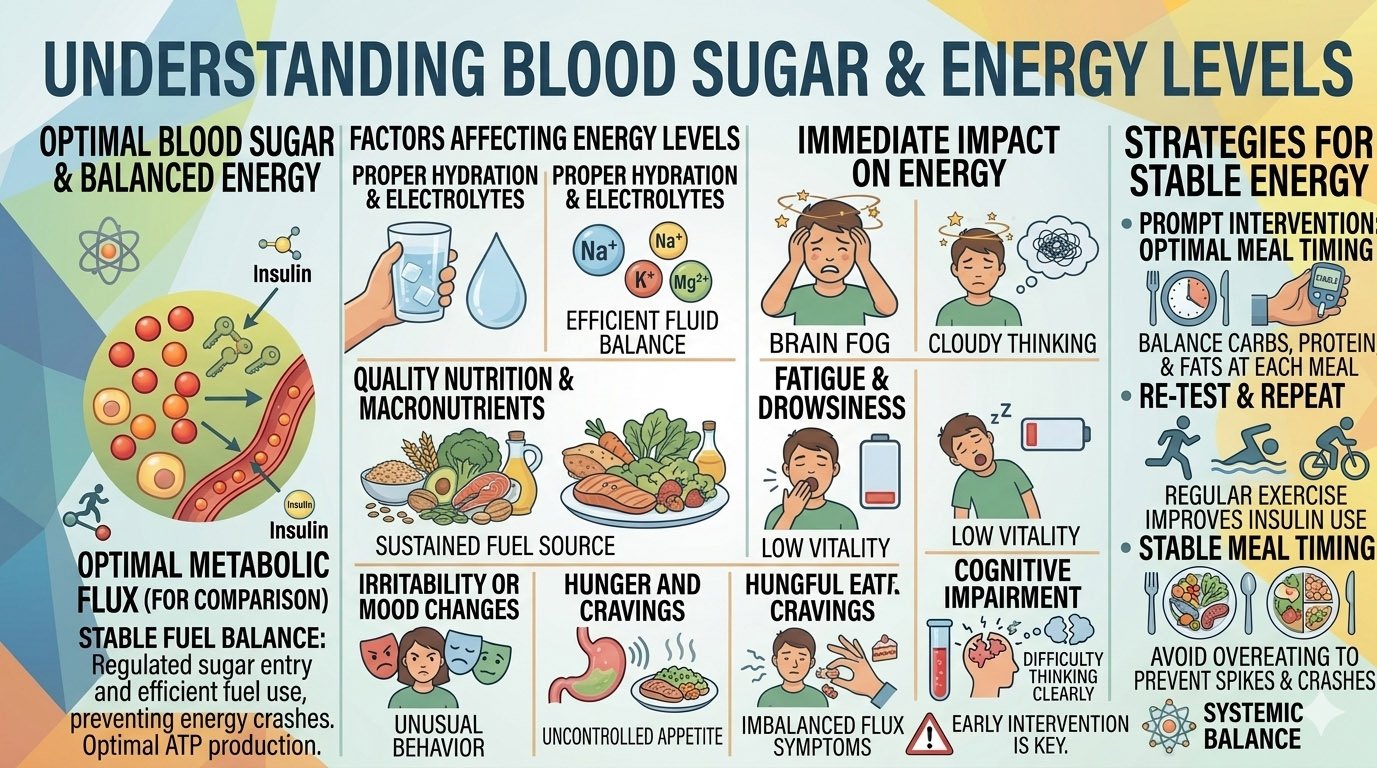
This relationship connects multiple biological systems, including Metabolism, Hormone Health, and Nutrition, as well as sleep, cardiovascular health, and body weight regulation. When blood sugar fluctuates too much—rising sharply after meals or dropping too low between them—energy production becomes inefficient, leading to fatigue, irritability, and reduced physical or cognitive performance.
Understanding how blood sugar influences energy is essential not only for people with diabetes but also for anyone experiencing persistent tiredness, afternoon crashes, or difficulty maintaining focus.
What Are Blood Sugar and Energy Levels?
Blood sugar (blood glucose) refers to the amount of glucose circulating in the bloodstream at any given time. This glucose comes primarily from carbohydrates in food and is tightly regulated by hormones, especially insulin and glucagon.
Energy levels reflect how efficiently the body converts nutrients into usable energy (ATP) for muscles, organs, and the brain.
In simple terms:
- Blood sugar provides the fuel
- Hormones regulate the delivery
- Cells generate the energy
This process is a central component of Metabolism, influencing both short-term performance and long-term health.
Normal blood sugar stability typically results in:
- Steady physical energy
- Stable mood
- Clear mental focus
- Consistent hunger patterns
In contrast, unstable glucose levels often lead to fatigue, cravings, and reduced productivity.
How Blood Sugar Controls Energy Production (Physiology)
The connection between blood sugar and energy begins after eating.
Step-by-step process
- Food is digested into glucose
- Glucose enters the bloodstream
- Insulin helps glucose enter cells
- Cells convert glucose into energy (ATP)
- Excess glucose is stored for later use
This system depends heavily on hormonal balance, nutrient availability, and metabolic efficiency, which is why Hormone Health and Nutrition play central roles in energy regulation.
The Brain’s Dependence on Glucose
The brain uses approximately:
- 20% of the body’s total energy
- Almost exclusively glucose under normal conditions
Even small fluctuations in blood sugar can affect:
- Concentration
- Memory
- Mood
- Reaction time
This explains why energy crashes often include mental fatigue, not just physical tiredness.
Key Factors That Influence Blood Sugar and Energy Levels
1) Meal Composition and Macronutrient Balance
The types of foods consumed strongly determine how stable blood sugar remains.
Foods that stabilize energy:
- Fiber-rich vegetables
- Lean protein
- Healthy fats
- Whole grains
Foods that destabilize energy:
- Refined carbohydrates
- Sugary beverages
- Ultra-processed snacks
- Large portions of simple sugars
Balanced meals are a cornerstone of Nutrition and help prevent rapid glucose spikes followed by crashes.
2) Insulin Sensitivity
Insulin sensitivity determines how efficiently cells respond to insulin.
High sensitivity:
- Stable blood sugar
- Efficient energy use
- Lower fatigue risk
Low sensitivity (insulin resistance):
- Slower glucose uptake
- Energy instability
- Increased risk of metabolic disease
This condition is strongly associated with Weight Loss, Metabolism, and long-term blood sugar regulation.
3) Sleep Quality and Circadian Rhythm
Poor sleep disrupts hormones that regulate glucose and energy.
Sleep deprivation can:
- Reduce insulin sensitivity
- Increase hunger hormones
- Raise cortisol levels
- Promote fatigue
Sleep is one of the most overlooked drivers of blood sugar stability, which is why Sleep Health is directly linked to energy regulation.
4) Physical Activity
Movement improves glucose utilization and supports steady energy production.
Exercise helps:
- Increase insulin sensitivity
- Stabilize blood sugar
- Improve mitochondrial function
- Reduce fatigue
Regular activity is a foundational strategy in Energy & Fatigue management.
5) Stress and Cortisol
Chronic stress elevates cortisol, a hormone that raises blood sugar to prepare the body for action.
Long-term stress can lead to:
- Blood sugar fluctuations
- Energy crashes
- Increased appetite
- Metabolic imbalance
This connection highlights the interaction between Hormone Health and daily energy regulation.
Blood Sugar Patterns That Affect Energy
Blood Sugar Spikes
Rapid increases in glucose after meals can produce a short burst of energy followed by a sudden drop.
Common symptoms:
- Sudden fatigue
- Brain fog
- Irritability
- Sugar cravings
These spikes are often linked to:
- High-glycemic meals
- Skipping meals
- Poor sleep
- Sedentary lifestyle
Blood Sugar Drops (Hypoglycemia)
Low blood sugar reduces fuel availability for the brain and muscles.
Typical symptoms:
- Weakness
- Dizziness
- Sweating
- Shakiness
- Difficulty concentrating
Frequent drops may signal underlying metabolic or hormonal issues that should be evaluated within the broader context of Blood Sugar regulation.
Blood Sugar Variability
Large swings between high and low glucose levels are increasingly recognized as a key driver of fatigue.
Research shows that glucose variability can affect:
- Energy stability
- Cognitive performance
- Cardiovascular risk
This pattern is also associated with Heart Health and long-term metabolic health.
Related Conditions That Disrupt Energy Through Blood Sugar
Several health conditions interfere with glucose regulation and energy production.
Insulin Resistance
A condition where cells respond poorly to insulin, leading to elevated blood sugar and fatigue.
Common signs:
- Persistent tiredness
- Increased hunger
- Abdominal weight gain
- Brain fog
This is one of the most important metabolic drivers of chronic fatigue and is closely connected to Metabolism and Weight Loss.
Type 2 Diabetes
Chronic high blood sugar reduces cellular energy efficiency and damages metabolic systems over time.
Energy-related symptoms:
- Extreme fatigue
- Slow recovery after meals
- Frequent urination
- Increased thirst
Reactive Hypoglycemia
A drop in blood sugar several hours after eating.
Often linked to:
- High-sugar meals
- Insulin resistance
- Hormonal imbalance
- Digestive dysfunction
Digestive health can influence glucose absorption and stability, highlighting the role of Gut Health in energy regulation.
Practical Strategies to Stabilize Blood Sugar and Improve Energy
These strategies are supported by metabolic and clinical research.
Build Balanced Meals
Include:
- Protein
- Fiber
- Healthy fats
- Complex carbohydrates
This combination slows glucose absorption and prevents energy crashes.
Eat at Regular Intervals
Consistent meal timing helps regulate:
- Blood sugar
- Hormones
- Energy rhythms
Irregular eating patterns are a common cause of fatigue.
Prioritize Sleep
Aim for:
7–9 hours per night
Good sleep improves:
- Insulin sensitivity
- Hormonal balance
- Energy production
Stay Physically Active
Even moderate movement can improve glucose control.
Examples:
- Walking
- Resistance training
- Cycling
- Stretching
Manage Stress
Effective strategies include:
- Deep breathing
- Meditation
- Time management
- Regular physical activity
Reducing stress supports Hormone Health and stabilizes energy levels.
Why Blood Sugar Stability Matters for Long-Term Health
Stable blood sugar is not only about preventing diabetes—it is central to overall health.
Consistently unstable glucose levels are associated with:
- Chronic fatigue
- Weight gain
- Cardiovascular disease
- Hormonal imbalance
- Poor sleep
- Reduced cognitive performance
Maintaining steady blood sugar supports:
- Sustainable energy
- Metabolic efficiency
- Mental clarity
- Healthy aging
This is why blood sugar regulation sits at the center of modern metabolic health research.
Final Thoughts: Energy Is a Metabolic Signal
Energy levels are not random—they reflect how well the body manages fuel.
When blood sugar is stable:
- Cells receive consistent energy
- Hormones stay balanced
- The brain functions efficiently
- Fatigue becomes less frequent
When blood sugar is unstable, energy becomes unpredictable.
Understanding the connection between Blood Sugar, Metabolism, Nutrition, Sleep Health, and Hormone Health provides a powerful framework for improving both daily performance and long-term health.
FAQ
Can blood sugar fluctuations cause fatigue even without diabetes?
Yes. Blood sugar instability is a common cause of fatigue in people without diabetes, especially when meals are high in refined carbohydrates or sleep is poor.
Why do I feel tired after eating?
This often happens due to:
- Rapid blood sugar spikes
- Insulin response
- Large meals
- Poor sleep
Post-meal fatigue is frequently linked to metabolic and dietary patterns.
Does low blood sugar affect brain function?
Yes. The brain relies heavily on glucose, so low blood sugar can quickly cause:
- Brain fog
- Confusion
- Difficulty concentrating
What is the best diet for stable energy?
A diet focused on:
- Whole foods
- Fiber
- Protein
- Healthy fats
- Low-glycemic carbohydrates
is consistently associated with stable blood sugar and sustained energy.
Medical Disclaimer
This content is for informational purposes only and does not constitute medical advice. Always consult a qualified healthcare professional.
Editorial Transparency
This article was created following evidence-based health content guidelines and reviewed by the VitaCoreBalance Editorial Team.
Sources
Centers for Disease Control and Prevention (CDC)
National Institute of Diabetes and Digestive and Kidney Diseases (NIDDK)
Mayo Clinic — Blood sugar and energy regulation
World Health Organization (WHO) — Diabetes and metabolic health
Ludwig DS. The Glycemic Index: Physiological Mechanisms Relating to Obesity, Diabetes, and Cardiovascular Disease
American Medical Association
Monnier L et al. Glucose Variability and Its Impact on Diabetes Complications
Diabetes Care
Benton D et al. The Influence of Blood Glucose on Cognitive Function
Neuroscience & Biobehavioral Reviews