
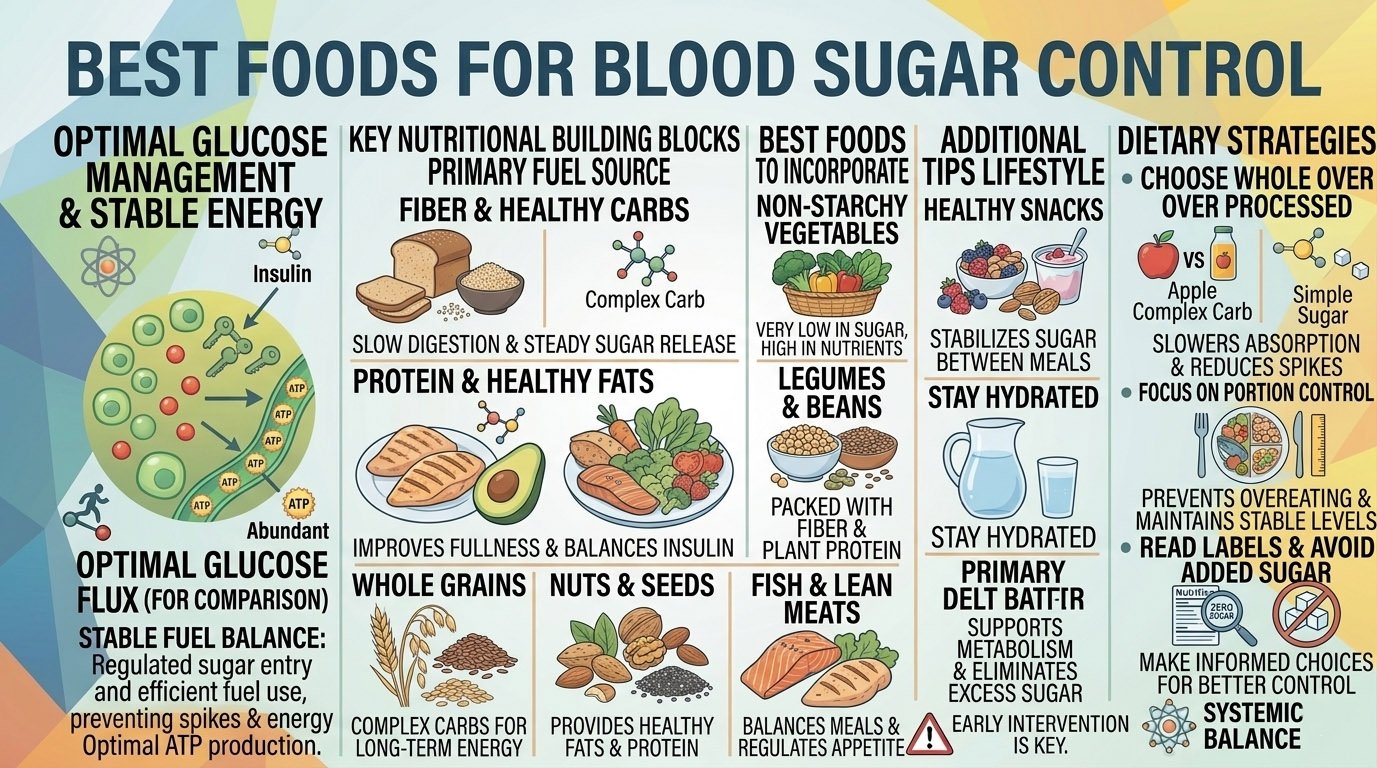
Best Foods for Blood Sugar Control
VitaCoreBalance Editorial Team | Research-based health content • Editorial review process | March 2026
Introduction: Food Choices as a Primary Tool for Blood Sugar Stability
Food is one of the most powerful and immediate factors influencing blood sugar levels. Every meal directly affects how glucose enters the bloodstream, how insulin responds, and how efficiently the body produces energy. Because of this, dietary choices sit at the center of Metabolism, Nutrition, and Hormone Health, shaping both short-term energy and long-term metabolic health.
For individuals with diabetes, insulin resistance, or frequent energy crashes, choosing the right foods can significantly improve glucose stability. Even for people without diagnosed metabolic conditions, dietary patterns play a critical role in preventing blood sugar spikes, reducing fatigue, supporting cardiovascular health, and maintaining healthy body weight.
Understanding the best foods for blood sugar control helps transform nutrition from a reactive strategy into a proactive tool for long-term health.
What Does Blood Sugar Control Mean?
Blood sugar control refers to maintaining glucose levels within a healthy range throughout the day, avoiding large spikes after meals and sudden drops between them.
Healthy blood sugar control typically involves:
- Gradual glucose increases after meals
- Stable energy levels
- Reduced hunger and cravings
- Balanced hormone responses
- Lower risk of metabolic disease
Poor control, on the other hand, is associated with:
- Fatigue
- Brain fog
- Increased appetite
- Weight gain
- Insulin resistance
This is why nutrition is foundational to both Blood Sugar regulation and long-term Energy & Fatigue management.
How Foods Influence Blood Sugar (Physiology)
Different foods affect blood sugar at different speeds depending on their composition.
Three key factors determine glucose response:
1) Carbohydrate Type
Simple carbohydrates:
- Absorb quickly
- Raise blood sugar rapidly
Complex carbohydrates:
- Digest slowly
- Produce gradual glucose release
2) Fiber Content
Fiber slows digestion and glucose absorption, helping prevent spikes.
High-fiber foods:
- Reduce post-meal glucose levels
- Improve insulin sensitivity
- Support digestive health
This connection highlights the importance of Gut Health in blood sugar regulation.
3) Protein and Fat Balance
Protein and healthy fats slow gastric emptying and stabilize glucose levels.
Balanced meals containing:
- Fiber
- Protein
- Healthy fats
consistently produce more stable blood sugar patterns.
Best Foods for Blood Sugar Control
These foods are strongly supported by clinical research and dietary guidelines for improving glucose regulation.
1) Non-Starchy Vegetables
Examples:
- Broccoli
- Spinach
- Kale
- Zucchini
- Cauliflower
- Bell peppers
Why they help:
- Very low glycemic impact
- High fiber content
- Rich in vitamins and antioxidants
- Support insulin sensitivity
Non-starchy vegetables are among the most consistently recommended foods for people managing blood sugar.
They are also essential for Weight Loss and cardiovascular risk reduction.
2) Whole Grains
Examples:
- Oats
- Quinoa
- Brown rice
- Barley
- Whole wheat
Why they help:
- Provide slow-releasing carbohydrates
- Improve satiety
- Stabilize glucose levels
- Support metabolic health
Research shows that replacing refined grains with whole grains significantly reduces the risk of type 2 diabetes and improves blood sugar control.
Whole grains are a cornerstone of healthy Nutrition and long-term metabolic stability.
3) Legumes (Beans and Lentils)
Examples:
- Black beans
- Lentils
- Chickpeas
- Kidney beans
- Peas
Why they help:
- High fiber and protein
- Low glycemic index
- Improve insulin sensitivity
- Promote fullness
Legumes are consistently associated with improved glucose control and reduced cardiovascular risk, making them valuable for both Blood Sugar and Heart Health.
4) Lean Protein Sources
Examples:
- Chicken
- Turkey
- Fish
- Eggs
- Greek yogurt
- Tofu
Why they help:
- Do not raise blood sugar directly
- Increase satiety
- Reduce post-meal glucose spikes
- Support muscle metabolism
Adequate protein intake is essential for maintaining stable energy levels and preventing overeating.
Protein is also closely linked to Metabolism and muscle health.
5) Healthy Fats
Examples:
- Avocados
- Olive oil
- Nuts
- Seeds
- Fatty fish (salmon, sardines)
Why they help:
- Slow carbohydrate absorption
- Improve insulin sensitivity
- Reduce inflammation
- Support cardiovascular health
Healthy fats are strongly associated with improved outcomes in metabolic disease and play a protective role in Heart Health.

6) Low-Glycemic Fruits
Examples:
- Berries
- Apples
- Pears
- Oranges
- Cherries
Why they help:
- Contain fiber and antioxidants
- Produce slower glucose increases
- Support metabolic balance
Despite containing natural sugar, whole fruits are generally beneficial for blood sugar control when consumed in reasonable portions.
Fruits also support digestive function and Gut Health.
7) Nuts and Seeds
Examples:
- Almonds
- Walnuts
- Chia seeds
- Flaxseeds
- Pumpkin seeds
Why they help:
- High in healthy fats and fiber
- Improve insulin sensitivity
- Reduce hunger
- Stabilize blood sugar
Studies show that regular nut consumption is associated with better glycemic control and reduced risk of metabolic disease.
Foods That Commonly Disrupt Blood Sugar Control
Certain foods consistently produce rapid glucose spikes.
Examples:
- Sugary drinks
- White bread
- Pastries
- Candy
- Refined cereals
- Ultra-processed snacks
These foods are typically:
- Low in fiber
- High in refined carbohydrates
- Rapidly absorbed
Frequent consumption increases the risk of insulin resistance and metabolic dysfunction.
Practical Strategies for Using Food to Control Blood Sugar
Build Balanced Meals
A simple framework:
Include:
- Fiber
- Protein
- Healthy fats
- Complex carbohydrates
This combination helps prevent rapid glucose changes.
Eat Fiber First
Research suggests that consuming fiber-rich foods before carbohydrates can reduce blood sugar spikes.
Example meal order:
- Vegetables
- Protein
- Carbohydrates
Maintain Consistent Meal Timing
Irregular eating patterns can disrupt blood sugar regulation.
Consistent meal timing supports:
- Stable glucose levels
- Hormonal balance
- Sustained energy
This is closely connected to Sleep Health and circadian rhythm regulation.
Monitor Portion Sizes
Even healthy foods can raise blood sugar if consumed in very large amounts.
Moderation remains essential.
Related Conditions That Improve with Better Food Choices
Healthy dietary patterns can help manage or prevent:
- Insulin resistance
- Prediabetes
- Type 2 diabetes
- Metabolic syndrome
- Obesity
- Cardiovascular disease
These conditions are strongly interconnected through Metabolism and long-term blood sugar regulation.
Why Food Quality Matters More Than Sugar Alone
Blood sugar control is not determined only by sugar intake.
More important factors include:
- Fiber intake
- Food processing level
- Macronutrient balance
- Meal timing
- Overall diet pattern
A diet based on whole, minimally processed foods consistently produces better metabolic outcomes than one focused solely on reducing sugar.
Final Thoughts: Food Is the Foundation of Blood Sugar Stability
Medication, exercise, and sleep all influence blood sugar—but food remains the most immediate and controllable factor.
Choosing the right foods can:
- Reduce blood sugar spikes
- Improve energy levels
- Support hormone balance
- Promote healthy weight
- Lower disease risk
Understanding the relationship between diet, Nutrition, Metabolism, Blood Sugar, and Heart Health allows individuals to build sustainable habits that support long-term metabolic health.
FAQ
What is the single best food for blood sugar control?
There is no single best food. The most effective approach is a balanced diet rich in fiber, protein, and healthy fats.
Are carbohydrates bad for blood sugar?
No. Complex carbohydrates from whole foods can support stable blood sugar when consumed in balanced portions.
Do fruits raise blood sugar too much?
Whole fruits generally produce moderate glucose responses due to their fiber content and are considered healthy for most people.
How quickly can diet improve blood sugar control?
Improvements can begin within days to weeks, especially when refined carbohydrates are replaced with whole foods.
Medical Disclaimer
This content is for informational purposes only and does not constitute medical advice. Always consult a qualified healthcare professional.
Editorial Transparency
This article was created following evidence-based health content guidelines and reviewed by the VitaCoreBalance Editorial Team.
Sources
American Diabetes Association (ADA)
Standards of Medical Care in Diabetes — Nutrition Therapy
National Institute of Diabetes and Digestive and Kidney Diseases (NIDDK)
Diet, Eating, and Physical Activity for Diabetes
Harvard T.H. Chan School of Public Health
Carbohydrates and Blood Sugar Control
Jenkins DJA et al.
Glycemic Index: Overview of Implications in Health and Disease
American Journal of Clinical Nutrition
Ley SH et al.
Prevention and Management of Type 2 Diabetes Through Diet
The Lancet
Reynolds A et al.
Carbohydrate Quality and Human Health: A Series of Systematic Reviews and Meta-Analyses
The Lancet
Evert AB et al.
Nutrition Therapy for Adults With Diabetes or Prediabetes
Diabetes Care