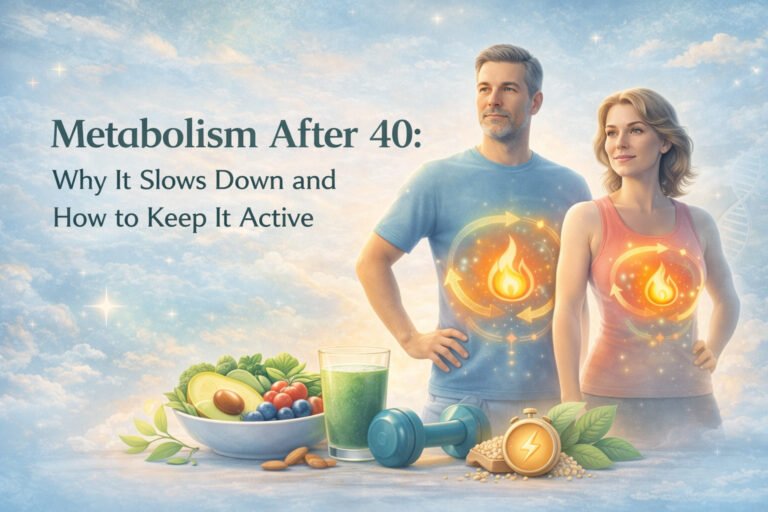
Metabolism After 40: Why It Slows Down and How to Keep It Active
VitaCoreBalance Editorial Team | Research-based health content • Editorial review process | March 2026
Many people notice that maintaining a healthy weight becomes more difficult after the age of 40. This is often attributed to a “slower metabolism.” While there is some truth to this idea, the reality is more nuanced. Metabolism after 40 does not suddenly decline overnight, but a combination of biological changes and lifestyle factors gradually reduces the number of calories the body burns each day.
Understanding how metabolism after 40 changes is essential for maintaining energy levels, managing body composition, and supporting long-term health. With the right strategies, it is possible to preserve metabolic function and remain active well into later decades.
What Is Metabolism?
Before exploring metabolism after 40, it is important to understand what metabolism is. Metabolism refers to all the chemical processes that occur in the body to sustain life, including energy production, tissue repair, and regulation of vital functions.
Your metabolism determines how many calories your body burns each day. This total energy expenditure is made up of three main components:
-
Basal Metabolic Rate (BMR) – the energy required to maintain basic functions such as breathing, circulation, and temperature regulation
-
Physical Activity – calories burned through exercise and daily movement
-
Thermic Effect of Food (TEF) – energy used to digest and process nutrients
Together, these processes determine how efficiently your body uses energy. For a complete breakdown, see our guide on what metabolism is and how it works.
Why Metabolism Slows Down After 40
Metabolism after 40 is influenced by several biological and behavioral changes that occur gradually over time.
Loss of Muscle Mass
One of the most important factors is the gradual loss of muscle mass, known as sarcopenia. Muscle tissue is metabolically active, meaning it burns more calories than fat tissue—even at rest.
After the age of 30, adults may lose between 3–8% of muscle mass per decade, and this rate often accelerates after 40. As muscle mass declines, resting metabolic rate decreases, making it easier to gain weight and harder to maintain energy balance.
Hormonal Changes
Hormones play a central role in regulating metabolism. After 40, hormonal shifts can significantly affect how the body stores and uses energy.
Common changes include:
-
Reduced testosterone levels in men
-
Declining estrogen levels in women during perimenopause and menopause
-
Changes in growth hormone production
These shifts can lead to increased fat storage, reduced muscle mass, and lower overall energy expenditure. Learn more about this in our guide to how hormones affect metabolism.
Decreased Physical Activity
Lifestyle changes are another major contributor to metabolic slowdown. Many adults become less physically active in their 40s due to work demands, family responsibilities, or injuries.
Lower activity levels reduce daily calorie expenditure, which can lead to gradual weight gain if dietary habits remain unchanged.
Changes in Insulin Sensitivity
Metabolism after 40 is also influenced by changes in insulin sensitivity. As the body becomes less responsive to insulin, it becomes more efficient at storing fat and less efficient at regulating blood sugar levels.
Reduced insulin sensitivity is associated with:
-
Increased fat accumulation
-
Higher risk of type 2 diabetes
-
Lower metabolic flexibility
To better understand this connection, explore how blood sugar affects metabolism and energy levels.
Signs Your Metabolism May Be Slowing
Metabolic changes tend to occur gradually, but some common signs may indicate that metabolism after 40 is slowing:
-
Gradual weight gain despite similar eating habits
-
Increased abdominal fat
-
Lower energy levels
-
Difficulty losing weight
-
Slower recovery from exercise
These signs often develop over time and are closely linked to lifestyle and body composition changes.
How to Boost Metabolism After 40
Although metabolism changes with age, it is highly influenced by daily habits. Several evidence-based strategies can help maintain or even improve metabolic function.
Strength Training
Resistance training is one of the most effective ways to counteract muscle loss and support metabolism after 40.
Key benefits include:
-
Preserving lean muscle mass
-
Increasing resting metabolic rate
-
Improving insulin sensitivity
-
Supporting bone density
Most experts recommend strength training at least 2–4 times per week.
Increase Protein Intake
Protein plays a critical role in maintaining muscle mass and supporting metabolic health. It also has a higher thermic effect, meaning the body burns more calories digesting protein compared to fats or carbohydrates.
Good sources of protein include:
-
Eggs
-
Fish
-
Lean meats
-
Greek yogurt
-
Beans and legumes
Spreading protein intake evenly throughout the day can further support muscle repair and energy balance.
Stay Physically Active Throughout the Day
In addition to structured workouts, daily movement significantly contributes to total energy expenditure.
Simple habits can make a meaningful difference:
-
Walking regularly
-
Taking the stairs instead of elevators
-
Standing instead of sitting when possible
-
Taking short activity breaks during work
This type of movement is known as non-exercise activity thermogenesis (NEAT) and plays a key role in metabolism after 40.
Prioritize Sleep
Sleep is essential for metabolic regulation. Poor sleep disrupts hormones that control hunger and appetite, such as ghrelin and leptin, which can lead to increased cravings and overeating.
Adults should aim for 7–9 hours of quality sleep per night. Learn more about the relationship between sleep and metabolism.
Manage Stress
Chronic stress increases cortisol levels, a hormone associated with fat storage—particularly in the abdominal region.
Effective stress management strategies include:
-
Meditation
-
Breathing exercises
-
Regular physical activity
-
Spending time outdoors
Managing stress is essential for maintaining hormonal balance and metabolic health.
The Good News About Metabolism After 40
Recent research suggests that metabolism may remain relatively stable between the ages of 20 and 60 when body composition is taken into account. In many cases, what is perceived as a “slow metabolism” is actually the result of reduced muscle mass and lower activity levels.
This means metabolism after 40 is highly adaptable. By maintaining muscle mass, staying active, and supporting overall health through nutrition and sleep, it is possible to preserve metabolic function over time.
Final Thoughts
Metabolism after 40 does not decline suddenly or irreversibly. While biological changes do occur, lifestyle habits remain the most important factor in determining metabolic health.
By focusing on strength training, balanced nutrition, regular movement, quality sleep, and stress management, you can support a strong and efficient metabolism well into midlife and beyond.
Understanding how metabolism after 40 works empowers you to take control of your health and maintain long-term vitality.
 Further Reading