

How to Lower Blood Sugar Naturally
VitaCoreBalance Editorial Team | Research-based health content • Editorial review process | March 2026
Introduction: Natural Strategies That Support Healthy Blood Sugar
Blood sugar levels are influenced by daily habits more than many people realize. While medications may be necessary for some individuals, natural lifestyle strategies—such as diet, physical activity, sleep, and stress management—play a central role in maintaining stable glucose levels. These approaches support the body’s natural regulatory systems and help reduce the risk of long-term metabolic complications.
Lowering blood sugar naturally does not mean using alternative remedies or quick fixes. Instead, it involves consistent habits that improve insulin sensitivity, stabilize energy levels, and support overall metabolic balance. These strategies are closely connected to Metabolism, Nutrition, and Hormone Health, as well as sleep quality, digestive health, and cardiovascular function.
Understanding how to lower blood sugar naturally helps individuals take practical steps toward long-term health and prevention.
What Does It Mean to Lower Blood Sugar Naturally?
Lowering blood sugar naturally refers to improving glucose control through lifestyle behaviors rather than relying solely on medication. These methods focus on supporting the body’s normal physiological processes, including insulin function, hormone balance, and energy regulation.
Healthy blood sugar regulation typically involves:
- Stable glucose levels throughout the day
- Fewer spikes after meals
- Improved insulin sensitivity
- Consistent energy levels
- Reduced risk of metabolic disease
Natural approaches are often recommended as the first line of prevention for prediabetes and metabolic syndrome, and they remain essential even when medical treatment is required.
This is why lifestyle-based strategies are foundational to both Blood Sugar management and long-term Energy & Fatigue regulation.
How the Body Naturally Lowers Blood Sugar (Physiology)
The body has built-in systems designed to regulate glucose levels.
These include:
Insulin Response
After eating, the pancreas releases insulin to help glucose enter cells. When insulin works efficiently, blood sugar levels return to normal within a few hours.
Muscle Glucose Uptake
Physical activity allows muscles to absorb glucose directly from the bloodstream, even without insulin.
This is one of the most powerful natural mechanisms for lowering blood sugar.
Liver Glucose Regulation
The liver stores excess glucose and releases it when energy is needed, helping maintain balance between meals and during sleep.
These processes are tightly controlled by hormones and metabolic signals, highlighting the importance of Hormone Health and stable Metabolism.
Natural Ways to Lower Blood Sugar
The following strategies are supported by clinical research and widely recommended by medical organizations.
1) Increase Physical Activity
Regular movement improves insulin sensitivity and helps muscles use glucose more efficiently.
Benefits include:
- Lower blood sugar levels
- Improved metabolism
- Increased energy
- Reduced insulin resistance
Even moderate activity can produce measurable improvements.
Examples:
- Walking after meals
- Resistance training
- Cycling
- Swimming
Physical activity is one of the most effective natural tools for managing blood sugar and supporting Weight Loss.
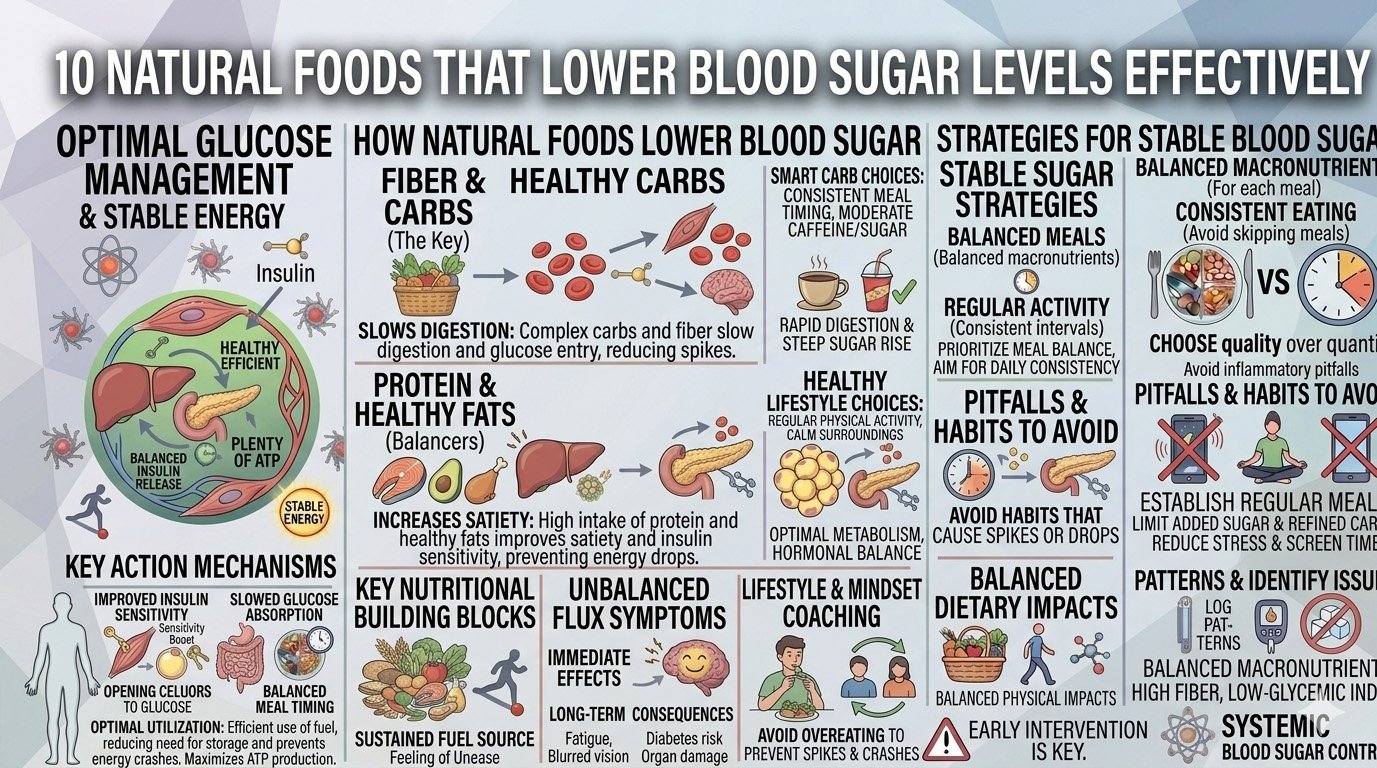
2) Eat Balanced, Fiber-Rich Meals
Diet is one of the strongest drivers of blood sugar control.
Meals that combine:
- Fiber
- Protein
- Healthy fats
- Complex carbohydrates
help slow glucose absorption and prevent spikes.
High-fiber foods include:
- Vegetables
- Legumes
- Whole grains
- Nuts and seeds
Fiber also supports digestive function and Gut Health.
3) Reduce Refined Carbohydrates and Added Sugar
Highly processed carbohydrates are quickly absorbed and can cause rapid increases in blood sugar.
Common sources include:
- Sugary drinks
- White bread
- Pastries
- Candy
- Sweetened snacks
Reducing these foods helps stabilize glucose levels and improve metabolic health.
4) Maintain a Healthy Body Weight
Excess body fat—particularly around the abdomen—can reduce insulin sensitivity.
Weight management can:
- Improve glucose control
- Reduce inflammation
- Lower diabetes risk
- Improve cardiovascular health
Healthy weight management is closely linked to Metabolism and long-term disease prevention.
5) Improve Sleep Quality
Sleep plays a critical role in hormone regulation and glucose control.
Poor sleep can:
- Increase cortisol levels
- Reduce insulin sensitivity
- Increase hunger
- Raise blood sugar levels
Consistent sleep supports stable glucose levels and overall Sleep Health.
6) Manage Stress
Chronic stress increases cortisol, a hormone that raises blood sugar.
Reducing stress can help:
- Stabilize glucose levels
- Improve insulin sensitivity
- Reduce fatigue
- Support hormonal balance
Stress management supports both Hormone Health and metabolic stability.
7) Stay Hydrated
Adequate hydration supports normal kidney function and helps the body regulate glucose levels.
Benefits include:
- Improved metabolic function
- Reduced dehydration risk
- Better overall health
Water is the preferred beverage for maintaining stable blood sugar.
8) Eat Regular Meals
Skipping meals can lead to large fluctuations in blood sugar later in the day.
Consistent meal timing helps:
- Maintain stable energy
- Prevent overeating
- Support hormone balance
Regular eating patterns are closely connected to Nutrition and daily energy regulation.
9) Increase Dietary Protein
Protein slows digestion and reduces the rate at which glucose enters the bloodstream.
Benefits include:
- Reduced blood sugar spikes
- Improved satiety
- Stable energy levels
Protein intake supports both Metabolism and long-term glucose control.
10) Monitor Carbohydrate Portions
Even healthy carbohydrates can raise blood sugar when consumed in large amounts.
Balanced portions help:
- Maintain stable glucose levels
- Prevent spikes
- Improve metabolic control
Portion awareness is a key part of natural blood sugar management.
Signs That Natural Blood Sugar Strategies Are Working
People often notice improvements gradually.
Common signs include:
- More stable energy levels
- Reduced sugar cravings
- Better sleep quality
- Improved concentration
- Gradual weight loss
- Fewer energy crashes
These changes reflect improvements in both glucose regulation and Energy & Fatigue patterns.
When to Seek Medical Guidance
Natural strategies are powerful, but medical evaluation is important when blood sugar levels remain consistently high.
Seek medical advice if:
- Blood sugar remains elevated
- Symptoms worsen
- You experience frequent fatigue
- You have risk factors for diabetes
- Lifestyle changes do not improve glucose control
Medical supervision ensures safe and effective management.
Why Natural Blood Sugar Control Matters for Long-Term Health
Stable blood sugar supports more than just energy.
Long-term benefits include:
- Reduced risk of diabetes
- Improved heart health
- Better hormone balance
- Healthy weight maintenance
- Reduced inflammation
- Improved cognitive function
Maintaining stable glucose is a cornerstone of both prevention and long-term health.
Final Thoughts: Small Daily Habits Create Lasting Blood Sugar Stability
Lowering blood sugar naturally does not require extreme changes. Consistent, practical habits—such as regular movement, balanced meals, good sleep, and stress management—can significantly improve glucose control over time.
These strategies work together to support Blood Sugar, Metabolism, Nutrition, Hormone Health, and overall health.
Sustainable lifestyle changes remain one of the most effective tools for protecting long-term metabolic health.
FAQ
How quickly can blood sugar be lowered naturally?
Improvements can begin within days to weeks, especially after increasing physical activity and improving diet.
Can exercise lower blood sugar immediately?
Yes. Physical activity allows muscles to use glucose for energy, which can lower blood sugar shortly after exercise.
Is it possible to control blood sugar without medication?
In some cases, especially in early stages of metabolic dysfunction, lifestyle changes can significantly improve blood sugar control. However, medical guidance is important.
What is the most effective natural method to lower blood sugar?
Regular physical activity and balanced meals are among the most consistently effective strategies.
Medical Disclaimer
This content is for informational purposes only and does not constitute medical advice. Always consult a qualified healthcare professional.
Editorial Transparency
This article was created following evidence-based health content guidelines and reviewed by the VitaCoreBalance Editorial Team.
Sources
American Diabetes Association (ADA)
Lifestyle Management for Diabetes
National Institute of Diabetes and Digestive and Kidney Diseases (NIDDK)
Managing Blood Sugar Naturally
Centers for Disease Control and Prevention (CDC)
Colberg SR et al.
Physical Activity and Type 2 Diabetes
Diabetes Care
Knowler WC et al.
Reduction in the Incidence of Type 2 Diabetes with Lifestyle Intervention
New England Journal of Medicine
Tuomilehto J et al.
Prevention of Type 2 Diabetes by Lifestyle Changes
The Lancet