

How Sleep Deprivation Impacts Heart Health
VitaCoreBalance Editorial Team | Research-based health content • Editorial review process | March 2026
Sleep is not simply a period of rest — it is a critical biological process that regulates cardiovascular function, metabolism, hormone balance, and inflammation. When sleep is consistently disrupted or shortened, the body enters a state of physiological stress that can directly affect the heart and blood vessels.
Research over the past two decades has firmly established sleep deprivation as a significant risk factor for cardiovascular disease. Poor sleep is associated with high blood pressure, inflammation, insulin resistance, and hormonal imbalance — all of which are key drivers of heart disease.
Understanding how sleep deprivation affects heart health helps connect multiple systems, including Hormone Health, Metabolism, Blood Sugar, and Energy & Fatigue, highlighting why sleep is now considered a core pillar of long-term health.
What Is Sleep Deprivation?
Sleep deprivation refers to getting less sleep than the body needs to function properly. For most adults, this means regularly sleeping fewer than 7 hours per night, although individual needs can vary.
Sleep deprivation can be:
- Acute — short-term sleep loss (one or several nights)
- Chronic — ongoing insufficient sleep over weeks or months
- Fragmented — frequent awakenings during the night
- Circadian disruption — misalignment of the sleep-wake cycle
Chronic sleep deprivation is the most concerning form because it creates persistent stress on the cardiovascular system and increases long-term disease risk.
Sleep quality is just as important as sleep duration, which is why conditions discussed in Sleep Health — such as insomnia, sleep apnea, and irregular sleep schedules — can significantly influence heart health.
How Sleep Deprivation Affects the Heart (Physiology)
Sleep supports cardiovascular stability through several key mechanisms. During healthy sleep, heart rate slows, blood pressure decreases, and the nervous system shifts into a restorative state. When sleep is insufficient, these protective processes are disrupted.
1) Increased Sympathetic Nervous System Activity
Sleep deprivation activates the body’s stress response system.
This leads to:
- Elevated heart rate
- Increased blood pressure
- Higher stress hormone levels
- Reduced cardiovascular recovery
The body remains in a “fight-or-flight” state longer than normal, placing continuous strain on the heart.
This mechanism also overlaps with Hormone Health, particularly the regulation of cortisol and adrenaline.
2) Elevated Blood Pressure
One of the most consistent effects of sleep deprivation is increased blood pressure.
Normally:
- Blood pressure drops during sleep (called nocturnal dipping)
With sleep deprivation:
- Blood pressure stays elevated
- Arterial stress increases
- Cardiovascular risk rises
Even modest sleep restriction — such as sleeping 5–6 hours per night — has been linked to hypertension.
This connection makes sleep a critical factor in both Heart Health and Metabolism, especially in individuals already at risk for cardiovascular disease.
3) Increased Inflammation
Sleep deprivation triggers low-grade systemic inflammation — a key driver of cardiovascular disease.
Inflammation contributes to:
- Atherosclerosis (plaque buildup in arteries)
- Endothelial dysfunction
- Increased risk of heart attack and stroke
Inflammatory markers commonly elevated with sleep deprivation include:
- C-reactive protein (CRP)
- Interleukin-6 (IL-6)
- Tumor necrosis factor-alpha (TNF-α)
Inflammation also connects sleep deprivation to Gut Health, since poor sleep can disrupt the gut microbiome and immune regulation.
4) Disrupted Blood Sugar and Insulin Regulation
Sleep deprivation significantly affects glucose metabolism.
It can lead to:
- Reduced insulin sensitivity
- Higher fasting blood sugar
- Increased risk of type 2 diabetes
These metabolic changes increase cardiovascular risk because high blood sugar damages blood vessels over time.
This is why sleep is strongly linked to:
- Blood Sugar
- Metabolism
- Weight Loss
Even short-term sleep restriction can impair glucose tolerance in healthy adults.
5) Hormonal Imbalance
Sleep plays a central role in hormone regulation. When sleep is disrupted, multiple hormones that influence cardiovascular health become dysregulated.
Key hormonal changes include:
- Increased cortisol
- Reduced melatonin
- Altered growth hormone release
- Increased appetite hormones (ghrelin)
- Reduced satiety hormones (leptin)
These changes contribute to:
- Weight gain
- Elevated blood pressure
- Metabolic dysfunction
- Increased cardiovascular risk
This highlights the close relationship between sleep and Hormone Health.
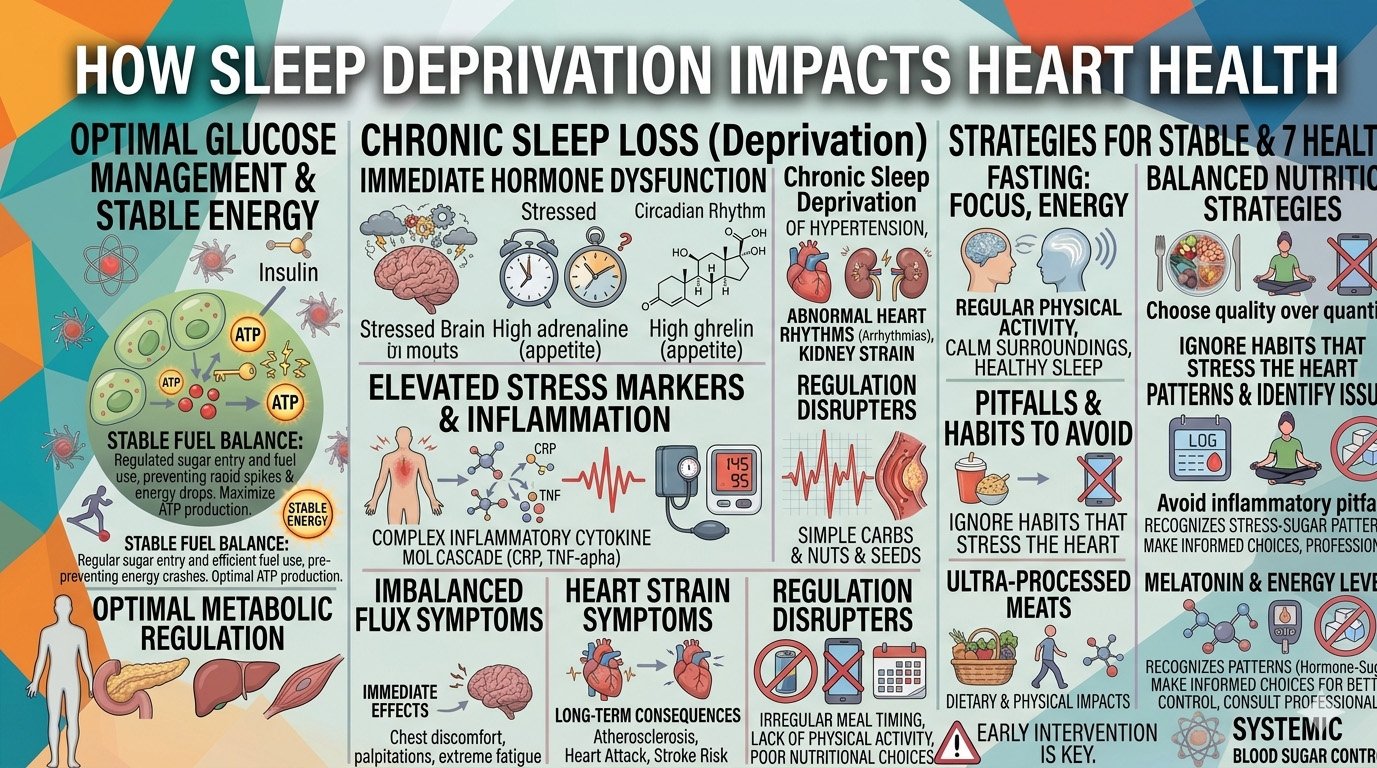
Key Risk Factors That Worsen the Impact of Sleep Deprivation
Some factors make sleep deprivation more harmful to heart health.
Common risk factors:
- Sleeping less than 6 hours per night
- Shift work or irregular schedules
- Chronic stress
- Obesity
- Poor diet
- Sedentary lifestyle
- Sleep apnea
- Aging
Sleep apnea deserves special attention because it combines sleep deprivation with repeated oxygen deprivation, which significantly increases cardiovascular risk.
These factors often interact with lifestyle patterns addressed in Nutrition and Weight Loss, reinforcing the importance of system-wide health management.
Cardiovascular Conditions Linked to Sleep Deprivation
Sleep deprivation is associated with multiple heart-related conditions.
Hypertension (High Blood Pressure)
Chronic sleep loss increases sympathetic activity and reduces nighttime blood pressure recovery.
Over time, this can lead to:
- Persistent hypertension
- Increased arterial stiffness
- Higher stroke risk
Coronary Artery Disease
Sleep deprivation contributes to plaque buildup in arteries through inflammation and metabolic dysfunction.
Risk increases through:
- Elevated cholesterol
- Increased inflammation
- Blood sugar dysregulation
These pathways connect directly to Metabolism and Blood Sugar regulation.
Heart Attack (Myocardial Infarction)
Short sleep duration has been linked to higher rates of heart attacks.
Risk increases due to:
- Increased clotting tendency
- Elevated blood pressure
- Vascular inflammation
Heart Failure
Poor sleep quality and sleep disorders can weaken the heart over time.
Mechanisms include:
- Chronic stress on the heart
- Reduced oxygen delivery
- Hormonal imbalance
Sleep apnea is one of the strongest contributors to this risk.
Stroke
Sleep deprivation increases stroke risk through:
- Hypertension
- Inflammation
- Blood vessel damage
- Blood clot formation
Both short sleep and excessively long sleep have been associated with higher stroke risk.
Practical Strategies to Protect Heart Health Through Better Sleep
Improving sleep is one of the most effective lifestyle interventions for cardiovascular health.
1) Maintain a Consistent Sleep Schedule
Go to bed and wake up at the same time every day, including weekends.
This stabilizes:
- Circadian rhythm
- Hormone release
- Blood pressure regulation
2) Prioritize Sleep Duration
Most adults need:
7–9 hours of sleep per night
Chronic sleep below this range increases cardiovascular risk.
3) Reduce Evening Stimulation
Avoid:
- Bright screens before bed
- Heavy meals late at night
- Caffeine in the evening
- Intense late-night exercise
These behaviors can interfere with sleep regulation and contribute to Energy & Fatigue during the day.
4) Support Sleep Through Nutrition
Diet strongly influences sleep quality and cardiovascular health.
Helpful habits include:
- Balanced meals with protein, fiber, and healthy fats
- Stable blood sugar levels
- Adequate magnesium and potassium intake
- Limiting ultra-processed foods
These patterns align with principles discussed in Nutrition and Metabolism.
5) Screen for Sleep Disorders
Medical evaluation may be necessary if symptoms include:
- Loud snoring
- Frequent nighttime awakenings
- Daytime sleepiness
- Morning headaches
- Poor concentration
Early diagnosis of sleep disorders can significantly reduce long-term cardiovascular risk.
Why Sleep Deprivation Matters for Long-Term Heart Health
Sleep deprivation is not just a lifestyle inconvenience — it is a biological stressor that affects nearly every system involved in cardiovascular function.
Over time, insufficient sleep can lead to:
- High blood pressure
- Insulin resistance
- Chronic inflammation
- Weight gain
- Hormonal imbalance
- Increased cardiovascular disease risk
These effects accumulate gradually, often without obvious symptoms in the early stages.
Because sleep influences Metabolism, Hormone Health, Blood Sugar, and Heart Health, it should be viewed as a foundational health behavior — not an optional one.
Final Thoughts
Sleep is one of the most powerful — and often overlooked — regulators of cardiovascular health. It affects blood pressure, inflammation, metabolism, hormone balance, and energy regulation.
Consistent sleep deprivation places the body in a state of chronic physiological stress, increasing the risk of heart disease over time. Fortunately, improving sleep is a highly modifiable risk factor.
Protecting heart health requires an integrated approach that includes:
- Healthy sleep patterns
- Balanced nutrition
- Stable metabolism
- Hormonal regulation
- Sustainable lifestyle habits
Sleep is not separate from these systems — it connects them.
Frequently Asked Questions (FAQ)
Can lack of sleep cause heart disease?
Yes. Chronic sleep deprivation is associated with higher risk of hypertension, coronary artery disease, heart attack, and stroke.
How many hours of sleep does the heart need?
Most adults need 7–9 hours per night to support cardiovascular health and proper physiological recovery.
Is sleeping too little worse than sleeping too much?
Both short and excessively long sleep durations have been associated with increased cardiovascular risk, but chronic short sleep is generally the more common and modifiable risk factor.
Can improving sleep lower blood pressure?
Yes. Better sleep quality and duration can help reduce blood pressure, inflammation, and stress hormone levels.
Medical Disclaimer
This content is for informational purposes only and does not constitute medical advice. Always consult a qualified healthcare professional.
Editorial Transparency
This article was created following evidence-based health content guidelines and reviewed by the VitaCoreBalance Editorial Team.
Sources
Medical Institutions
Centers for Disease Control and Prevention (CDC)
National Institutes of Health (NIH) — National Heart, Lung, and Blood Institute
Global Organizations
World Health Organization (WHO) — Sleep and Cardiovascular Health
Peer-Reviewed Studies
Cappuccio FP et al.
Sleep duration and cardiovascular outcomes: A systematic review and meta-analysis
European Heart Journal
Grandner MA et al.
Sleep duration and hypertension: Analysis of population data
Hypertension
Spiegel K et al.
Sleep loss and metabolic function
The Lancet
Scientific Review
Medic G, Wille M, Hemels ME
Short- and long-term health consequences of sleep disruption
Nature and Science of Sleep