
Sleep and Heart Health
VitaCoreBalance Editorial Team | Research-based health content • Editorial review process | March 2026
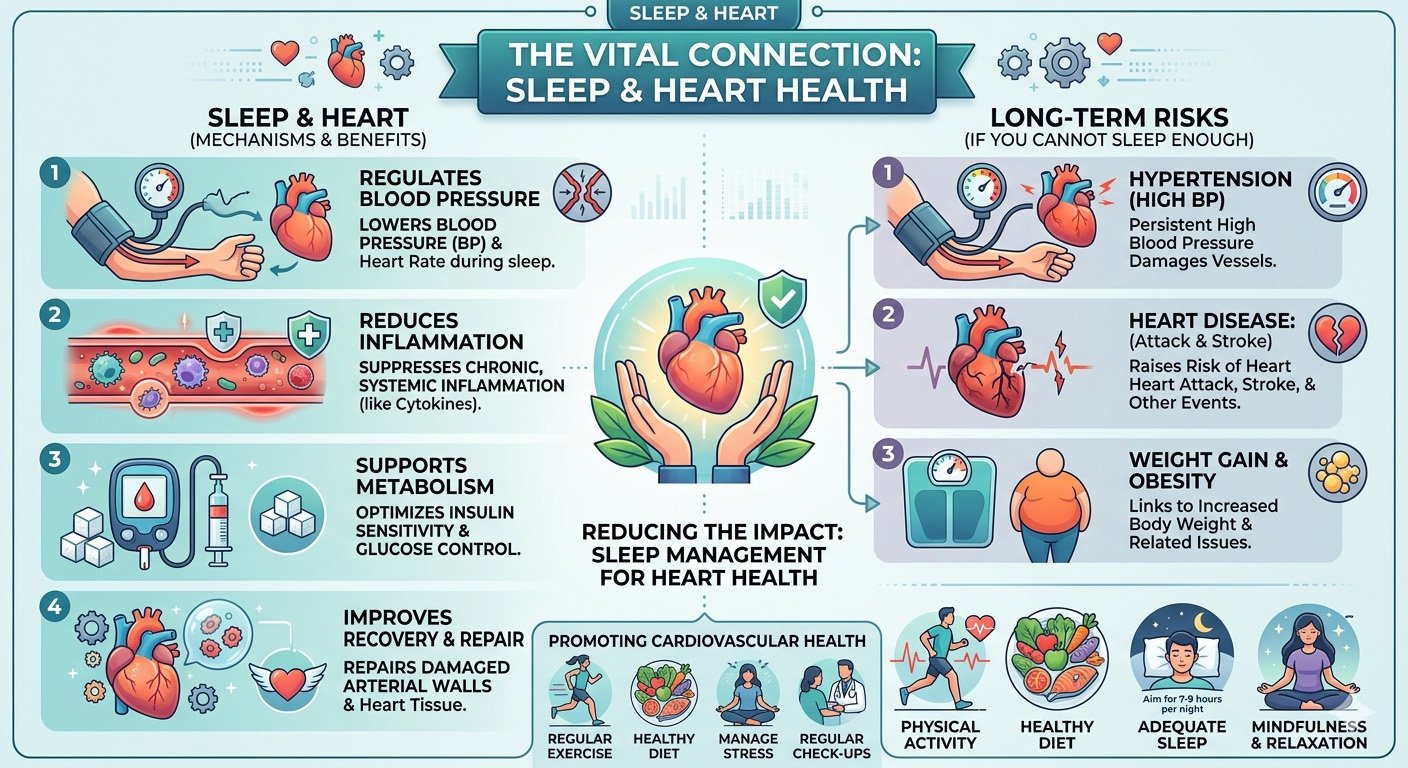
Sleep is a fundamental biological process that supports cardiovascular recovery, hormone regulation, and metabolic balance. During sleep, the body repairs tissues, regulates blood pressure, stabilizes heart rhythm, and reduces inflammation. When sleep is consistently insufficient or disrupted, these protective processes are impaired, increasing the risk of heart disease over time.
Sleep health is closely connected to multiple systems that influence cardiovascular function, including Metabolism, Hormone Health, and Blood Sugar, as well as related factors such as Nutrition, Energy & Fatigue, and stress regulation. Because sleep affects both short-term physiological responses and long-term disease risk, it is considered a core pillar of cardiovascular prevention.
Understanding how sleep influences heart health helps identify risk early and supports sustainable lifestyle strategies.
What Is Healthy Sleep?
Healthy sleep refers to consistent, restorative sleep that allows the body to recover physically and mentally. Most adults require:
7 to 9 hours of sleep per night
However, sleep quality is just as important as duration. Healthy sleep involves:
- Falling asleep within a reasonable time
- Staying asleep through the night
- Waking feeling refreshed
- Maintaining a consistent sleep schedule
Sleep patterns are influenced by hormonal rhythms discussed in Hormone Health and metabolic stability addressed in Metabolism.
How Sleep Supports the Cardiovascular System (Physiology)
Sleep plays a critical role in maintaining cardiovascular stability. During healthy sleep, the body shifts into a restorative state characterized by lower heart rate, reduced blood pressure, and decreased nervous system activity.
These physiological changes help protect the heart and blood vessels.
Blood Pressure Regulation
One of the most important cardiovascular benefits of sleep is the natural reduction in blood pressure during the night.
This process is known as:
nocturnal dipping
When sleep is disrupted or insufficient:
- Blood pressure may remain elevated
- Blood vessels experience increased stress
- Cardiovascular risk increases
Blood pressure regulation is closely connected to systems discussed in Heart Health and Metabolism.
Heart Rate and Rhythm Stability
Sleep helps regulate heart rhythm and nervous system balance.
Healthy sleep supports:
- Stable heart rate
- Balanced autonomic nervous system activity
- Reduced cardiovascular strain
Sleep disruption can increase the risk of irregular heart rhythms and cardiovascular stress.
Heart rhythm stability is closely related to energy regulation discussed in Energy & Fatigue.
Reduced Inflammation
Sleep plays a key role in controlling inflammation.
Adequate sleep helps:
- Lower inflammatory markers
- Support immune regulation
- Protect blood vessel health
Chronic sleep deprivation can increase inflammation, which is strongly linked to metabolic dysfunction discussed in Metabolism and digestive health addressed in Gut Health.
Blood Sugar and Metabolic Regulation
Sleep affects insulin sensitivity and glucose metabolism.
Poor sleep can lead to:
- Increased blood sugar
- Reduced insulin sensitivity
- Increased appetite
- Weight gain
These changes increase cardiovascular risk and are closely connected to systems discussed in Blood Sugar and Weight Loss.
Common Sleep Problems That Affect Heart Health
Several sleep disorders are strongly associated with cardiovascular risk.
Insomnia
Insomnia involves difficulty falling asleep, staying asleep, or waking too early.
Chronic insomnia may lead to:
- Elevated stress hormones
- Increased blood pressure
- Increased inflammation
- Increased cardiovascular risk
Stress regulation is closely connected to hormonal balance discussed in Hormone Health.
Sleep Apnea
Sleep apnea is a condition in which breathing repeatedly stops and starts during sleep.
This disorder can cause:
- Oxygen deprivation
- Increased blood pressure
- Increased heart strain
- Increased risk of heart disease
Sleep apnea is one of the strongest sleep-related risk factors for cardiovascular disease.
Short Sleep Duration
Regularly sleeping fewer than 6 hours per night is associated with increased cardiovascular risk.
Short sleep can lead to:
- Increased blood pressure
- Increased inflammation
- Hormonal imbalance
- Reduced metabolic efficiency
These effects are closely linked to metabolic regulation discussed in Metabolism.
Irregular Sleep Patterns
Inconsistent sleep schedules can disrupt the body’s internal clock.
This disruption may cause:
- Hormonal imbalance
- Increased stress
- Increased cardiovascular strain
- Reduced sleep quality
Circadian rhythm stability is closely connected to metabolic regulation discussed in Metabolism.
Risk Factors That Increase Sleep-Related Cardiovascular Risk
Certain lifestyle and health factors can worsen the effects of poor sleep on heart health.
These include:
- Chronic stress
- Obesity
- High blood pressure
- Diabetes
- Sedentary lifestyle
- Excess caffeine intake
- Alcohol use
- Shift work
These risk factors often interact with lifestyle patterns discussed in Nutrition, Weight Loss, and Metabolism.

Warning Signs of Sleep-Related Cardiovascular Strain
Early symptoms may indicate increased cardiovascular risk related to sleep problems.
Common warning signs include:
- Persistent fatigue
- Morning headaches
- Snoring
- Daytime sleepiness
- High blood pressure
- Difficulty concentrating
- Mood changes
- Irregular heartbeat
These symptoms often overlap with energy-related issues discussed in Energy & Fatigue.
Practical Strategies to Improve Sleep and Protect Heart Health
Improving sleep is one of the most effective ways to reduce cardiovascular risk.
Maintain a Consistent Sleep Schedule
Going to bed and waking up at the same time each day helps regulate the body’s internal clock.
Benefits include:
- Improved sleep quality
- Better hormone regulation
- Improved cardiovascular recovery
These effects support systems discussed in Hormone Health.
Create a Sleep-Friendly Environment
A supportive sleep environment promotes restorative sleep.
Helpful adjustments include:
- Keeping the room dark and quiet
- Maintaining a comfortable temperature
- Reducing screen exposure before bed
Healthy sleep environments support recovery discussed in Sleep Health.
Limit Stimulants Before Bed
Caffeine and other stimulants can interfere with sleep.
Reducing stimulant intake can:
- Improve sleep quality
- Reduce heart rate stimulation
- Support cardiovascular recovery
Stay Physically Active
Regular exercise improves sleep quality and cardiovascular health.
Benefits include:
- Reduced stress
- Improved circulation
- Improved metabolic regulation
Physical activity supports cardiovascular protection discussed in Heart Health.
Support Sleep Through Nutrition
Diet plays a role in sleep quality and cardiovascular health.
Helpful habits include:
- Balanced meals
- Reduced added sugar
- Adequate magnesium intake
- Limiting heavy meals before bedtime
These dietary patterns align with guidance discussed in Nutrition.
Why Sleep Matters for Long-Term Heart Health
Sleep is not simply rest — it is a biological recovery process that protects the cardiovascular system. Chronic sleep disruption can gradually increase blood pressure, inflammation, and metabolic dysfunction, all of which increase cardiovascular risk.
Over time, poor sleep can contribute to:
- Hypertension
- Heart disease
- Stroke
- Diabetes
- Obesity
- Reduced life expectancy
Because sleep affects multiple systems simultaneously, improving sleep supports prevention strategies across Metabolism, Hormone Health, Blood Sugar, Nutrition, and Heart Health.
Final Thoughts
Sleep is one of the most powerful — and often overlooked — factors in cardiovascular health. The heart depends on regular, restorative sleep to maintain stable blood pressure, regulate inflammation, and support metabolic balance.
Small improvements in sleep habits can produce meaningful long-term benefits for heart health.
Protecting the heart begins with protecting sleep.
Medical Disclaimer
This content is for informational purposes only and does not constitute medical advice. Always consult a qualified healthcare professional.
Editorial Transparency
This article was created following evidence-based health content guidelines and reviewed by the VitaCoreBalance Editorial Team.
Sources
Medical Institutions
American Heart Association (AHA)
National Institutes of Health (NIH) — National Heart, Lung, and Blood Institute
Mayo Clinic — Sleep and Heart Health
Centers for Disease Control and Prevention (CDC) — Sleep and Chronic Disease
Global Organizations
World Health Organization (WHO) — Sleep and Cardiovascular Health
Peer-Reviewed Studies
Cappuccio FP et al.
Sleep duration and cardiovascular outcomes
European Heart Journal
Grandner MA et al.
Sleep and cardiovascular disease
Sleep Medicine Reviews
Scientific Review
Medic G, Wille M, Hemels ME
Short- and long-term health consequences of sleep disruption
Nature and Science of Sleep