
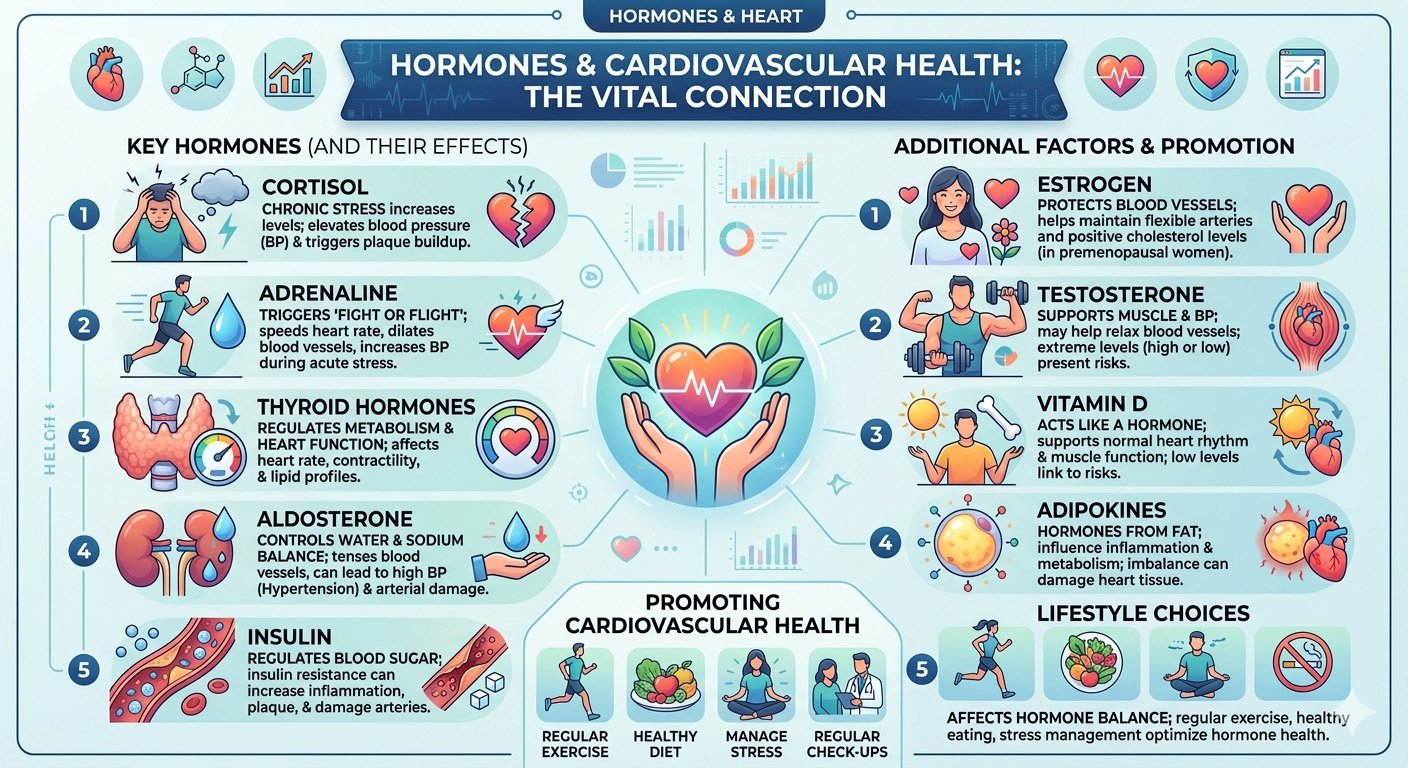
Hormones and Cardiovascular Health
Hormones play a central role in regulating cardiovascular health. These chemical messengers control heart rate, blood pressure, fluid balance, metabolism, and inflammation — all critical processes that influence the risk of heart disease. When hormone levels remain balanced, the cardiovascular system functions efficiently. When hormonal regulation is disrupted, the risk of cardiovascular problems increases.
Hormonal health is closely connected to multiple body systems that influence heart function, including Metabolism, Nutrition, and Blood Sugar. Hormones also interact with sleep, stress, and energy regulation, making Sleep Health, Weight Loss, and inflammation control essential components of cardiovascular prevention.
Understanding how hormones affect the heart helps explain why conditions such as chronic stress, thyroid disorders, and insulin resistance can significantly impact cardiovascular risk.
What Are Hormones?
Hormones are chemical messengers produced by glands in the endocrine system. They travel through the bloodstream and signal organs and tissues to perform specific functions.
Major hormone-producing glands include:
- The thyroid gland
- The adrenal glands
- The pancreas
- The pituitary gland
- The ovaries and testes
Hormones regulate many essential processes, including:
- Heart rate
- Blood pressure
- Blood sugar levels
- Metabolism
- Fluid balance
- Inflammation
Healthy hormone function is closely tied to metabolic stability discussed in Metabolism and dietary patterns addressed in Nutrition.
How Hormones Affect the Cardiovascular System (Physiology)
Hormones influence nearly every aspect of cardiovascular function. They regulate how blood vessels respond to stress, how the heart pumps blood, and how the body maintains circulation.
When hormones are balanced, they help:
- Maintain stable blood pressure
- Support healthy blood vessel function
- Regulate heart rhythm
- Control inflammation
- Maintain metabolic balance
When hormone regulation becomes disrupted, cardiovascular strain can increase over time.
These effects are closely linked to metabolic processes discussed in Blood Sugar and stress regulation addressed in Hormone Health.
Key Hormones That Influence Cardiovascular Health
Several hormones have direct and measurable effects on heart function and vascular health.
Cortisol (The Stress Hormone)
Cortisol is released during stress and helps regulate blood pressure, metabolism, and immune responses.
Short-term cortisol increases can be beneficial, but chronic elevation can lead to:
- High blood pressure
- Increased inflammation
- Increased blood sugar
- Weight gain
- Increased cardiovascular risk
Chronic stress and cortisol imbalance are closely connected to cardiovascular risk discussed in Metabolism and Sleep Health.
Insulin
Insulin regulates blood sugar by helping glucose enter cells for energy.
When insulin resistance develops:
- Blood sugar increases
- Blood vessels become damaged
- Inflammation increases
- Cardiovascular risk rises
Insulin resistance is one of the strongest predictors of heart disease.
This mechanism is closely connected to metabolic regulation discussed in Blood Sugar.
Thyroid Hormones
Thyroid hormones regulate metabolism and energy production.
Both low and high thyroid hormone levels can affect cardiovascular health.
Low thyroid function may cause:
- Slow heart rate
- Elevated cholesterol
- Fatigue
- Weight gain
High thyroid function may cause:
- Rapid heart rate
- Irregular heartbeat
- Increased blood pressure
- Increased cardiovascular risk
Thyroid regulation is closely connected to metabolic health discussed in Metabolism.
Aldosterone
Aldosterone regulates sodium and fluid balance in the body.
Excess aldosterone can lead to:
- High blood pressure
- Fluid retention
- Increased cardiovascular strain
Blood pressure regulation is closely connected to cardiovascular health discussed in Heart Health.
Adrenaline (Epinephrine)
Adrenaline prepares the body for immediate action during stress.
It increases:
- Heart rate
- Blood pressure
- Blood flow to muscles
Frequent adrenaline activation due to chronic stress can place continuous strain on the cardiovascular system.
Stress regulation is closely linked to hormonal balance discussed in Hormone Health.
Estrogen and Testosterone
Sex hormones influence blood vessel health and cardiovascular risk.
Estrogen helps:
- Maintain flexible blood vessels
- Reduce inflammation
- Improve cholesterol balance
Testosterone supports:
- Muscle mass
- Energy levels
- Metabolic regulation
Hormonal changes during aging can influence cardiovascular risk.
These changes are closely connected to metabolic stability discussed in Metabolism.
Hormonal Imbalances That Increase Cardiovascular Risk
Several hormonal disorders are associated with increased cardiovascular disease risk.
Insulin Resistance
Insulin resistance occurs when cells respond poorly to insulin.
This condition can lead to:
- High blood sugar
- Inflammation
- Weight gain
- Increased cardiovascular risk
This mechanism is closely linked to metabolic regulation discussed in Blood Sugar.
Thyroid Disorders
Both hypothyroidism and hyperthyroidism can affect cardiovascular function.
These conditions may lead to:
- High cholesterol
- Irregular heartbeat
- Fatigue
- Blood pressure changes
Thyroid health is closely connected to metabolic balance discussed in Metabolism.
Chronic Stress and Elevated Cortisol
Persistent stress can disrupt hormonal regulation and increase cardiovascular risk.
Long-term cortisol elevation may cause:
- High blood pressure
- Increased inflammation
- Increased blood sugar
- Reduced sleep quality
Sleep disruption is closely connected to cardiovascular health discussed in Sleep Health.
Hormonal Changes With Aging
Hormone levels naturally change with age.
These changes may contribute to:
- Increased blood pressure
- Increased body fat
- Reduced metabolic efficiency
- Increased cardiovascular risk
Weight regulation is closely connected to metabolic health discussed in Weight Loss.
Lifestyle Factors That Influence Hormones and Heart Health
Daily habits play a major role in maintaining hormonal balance and cardiovascular stability.
Sleep
Sleep regulates hormone production and cardiovascular recovery.
Poor sleep can lead to:
- Increased cortisol
- Increased blood pressure
- Increased inflammation
- Increased cardiovascular risk
Sleep patterns strongly influence health outcomes discussed in Sleep Health.

Nutrition
Diet provides nutrients that support hormone production and metabolic regulation.
Healthy dietary patterns include:
- Whole foods
- Fiber-rich foods
- Healthy fats
- Balanced protein intake
These dietary patterns align with guidance discussed in Nutrition.
Physical Activity
Exercise supports hormone balance and cardiovascular function.
Benefits include:
- Improved insulin sensitivity
- Reduced stress hormones
- Improved circulation
- Reduced inflammation
Physical activity supports metabolic regulation discussed in Metabolism.
Stress Management
Managing stress helps regulate hormone levels and protect the cardiovascular system.
Helpful strategies include:
- Regular physical activity
- Relaxation techniques
- Consistent sleep schedule
Stress regulation supports systems discussed in Hormone Health.
Warning Signs of Hormonal Imbalance Affecting the Heart
Hormonal disruptions may produce symptoms that signal increased cardiovascular risk.
Common warning signs include:
- Persistent fatigue
- Irregular heartbeat
- High blood pressure
- Unexplained weight gain
- Sleep disturbances
- Increased blood sugar
- Mood changes
These symptoms often overlap with metabolic and energy-related issues discussed in Energy & Fatigue.
Practical Strategies to Support Hormonal Balance and Heart Health
Maintaining hormonal balance requires consistent lifestyle habits.
Maintain a Healthy Body Weight
Healthy weight supports hormone regulation and cardiovascular function.
Benefits include:
- Improved insulin sensitivity
- Reduced inflammation
- Improved blood pressure
Weight regulation is closely connected to metabolic health discussed in Weight Loss.
Eat a Balanced Diet
A balanced diet supports hormone production and cardiovascular stability.
Helpful habits include:
- Regular meals
- Whole foods
- Reduced added sugar
- Adequate nutrient intake
These dietary patterns support metabolic regulation discussed in Nutrition.
Stay Physically Active
Regular movement helps regulate hormones and protect cardiovascular health.
Benefits include:
- Reduced stress hormones
- Improved metabolism
- Improved circulation
Physical activity supports prevention strategies discussed in Heart Health.
Get Regular Health Checkups
Monitoring hormone levels and cardiovascular markers helps detect early risk.
Important tests may include:
- Blood pressure
- Blood sugar
- Cholesterol
- Thyroid function
- Hormone levels
Monitoring supports prevention strategies discussed in Heart Health.
Why Hormones Matter for Cardiovascular Health
Hormones act as regulators of the cardiovascular system, controlling blood pressure, metabolism, and inflammation. When hormones become imbalanced, cardiovascular risk increases — often gradually and without obvious symptoms.
Over time, hormonal disruptions can lead to:
- High blood pressure
- Heart disease
- Stroke
- Metabolic dysfunction
- Reduced quality of life
Because hormones influence multiple systems simultaneously, maintaining hormonal balance supports prevention strategies across Metabolism, Blood Sugar, Nutrition, Sleep Health, and Heart Health.
Final Thoughts
Hormones are essential regulators of cardiovascular health. They control heart function, blood pressure, metabolism, and inflammatory responses that determine long-term cardiovascular risk.
Small, consistent lifestyle habits — including healthy sleep, balanced nutrition, regular physical activity, and stress management — can significantly improve hormonal balance and protect heart health.
Protecting the heart often begins with protecting hormonal health.
Medical Disclaimer
This content is for informational purposes only and does not constitute medical advice. Always consult a qualified healthcare professional.
Editorial Transparency
This article was created following evidence-based health content guidelines and reviewed by the VitaCoreBalance Editorial Team.
Sources
Medical Institutions
American Heart Association (AHA)
National Institutes of Health (NIH)
Mayo Clinic — Hormones and Heart Health
Cleveland Clinic — Hormonal Health and Cardiovascular Risk
Global Organizations
World Health Organization (WHO) — Cardiovascular Disease Risk Factors
Peer-Reviewed Studies
Mendelsohn ME, Karas RH
The protective effects of estrogen on the cardiovascular system
New England Journal of Medicine
Reaven GM
Insulin resistance and cardiovascular disease
Circulation
Scientific Review
Grundy SM
Hormonal influences on cardiovascular disease
Journal of the American College of Cardiology