

Best Bedtime Routine for Deep Sleep: Science-Based Habits for Restorative Recovery
VitaCoreBalance Editorial Team | Research-based health content • Editorial review process | March 2026
A consistent bedtime routine is one of the most effective ways to improve sleep quality and support deep, restorative sleep. Deep sleep — also known as slow-wave sleep — plays a critical role in physical recovery, immune function, memory consolidation, and metabolic regulation. Without sufficient deep sleep, the body may struggle to maintain energy, hormone balance, and long-term health.
Sleep routines influence systems discussed across Sleep Health, Metabolism, and Hormone Health, while also affecting cardiovascular stability and daily performance addressed in Heart Health and Energy & Fatigue. Establishing a structured bedtime routine helps regulate the circadian rhythm, reduce stress, and prepare the body for sleep naturally.
Creating healthy bedtime habits can significantly improve sleep depth, recovery, and overall well-being.
What Is a Bedtime Routine?
A bedtime routine is a series of consistent behaviors performed before sleep that signal the body to relax and transition into rest. These habits help regulate the nervous system, support hormone production, and improve sleep efficiency.
A healthy bedtime routine typically includes:
- Consistent sleep timing
- Relaxation activities
- Reduced stimulation
- Comfortable sleep environment
- Limited screen exposure
These habits help prepare the body for deep sleep and recovery.
Why Deep Sleep Matters for Health
Deep sleep is one of the most important stages of the sleep cycle. During this stage, the body repairs tissues, restores energy, and regulates immune and metabolic functions.
Deep sleep supports:
- Physical recovery
- Muscle repair
- Immune function
- Hormone regulation
- Memory consolidation
- Metabolic balance
Deep sleep is closely connected to recovery processes discussed in Metabolism and hormonal regulation addressed in Hormone Health.
Signs You May Not Be Getting Enough Deep Sleep
Insufficient deep sleep often leads to noticeable physical and mental symptoms.
Common signs include:
- Waking up feeling tired
- Persistent fatigue
- Difficulty concentrating
- Reduced physical performance
- Frequent illness
- Brain fog
- Low energy levels
These symptoms often reflect disrupted recovery and reduced sleep quality.
The Best Bedtime Routine for Deep Sleep
The most effective bedtime routine focuses on consistency, relaxation, and environmental control. These steps help synchronize the body’s internal clock and promote deep sleep.
Set a Consistent Sleep Schedule
Going to bed and waking up at the same time every day helps regulate the circadian rhythm.
Benefits include:
- Faster sleep onset
- Improved sleep quality
- Increased deep sleep
- Stable energy levels
Consistency supports circadian rhythm stability discussed in Sleep Health.
Create a Wind-Down Period Before Bed
A transition period allows the nervous system to shift from alertness to relaxation.
Helpful activities include:
- Reading
- Gentle stretching
- Meditation
- Listening to calming music
Relaxation supports nervous system regulation.
Reduce Screen Time Before Bed
Electronic devices emit blue light that suppresses melatonin production.
Reducing screen exposure helps:
- Improve sleep onset
- Increase deep sleep
- Reduce nighttime awakenings
These habits support hormonal regulation discussed in Hormone Health.
Optimize Your Sleep Environment
A comfortable sleep environment promotes deeper sleep.
Helpful adjustments include:
- Keeping the bedroom dark
- Maintaining a cool temperature
- Reducing noise
- Using supportive bedding
Environmental control improves sleep efficiency.
Limit Caffeine and Alcohol
Both substances can interfere with deep sleep cycles.
Reducing intake helps:
- Improve sleep quality
- Increase deep sleep
- Reduce nighttime awakenings
Nutrition plays an important role in sleep regulation discussed in Nutrition.
Practice Relaxation Techniques
Relaxation methods help calm the nervous system and prepare the body for sleep.
Helpful techniques include:
- Deep breathing
- Progressive muscle relaxation
- Mindfulness
- Journaling
Relaxation supports recovery and sleep readiness.
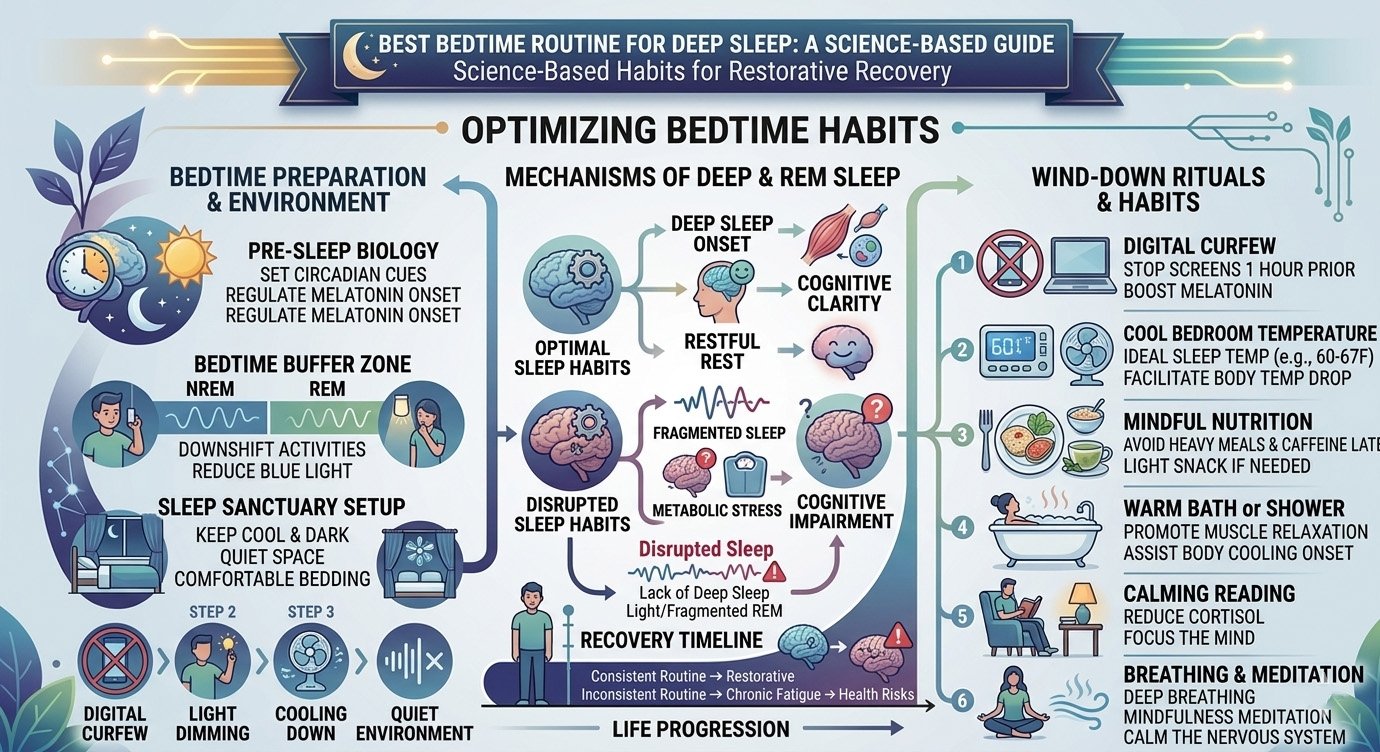
Avoid Heavy Meals Late at Night
Large meals close to bedtime can disrupt digestion and sleep cycles.
Helpful habits include:
- Eating dinner earlier
- Choosing lighter evening meals
- Avoiding excess sugar
Meal timing supports metabolic regulation discussed in Metabolism.
Keep Your Bedroom Cool and Dark
Temperature and light levels influence sleep depth.
Optimal sleep conditions include:
- Room temperature around 18–20°C (64–68°F)
- Minimal light exposure
- Quiet surroundings
Environmental conditions strongly affect sleep quality.
How Long Does It Take to See Results?
Sleep improvements can occur quickly when bedtime habits are consistent.
Typical timelines:
- Within a few days: Improved sleep onset
- Within one week: Better sleep quality
- Within several weeks: Increased deep sleep and recovery
Consistency is the most important factor in achieving lasting improvements.
Common Mistakes That Disrupt Bedtime Routines
Certain habits can interfere with deep sleep even when bedtime routines are established.
Common mistakes include:
- Irregular sleep timing
- Excess screen use
- High caffeine intake
- Late-night eating
- Poor sleep environment
- Chronic stress
Identifying and correcting these habits can significantly improve sleep quality.
When to Seek Medical Advice
Persistent sleep problems may indicate underlying conditions.
Consult a healthcare provider if you experience:
- Chronic insomnia
- Loud snoring
- Breathing interruptions during sleep
- Severe daytime fatigue
- Sleep problems lasting several weeks
Early evaluation helps prevent long-term health complications.
Why a Bedtime Routine Matters for Long-Term Health
A consistent bedtime routine supports deep sleep, recovery, and metabolic balance. Over time, improved sleep quality reduces inflammation, stabilizes hormones, and protects cardiovascular health.
Healthy sleep routines support:
- Daily energy
- Mental clarity
- Emotional stability
- Physical recovery
- Immune strength
- Long-term health
Because sleep influences multiple systems simultaneously, establishing a bedtime routine supports prevention strategies across Sleep Health, Metabolism, Hormone Health, Heart Health, and Energy & Fatigue.
Final Thoughts
The best bedtime routine for deep sleep is simple, consistent, and sustainable. Small daily habits — such as maintaining regular sleep timing, reducing stimulation before bed, and creating a comfortable sleep environment — can significantly improve sleep depth and recovery.
Better routines lead to better sleep.
Better sleep supports better health.
Medical Disclaimer
This content is for informational purposes only and does not constitute medical advice. Always consult a qualified healthcare professional.
Editorial Transparency
This article was created following evidence-based health content guidelines and reviewed by the VitaCoreBalance Editorial Team.
Sources
1. National Sleep Foundation — Sleep Hygiene
Explica práticas baseadas em evidências para melhorar a qualidade do sono naturalmente, incluindo rotina, ambiente e hábitos.
2. Centers for Disease Control and Prevention (CDC) — Sleep and Sleep Disorders
Fonte oficial de saúde pública sobre a importância do sono para energia, metabolismo, imunidade e prevenção de doenças.
3. National Institutes of Health (NIH) — Sleep Deprivation and Deficiency
Aborda como a privação de sono afeta o coração, metabolismo, hormônios e desempenho cognitivo.
4. Mayo Clinic — Insomnia: Symptoms and Causes
Fonte clínica confiável sobre causas comuns de insônia e estratégias naturais para melhorar o sono.
5. Harvard Medical School — Improving Sleep
Recomendações baseadas em ciência para melhorar o sono, incluindo luz, rotina e comportamento.
6. World Health Organization (WHO) — Sleep and Health
Destaca a relação entre sono, doenças crônicas, saúde mental e qualidade de vida.