
Disease Prevalence and Global Trends
VitaCoreBalance Editorial Team | Research-based health content • Editorial review process | March 2026
Introduction
Disease prevalence is a key measure used in public health to understand how common specific health conditions are within a population at a given time. It provides essential insight into the global burden of disease, healthcare system performance, and long-term population health trends.
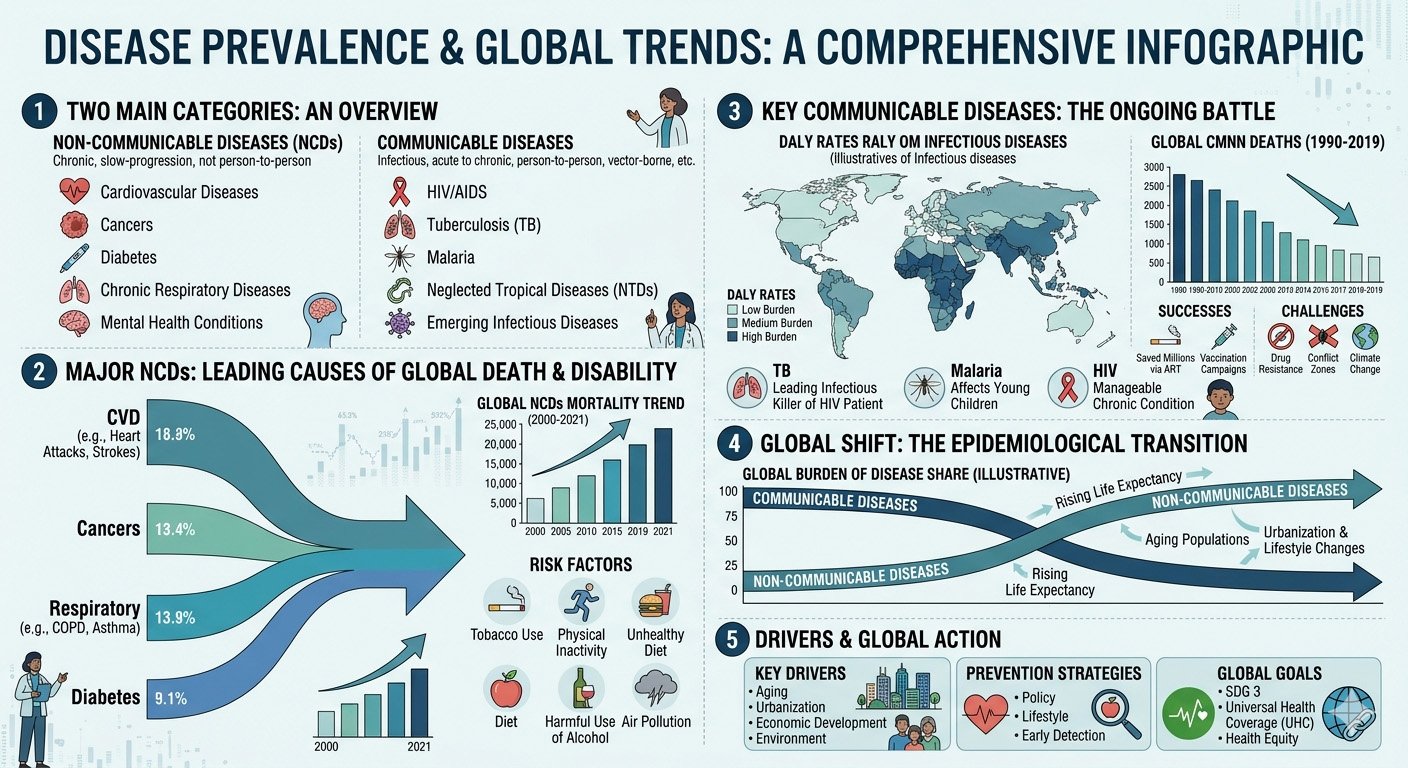
Over the past century, the global disease landscape has shifted dramatically. Infectious diseases once dominated mortality and morbidity worldwide. Today, chronic noncommunicable diseases (NCDs) such as heart disease, diabetes, and cancer have become the leading causes of illness and death in most regions.
Understanding disease prevalence and global trends helps policymakers, healthcare providers, and researchers:
- Identify emerging health threats
- Allocate healthcare resources
- Plan prevention strategies
- Monitor population health
- Reduce health disparities
- Improve long-term outcomes
Tracking disease patterns is essential for improving global health and guiding evidence-based public health interventions.
What Is Disease Prevalence?
Disease prevalence refers to the total number of individuals living with a specific disease within a population at a given time.
It differs from incidence, which measures the number of new cases occurring during a specific period.
Types of Prevalence
Point Prevalence
The proportion of individuals with a disease at a specific moment.
Period Prevalence
The proportion of individuals who have had a disease during a defined time period.
Lifetime Prevalence
The proportion of individuals who have ever had a disease in their lifetime.
Prevalence depends on several factors:
Disease duration
Population size
Survival rates
Treatment effectiveness
Public health interventions
Longer survival with chronic diseases increases prevalence even when incidence remains stable.
Global Burden of Disease
The global burden of disease refers to the total impact of diseases and health conditions on populations, measured through mortality, disability, and quality of life.
Major indicators include:
Mortality rates
Disability-adjusted life years (DALYs)
Years of life lost (YLL)
Disease prevalence
Healthcare utilization
According to global health data, noncommunicable diseases account for the majority of deaths worldwide.
Leading Causes of Death Globally
Cardiovascular disease
Cancer
Chronic respiratory disease
Diabetes
Kidney disease
Neurological disorders
These conditions now represent the primary drivers of healthcare demand in most countries.
Most Common Diseases Worldwide
Several diseases account for a large proportion of global illness and healthcare burden.
Cardiovascular Disease
Cardiovascular disease remains the leading cause of death worldwide.
Examples include:
Heart disease
Stroke
Hypertension
Risk factors:
High blood pressure
Smoking
Obesity
Physical inactivity
Poor diet
Cardiovascular disease prevalence continues to increase due to aging populations and lifestyle changes.
Diabetes
Diabetes prevalence has increased rapidly over the past decades.
Major drivers include:
Obesity
Sedentary lifestyle
Urbanization
Dietary changes
Diabetes is associated with complications such as:
Heart disease
Kidney disease
Vision loss
Nerve damage
Global diabetes prevalence is expected to continue rising.
Cancer
Cancer is one of the most significant health challenges worldwide.
Common types include:
Lung cancer
Breast cancer
Colorectal cancer
Prostate cancer
Cancer prevalence is increasing due to:
Population aging
Environmental exposure
Lifestyle factors
Improved detection
Early diagnosis and treatment significantly improve survival rates.
Respiratory Diseases
Chronic respiratory diseases affect millions of people globally.
Examples include:
Asthma
Chronic obstructive pulmonary disease (COPD)
Pulmonary fibrosis
Major risk factors:
Air pollution
Smoking
Occupational exposure
Urbanization
Air quality plays a critical role in respiratory disease prevalence.
Mental Health Disorders
Mental health conditions are increasingly recognized as major contributors to global disease burden.
Common disorders include:
Depression
Anxiety
Bipolar disorder
Substance use disorders
Mental health disorders contribute significantly to:
Disability
Reduced productivity
Healthcare utilization
Quality of life impairment
Recognition and treatment of mental health conditions have expanded worldwide.
Infectious Disease Trends
Although chronic diseases dominate in high-income countries, infectious diseases remain a major concern in many regions.
Common infectious diseases include:
Tuberculosis
HIV/AIDS
Malaria
Influenza
COVID-19
Dengue fever
Public health programs such as vaccination and sanitation have significantly reduced the prevalence of many infectious diseases.
However, emerging threats continue to challenge global health systems.
Emerging Global Health Trends
Several major trends are shaping disease prevalence worldwide.
Population Aging
Aging populations increase the prevalence of chronic diseases.
Common age-related conditions include:
Heart disease
Cancer
Alzheimer’s disease
Arthritis
Diabetes
Longer life expectancy leads to higher demand for healthcare services.
Urbanization
Urban living has changed lifestyle patterns and environmental exposure.
Effects include:
Reduced physical activity
Increased pollution
Dietary changes
Stress
Crowded living conditions
These factors contribute to rising rates of chronic disease.
Obesity and Metabolic Disorders
Obesity has become one of the fastest-growing public health concerns.
Associated conditions include:
Type 2 diabetes
Heart disease
Hypertension
Fatty liver disease
Obesity prevalence has increased in both developed and developing countries.
Antimicrobial Resistance
Antimicrobial resistance occurs when bacteria become resistant to antibiotics.
This trend threatens the effectiveness of modern medicine.
Potential consequences include:
Longer hospital stays
Increased mortality
Higher healthcare costs
Limited treatment options
Antimicrobial resistance is considered one of the most serious global health risks.
Regional Differences in Disease Prevalence
Disease patterns vary significantly between regions due to economic, environmental, and healthcare factors.
High-Income Countries
Common health issues:
Heart disease
Cancer
Diabetes
Mental health disorders
These countries often have advanced healthcare systems and longer life expectancy.
Low- and Middle-Income Countries
Common health issues:
Infectious diseases
Maternal and child health conditions
Malnutrition
Chronic disease
Healthcare access and infrastructure play a major role in disease outcomes.
Social and Environmental Determinants of Disease
Disease prevalence is strongly influenced by social and environmental conditions.
Key determinants include:
Income
Education
Housing
Nutrition
Access to healthcare
Environmental exposure
Public health infrastructure
Addressing these factors is essential for improving population health.
The Role of Prevention in Reducing Disease Prevalence
Prevention is one of the most effective strategies for reducing disease burden.
Key prevention strategies include:
Vaccination programs
Health education
Healthy lifestyle promotion
Early screening
Environmental protection
Access to healthcare
Preventive care reduces long-term healthcare costs and improves quality of life.
Future Outlook for Global Disease Trends
Global disease patterns are expected to continue evolving due to demographic and environmental changes.
Key future drivers include:
Population aging
Climate change
Urbanization
Medical innovation
Health policy
Technological advances
Public health planning will play a central role in managing disease burden in the coming decades.
Conclusion
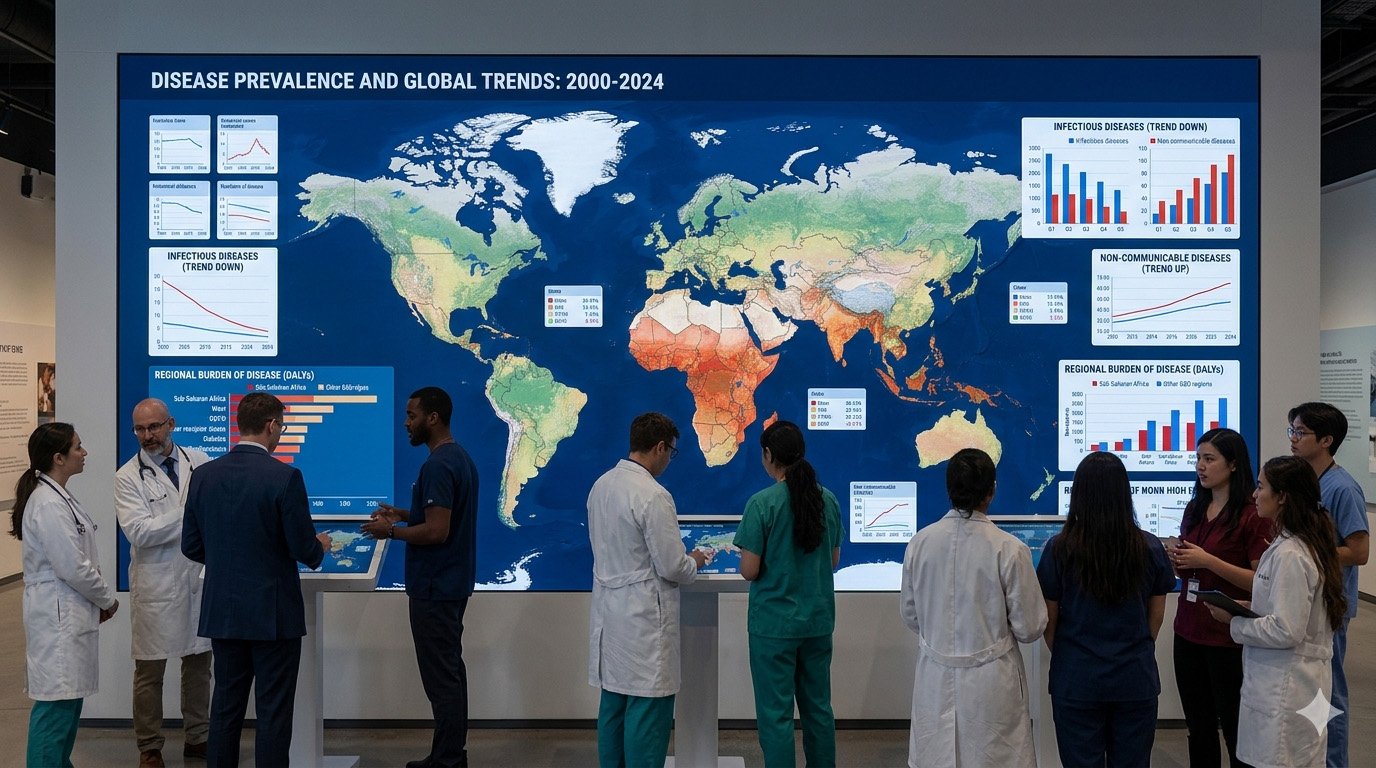
Disease prevalence is a fundamental indicator of population health and healthcare system performance. Global trends show a clear shift from infectious diseases to chronic conditions as the leading causes of illness and death.
Understanding disease patterns helps governments and healthcare systems identify risks, allocate resources, and develop effective prevention strategies.
Monitoring disease prevalence is essential for improving health outcomes, reducing disparities, and supporting long-term global health.
Medical Disclaimer
This content is for informational purposes only and does not constitute medical advice. Always consult a qualified healthcare professional.
Editorial Transparency
This article was created following evidence-based health content guidelines and reviewed by the VitaCoreBalance Editorial Team.
Scientific Sources
- World Health Organization (WHO) — Global Health Estimates: Leading Causes of Death and Disease Burden
- Institute for Health Metrics and Evaluation (IHME) — Global Burden of Disease (GBD) Results Tool
- World Bank — Global Health and Population Data
- Centers for Disease Control and Prevention (CDC) — Global Health Overview
- United Nations (UN) — Sustainable Development Goals: Health and Well-Being
- Our World in Data — Global Burden of Disease