
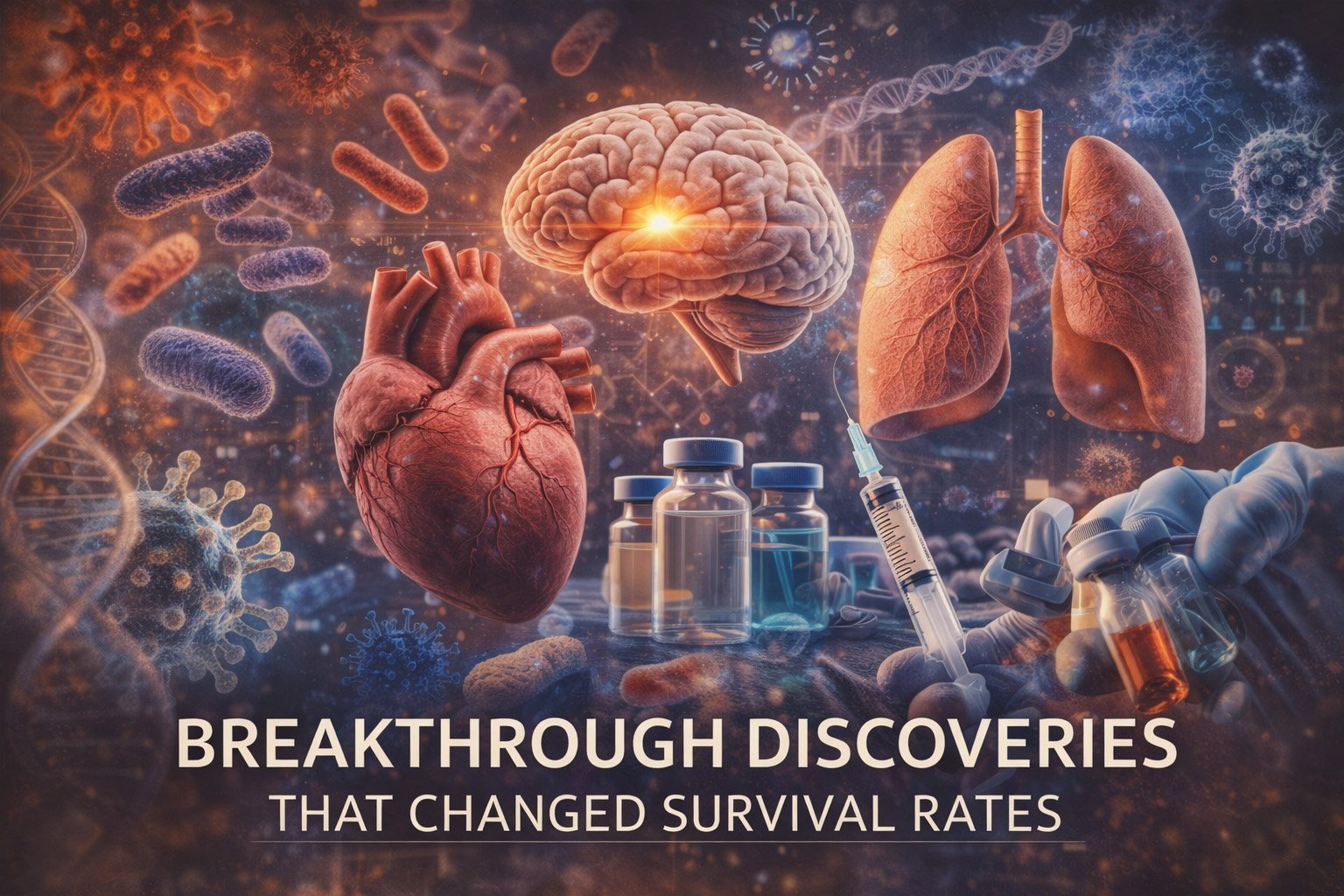
Breakthrough Discoveries That Changed Survival Rates
VitaCoreBalance Editorial Team | Research-based health content • Editorial review process | March 2026
Throughout human history, survival has depended not only on biological adaptation but on scientific discovery. For most of recorded history, infections, injuries, childbirth complications, and malnutrition were common causes of death. Life expectancy was low, infant mortality was high, and even minor wounds could become fatal. Over the past two centuries, however, a series of medical breakthroughs transformed survival from a matter of chance into a matter of science.
These discoveries did not occur in isolation. They emerged from advances in biology, chemistry, engineering, public health, and clinical medicine. Each breakthrough reshaped how diseases were understood, prevented, and treated, dramatically increasing survival rates across populations. Today, modern healthcare systems rely on innovations developed over decades of research, experimentation, and global collaboration.
Understanding these milestones provides insight into how medical progress continues to extend life expectancy and improve quality of life worldwide.
The Germ Theory of Disease: The Foundation of Modern Medicine
Before the nineteenth century, disease was widely attributed to supernatural forces, imbalanced bodily humors, or environmental vapors known as miasma. Without a clear understanding of infection, physicians lacked effective strategies to prevent disease transmission.
The development of germ theory revolutionized medicine by demonstrating that microorganisms cause infectious diseases.
Key contributors included:
- Louis Pasteur
- Robert Koch
- Joseph Lister
Their work established that bacteria and other pathogens could spread through contaminated surfaces, food, water, and human contact. This insight led to practical interventions that dramatically improved survival.
Major impacts of germ theory:
- Introduction of sterilization and antiseptic surgery
- Improved sanitation and hygiene practices
- Safer hospital environments
- Reduced infection-related mortality
The adoption of antiseptic techniques in surgery alone reduced postoperative mortality rates by more than half in many hospitals during the late nineteenth century.
Germ theory remains the cornerstone of infectious disease control today.
Vaccination: Preventing Disease Before It Begins
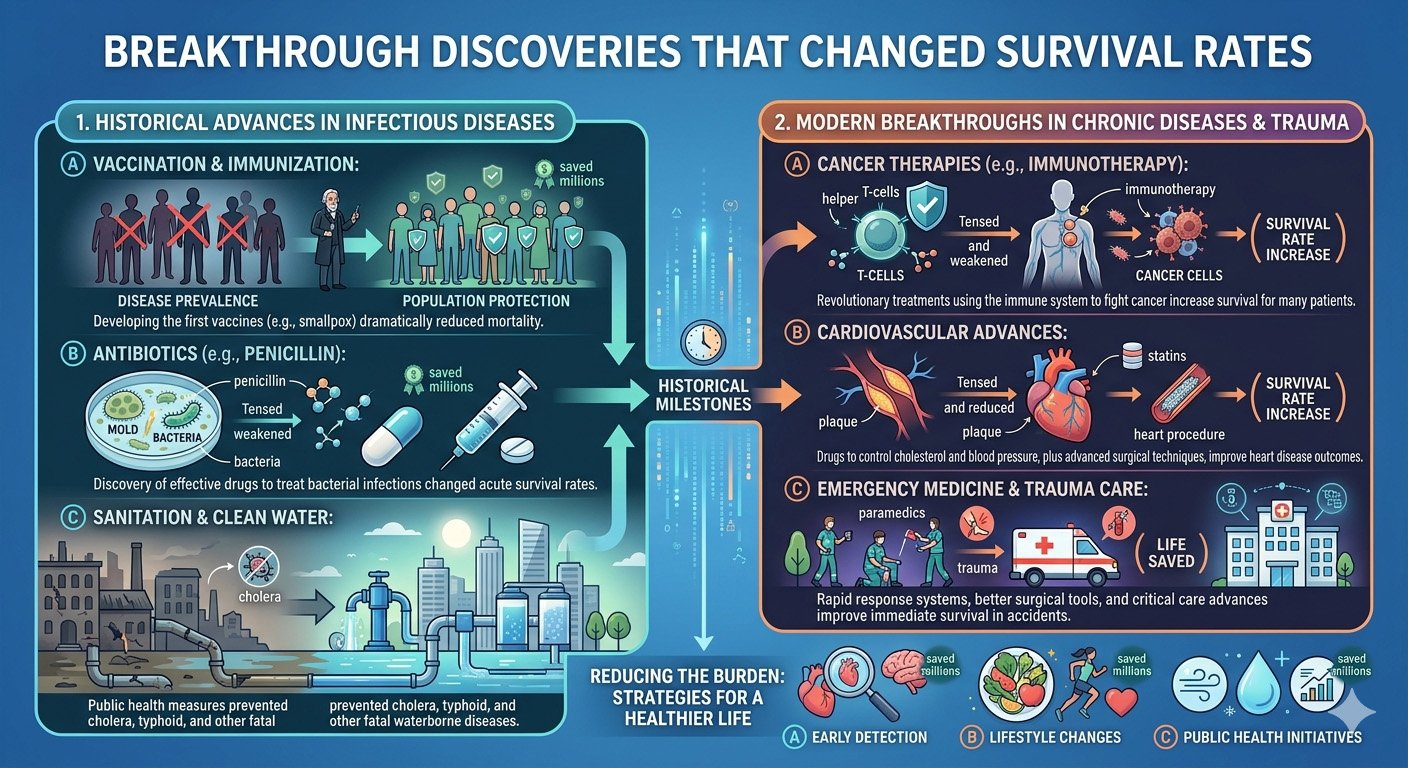
Vaccination is one of the most powerful public health interventions ever developed. It works by training the immune system to recognize and neutralize pathogens before they cause illness.
The first successful vaccine was developed in 1796, when Edward Jenner used cowpox material to protect against smallpox.
Since then, vaccines have prevented millions of deaths worldwide.
Diseases significantly reduced or eliminated through vaccination include:
- Smallpox
- Polio
- Measles
- Diphtheria
- Tetanus
- Hepatitis B
Smallpox, once responsible for millions of deaths each year, was officially eradicated in 1980 following a global vaccination campaign.
Vaccination has transformed childhood survival rates and remains a central pillar of modern preventive medicine.
Antibiotics: Turning Fatal Infections into Treatable Conditions
Before antibiotics, bacterial infections such as pneumonia, tuberculosis, and wound infections were often fatal.
The discovery of penicillin in 1928 marked the beginning of the antibiotic era.
Antibiotics work by killing bacteria or preventing their growth, allowing the immune system to eliminate infection.
Major outcomes of antibiotic development:
- Dramatic reduction in deaths from bacterial infections
- Safer surgical procedures
- Improved survival after injuries
- Increased life expectancy
For example, mortality from bacterial pneumonia declined sharply after the introduction of antibiotics in the mid-twentieth century.
Despite their success, antibiotic resistance has emerged as a major modern challenge, highlighting the need for responsible use and continued research.
Anesthesia: Enabling Safe and Complex Surgery
Before the discovery of anesthesia, surgical procedures were extremely painful and often performed quickly to minimize suffering. Many patients avoided surgery altogether, even when it could save their lives.
The introduction of anesthesia in the nineteenth century transformed surgery into a precise and controlled medical practice.
Anesthesia allows:
- Pain-free surgical procedures
- Longer and more complex operations
- Improved surgical outcomes
- Reduced trauma and complications
Modern anesthesia also includes monitoring systems that maintain stable heart rate, breathing, and blood pressure during surgery.
This innovation enabled the development of advanced surgical techniques that significantly improved survival rates.
Blood Transfusion: Saving Lives in Emergencies
Severe blood loss has long been a leading cause of death in trauma, childbirth, and surgery.
The discovery of blood groups and compatibility made safe blood transfusion possible.
Blood transfusion provides:
- Immediate restoration of blood volume
- Improved oxygen delivery to tissues
- Stabilization of patients after injury
- Life-saving support during surgery
During the twentieth century, the establishment of blood banks ensured that compatible blood could be stored and delivered quickly in emergencies.
Today, blood transfusion remains essential in trauma care, cancer treatment, and organ transplantation.
Medical Imaging: Seeing Disease Inside the Body
The invention of medical imaging allowed physicians to diagnose conditions without invasive procedures.
The discovery of X-rays in 1895 marked the beginning of diagnostic imaging.
Modern imaging technologies include:
- X-rays
- Ultrasound
- Computed tomography (CT)
- Magnetic resonance imaging (MRI)
These tools enable early detection of:
- Fractures
- Tumors
- Internal bleeding
- Organ damage
- Neurological conditions
Early diagnosis significantly improves survival by allowing treatment to begin before disease progresses.
Medical imaging is now a routine part of modern healthcare.
Public Health and Sanitation: Preventing Disease at the Population Level
Medical breakthroughs are not limited to clinical treatments. Improvements in sanitation and public health have had an equally profound impact on survival.
Key public health interventions include:
- Clean drinking water
- Waste disposal systems
- Food safety regulations
- Vaccination programs
- Disease surveillance
These measures reduced outbreaks of diseases such as cholera, typhoid fever, and dysentery.
In many countries, improved sanitation contributed more to increased life expectancy than medical treatments alone.
Public health remains one of the most effective tools for protecting population health.
Intensive Care Units (ICUs): Managing Critical Illness
The development of intensive care units revolutionized the treatment of life-threatening conditions.
ICUs provide continuous monitoring and advanced life support for patients with severe illness or injury.
Capabilities of modern ICUs include:
- Mechanical ventilation
- Continuous heart monitoring
- Intravenous medication delivery
- Rapid emergency response
These technologies allow physicians to stabilize patients during critical periods, improving survival after trauma, surgery, and severe infection.
ICUs play a central role in modern emergency medicine.
Organ Transplantation: Replacing Failing Organs
Organ transplantation represents one of the most complex achievements in medical science.
It involves replacing a diseased organ with a healthy donor organ, restoring function and extending life.
Common transplanted organs include:
- Kidneys
- Liver
- Heart
- Lungs
Advances in immunosuppressive medications have reduced rejection rates and improved long-term survival.
Organ transplantation transformed previously fatal conditions into treatable diseases.
Cancer Treatments: From Fatal Diagnosis to Chronic Disease
Cancer was once considered a nearly certain cause of death. Advances in detection and treatment have significantly improved survival rates.
Modern cancer therapies include:
- Surgery
- Chemotherapy
- Radiation therapy
- Targeted therapy
- Immunotherapy
Early detection programs, such as screening tests, have also improved outcomes.
Many cancers are now manageable or curable when diagnosed early.
Maternal and Neonatal Care: Protecting Mothers and Infants
Childbirth was historically one of the most dangerous events in a woman’s life.
Advances in maternal and neonatal care have dramatically reduced mortality rates for both mothers and newborns.
Key improvements include:
- Prenatal care
- Sterile delivery practices
- Cesarean section techniques
- Neonatal intensive care
- Monitoring of fetal health
These interventions have transformed childbirth into a safer medical process.
The Role of Data and Evidence-Based Medicine
Modern healthcare relies on data to guide treatment decisions.
Evidence-based medicine uses clinical research, patient outcomes, and statistical analysis to determine the most effective therapies.
This approach improves survival by:
- Identifying effective treatments
- Reducing harmful interventions
- Standardizing medical care
- Improving patient safety
Evidence-based medicine continues to shape healthcare systems worldwide.
Modern Challenges to Survival
Despite remarkable progress, new threats continue to emerge.
Current challenges include:
- Antibiotic resistance
- Emerging infectious diseases
- Aging populations
- Chronic diseases
- Health disparities
- Climate-related health risks
Addressing these challenges requires continued innovation, research, and global cooperation.
The Core Insight: Survival Is the Result of Scientific Progress
Human survival has been transformed by scientific discovery. Breakthroughs in microbiology, surgery, pharmacology, and public health have converted once-fatal conditions into manageable diseases.
These advances demonstrate that survival is not determined solely by biology—it is shaped by knowledge, technology, and collective action. Continued investment in research and healthcare innovation remains essential for improving survival rates and protecting future generations.
Medical Disclaimer
This content is for informational purposes only and does not constitute medical advice. Always consult a qualified healthcare professional.
Editorial Transparency
This article was created following evidence-based health content guidelines and reviewed by the VitaCoreBalance Editorial Team.
SOURCES:
World Health Organization (WHO) – Ten Great Public Health Achievements
https://www.who.int/news-room/spotlight/ten-threats-to-global-health
Centers for Disease Control and Prevention (CDC) – Ten Great Public Health Achievements in the 20th Century
https://www.cdc.gov/mmwr/preview/mmwrhtml/00056796.htm
National Institutes of Health (NIH) – Medical Research and Advances
https://www.nih.gov/about-nih/what-we-do/impact-nih-research
Our World in Data – Life Expectancy
https://ourworldindata.org/life-expectancy
The Lancet Commission – Global Health and Survival Improvements
https://www.thelancet.com/commissions/global-health
Harvard T.H. Chan School of Public Health – The Rise of Modern Medicine and Public Health
https://www.hsph.harvard.edu/news/magazine/rise-of-modern-medicine