The Role of Vaccination and Prevention
VitaCoreBalance Editorial Team | Research-based health content • Editorial review process | March 2026
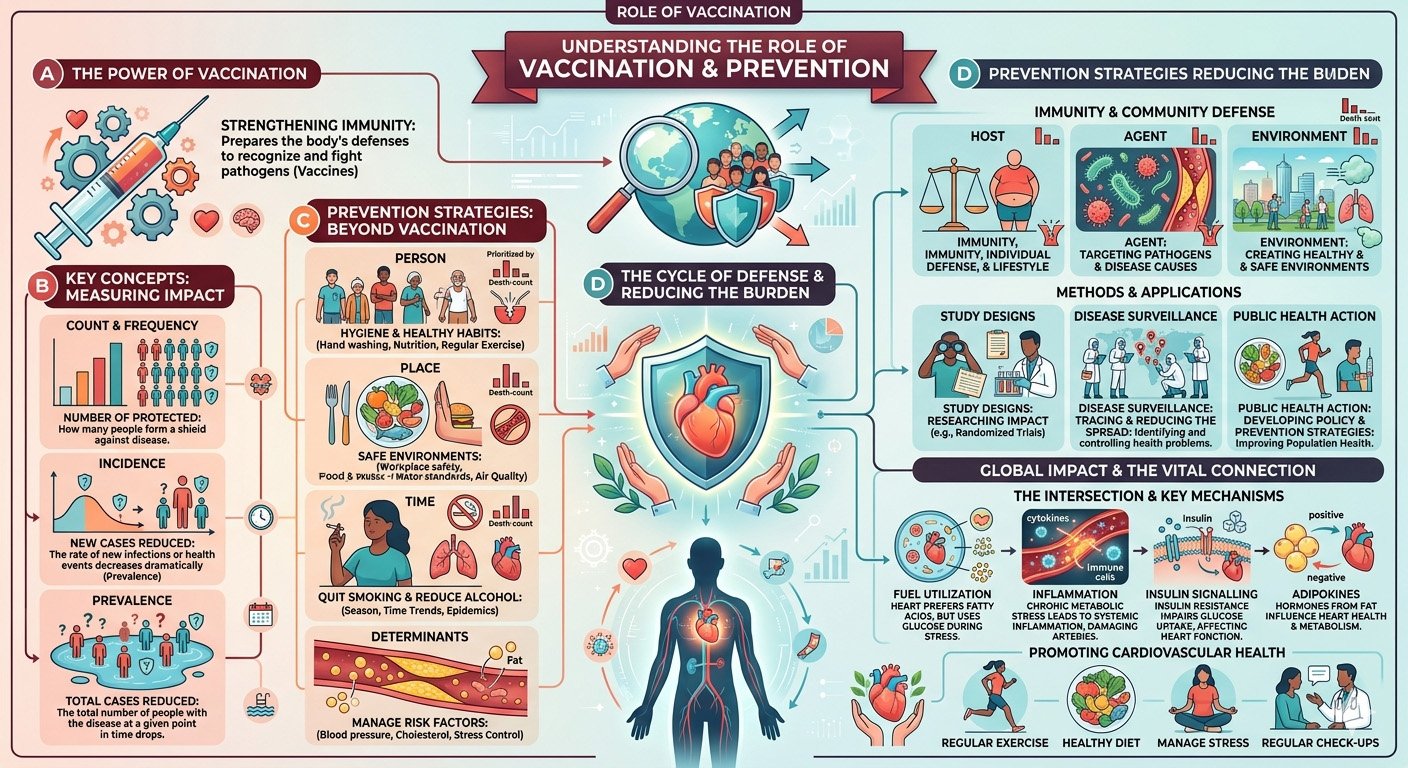
Vaccination and preventive health measures are among the most powerful tools ever developed to protect human populations from infectious disease. Over the past two centuries, vaccines have saved millions of lives, reduced child mortality, and transformed once-devastating illnesses into preventable conditions. Prevention, in its broader sense, extends beyond immunization to include hygiene, sanitation, surveillance, education, and early intervention—forming the foundation of modern public health.
Understanding the role of vaccination and prevention is essential in a world where infectious diseases can spread rapidly across borders. While medical treatments remain critical, prevention remains the most effective, cost-efficient, and sustainable strategy for protecting communities. This article explores how vaccination works, why prevention matters, and how integrated public health strategies reduce disease risk at both individual and population levels.
Understanding Vaccination: A Foundation of Modern Public Health
Vaccination is a medical intervention designed to stimulate the immune system to recognize and fight specific pathogens without causing the disease itself. Vaccines expose the body to harmless components of bacteria or viruses, allowing the immune system to develop protective memory.
How Vaccines Work
When a vaccine is administered, the immune system produces antibodies and immune cells that remain ready to respond to future infections. If the individual later encounters the real pathogen, the immune system reacts quickly, preventing illness or reducing its severity.
This process creates immunity, which protects not only individuals but also communities when enough people are vaccinated.
The Concept of Disease Prevention
Prevention in public health is divided into three levels, each targeting a different stage of disease development.
Primary Prevention
Primary prevention aims to stop disease before it occurs.
Examples include:
- Vaccination
- Safe drinking water
- Hand hygiene
- Nutrition programs
- Health education
- Environmental sanitation
Primary prevention is the most effective form of disease control because it reduces risk before infection begins.
Secondary Prevention
Secondary prevention focuses on early detection and prompt intervention.
Examples include:
- Screening programs
- Diagnostic testing
- Contact tracing
- Early treatment
These strategies reduce disease severity and prevent further transmission.
Tertiary Prevention
Tertiary prevention aims to minimize complications and improve quality of life after disease has occurred.
Examples include:
- Rehabilitation programs
- Chronic disease management
- Long-term medical care
Together, these three levels form a comprehensive prevention framework.
Herd Immunity: Protecting the Community
One of the most important public health benefits of vaccination is herd immunity, also known as community immunity.
Herd immunity occurs when a large proportion of the population becomes immune to a disease, reducing the likelihood of transmission. This protects vulnerable individuals who cannot be vaccinated, such as:
- Infants
- Elderly individuals
- People with weakened immune systems
- Individuals with certain medical conditions
When vaccination rates fall, herd immunity weakens, allowing diseases to spread more easily.
Vaccination and the Control of Infectious Diseases
Vaccination programs have dramatically reduced the burden of infectious diseases worldwide.
Major Achievements of Vaccination
Eradication of smallpox
Near elimination of polio in most countries
Reduction in measles deaths
Prevention of childhood infections
Protection against seasonal influenza
Control of hepatitis and meningitis
These achievements demonstrate the long-term impact of coordinated vaccination efforts.
Prevention Beyond Vaccines
While vaccines are essential, prevention also relies on a wide range of public health measures.
Key Preventive Strategies
Handwashing and hygiene
Safe food handling
Clean water and sanitation
Vector control
Public health surveillance
Health education
Environmental protection
These interventions reduce exposure to pathogens and strengthen community resilience.
Prevention is most effective when multiple strategies are implemented simultaneously.
The Economic Benefits of Prevention
Preventive healthcare is not only medically effective but also economically advantageous.
Treating disease is often far more expensive than preventing it. Hospitalization, medications, and long-term care place significant financial burdens on individuals and healthcare systems.
Economic Advantages of Prevention
Lower healthcare costs
Reduced hospital admissions
Increased workforce productivity
Decreased disability rates
Improved population health
Investing in prevention allows governments and healthcare systems to allocate resources more efficiently.
Vaccination and Global Health Security
Vaccination plays a central role in protecting populations from emerging infectious diseases and potential pandemics.
Global vaccination programs help:
- Reduce disease transmission
- Prevent outbreaks
- Protect vulnerable populations
- Maintain healthcare system capacity
- Support economic stability
In an interconnected world, disease prevention in one country contributes to global health security.
Addressing Vaccine Hesitancy
Despite overwhelming scientific evidence supporting vaccination, vaccine hesitancy remains a significant public health challenge.
Vaccine hesitancy refers to delay in acceptance or refusal of vaccines despite availability.
Common Causes of Vaccine Hesitancy
Misinformation
Fear of side effects
Lack of trust in institutions
Cultural beliefs
Limited access to healthcare
Addressing these concerns requires transparent communication, community engagement, and evidence-based education.
The Role of Prevention in Future Public Health
Advances in science and technology are transforming preventive medicine.
Emerging Prevention Strategies
Personalized vaccines
Genomic surveillance
Artificial intelligence in disease prediction
Digital health monitoring
Rapid vaccine development platforms
These innovations allow faster responses to emerging health threats and improve disease prevention worldwide.
Vaccination Across the Lifespan
Vaccination is not limited to childhood. Individuals require vaccines throughout life to maintain protection against evolving pathogens.
Vaccines Recommended Across Life Stages
Infancy and childhood
Adolescence
Adulthood
Older age
Regular vaccination schedules protect individuals at every stage of life and reduce disease transmission across generations.
The Importance of Community Participation
Public health prevention depends on collective action.
Communities play a critical role in:
- Following vaccination schedules
- Practicing hygiene
- Supporting public health initiatives
- Reporting symptoms early
- Promoting health education
Community participation strengthens health systems and improves disease control.
Conclusion
Vaccination and prevention are the cornerstones of modern public health. They protect individuals, safeguard communities, and reduce the burden of disease worldwide. While medical treatments remain essential, prevention remains the most effective strategy for saving lives, reducing costs, and ensuring long-term health security.
In an era of rapid global travel and emerging infectious diseases, strong prevention systems—including vaccination programs, hygiene practices, surveillance, and public education—are essential for protecting populations and maintaining resilient healthcare systems.
Medical Disclaimer
This content is for informational purposes only and does not constitute medical advice. Always consult a qualified healthcare professional.
Editorial Transparency
This article was created following evidence-based health content guidelines and reviewed by the VitaCoreBalance Editorial Team.
SOURCES:
World Health Organization (WHO)
https://www.who.int
Centers for Disease Control and Prevention (CDC)
https://www.cdc.gov/vaccines
United Nations Children’s Fund (UNICEF)
https://www.unicef.org/immunization
Gavi, the Vaccine Alliance
https://www.gavi.org
National Institutes of Health (NIH)
https://www.nih.gov
Harvard T.H. Chan School of Public Health
https://www.hsph.harvard.edu