
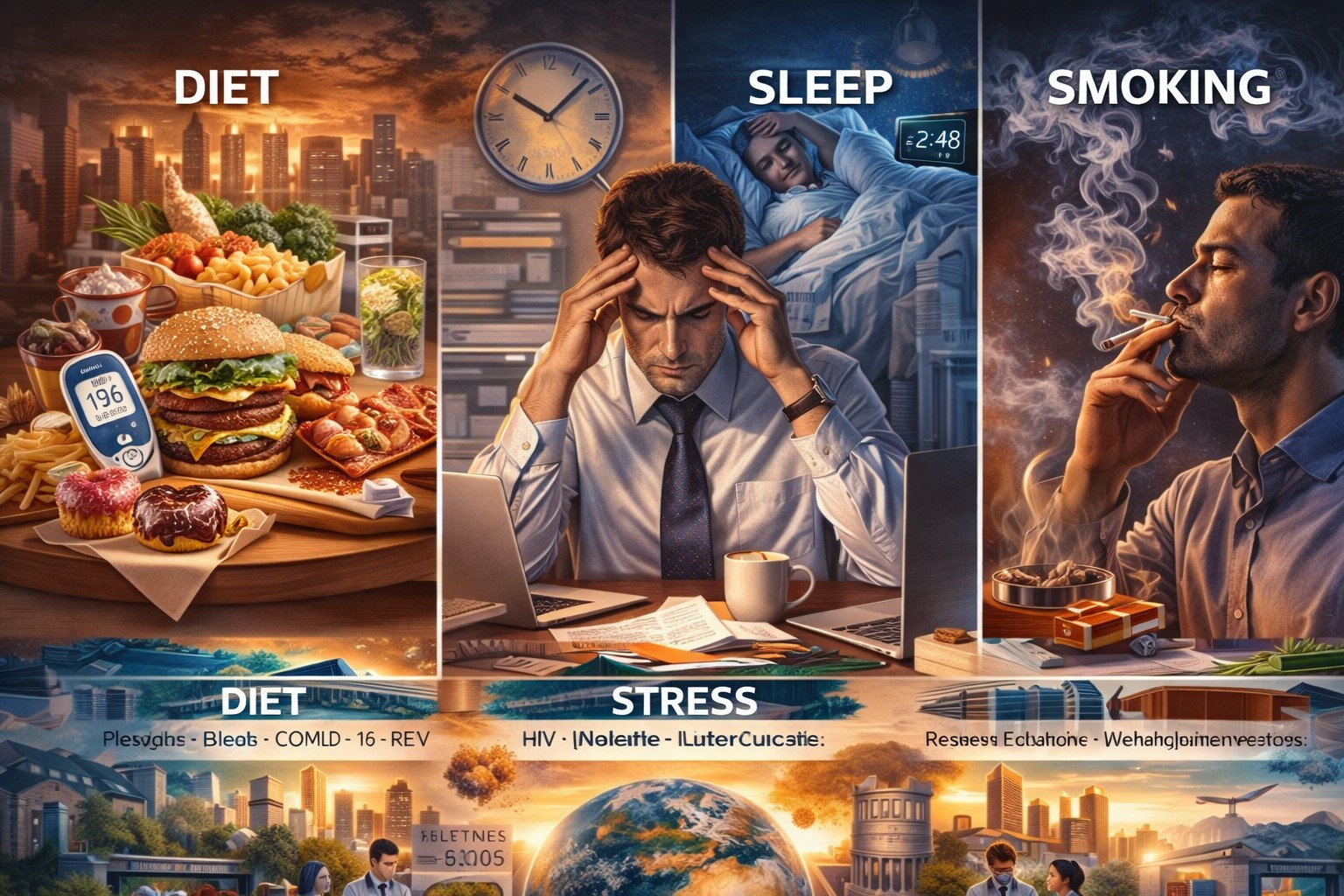
Lifestyle-Related Risks: Diet, Sleep, Stress, and Smoking
Lifestyle choices are among the most significant determinants of long-term health. While genetics and environmental factors influence disease risk, daily behaviors—such as what we eat, how we sleep, how we manage stress, and whether we smoke—play a decisive role in shaping health outcomes. These lifestyle-related risks are closely linked to the development of chronic diseases, including cardiovascular disease, diabetes, respiratory disorders, cancer, and mental health conditions.
Modern public health recognizes that many of the leading causes of death worldwide are preventable through lifestyle modification. Poor nutrition, inadequate sleep, chronic stress, and tobacco use contribute not only to individual illness but also to increased healthcare costs, reduced productivity, and decreased quality of life across populations. Understanding these risk factors is essential for prevention, early intervention, and long-term health promotion.
This article explores the major lifestyle-related risks associated with diet, sleep, stress, and smoking, examining their biological effects, public health implications, and practical strategies for reducing harm and improving overall well-being.
Understanding Lifestyle-Related Health Risks
Lifestyle-related risks refer to behaviors and habits that increase the likelihood of disease or premature death. Unlike genetic factors, lifestyle behaviors are modifiable, meaning individuals and communities can reduce risk through informed choices and supportive environments.
These risks often interact with one another. For example:
- Poor diet can contribute to obesity and metabolic disorders
- Sleep deprivation can increase stress and reduce immune function
- Chronic stress can lead to unhealthy eating habits
- Smoking can worsen cardiovascular and respiratory health
When multiple risk factors occur together, their effects can compound, increasing the overall burden of disease.
Diet and Nutrition: The Foundation of Health
Diet is one of the most influential lifestyle factors affecting health. Nutritional quality directly impacts metabolism, immune function, and disease risk.
Health Risks Associated with Poor Diet
Unhealthy dietary patterns are linked to:
- Obesity
- Type 2 diabetes
- Heart disease
- Hypertension
- Stroke
- Certain cancers
Diets high in processed foods, sugar, saturated fats, and sodium increase inflammation and metabolic stress, contributing to chronic disease development.
Protective Dietary Behaviors
Healthy eating patterns can significantly reduce disease risk.
Key protective habits include:
- Consuming fruits and vegetables daily
- Choosing whole grains
- Limiting processed foods
- Reducing added sugars
- Maintaining balanced portion sizes
- Staying hydrated
Nutrition is a cornerstone of disease prevention and population health.
Sleep: A Critical Yet Often Overlooked Health Factor
Sleep is essential for physical and mental recovery. During sleep, the body repairs tissues, regulates hormones, and strengthens immune defenses.
Health Risks of Sleep Deprivation
Chronic sleep deprivation is associated with:
- Increased risk of heart disease
- Impaired cognitive function
- Reduced immune response
- Weight gain and metabolic disorders
- Depression and anxiety
- Reduced productivity
Sleep deficiency also increases the risk of accidents and injuries.
Recommended Sleep Duration
Most adults require:
- 7 to 9 hours of sleep per night
Children and adolescents typically need more sleep due to growth and development.
Factors That Disrupt Sleep
Common contributors to poor sleep include:
- Irregular schedules
- Excessive screen time
- Stress and anxiety
- Caffeine consumption
- Environmental noise
- Shift work
Improving sleep hygiene is an effective strategy for reducing health risks.
Stress: The Hidden Driver of Chronic Disease
Stress is a natural physiological response to challenges, but chronic stress can harm the body over time. Prolonged exposure to stress hormones disrupts normal biological processes and increases vulnerability to disease.
Physical Effects of Chronic Stress
Chronic stress can lead to:
- Elevated blood pressure
- Weakened immune system
- Digestive problems
- Sleep disturbances
- Headaches and muscle tension
- Increased risk of heart disease
Stress also affects mental health, contributing to anxiety, depression, and burnout.
Sources of Chronic Stress
Common stressors include:
- Work-related pressure
- Financial difficulties
- Family responsibilities
- Health concerns
- Social isolation
- Major life changes
Managing stress is essential for maintaining both physical and emotional well-being.
Healthy Stress Management Strategies
Effective approaches include:
- Regular physical activity
- Mindfulness and meditation
- Deep breathing exercises
- Social support
- Time management
- Professional counseling
Stress management is a critical component of preventive healthcare.
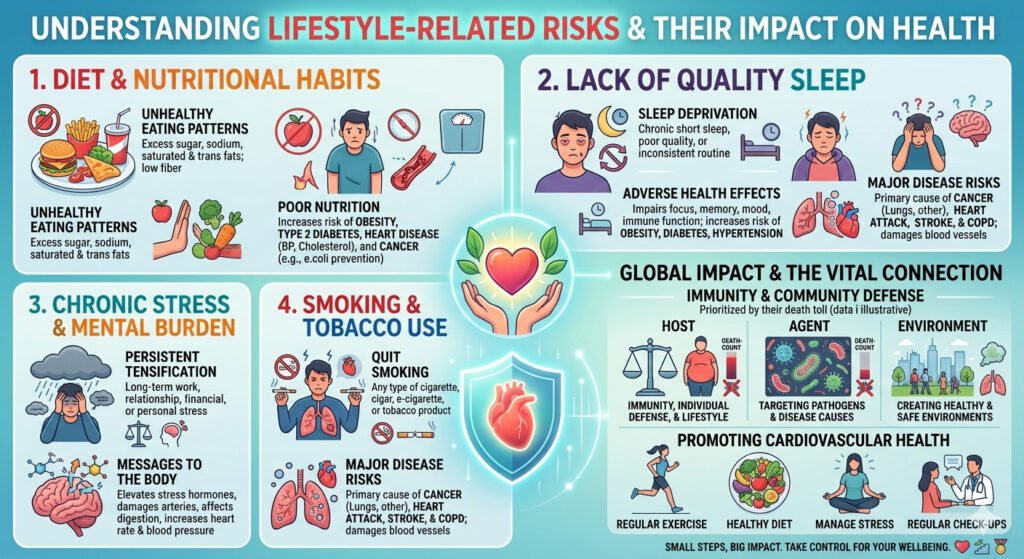
Smoking: A Leading Preventable Cause of Death
Tobacco use remains one of the most significant lifestyle-related health risks worldwide. Smoking damages nearly every organ in the body and is strongly associated with multiple chronic diseases.
Health Risks of Smoking
Smoking increases the risk of:
- Lung cancer
- Chronic obstructive pulmonary disease (COPD)
- Heart disease
- Stroke
- Respiratory infections
- Reduced life expectancy
Secondhand smoke also poses serious health risks to non-smokers, particularly children and pregnant women.
Why Smoking Is So Harmful
Tobacco smoke contains thousands of chemicals, many of which are toxic and carcinogenic. These substances damage blood vessels, reduce oxygen delivery, and impair immune function.
Benefits of Quitting Smoking
Stopping smoking leads to immediate and long-term health improvements.
Benefits include:
- Improved lung function
- Reduced risk of heart disease
- Lower cancer risk
- Better circulation
- Increased life expectancy
Public health campaigns and smoking cessation programs have saved millions of lives.
The Interaction of Lifestyle Risk Factors
Lifestyle-related risks rarely occur in isolation. Instead, they often interact in complex ways that amplify health consequences.
Example of Risk Interaction
A person experiencing chronic stress may:
- Sleep poorly
- Eat unhealthy foods
- Smoke more frequently
These behaviors can lead to:
- Weight gain
- High blood pressure
- Increased risk of chronic disease
Understanding these interactions helps healthcare professionals design comprehensive prevention strategies.
Lifestyle Risks and Chronic Disease
Many of the world’s leading causes of death are strongly linked to lifestyle behaviors.
Major Chronic Diseases Associated with Lifestyle Risks
Cardiovascular disease
Type 2 diabetes
Cancer
Respiratory disease
Obesity
Mental health disorders
These conditions often develop gradually and can be prevented through healthy lifestyle choices.
Public Health Approaches to Reducing Lifestyle Risks
Public health systems address lifestyle-related risks through education, policy, and community programs.
Common Public Health Interventions
Nutrition education campaigns
Smoking cessation programs
Mental health support services
Workplace wellness programs
School-based health initiatives
Community fitness programs
These interventions promote healthier behaviors and reduce disease burden.
The Economic Impact of Lifestyle-Related Risks
Lifestyle-related diseases place a significant financial burden on healthcare systems and societies.
Economic Consequences
Higher healthcare costs
Lost productivity
Increased disability
Reduced workforce participation
Long-term treatment expenses
Preventive strategies that encourage healthy lifestyles can reduce these costs.
Building Healthier Habits for Long-Term Well-Being
Adopting healthy lifestyle habits is one of the most effective ways to reduce disease risk and improve quality of life.
Key Healthy Lifestyle Habits
Balanced diet
Regular physical activity
Adequate sleep
Stress management
Avoidance of tobacco
Regular health checkups
Small, consistent changes can produce significant long-term health benefits.
The Role of Prevention in Public Health
Prevention remains the most powerful strategy for reducing lifestyle-related health risks. By addressing behaviors before disease develops, public health systems can improve population health and reduce mortality rates.
Preventive approaches include:
- Health education
- Early screening
- Community outreach
- Policy interventions
- Environmental improvements
These strategies protect individuals and communities alike.
Conclusion
Lifestyle-related risks—particularly poor diet, inadequate sleep, chronic stress, and smoking—are among the leading contributors to chronic disease and premature death worldwide. Unlike many other risk factors, these behaviors are largely preventable and modifiable.
By promoting healthy habits, strengthening public health programs, and increasing awareness of lifestyle risks, societies can reduce disease burden, improve quality of life, and extend life expectancy. In the long term, prevention and lifestyle management remain essential pillars of sustainable health systems and population well-being.