
Myths vs. Reality in Health and Medicine
Understanding Common Misconceptions and the Science Behind Them
VitaCoreBalance Editorial Team | Research-based health content • Editorial review process | March 2026
Health and medicine are fields surrounded by information, advice, traditions, and beliefs—some accurate, others outdated or misleading. In the modern digital environment, misinformation can spread quickly, often appearing credible even when it lacks scientific support.
Medical myths are not always created intentionally. Many originate from historical practices, partial truths, misunderstood research findings, or cultural traditions. Over time, these ideas can become widely accepted despite contradicting current scientific evidence.
Understanding the difference between myths and medical reality is essential for making informed health decisions. Accurate knowledge supports prevention, improves treatment outcomes, and reduces unnecessary risks.
This article examines common health myths, explains the scientific reality behind them, and highlights how evidence-based medicine guides safe and effective healthcare.
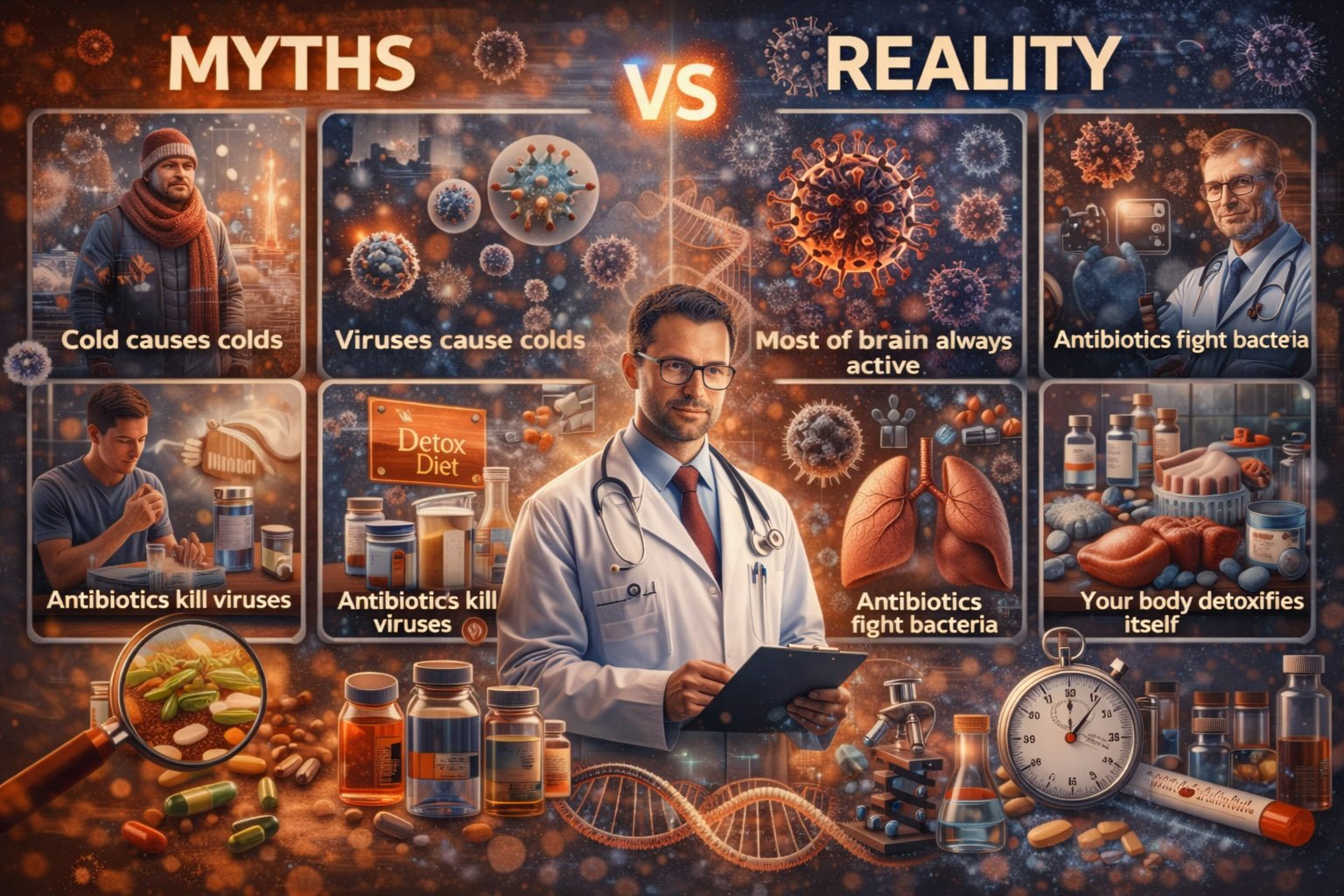
Myth: Cold Weather Causes the Common Cold
Reality: Viruses Cause Colds — Not Temperature Alone
One of the most persistent beliefs in health is that cold weather directly causes illness. While respiratory infections are more common during colder seasons, the true cause is viral transmission.
The common cold is typically caused by viruses such as:
- Rhinoviruses
- Coronaviruses
- Respiratory syncytial virus (RSV)
Cold weather can indirectly increase infection risk because people:
- Spend more time indoors
- Stay in close contact with others
- Experience lower humidity levels
- May have reduced immune efficiency due to environmental stress
However, exposure to cold air alone does not create infection.
Myth: You Only Use 10% of Your Brain
Reality: Most Brain Regions Are Active Throughout the Day
The idea that humans use only a small fraction of their brain has circulated for decades, often in self-improvement and popular media. Modern neuroscience clearly demonstrates that this claim is incorrect.
Brain imaging technologies such as:
- MRI
- PET scans
- Functional MRI (fMRI)
show that nearly all areas of the brain have identifiable functions and become active at different times.
Even during sleep, the brain remains highly active, regulating:
- Memory consolidation
- Hormone release
- Emotional processing
- Tissue repair
Damage to small areas of the brain can produce significant functional impairment, further confirming that most brain tissue is essential.
Myth: Cracking Your Knuckles Causes Arthritis
Reality: No Strong Evidence Links Knuckle Cracking to Arthritis
The sound produced when cracking knuckles comes from gas bubbles forming and collapsing in joint fluid. This process is known as:
Cavitation.
Research has not found consistent evidence that habitual knuckle cracking leads to arthritis. However, excessive or forceful manipulation may cause:
- Temporary joint swelling
- Reduced grip strength
- Soft tissue irritation
While generally harmless, moderation is advisable.
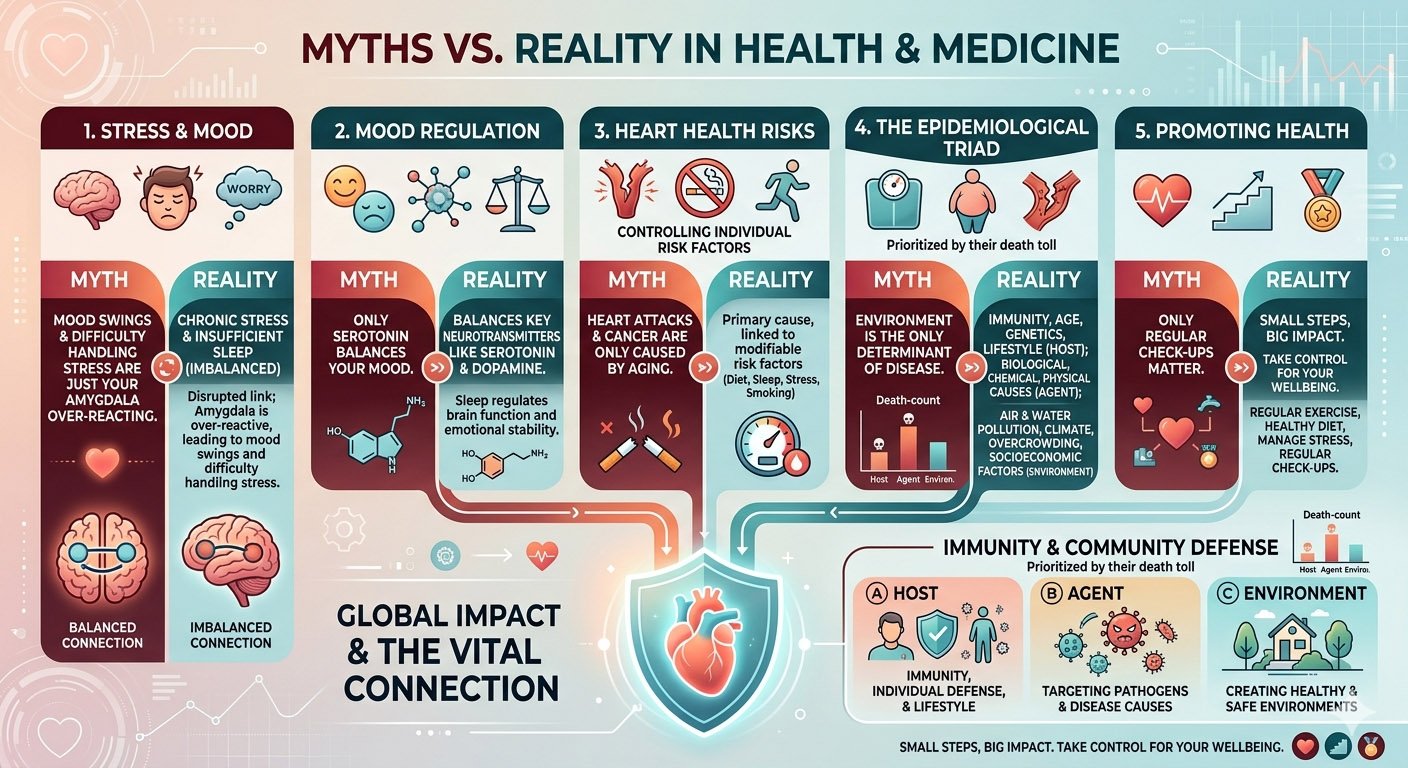
Myth: Antibiotics Work Against Viral Infections
Reality: Antibiotics Treat Bacteria — Not Viruses
This misconception has serious public health consequences.
Antibiotics are effective only against bacterial infections, such as:
- Strep throat
- Urinary tract infections
- Bacterial pneumonia
They do not treat viral infections like:
- Influenza
- COVID-19
- Common cold
- Most sore throats
Unnecessary antibiotic use contributes to:
Antibiotic resistance.
Antibiotic resistance occurs when bacteria evolve mechanisms that reduce the effectiveness of medications, making infections harder to treat.
This is considered one of the most significant global health threats today.
Myth: Natural Products Are Always Safe
Reality: Natural Substances Can Be Powerful — and Risky
The term “natural” is often interpreted as meaning safe or harmless. In reality, many natural substances contain biologically active compounds that can produce strong effects.
Examples include:
- Certain herbal supplements interacting with medications
- Toxic plants causing poisoning
- Natural compounds triggering allergic reactions
Even widely used natural substances can produce side effects if:
- Taken in high doses
- Combined with medications
- Used without medical guidance
Safety depends on:
- Dosage
- Individual health status
- Interactions
- Scientific evidence
Not simply whether a product is natural.
Myth: Vaccines Overload the Immune System
Reality: The Immune System Handles Multiple Challenges Simultaneously
The immune system encounters thousands of foreign substances every day.
These include:
- Microorganisms
- Environmental particles
- Food proteins
- Chemicals
Vaccines contain controlled amounts of antigens designed to stimulate immune protection without causing disease.
Modern vaccines typically expose the immune system to fewer antigens than everyday environmental exposure.
Vaccination remains one of the most effective tools in preventing infectious diseases and reducing mortality worldwide.
Myth: Detox Diets Remove Toxins From the Body
Reality: The Liver and Kidneys Already Perform Detoxification
The human body has highly efficient systems for removing waste and toxins.
Primary detoxification organs include:
- Liver
- Kidneys
- Lungs
- Skin
- Digestive system
These organs continuously filter and eliminate harmful substances.
Most commercial detox programs lack strong scientific evidence demonstrating additional detoxification benefits in healthy individuals.
Balanced nutrition, hydration, and sleep support natural detoxification processes more effectively than short-term detox regimens.
Myth: You Must Drink Eight Glasses of Water Daily
Reality: Hydration Needs Vary Between Individuals
The recommendation to drink eight glasses of water per day is a general guideline, not a universal requirement.
Water needs depend on:
- Body size
- Physical activity
- Climate
- Health conditions
- Diet
- Age
The body regulates hydration through thirst and kidney function.
Signs of adequate hydration include:
- Light-colored urine
- Stable energy levels
- Normal cognitive function
Both dehydration and excessive water intake can create health risks.
Why Medical Myths Persist
Medical myths continue to circulate because they often:
- Contain partial truths
- Are simple to understand
- Spread quickly through social media
- Are repeated by trusted sources
- Appear consistent with personal experience
In contrast, scientific evidence evolves over time and may appear more complex.
Critical thinking and evidence-based medicine help distinguish reliable information from misinformation.
The Role of Evidence-Based Medicine
Evidence-based medicine combines:
- Scientific research
- Clinical expertise
- Patient values
This approach ensures that medical decisions are guided by reliable data rather than assumptions or tradition.
Healthcare recommendations are continuously updated as new evidence emerges, improving safety and effectiveness over time.
Conclusion
Health myths can appear harmless, but misinformation can influence behavior, delay treatment, and increase health risks. Understanding the difference between myth and reality empowers individuals to make informed decisions based on scientific evidence.
Medicine is not static. It evolves as research advances, technologies improve, and knowledge expands. Staying informed with accurate, evidence-based information is one of the most effective ways to protect long-term health and well-being.
Medical Disclaimer
This content is for informational purposes only and does not constitute medical advice. Always consult a qualified healthcare professional.
Editorial Transparency
This article was created following evidence-based health content guidelines and reviewed by the VitaCoreBalance Editorial Team.
Sources
World Health Organization (WHO)
https://www.who.int
Centers for Disease Control and Prevention (CDC)
https://www.cdc.gov
National Institutes of Health (NIH)
https://www.nih.gov
Mayo Clinic
https://www.mayoclinic.org
Cleveland Clinic
https://my.clevelandclinic.org
MedlinePlus
https://medlineplus.gov