
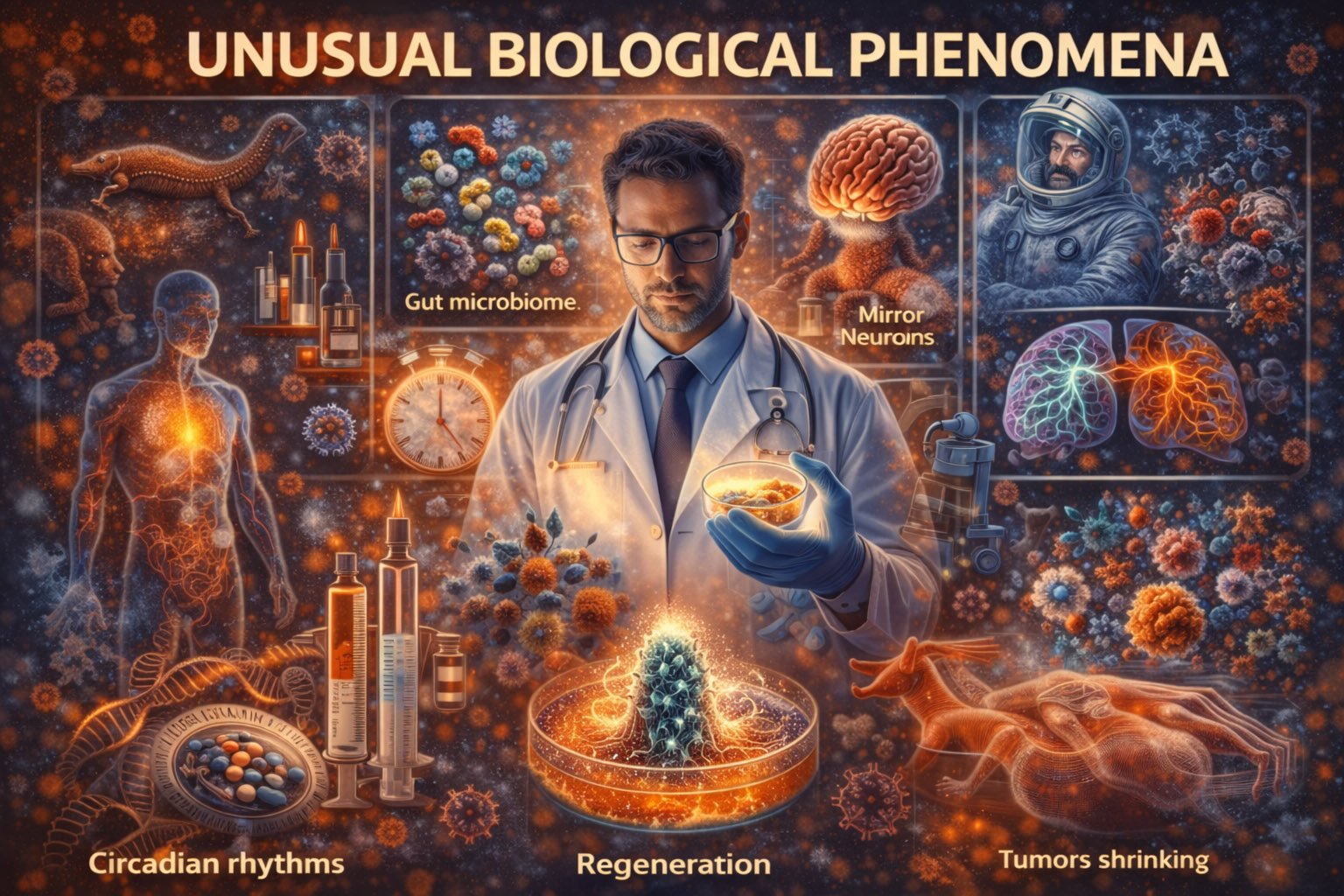
Unusual Biological Phenomena
Extraordinary Processes That Reveal the Hidden Complexity of Life
VitaCoreBalance Editorial Team | Research-based health content • Editorial review process | March 2026
Biology is filled with processes that appear unusual, surprising, or even paradoxical. These phenomena often challenge common assumptions about how living organisms function. Yet, each reflects a carefully regulated mechanism shaped by evolution, adaptation, and survival.
From organisms that regenerate lost body parts to humans capable of surviving extreme conditions, unusual biological phenomena reveal the remarkable flexibility and resilience of life. Many of these processes are not rare anomalies but natural responses to environmental stress, injury, or physiological demands.
Understanding these phenomena provides insight into medicine, disease prevention, and the future of healthcare. Some discoveries have already led to major medical advances, including organ transplantation, regenerative medicine, and new approaches to treating chronic diseases.
This article explores scientifically documented biological phenomena that illustrate the extraordinary capabilities of living systems.
Human Bioluminescence
The Body Produces Light — But It Is Invisible to the Human Eye
One of the most fascinating biological phenomena is the production of light by living organisms, known as:
Bioluminescence.
While commonly associated with deep-sea creatures and insects such as fireflies, research has shown that humans also produce extremely small amounts of light.
This light is generated through biochemical reactions involving:
- Reactive oxygen species
- Cellular metabolism
- Energy transfer within cells
The light emitted by human tissue is:
- Continuous
- Extremely weak
- Invisible without specialized imaging equipment
Scientists use sensitive cameras to detect these emissions, which can vary based on:
- Metabolic activity
- Stress levels
- Circadian rhythms
This phenomenon helps researchers study cellular health and oxidative stress.
Regeneration in Humans
The Body Can Replace Damaged Tissue
Regeneration is the ability of an organism to repair or replace damaged tissue. While humans cannot regrow entire limbs, they possess significant regenerative capacity.
Examples include:
Skin
— Rapid renewal after injury
Liver
— Regeneration of lost tissue
Blood
— Continuous replacement of cells
Bone
— Structural repair following fractures
Some organisms demonstrate far more extensive regeneration.
Extreme Regeneration in Nature
Examples:
Salamanders
— Can regrow limbs
Starfish
— Can regenerate arms
Planarian worms
— Can regenerate entire bodies from small fragments
Understanding these mechanisms is a major focus of:
Regenerative medicine.
Researchers are studying these processes to develop therapies for:
- Spinal cord injuries
- Organ damage
- Tissue loss
- Degenerative diseases
The Human Body Can Survive Without Food for Weeks
But Not Without Water for Long
Under extreme conditions, the human body can adapt to limited food availability.
During fasting, the body:
- Uses stored glucose
- Breaks down fat for energy
- Conserves protein
- Slows metabolism
This metabolic adaptation helps maintain vital organ function.
However, dehydration is far more dangerous.
Most humans can survive:
- Several weeks without food
- Only a few days without water
Water is essential for:
- Blood circulation
- Temperature regulation
- Cellular function
- Waste removal
This difference highlights the central role of hydration in survival.
Hibernation-Like States in Humans
The Body Can Dramatically Reduce Metabolism
Certain medical conditions and environmental situations can trigger states resembling hibernation.
In extreme cold exposure, the body may:
- Reduce heart rate
- Slow breathing
- Lower body temperature
- Preserve oxygen
This response can increase survival time in life-threatening situations.
Documented cases show individuals surviving prolonged cold exposure due to:
Reduced metabolic demand.
Researchers are investigating controlled metabolic suppression as a potential medical technique for:
- Trauma treatment
- Cardiac surgery
- Space travel
- Emergency medicine
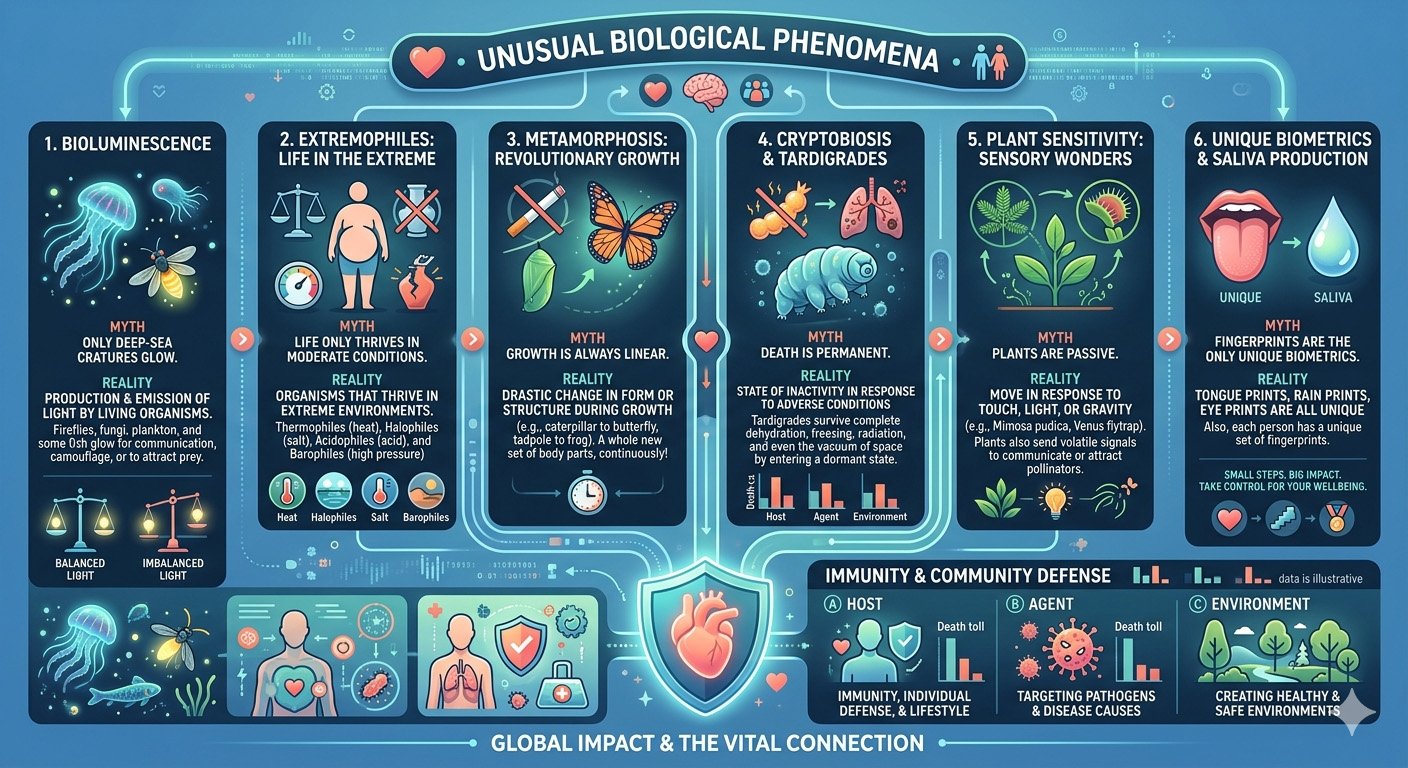
Mirror Neurons
The Brain Responds to Observing Actions
Mirror neurons are specialized brain cells that activate both when a person performs an action and when they observe another person performing the same action.
These neurons are believed to play roles in:
- Learning through imitation
- Social interaction
- Empathy
- Language development
Mirror neuron activity demonstrates that perception and action are closely linked in the nervous system.
This phenomenon helps explain why humans can:
- Learn skills by watching others
- Experience emotional responses to observed events
- Develop complex social behaviors
The Gut Microbiome
Trillions of Microorganisms Live Inside the Human Body
The human digestive system contains a vast community of microorganisms known as the microbiome.
Estimated number of microbes:
Trillions.
These microorganisms perform essential functions:
- Digesting food
- Producing vitamins
- Supporting immune function
- Regulating metabolism
- Protecting against harmful pathogens
The microbiome is increasingly recognized as a major factor in:
- Immune health
- Mental health
- Metabolic disease
- Inflammation
Changes in the microbiome can influence disease risk and treatment response.
Spontaneous Remission
Diseases Can Occasionally Improve Without Clear Medical Intervention
Spontaneous remission refers to the unexpected reduction or disappearance of disease symptoms without targeted treatment.
This phenomenon has been documented in:
- Certain cancers
- Autoimmune disorders
- Infections
Although rare, spontaneous remission demonstrates the powerful role of:
The immune system.
Researchers are studying this process to better understand:
- Immune regulation
- Tumor biology
- Recovery mechanisms
Insights from these cases may lead to new therapeutic strategies.
Biological Clocks
The Body Operates on Precise Internal Timing
The human body contains internal timing systems known as:
Circadian rhythms.
These rhythms regulate:
- Sleep cycles
- Hormone release
- Body temperature
- Metabolism
- Immune activity
Circadian rhythms are influenced by:
- Light exposure
- Meal timing
- Physical activity
- Environmental cues
Disruption of biological clocks is associated with increased risk of:
- Sleep disorders
- Metabolic disease
- Cardiovascular disease
- Mood disorders
Maintaining consistent daily routines helps support circadian stability.
Extreme Pain Tolerance and Stress Responses
The Body Can Temporarily Suppress Pain
In dangerous situations, the body can release hormones that reduce pain perception.
This response is part of the:
Fight-or-flight reaction.
Key hormones involved:
- Adrenaline
- Endorphins
- Cortisol
These chemicals can:
- Increase strength
- Improve alertness
- Reduce pain
- Enhance survival
This temporary pain suppression allows individuals to respond quickly to threats.
Conclusion
Unusual biological phenomena reveal the extraordinary adaptability and complexity of living organisms. These processes demonstrate that the body is not a static system but a dynamic network capable of responding to injury, environmental stress, and changing physiological demands.
Many phenomena once considered mysterious are now understood through scientific research, leading to advances in medicine, biotechnology, and public health. Continued exploration of these mechanisms will likely produce new treatments and technologies that improve survival, recovery, and quality of life.
Understanding biology at this level not only satisfies curiosity—it strengthens our ability to protect and preserve health.
Medical Disclaimer
This content is for informational purposes only and does not constitute medical advice. Always consult a qualified healthcare professional.
Editorial Transparency
This article was created following evidence-based health content guidelines and reviewed by the VitaCoreBalance Editorial Team.
Sources
World Health Organization (WHO)
https://www.who.int
National Institutes of Health (NIH)
https://www.nih.gov
Nature Journal
https://www.nature.com
National Geographic
https://www.nationalgeographic.com
Cleveland Clinic
https://my.clevelandclinic.org
MedlinePlus
https://medlineplus.gov