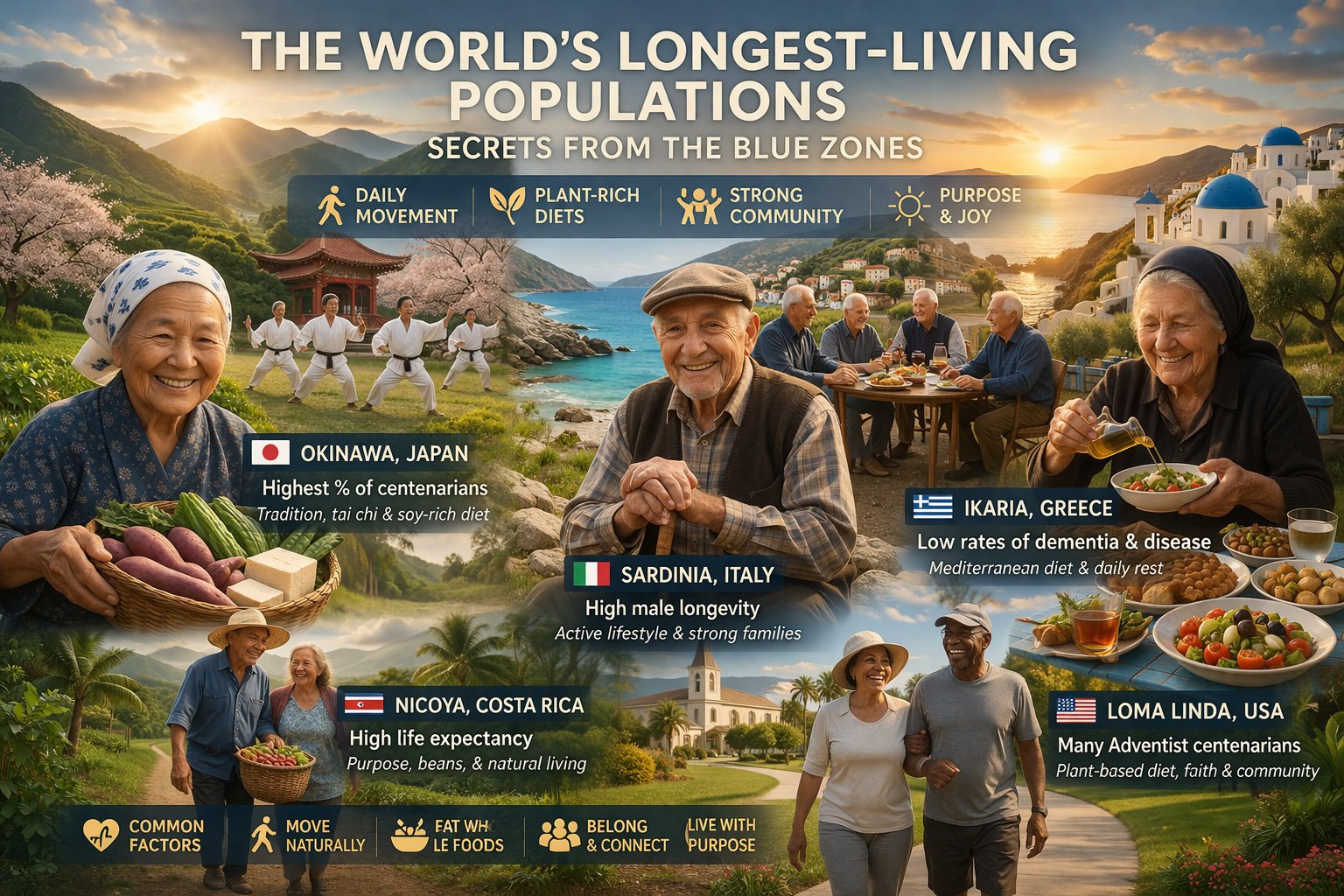
Illustration showing the world’s longest-living populations in blue zones including Okinawa, Sardinia, Nicoya, and Ikaria with healthy aging lifestyles

The World’s Longest-Living Populations

What Science Reveals About Communities With Exceptional Longevity

VitaCoreBalance Editorial Team | Research-based health content • Editorial review process | March 2026

Across the world, certain populations live significantly longer than average. These communities, often called longevity hotspots, have attracted global scientific attention because of their unusually high number of individuals who live into their 90s and beyond. In some regions, people are several times more likely to reach age 100 than the global average.

Researchers study these populations not to find a single secret to long life, but to understand how lifestyle, environment, genetics, and social structure interact to support healthy aging. The goal is to identify patterns that can be applied broadly to improve healthspan and reduce chronic disease risk.

Understanding the world’s longest-living populations provides valuable insight into prevention, resilience, and sustainable health practices.


Blue Zones: Regions Known for Exceptional Longevity

Scientists Have Identified Several Longevity Hotspots

The term Blue Zones refers to geographic areas where people live longer than average and maintain relatively low rates of chronic disease. These regions share common lifestyle patterns despite cultural differences.

Well-known longevity regions include:

  • Okinawa
  • Sardinia
  • Nicoya Peninsula
  • Ikaria
  • Loma Linda

These regions differ in climate, culture, and diet, yet they share consistent health patterns that support longevity.


Okinawa, Japan

A Culture of Longevity and Social Connection

https://i.guim.co.uk/img/media/596ab5fcd3497e0f79d866206bcc928e5a528b95/0_42_3701_2221/master/3701.jpg?auto=format&fit=crop&height=1200&quality=85&s=4f1b22036a99d495a7f8d50515a13cc0&width=1200
https://cdn.shopify.com/s/files/1/0497/6312/3353/files/okinawan-moai-community.webp?v=1732160973
https://images.immediate.co.uk/production/volatile/sites/30/2022/03/Why-is-the-Japanese-diet-so-healthy-d51177a.jpg?resize=768%2C698
4

Residents of Okinawa have historically experienced some of the highest life expectancies in the world.

Common characteristics include:

  • Plant-based diets rich in vegetables and legumes
  • Strong social networks
  • Regular physical activity
  • Cultural respect for aging
  • Low rates of cardiovascular disease

Okinawan culture emphasizes moderation and purpose in life, which may support long-term health.


Sardinia, Italy

A Region With High Male Longevity

https://i.guim.co.uk/img/static/sys-images/Travel/Late_offers/pictures/2010/4/29/1272552447692/Supramonte-and-Gennergent-004.jpg?crop=none&dpr=1&s=none&width=465
https://i.guim.co.uk/img/media/aa737cac8271267d0c10321f971420767b6c0bf1/0_36_656_394/master/656.jpg?crop=none&dpr=1&s=none&width=445
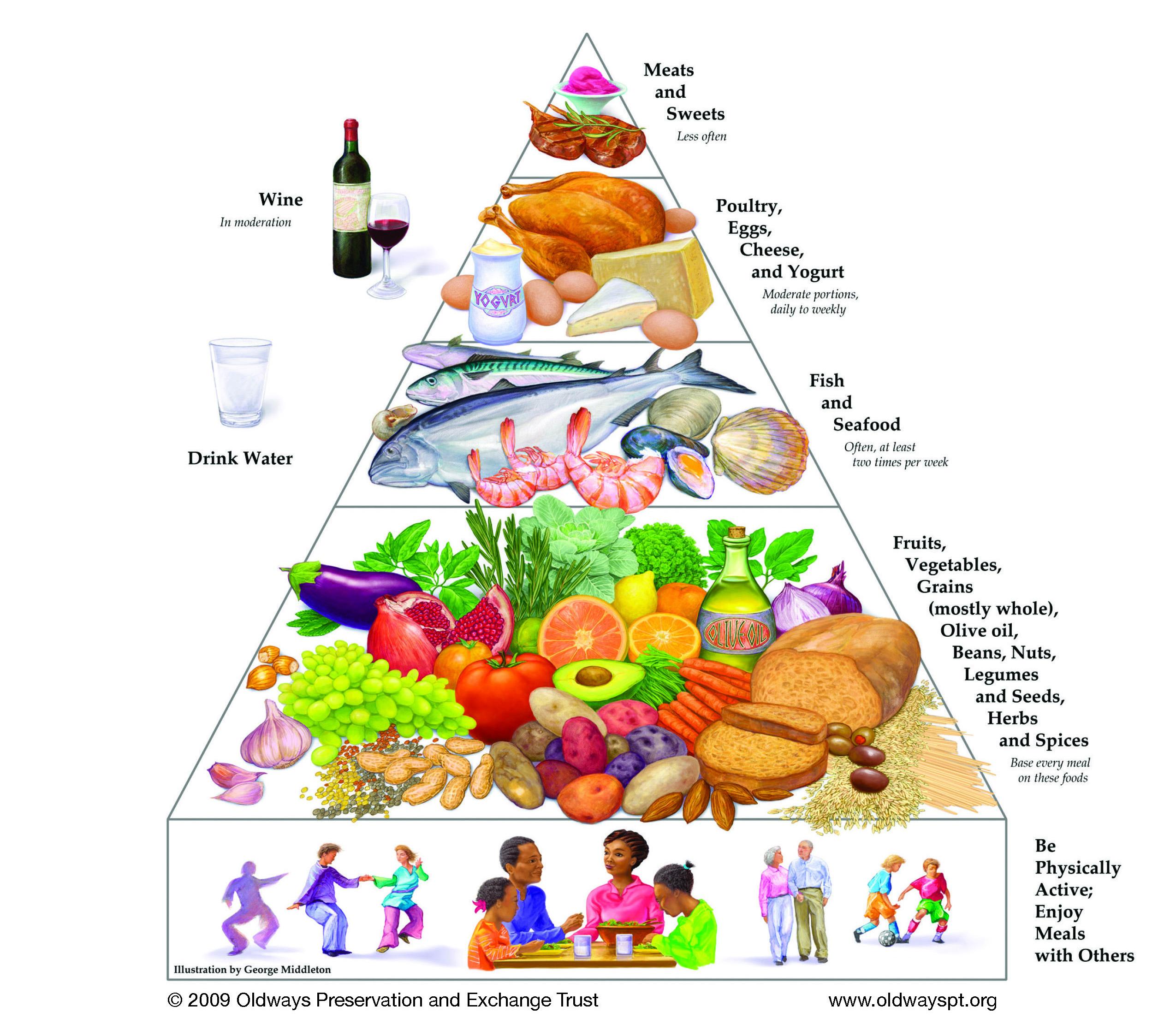
https://extension.umd.edu/sites/extension.umd.edu/files/styles/optimized/public/2022-02/MedDietPyramid_flyer.jpg?itok=VCU5iZ8w
4

Sardinia is known for an unusually high number of male centenarians.

Researchers have observed:

  • Physically active daily routines
  • Strong family ties
  • Mediterranean-style diets
  • Lower stress levels
  • Genetic factors that may support cardiovascular health

Physical activity in Sardinia often comes from daily living rather than structured exercise.


Nicoya Peninsula, Costa Rica

Longevity Linked to Lifestyle and Environment
https://production-uploads.fastly.propertybase.com/assets/uploads/post/featured_image/66871/2c845b7430032037f90bd7f7bd14147c.jpg?auto=webp&optimize=low&width=1920
https://mayorgacoffee.com/cdn/shop/articles/New_Project_1_5b0c904c-a556-412c-9702-cb82988d3a91.jpg?v=1737233390
https://static.wixstatic.com/media/6d89b0_d827d5cd8d3c458fa5c5f081b713b609~mv2.jpg/v1/fill/w_750%2Ch_1000%2Cal_c%2Cq_85%2Cusm_0.66_1.00_0.01/6d89b0_d827d5cd8d3c458fa5c5f081b713b609~mv2.jpg
4

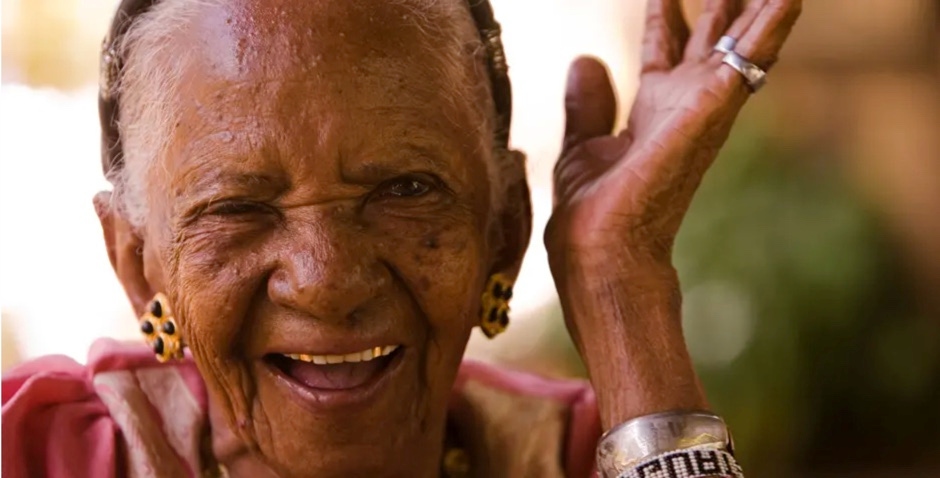
The Nicoya Peninsula has one of the highest life expectancies in Latin America.

Researchers have identified several contributing factors:

  • Strong sense of purpose
  • Frequent physical activity
  • Nutrient-rich diets
  • Access to sunlight
  • Social engagement

Community support plays a major role in maintaining health among older adults.


Ikaria, Greece

Low Rates of Chronic Disease

https://i2-prod.mirror.co.uk/article36562126.ece/ALTERNATES/s1200d/0_Travel-In-Greece-Ikaria-Island.jpg
https://mecenemarket.com/cdn/shop/articles/ikaria-diet-traditional-greek-meal-outdoor-view_a14f4473-c859-46c9-bbdf-6b2e75990d86.png?v=1746074385
https://cdn.shopify.com/s/files/1/0728/9657/7801/files/longevidad_icaria.jpg?v=1727600457
4

Residents of Ikaria experience lower-than-average rates of chronic disease.

Key lifestyle factors include:

  • Mediterranean diet patterns
  • Regular physical movement
  • Afternoon rest periods
  • Social interaction
  • Low levels of processed food consumption

These habits support cardiovascular and metabolic health.


Loma Linda, California

Longevity Within a Modern Urban Environment

https://www.desertsun.com/gcdn/presto/2021/06/16/PPAS/cceef65a-627c-4efd-8df9-c876926753fa-Blue_Zones_Project_Loma_Linda708.JPG?crop=2000%2C2000%2Cx750%2Cy0
https://i.insider.com/652071be6561dd877e73bcce?auto=webp&format=jpeg&width=900
https://upload.wikimedia.org/wikipedia/commons/1/18/Loma_Linda_University_Vegetarian_Food_Pyramid.jpg
4

Loma Linda is unique because it is located within a developed urban setting.

Residents often follow health-promoting behaviors such as:

  • Plant-based diets
  • Regular exercise
  • Strong community engagement
  • Low smoking rates
  • Preventive healthcare practices

This example demonstrates that longevity is possible even in modern environments.
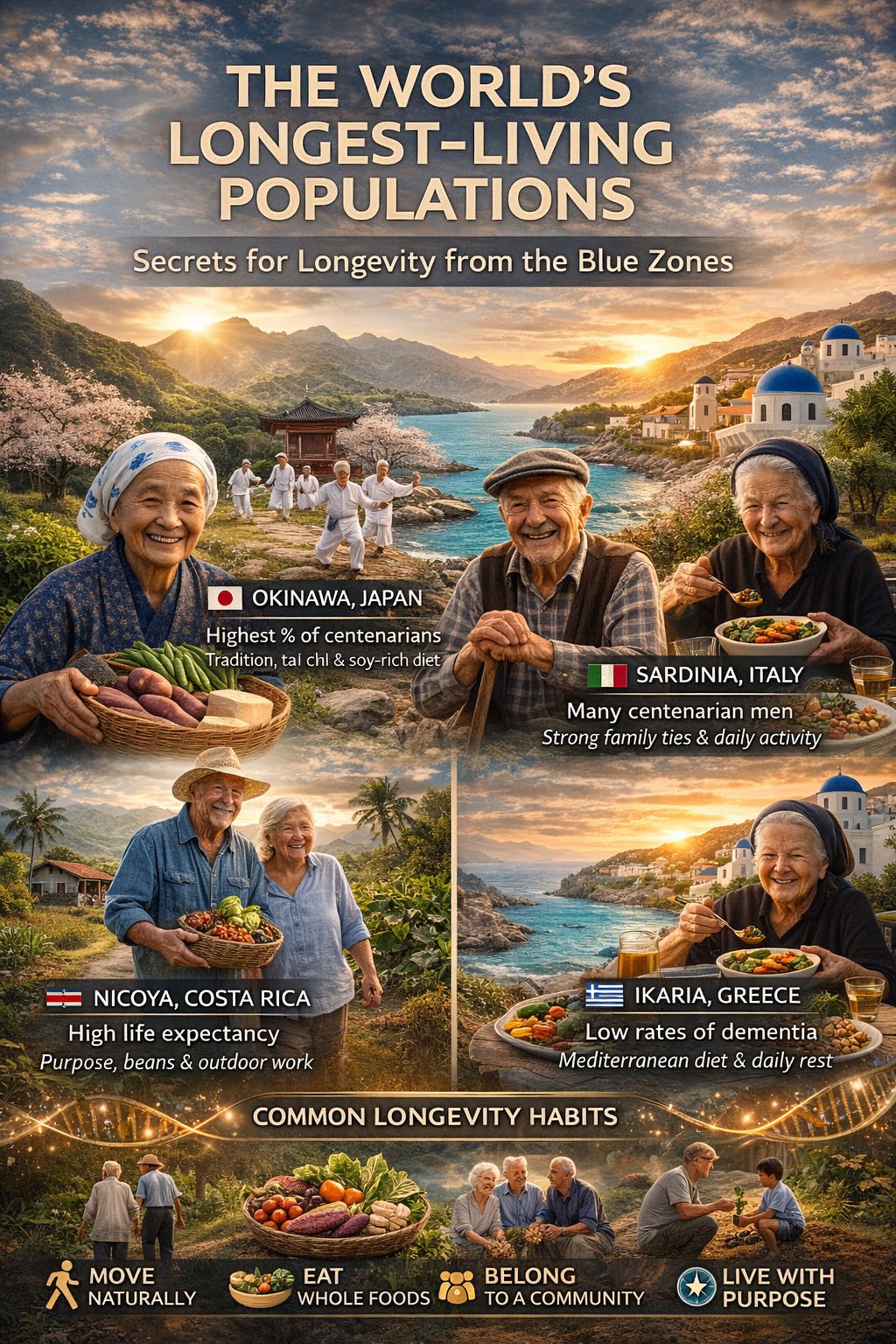
Infographic showing the world’s longest-living populations in blue zones including Okinawa, Sardinia, Nicoya, Ikaria, and Loma Linda with healthy aging lifestyles

Common Lifestyle Patterns in Long-Living Populations

Shared Behaviors Support Longevity

Despite geographic differences, the world’s longest-living populations share consistent habits.

These patterns include:

Regular Physical Activity

Movement is integrated into daily life rather than performed only as exercise.

Examples:

  • Walking
  • Gardening
  • Household tasks
  • Farming

Physical activity supports cardiovascular health and metabolic balance.


Nutrient-Dense Diets

Long-living populations often consume diets rich in:

  • Vegetables
  • Legumes
  • Whole grains
  • Healthy fats
  • Moderate protein

These foods provide essential nutrients and support immune function.


Strong Social Connections

Social relationships play a major role in longevity.

Social support helps reduce:

  • Stress
  • Depression
  • Isolation
  • Cognitive decline

Communities with strong social ties often show better health outcomes.


Purpose and Psychological Well-Being

A sense of purpose has been associated with improved health and longevity.

Purpose may include:

  • Work
  • Family responsibilities
  • Community roles
  • Personal goals

Psychological well-being influences both physical and mental health.


Genetics and Longevity

Genes Contribute — But Lifestyle Plays a Larger Role

Genetics influences lifespan, but research suggests that lifestyle factors account for most differences in longevity.

Genetic advantages may include:

  • Efficient metabolism
  • Strong immune response
  • Reduced inflammation
  • Improved cellular repair

However, healthy behaviors remain the most reliable predictors of long-term health.


Environmental Factors and Longevity

Surroundings Affect Health Over Time

Environmental conditions play an important role in longevity.

Examples include:

  • Clean air
  • Safe water
  • Access to nutritious food
  • Sunlight exposure
  • Community infrastructure

Healthy environments support disease prevention and long-term well-being.


What Longevity Research Teaches Us

Lessons That Apply to Everyone

The world’s longest-living populations demonstrate that longevity is influenced by consistent daily habits rather than single interventions.

Evidence-based strategies associated with longer life include:

  • Regular physical activity
  • Balanced nutrition
  • Adequate sleep
  • Stress management
  • Social engagement
  • Preventive healthcare

These behaviors support healthy aging across different cultures and environments.


Conclusion

The world’s longest-living populations provide valuable insight into how lifestyle, community, and environment shape longevity. While genetics plays a role, consistent healthy behaviors remain the strongest predictors of long-term health.

Research on longevity hotspots continues to inform public health strategies aimed at improving quality of life, reducing disease risk, and supporting healthy aging worldwide.

Medical Disclaimer
This content is for informational purposes only and does not constitute medical advice. Always consult a qualified healthcare professional.

Editorial Transparency
This article was created following evidence-based health content guidelines and reviewed by the VitaCoreBalance Editorial Team.


Sources

National Geographic — Blue Zones
https://www.nationalgeographic.com/science/article/blue-zones

National Institute on Aging (NIA) — Longevity and Aging Research
https://www.nia.nih.gov/health

World Health Organization (WHO) — Ageing and Health
https://www.who.int/news-room/fact-sheets/detail/ageing-and-health

Harvard T.H. Chan School of Public Health — Healthy Aging
https://www.hsph.harvard.edu/nutritionsource/healthy-aging

Centers for Disease Control and Prevention (CDC) — Healthy Aging
https://www.cdc.gov/aging

National Institutes of Health (NIH) — Exceptional Longevity Studies
https://www.nih.gov/news-events/nih-research-matters/study-centenarians-reveals-keys-longevity