
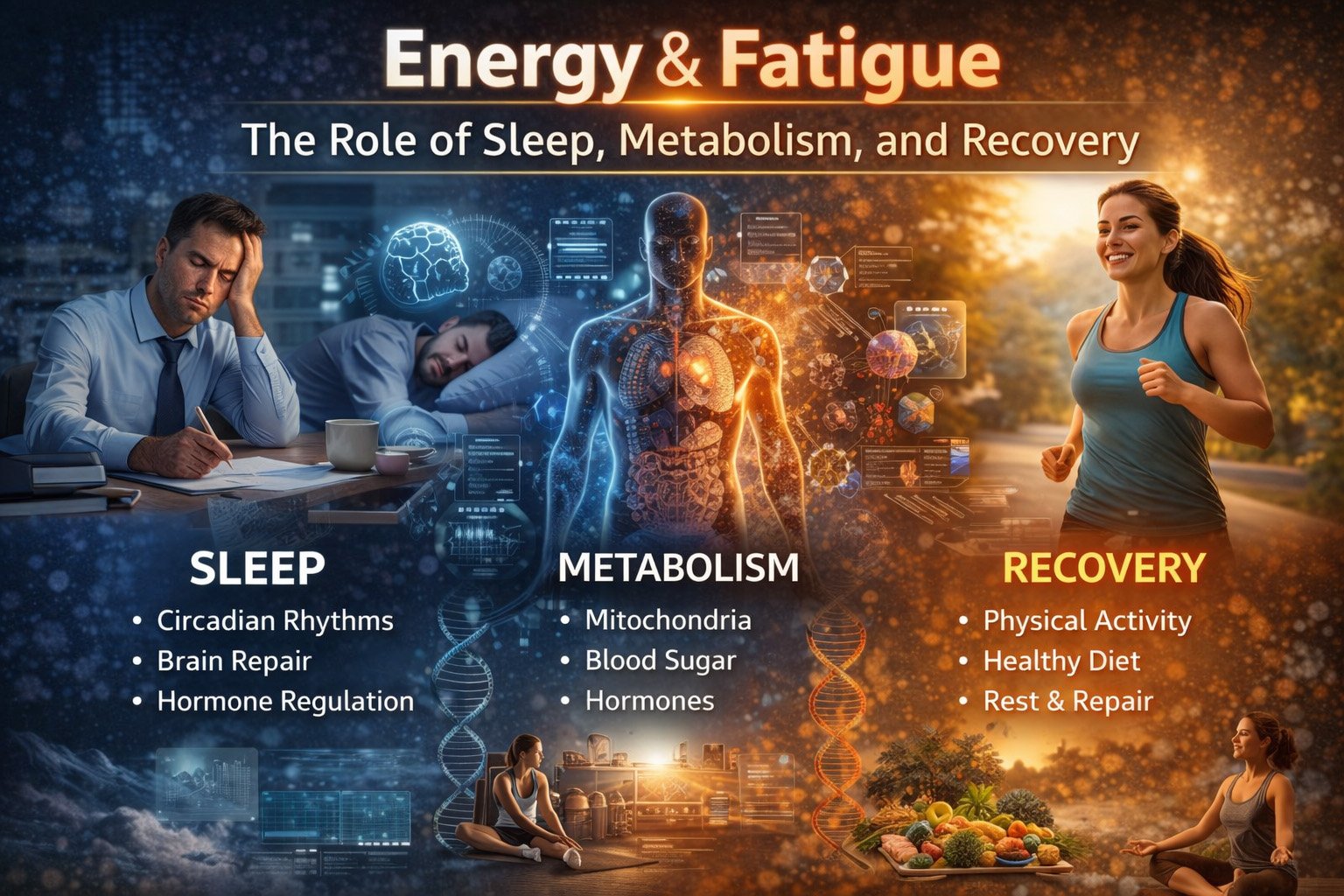
Energy & Fatigue: The Role of Sleep, Metabolism, and Recovery
VitaCoreBalance Editorial Team | Research-based health content • Editorial review process | March 2026
Energy is one of the most fundamental experiences of daily life. It determines how clearly we think, how efficiently we move, how resilient we feel under stress, and how well the body maintains health over time. Yet fatigue — the persistent feeling of low energy, exhaustion, or reduced capacity — has become increasingly common in modern societies.
Many people interpret fatigue as a simple lack of sleep or a sign of aging. In reality, energy levels are the result of complex biological processes involving sleep, metabolism, hormones, nutrition, physical activity, and recovery. When any of these systems becomes disrupted, fatigue can emerge — sometimes subtly, sometimes severely.
Understanding energy and fatigue requires looking beyond short-term tiredness and examining how the body produces, distributes, and restores energy at the cellular level. It also requires recognizing that rest and recovery are not luxuries, but essential biological functions.
What Is Energy in the Human Body?
Biological energy refers to the capacity of cells to perform work. Every heartbeat, muscle contraction, nerve signal, and immune response depends on energy production inside the body.
This energy is generated primarily in small cellular structures called mitochondria. These organelles convert nutrients — especially carbohydrates, fats, and oxygen — into a molecule known as ATP (adenosine triphosphate), which acts as the body’s immediate energy source.
Energy production depends on several key factors:
- Adequate oxygen supply
- Nutrient availability
- Healthy mitochondria
- Balanced hormones
- Proper sleep cycles
- Efficient metabolism
When these systems function well, energy levels tend to be stable. When they become impaired, fatigue often develops.
The Central Role of Sleep in Energy Regulation
Sleep is one of the most powerful regulators of energy in the human body. During sleep, the brain and body perform essential maintenance processes that cannot occur efficiently during wakefulness.
These processes include:
- Cellular repair
- Hormonal regulation
- Memory consolidation
- Immune system activation
- Energy restoration
- Metabolic recalibration
Sleep also regulates circadian rhythms — the internal biological clock that controls sleep-wake cycles, hormone release, body temperature, and energy levels throughout the day.
When sleep quality or duration is insufficient, the consequences can appear quickly.
Common effects of poor sleep include:
- Daytime fatigue
- Reduced concentration
- Slower reaction time
- Mood instability
- Increased appetite
- Lower physical performance
Chronic sleep deprivation can lead to deeper health problems, including metabolic disorders, cardiovascular disease, and weakened immune function.
Sleep Debt and Cumulative Fatigue
Fatigue does not always result from a single night of poor sleep. It often accumulates gradually through a process known as sleep debt.
Sleep debt occurs when the body consistently receives less sleep than it needs. Over time, this deficit builds and leads to persistent tiredness, reduced productivity, and impaired recovery.
Unlike acute tiredness, chronic fatigue can affect:
- Cognitive performance
- Emotional regulation
- Immune defenses
- Hormonal balance
- Metabolic efficiency
Recovery from sleep debt usually requires multiple nights of consistent, adequate sleep.
Metabolism: The Engine of Energy Production
Metabolism refers to the set of chemical reactions that convert food into usable energy. It determines how efficiently the body extracts energy from nutrients and how quickly that energy becomes available to cells.
Several factors influence metabolic efficiency:
- Nutritional status
- Hormone levels
- Body composition
- Physical activity
- Age
- Sleep quality
- Stress levels
When metabolism is functioning properly, energy production remains stable throughout the day. When metabolic processes become impaired, fatigue often follows.
Blood Sugar Stability and Energy Levels
One of the most immediate drivers of energy fluctuations is blood glucose — the primary fuel for the brain and muscles.
Stable blood sugar levels support consistent energy. Rapid spikes and drops in glucose can produce cycles of energy surges followed by sudden fatigue.
Common causes of unstable blood sugar include:
- High intake of refined carbohydrates
- Irregular meal timing
- Excess sugar consumption
- Low fiber intake
- Insufficient protein
- Poor sleep
Symptoms of unstable blood sugar may include:
- Sudden tiredness
- Difficulty concentrating
- Irritability
- Hunger cravings
- Headaches
Maintaining balanced nutrition helps stabilize energy levels throughout the day.
The Role of Hormones in Energy and Fatigue
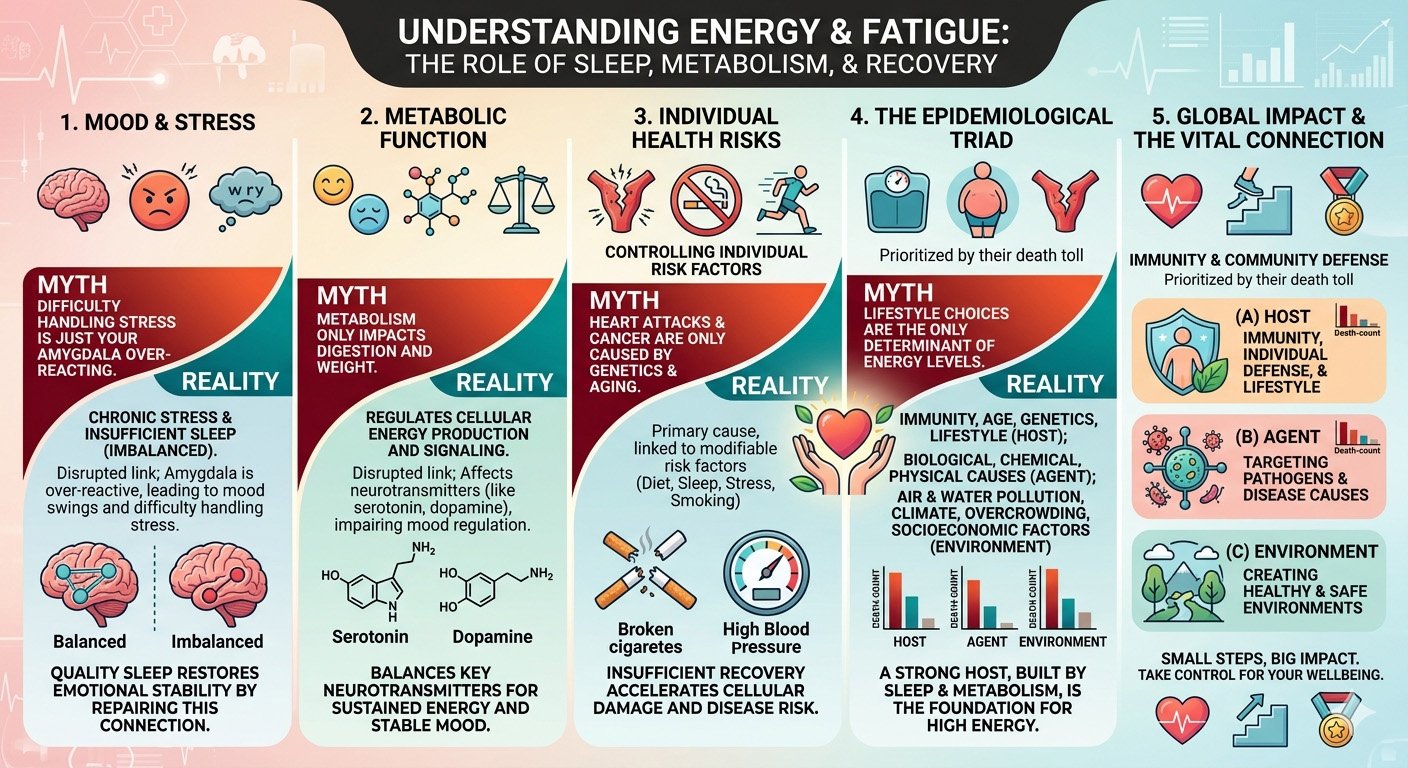
Hormones act as chemical messengers that regulate energy production, sleep, metabolism, and recovery. Several hormones play particularly important roles in maintaining energy balance.
Cortisol
Often called the stress hormone, cortisol helps mobilize energy during physical or psychological stress. It increases alertness and supports survival responses.
However, chronically elevated cortisol levels can lead to:
- Persistent fatigue
- Sleep disruption
- Muscle breakdown
- Increased inflammation
- Reduced immune function
Balanced cortisol rhythms are essential for sustained energy.
Thyroid Hormones
Thyroid hormones regulate metabolic rate — the speed at which the body uses energy.
When thyroid function is reduced, energy production slows, leading to:
- Fatigue
- Cold sensitivity
- Weight gain
- Slowed thinking
- Reduced physical stamina
Proper thyroid function is critical for maintaining energy levels.
Insulin
Insulin controls how glucose enters cells to be used as energy.
Insulin resistance — a condition in which cells respond poorly to insulin — can lead to:
- Persistent fatigue
- Weight gain
- Elevated blood sugar
- Increased risk of diabetes
Energy stability depends heavily on insulin sensitivity.
Recovery: The Missing Link in Modern Energy Management
In many modern lifestyles, activity is emphasized while recovery is neglected. Yet recovery is not simply rest — it is an active biological process that restores physical and mental capacity.
Recovery allows the body to:
- Repair damaged tissues
- Replenish energy stores
- Restore hormone balance
- Reduce inflammation
- Strengthen the immune system
- Rebuild muscle and cellular structures
Without adequate recovery, fatigue becomes more likely — even in individuals who sleep regularly.
Physical Activity and Energy Efficiency
Physical activity is often associated with energy expenditure, but paradoxically, regular exercise increases long-term energy levels.
Exercise improves:
- Mitochondrial function
- Oxygen delivery
- Muscle efficiency
- Hormonal balance
- Sleep quality
- Stress tolerance
People who engage in consistent physical activity often report greater energy and reduced fatigue compared to sedentary individuals.
This effect occurs because the body adapts to physical demand by becoming more efficient at producing energy.
Mental Fatigue and Cognitive Load
Fatigue is not always physical. Mental fatigue can arise from prolonged concentration, emotional stress, or continuous exposure to information.
Modern environments often place heavy cognitive demands on the brain through:
- Digital screens
- Multitasking
- Constant notifications
- Long working hours
- Emotional stress
Mental fatigue can produce symptoms similar to physical exhaustion, including:
- Difficulty focusing
- Slower thinking
- Reduced motivation
- Irritability
- Decision fatigue
Regular breaks, sleep, and stress management support mental recovery.
Inflammation and Chronic Fatigue
Low-grade inflammation is increasingly recognized as a contributor to persistent fatigue. Inflammation is part of the body’s natural defense system, but when it becomes chronic, it can disrupt energy production and recovery.
Common triggers of chronic inflammation include:
- Poor sleep
- Unhealthy diet
- Sedentary behavior
- Chronic stress
- Obesity
- Infection
- Environmental exposures
Inflammation affects mitochondrial function and can reduce the body’s ability to generate energy efficiently.
Aging, Energy, and Resilience
Energy levels often decline with age, but this decline is not inevitable. Much of the change results from lifestyle factors rather than aging alone.
Key contributors to age-related fatigue include:
- Reduced physical activity
- Loss of muscle mass
- Poor sleep quality
- Chronic disease
- Nutritional deficiencies
- Hormonal changes
Maintaining healthy habits can significantly slow the decline in energy associated with aging.
Warning Signs of Persistent Fatigue
Occasional tiredness is normal. However, persistent fatigue may signal underlying health problems.
Warning signs include:
- Fatigue lasting several weeks or months
- Difficulty functioning in daily activities
- Unrefreshing sleep
- Shortness of breath
- Unexplained weight changes
- Memory problems
- Persistent muscle weakness
When fatigue becomes chronic or severe, medical evaluation may be necessary.
Building Sustainable Energy Through Daily Habits
Energy is not determined by a single factor. It is the result of daily patterns that influence sleep, metabolism, and recovery.
Habits that support stable energy include:
- Consistent sleep schedules
- Balanced nutrition
- Regular physical activity
- Stress management
- Adequate hydration
- Scheduled recovery time
- Exposure to natural light
These behaviors strengthen the body’s energy systems and reduce the risk of chronic fatigue.
Energy as a Reflection of Biological Balance
Energy levels reflect the state of the body’s internal systems. When sleep, metabolism, hormones, and recovery are aligned, energy tends to be stable and sustainable. When these systems become disrupted, fatigue often emerges as an early warning signal.
Rather than viewing fatigue as a weakness or inconvenience, it can be understood as a biological message — a sign that the body requires rest, recovery, or adjustment.
Maintaining energy is not about pushing harder. It is about supporting the systems that allow the body to function efficiently, adapt to stress, and sustain health over time.
Medical Disclaimer
This content is for informational purposes only and does not constitute medical advice. Always consult a qualified healthcare professional.
Editorial Transparency
This article was created following evidence-based health content guidelines and reviewed by the VitaCoreBalance Editorial Team.
Sources
- https://www.cdc.gov/sleep/about_sleep/how_much_sleep.html
- https://www.nhlbi.nih.gov/health/sleep-deprivation
- https://www.ninds.nih.gov/health-information/disorders/fatigue
- https://www.ncbi.nlm.nih.gov/books/NBK279077/
- https://www.who.int/news-room/fact-sheets/detail/physical-activity
- https://www.ncbi.nlm.nih.gov/pmc/articles/PMC6836141/