
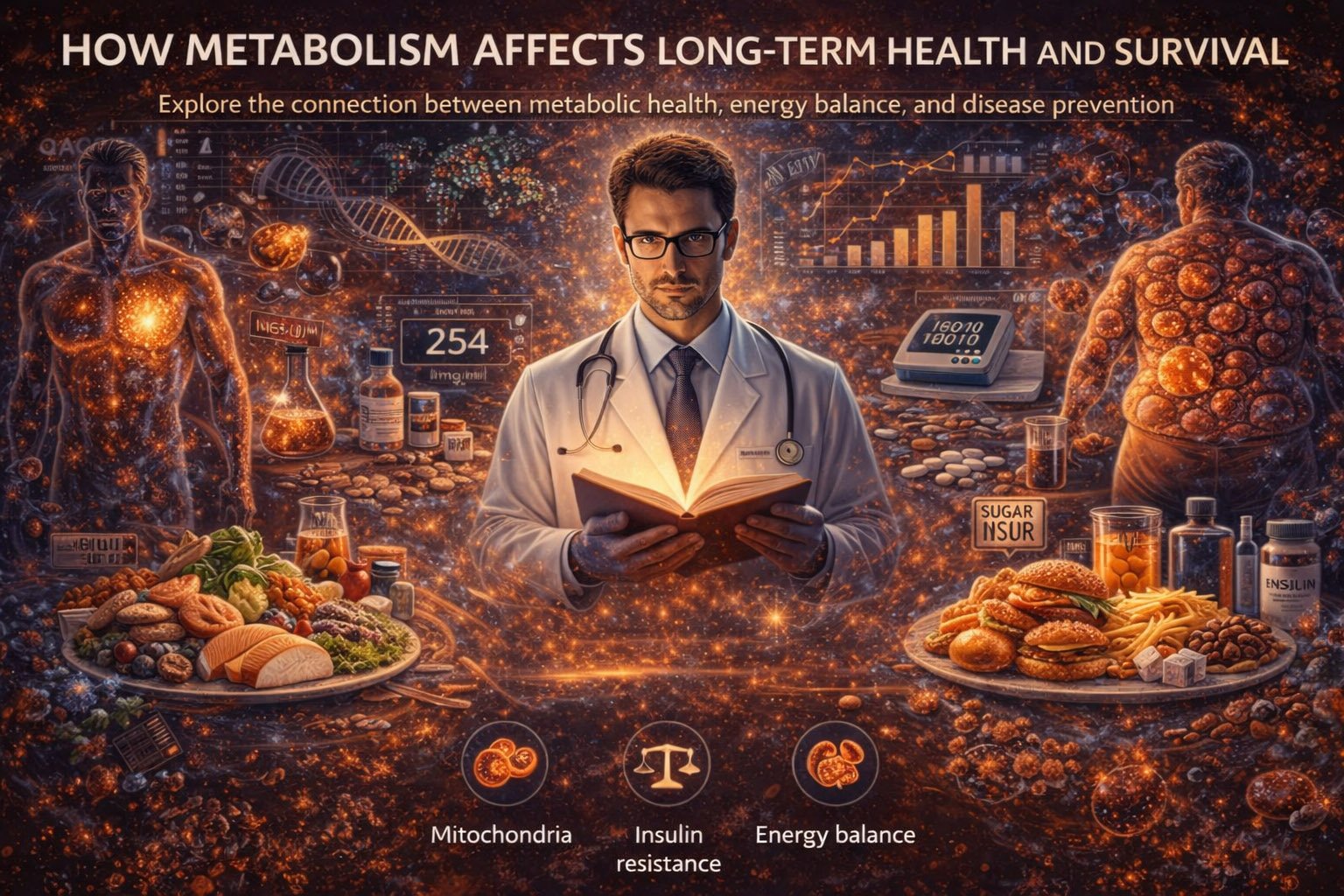
How Metabolism Affects Long-Term Health and Survival
Exploring the Connection Between Metabolic Health, Energy Balance, and Disease Prevention
VitaCoreBalance Editorial Team | Research-based health content • Editorial review process | March 2026
Metabolism is one of the most fundamental processes sustaining human life. It determines how efficiently the body converts food into energy, regulates hormones, maintains cellular repair, and supports immune function. Yet despite its central role in survival, metabolism is often misunderstood—reduced to weight loss or calorie burning.
In reality, metabolic health influences nearly every aspect of long-term well-being, including disease risk, aging, and lifespan. Poor metabolic function is strongly associated with conditions such as cardiovascular disease, type 2 diabetes, obesity, and metabolic syndrome. Conversely, a well-regulated metabolism supports resilience, longevity, and overall physiological stability.
Understanding how metabolism works—and how daily habits influence it—has become one of the most important strategies for preventing chronic disease in modern society.
What Is Metabolism?
Metabolism refers to the complex network of chemical reactions that keep the body alive. These reactions allow the body to:
- Produce energy from nutrients
- Build and repair tissues
- Maintain body temperature
- Regulate hormones
- Eliminate waste products
- Support immune and brain function
Metabolism operates continuously, even during sleep.
It includes two primary processes:
Catabolism
Breaking down molecules to release energy.
Examples:
- Digestion of carbohydrates
- Breakdown of fats
- Protein metabolism
Anabolism
Building molecules needed for growth and repair.
Examples:
- Muscle tissue formation
- Bone growth
- Hormone production
These two processes must remain balanced for optimal health.
Energy Balance: The Foundation of Metabolic Health
One of the most critical concepts in metabolism is energy balance, the relationship between calories consumed and calories expended.
When energy intake consistently exceeds energy expenditure, excess energy is stored—primarily as body fat. Over time, this imbalance can lead to obesity and metabolic dysfunction.
When energy expenditure matches intake, body weight and metabolic stability are maintained.
When expenditure exceeds intake, the body mobilizes stored energy.
This relationship explains why metabolism plays a central role in long-term health and disease prevention.
Basal Metabolic Rate: The Energy Required to Stay Alive
BMR=energy required to maintain vital functions at restBMR = \text{energy required to maintain vital functions at rest}BMR=energy required to maintain vital functions at rest
Basal metabolic rate (BMR) represents the minimum amount of energy the body needs to sustain essential functions such as:
- Breathing
- Circulation
- Brain activity
- Cell repair
- Temperature regulation
For most adults, BMR accounts for:
60% to 75% of daily energy expenditure
Factors influencing BMR include:
- Age
- Body composition
- Sex
- Genetics
- Hormonal balance
- Physical activity level
Loss of muscle mass with aging is one of the main reasons metabolism slows over time.
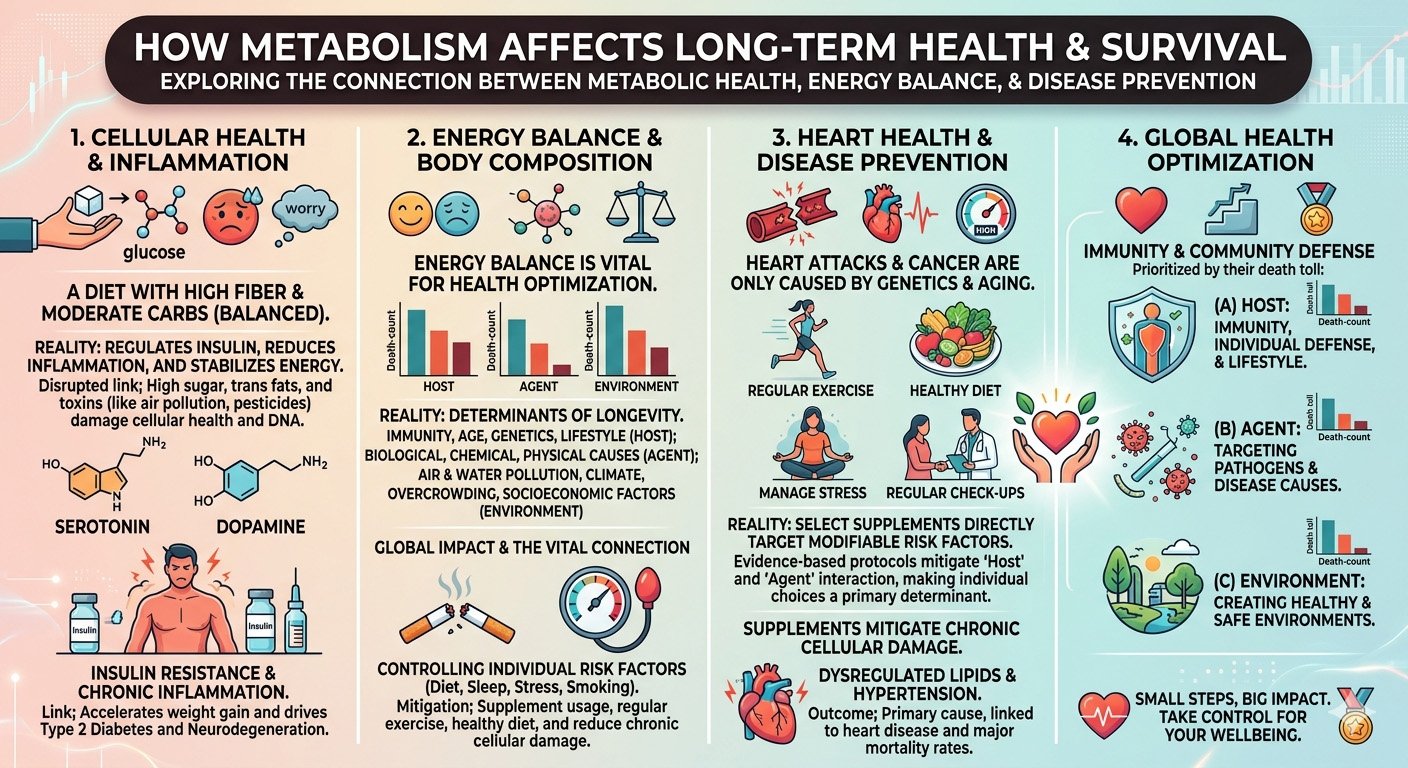
Metabolic Health and Chronic Disease Risk
Metabolic dysfunction is a major driver of chronic disease.
When metabolism becomes impaired, the body loses its ability to regulate blood sugar, fats, and energy efficiently. This leads to systemic stress and inflammation.
Conditions strongly linked to metabolic dysfunction include:
- Cardiovascular disease
- Type 2 diabetes
- Obesity
- Fatty liver disease
- Hypertension
- Kidney disease
- Stroke
Metabolic health is now considered one of the strongest predictors of long-term survival.
Insulin Resistance: The Early Warning Sign
One of the earliest indicators of metabolic dysfunction is insulin resistance.
In this condition:
Cells become less responsive to insulin, forcing the body to produce more of the hormone to maintain normal blood sugar levels.
Over time, this leads to:
- Elevated blood glucose
- Increased fat storage
- Chronic inflammation
- Hormonal imbalance
Insulin resistance often develops silently years before diabetes is diagnosed.
Common risk factors include:
- Excess body fat
- Sedentary lifestyle
- High sugar intake
- Poor sleep
- Chronic stress
- Aging
Metabolism and Aging
Metabolism changes gradually with age.
These changes include:
- Reduced muscle mass
- Slower cellular repair
- Hormonal shifts
- Increased fat accumulation
- Decreased mitochondrial efficiency
This process is sometimes referred to as metabolic aging.
However, metabolism does not decline uniformly. Lifestyle factors play a dominant role in determining how quickly metabolic function changes over time.
Research consistently shows that physically active individuals maintain healthier metabolism well into older age.
The Role of Mitochondria in Energy Production
Mitochondria are often called the powerhouses of the cell because they generate the energy required for cellular activity.
Their primary function is to produce ATP, the molecule that powers biological processes.
Healthy mitochondria support:
- Physical endurance
- Brain function
- Immune response
- Cellular repair
- Longevity
Mitochondrial dysfunction has been linked to:
- Aging
- Neurodegenerative diseases
- Chronic fatigue
- Metabolic disorders
- Cardiovascular disease
Protecting mitochondrial health is increasingly recognized as a key factor in disease prevention.
Metabolic Syndrome: A Cluster of Risk Factors
Metabolic syndrome is not a single disease but a combination of conditions that dramatically increase the risk of heart disease and diabetes.
It typically includes:
- Abdominal obesity
- High blood pressure
- High blood sugar
- High triglycerides
- Low HDL cholesterol
Having three or more of these factors significantly raises the risk of long-term health complications.
Metabolic syndrome is now considered one of the most important predictors of premature mortality.
Inflammation and Metabolic Dysfunction
Chronic low-grade inflammation is a central mechanism linking metabolism to disease.
Inflammation disrupts metabolic processes and damages tissues over time.
It contributes to:
- Insulin resistance
- Atherosclerosis
- Obesity
- Diabetes
- Cardiovascular disease
This is why inflammation is often described as a biological bridge between lifestyle and chronic illness.
Lifestyle Factors That Shape Metabolic Health
Metabolism is highly responsive to daily behavior.
Small habits repeated consistently over time can either protect or damage metabolic function.
Nutrition
Diet quality strongly influences metabolism.
Key dietary factors include:
- Whole foods
- Fiber intake
- Protein consumption
- Healthy fats
- Micronutrients
Diets high in ultra-processed foods and added sugars increase the risk of metabolic disease.
Physical Activity
Regular exercise improves metabolic efficiency and insulin sensitivity.
Benefits include:
- Increased muscle mass
- Improved glucose regulation
- Reduced inflammation
- Better cardiovascular health
Physical activity is one of the most powerful interventions for metabolic health.
Sleep
Sleep plays a critical role in hormonal regulation and energy balance.
Poor sleep is associated with:
- Insulin resistance
- Weight gain
- Increased appetite
- Hormonal imbalance
- Reduced metabolic efficiency
Adults typically require:
7 to 9 hours of sleep per night.
Stress
Chronic stress affects metabolism through hormonal pathways.
Long-term stress can:
- Increase cortisol levels
- Promote fat storage
- Raise blood sugar
- Disrupt sleep
- Increase inflammation
Stress management is therefore a key component of metabolic health.
Why Metabolic Health Matters for Survival
Metabolism is not just about energy—it is about survival.
Healthy metabolism supports:
- Disease resistance
- Physical resilience
- Cognitive performance
- Immune function
- Longevity
Poor metabolic health, by contrast, increases the risk of nearly every major chronic disease.
This is why metabolic function is increasingly viewed as a central determinant of long-term health outcomes.
The Future of Metabolic Health and Disease Prevention
Healthcare is shifting toward early detection of metabolic dysfunction.
Emerging approaches include:
- Continuous glucose monitoring
- Personalized nutrition
- Wearable health technology
- Metabolic biomarkers
- Preventive medicine
- Lifestyle medicine
These innovations aim to identify risk earlier—before disease develops.
Final Perspective
Metabolism is the engine of human health.
It governs how the body uses energy, responds to stress, repairs damage, and resists disease. Over time, metabolic efficiency becomes one of the strongest predictors of survival and quality of life.
Long-term health is rarely determined by a single event. It is shaped by daily metabolic decisions repeated consistently over years.
Understanding metabolism is therefore not just a scientific concept—it is a practical strategy for longevity.
Medical Disclaimer
This content is for informational purposes only and does not constitute medical advice. Always consult a qualified healthcare professional.
Editorial Transparency
This article was created following evidence-based health content guidelines and reviewed by the VitaCoreBalance Editorial Team.
Sources
1. National Institute of Diabetes and Digestive and Kidney Diseases (NIDDK) — Your Metabolism and Weight Loss
https://www.niddk.nih.gov/health-information/weight-management/metabolism-weight-loss
2. Harvard Health Publishing — Metabolism and Weight: What You Need to Know
https://www.health.harvard.edu/staying-healthy/the-truth-about-metabolism
3. Centers for Disease Control and Prevention (CDC) — About Adult Overweight and Obesity
https://www.cdc.gov/obesity/adult/causes.html
4. World Health Organization (WHO) — Obesity and Overweight Fact Sheet
https://www.who.int/news-room/fact-sheets/detail/obesity-and-overweight
5. National Institute on Aging (NIA) — Metabolism and Aging
https://www.nia.nih.gov/health/metabolism-and-aging
6. Mayo Clinic — Metabolism and Weight Loss: How You Burn Calories
https://www.mayoclinic.org/healthy-lifestyle/weight-loss/in-depth/metabolism/art-20046508