
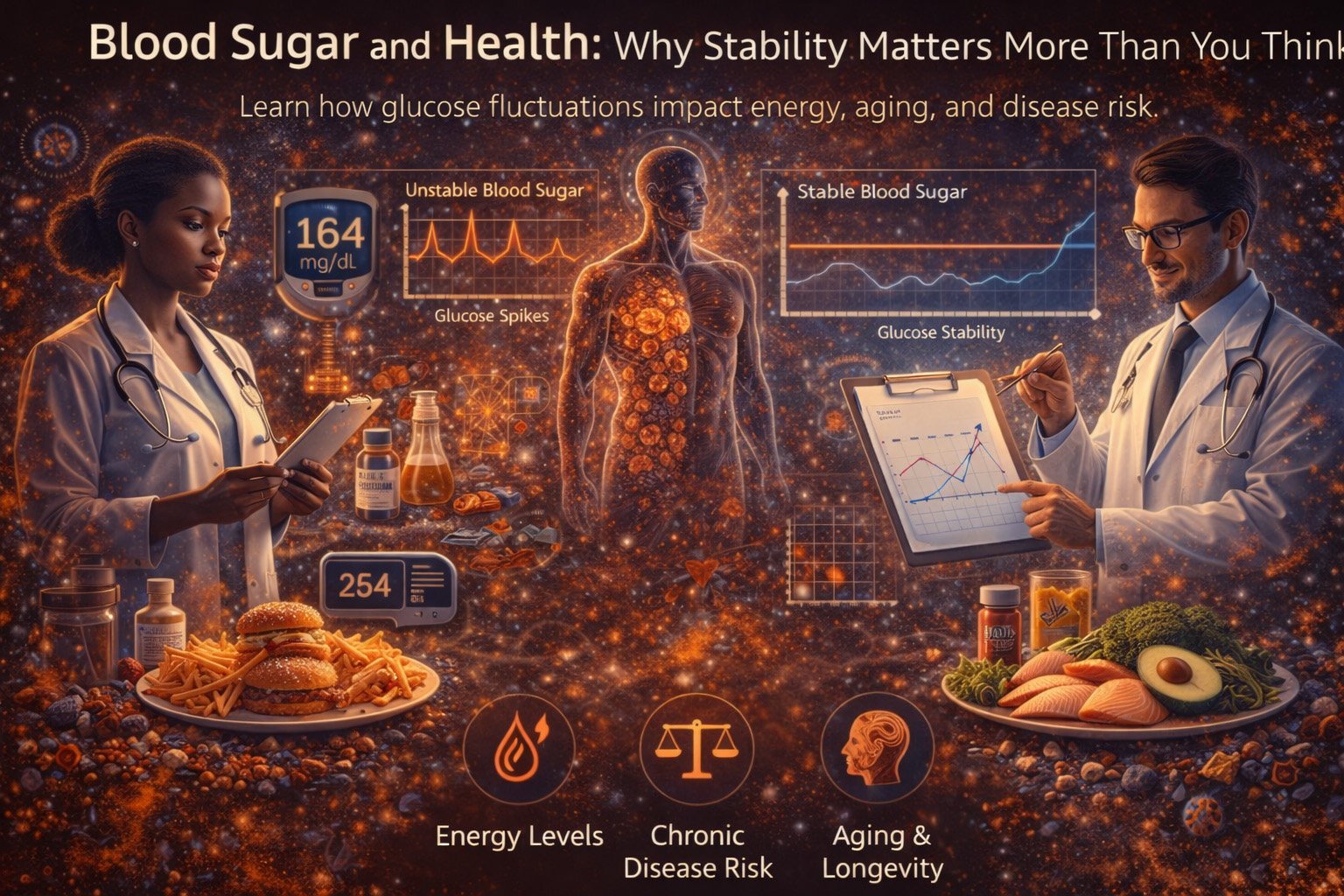
Blood Sugar and Health: Why Stability Matters More Than You Think
Learn How Glucose Fluctuations Impact Energy, Aging, and Chronic Disease Risk
VitaCoreBalance Editorial Team | Research-based health content • Editorial review process | March 2026
Blood sugar, or blood glucose, is one of the most tightly regulated variables in human physiology. It fuels the brain, supports muscle activity, and sustains cellular function. Yet despite its central role in survival, blood sugar regulation often receives attention only after problems arise—when fatigue becomes chronic, weight increases, or a diagnosis such as diabetes is made.
In reality, blood sugar stability is a cornerstone of long-term health. Even in individuals without diabetes, repeated glucose spikes and crashes can affect energy levels, cognitive performance, inflammation, and metabolic health. Over time, unstable blood sugar regulation contributes to aging-related decline and increases the risk of chronic diseases such as cardiovascular disease, obesity, and type 2 diabetes.
Understanding how blood sugar works—and how daily habits influence it—is one of the most practical strategies for protecting health and longevity.
What Is Blood Sugar?
Blood sugar refers to the concentration of glucose circulating in the bloodstream. Glucose is the body’s primary source of energy, derived mainly from carbohydrates in food.
After eating:
- Carbohydrates are broken down into glucose
- Glucose enters the bloodstream
- The pancreas releases insulin
- Cells absorb glucose for energy
This process allows the body to maintain stable energy supply throughout the day.
How Blood Sugar Is Regulated
The body uses a complex hormonal system to maintain blood glucose within a narrow range.
Two key hormones play central roles:
Insulin
- Lowers blood sugar
- Helps cells absorb glucose
- Promotes energy storage
Glucagon
- Raises blood sugar
- Stimulates release of stored glucose
- Maintains energy between meals
Together, these hormones create a dynamic balance that keeps blood sugar stable.
Normal Blood Sugar Range
Normal fasting blood glucose=70–99 mg/dL\text{Normal fasting blood glucose} = 70\text{–}99\ \text{mg/dL}Normal fasting blood glucose=70–99 mg/dL
Typical ranges for healthy adults:
Fasting:
70–99 mg/dL
After meals:
Less than 140 mg/dL
Maintaining blood sugar within this range supports metabolic stability and reduces long-term health risks.
Why Blood Sugar Stability Matters
Many people focus only on average blood sugar levels. However, fluctuations—the rapid rises and falls in glucose—can be just as important.
Repeated spikes and crashes can:
- Trigger fatigue
- Increase hunger
- Promote fat storage
- Raise inflammation
- Accelerate aging
- Increase disease risk
Stable blood sugar helps maintain consistent energy, mental clarity, and metabolic balance.
The Hidden Effects of Blood Sugar Spikes
Rapid increases in blood glucose place stress on the body.
These spikes often occur after:
- Sugary foods
- Refined carbohydrates
- Large meals
- Sedentary behavior
- Poor sleep
Over time, frequent spikes can lead to:
- Insulin resistance
- Weight gain
- Chronic inflammation
- Metabolic dysfunction
- Cardiovascular disease
This process can develop gradually and remain unnoticed for years.
Blood Sugar and Energy Levels
One of the most immediate effects of unstable blood sugar is fluctuating energy.
When blood sugar rises quickly:
Energy increases temporarily.
When blood sugar falls rapidly:
Fatigue often follows.
Common symptoms of unstable blood sugar include:
- Afternoon energy crashes
- Brain fog
- Irritability
- Difficulty concentrating
- Strong sugar cravings
These symptoms are frequently misattributed to stress or lack of sleep, when blood sugar instability may be the underlying cause.
Blood Sugar and Aging
Blood sugar regulation plays a significant role in the aging process.
Chronically elevated glucose levels contribute to:
- Cellular damage
- Oxidative stress
- Inflammation
- Tissue degeneration
One important mechanism is glycation, a process in which glucose binds to proteins and damages tissues.
Glycation is associated with:
- Skin aging
- Vascular damage
- Kidney disease
- Cognitive decline
- Reduced lifespan
Maintaining stable blood sugar helps slow these processes.
Insulin Resistance: The Turning Point
Insulin resistance occurs when cells become less responsive to insulin.
As a result:
- The pancreas produces more insulin
- Blood sugar remains elevated
- Fat storage increases
- Inflammation rises
Insulin resistance is a major risk factor for:
- Type 2 diabetes
- Heart disease
- Obesity
- Metabolic syndrome
It often develops silently over many years.
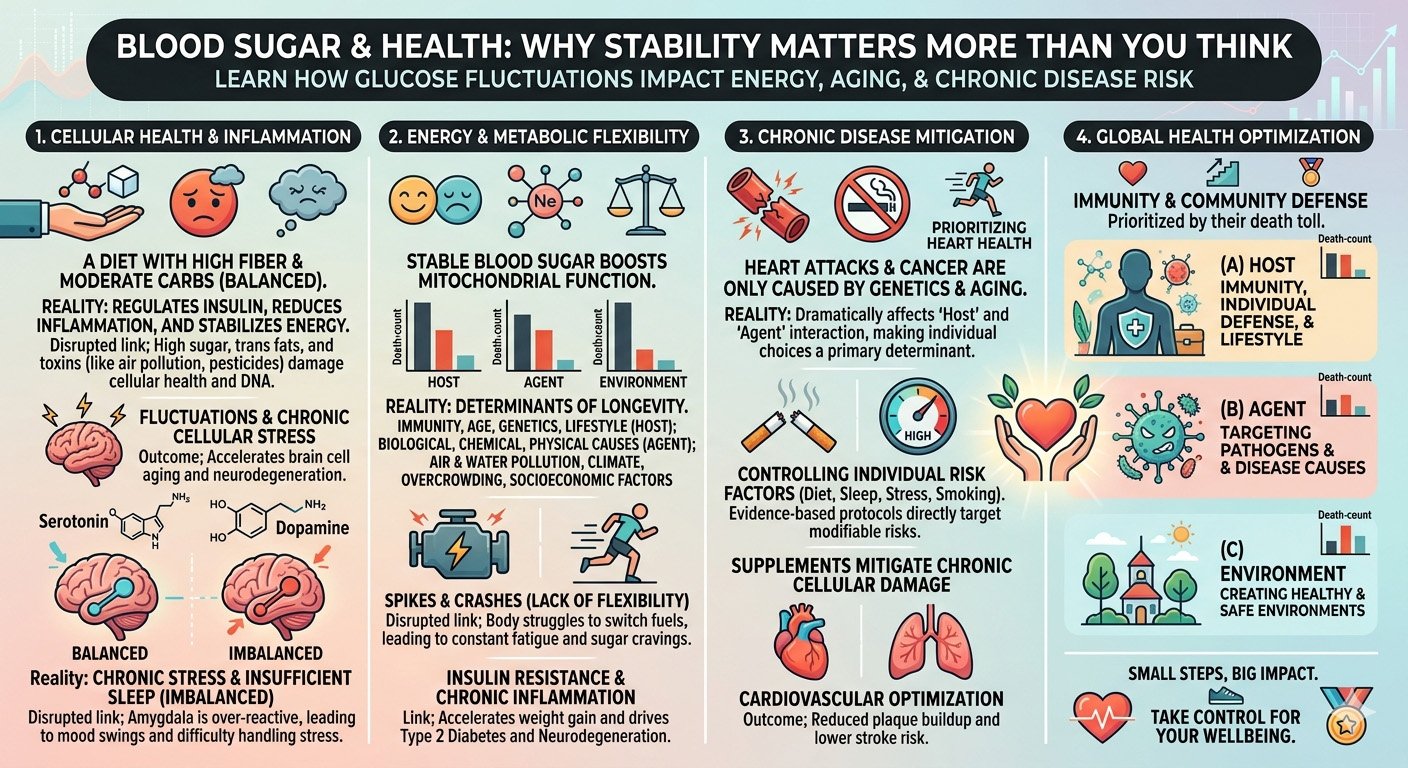
Blood Sugar and Chronic Disease Risk
Persistent blood sugar instability is strongly associated with long-term disease.
Conditions linked to poor glucose regulation include:
- Cardiovascular disease
- Type 2 diabetes
- Obesity
- Fatty liver disease
- Stroke
- Kidney disease
- Neurological disorders
Blood sugar regulation is therefore not just a metabolic issue—it is a fundamental determinant of health and survival.
Factors That Influence Blood Sugar Stability
Blood sugar is highly responsive to daily behavior.
Small lifestyle choices repeated consistently can dramatically affect glucose control.
Diet
Nutrition is the most powerful driver of blood sugar levels.
Key dietary factors include:
- Carbohydrate quality
- Fiber intake
- Protein consumption
- Meal timing
- Portion size
Foods that promote stable blood sugar:
- Vegetables
- Whole grains
- Lean proteins
- Healthy fats
- Fiber-rich foods
Foods that promote spikes:
- Sugary beverages
- Refined carbohydrates
- Processed snacks
- High-sugar desserts
Physical Activity
Exercise improves insulin sensitivity and helps regulate glucose levels.
Benefits include:
- Lower blood sugar
- Increased energy
- Reduced inflammation
- Improved metabolic health
Even moderate physical activity can significantly improve glucose control.
Sleep
Sleep plays a critical role in hormone regulation.
Poor sleep can:
- Increase insulin resistance
- Raise blood sugar
- Increase appetite
- Reduce metabolic efficiency
Sleep deprivation is increasingly recognized as a risk factor for metabolic disease.
Stress
Stress affects blood sugar through hormonal pathways.
Chronic stress can:
- Increase cortisol
- Raise blood glucose
- Promote fat storage
- Disrupt sleep
- Increase inflammation
Stress management is therefore an important component of metabolic health.
The Long-Term Benefits of Blood Sugar Stability
Maintaining stable blood sugar supports:
- Consistent energy
- Healthy weight
- Reduced inflammation
- Better cognitive function
- Improved cardiovascular health
- Slower aging
- Lower disease risk
These benefits accumulate gradually over time.
The Future of Blood Sugar Monitoring
Technology is transforming how individuals monitor and manage glucose.
Emerging tools include:
- Continuous glucose monitors (CGMs)
- Wearable health devices
- Personalized nutrition
- Metabolic tracking
- Predictive health analytics
These innovations allow earlier detection of metabolic problems and more precise prevention strategies.
Final Perspective
Blood sugar stability is one of the most powerful indicators of long-term health.
It influences energy, metabolism, aging, and disease risk. While dramatic medical interventions often receive attention, the most important factors shaping blood sugar are daily habits—what we eat, how we move, how we sleep, and how we manage stress.
Over time, stable blood sugar becomes a foundation for resilience, longevity, and sustained health.
Medical Disclaimer
This content is for informational purposes only and does not constitute medical advice. Always consult a qualified healthcare professional.
Editorial Transparency
This article was created following evidence-based health content guidelines and reviewed by the VitaCoreBalance Editorial Team.
Sources
1. Centers for Disease Control and Prevention (CDC) — Blood Sugar and Diabetes Basics
https://www.cdc.gov/diabetes/basics/diabetes.html
2. National Institute of Diabetes and Digestive and Kidney Diseases (NIDDK) — Blood Glucose Monitoring
https://www.niddk.nih.gov/health-information/diabetes/overview/managing-diabetes/blood-glucose-monitoring
3. Mayo Clinic — Blood Sugar: Testing and Interpretation
https://www.mayoclinic.org/tests-procedures/blood-sugar-test/about/pac-20384640
4. American Diabetes Association — Understanding Blood Glucose and Control
https://diabetes.org/healthy-living/medication-treatments/blood-glucose-testing-and-control
5. Harvard Health Publishing — Abnormal Blood Sugar Levels and Health Risks
https://www.health.harvard.edu/diseases-and-conditions/prediabetes-a-warning-sign
6. World Health Organization (WHO) — Diabetes Fact Sheet
https://www.who.int/news-room/fact-sheets/detail/diabetes