
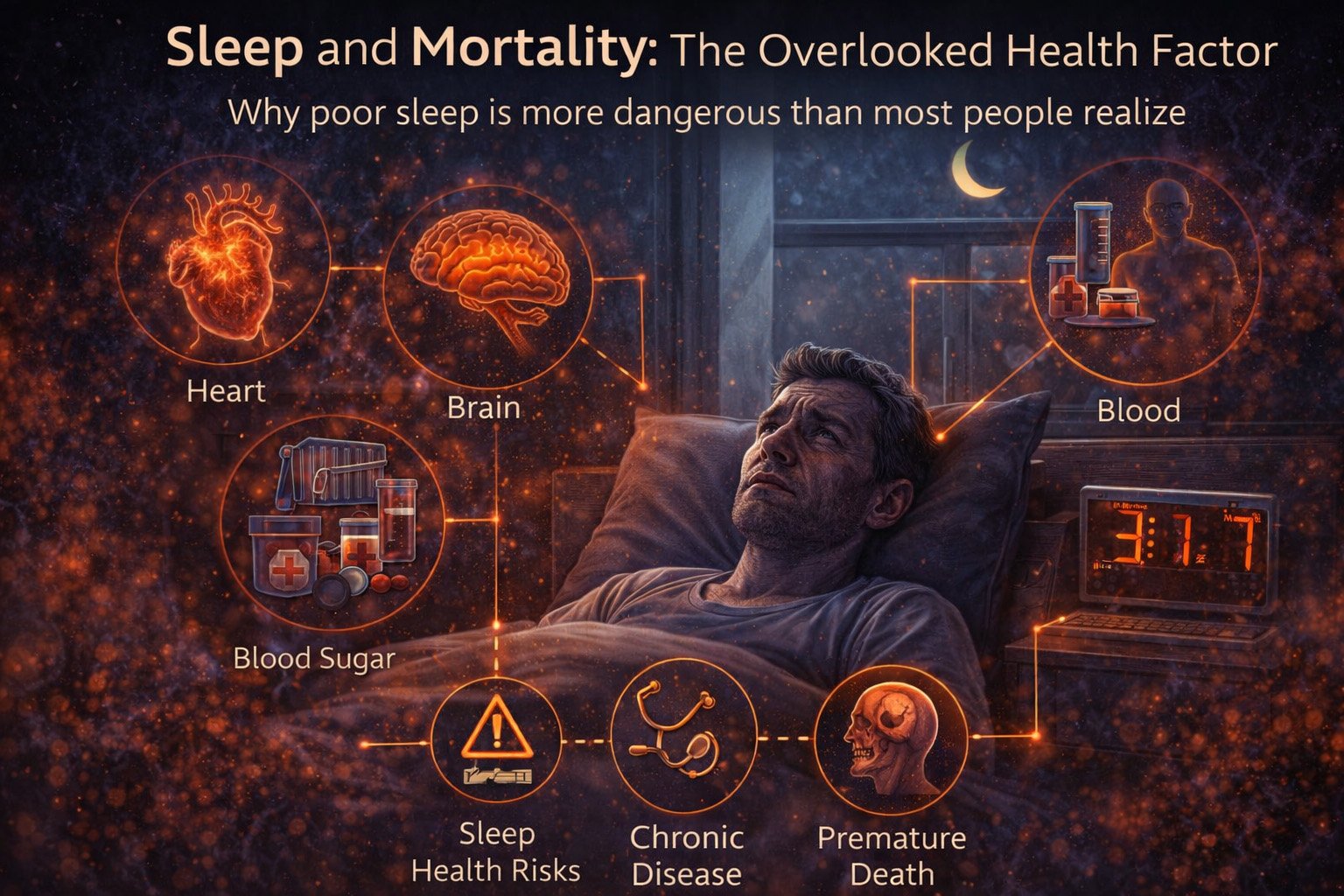
Sleep and Mortality: The Overlooked Health Factor
Why Poor Sleep Is More Dangerous Than Most People Realize
VitaCoreBalance Editorial Team | Research-based health content • Editorial review process | March 2026
Sleep is one of the most fundamental biological processes sustaining human life, yet it is often treated as optional. In modern society, sleep is frequently sacrificed for productivity, entertainment, or convenience. However, research consistently shows that insufficient or poor-quality sleep is strongly associated with increased risk of chronic disease, reduced life expectancy, and higher mortality rates.
Sleep is not simply a period of rest. It is an active physiological state during which the body repairs tissues, regulates hormones, consolidates memory, and restores metabolic balance. When sleep is disrupted, these processes become impaired, gradually increasing the risk of illness and premature death.
Understanding the role of sleep in long-term health is therefore essential for disease prevention and survival.
Why Sleep Matters for Survival
Sleep influences nearly every major system in the body.
It plays a critical role in:
- Immune function
- Hormonal regulation
- Brain health
- Cardiovascular stability
- Metabolic balance
- Emotional regulation
- Cellular repair
Without adequate sleep, these systems cannot function properly.
Over time, chronic sleep deprivation increases physiological stress and accelerates biological aging.
Recommended Sleep Duration for Adults
Recommended sleep duration for adults=7–9 hours per night\text{Recommended sleep duration for adults} = 7\text{–}9\ \text{hours per night}Recommended sleep duration for adults=7–9 hours per night
Most health authorities recommend:
7 to 9 hours of sleep per night for adults.
Sleeping significantly less—or significantly more—than this range is associated with increased health risks.
Both short sleep duration and excessive sleep can indicate underlying health problems.
The Link Between Poor Sleep and Mortality
Multiple large-scale studies have found strong associations between sleep duration and mortality risk.
Individuals who consistently sleep:
Less than 6 hours per night
or
More than 9 to 10 hours per night
have higher risk of:
- Cardiovascular disease
- Stroke
- Diabetes
- Obesity
- Depression
- Cognitive decline
- Premature death
Sleep is now considered a major predictor of long-term survival.
Sleep and Cardiovascular Disease
Poor sleep places stress on the cardiovascular system.
Sleep deprivation can:
- Raise blood pressure
- Increase inflammation
- Disrupt heart rhythm
- Promote atherosclerosis
- Increase risk of heart attack and stroke
Chronic sleep problems are strongly associated with hypertension and heart disease.
Sleep disorders such as sleep apnea are particularly dangerous because they repeatedly interrupt breathing during the night.
Sleep and Metabolic Health
Sleep plays a central role in metabolic regulation.
Insufficient sleep can:
- Increase insulin resistance
- Raise blood sugar levels
- Promote weight gain
- Disrupt appetite hormones
- Reduce metabolic efficiency
These effects explain why poor sleep is closely linked to obesity and type 2 diabetes.
Sleep deprivation also increases hunger by altering hormones such as:
- Ghrelin (increases appetite)
- Leptin (reduces appetite)
This hormonal imbalance can lead to overeating and long-term weight gain.
Sleep and the Immune System
The immune system depends on sleep to function effectively.
During sleep, the body produces immune cells and inflammatory regulators that help fight infection and repair tissues.
Poor sleep can:
- Reduce immune response
- Increase susceptibility to infections
- Slow recovery from illness
- Increase chronic inflammation
Sleep deprivation is therefore associated with both infectious disease risk and chronic disease development.
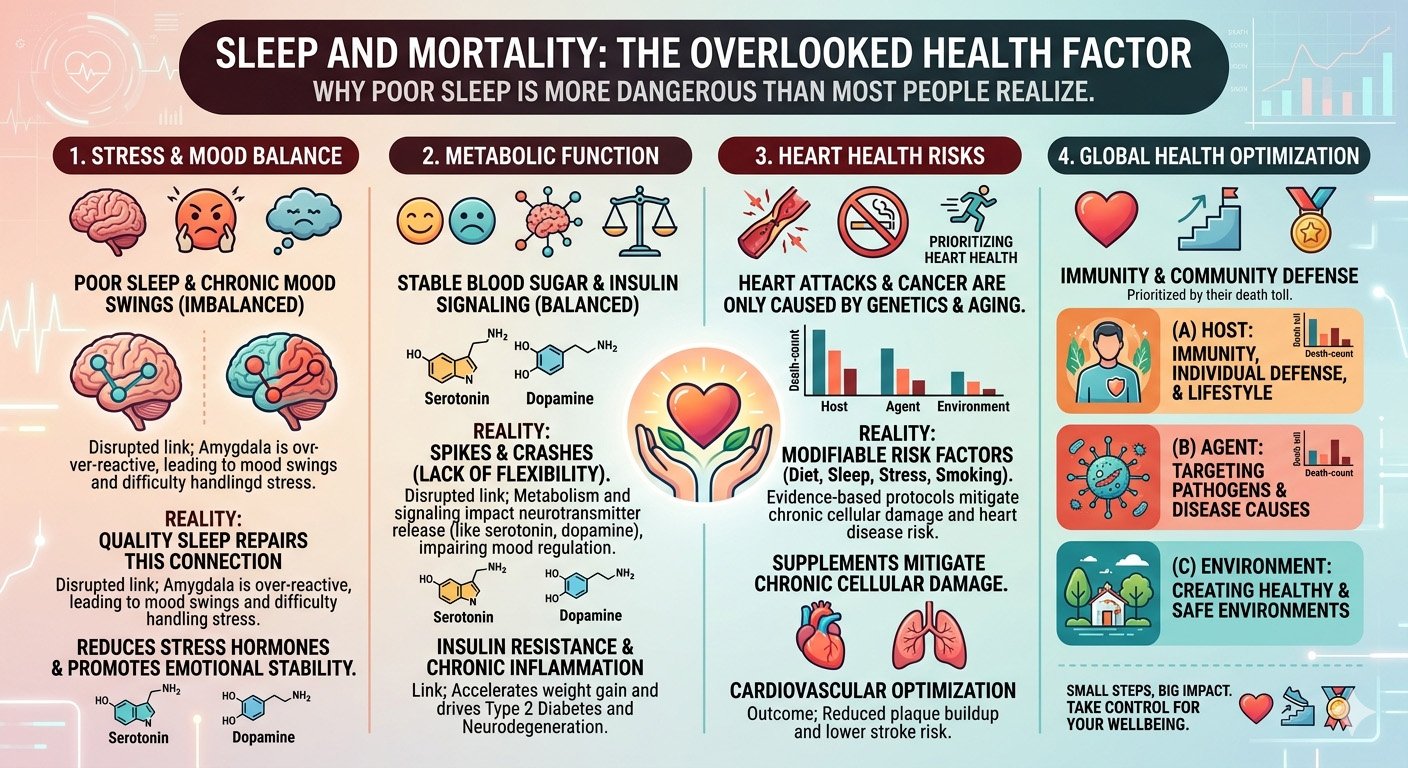
Sleep and Brain Health
Sleep is essential for cognitive function and neurological health.
During sleep, the brain clears metabolic waste products that accumulate during the day.
This process helps protect against:
- Memory decline
- Cognitive impairment
- Neurodegenerative diseases
- Alzheimer’s disease
Chronic sleep deprivation is increasingly recognized as a risk factor for long-term brain disorders.
Sleep and Inflammation
Sleep and inflammation are closely interconnected.
Poor sleep increases inflammatory activity in the body.
This relationship contributes to:
- Cardiovascular disease
- Diabetes
- Obesity
- Autoimmune disorders
- Accelerated aging
Chronic inflammation is one of the key mechanisms linking sleep problems to disease.
Sleep and Aging
Sleep patterns naturally change with age.
Common age-related changes include:
- Lighter sleep
- More frequent awakenings
- Earlier wake times
- Reduced deep sleep
However, poor sleep is not an inevitable part of aging.
Healthy sleep habits can significantly improve quality of life and longevity.
Sleep quality is increasingly recognized as a major determinant of healthy aging.
Common Causes of Poor Sleep
Sleep problems often develop gradually and may be influenced by multiple factors.
Common contributors include:
- Stress
- Irregular sleep schedules
- Excess screen time
- Caffeine consumption
- Alcohol use
- Lack of physical activity
- Shift work
- Chronic illness
Identifying these factors is an important step toward improving sleep quality.
Symptoms of Chronic Sleep Deprivation
Sleep deprivation can affect both physical and mental health.
Common symptoms include:
- Persistent fatigue
- Difficulty concentrating
- Mood changes
- Memory problems
- Reduced productivity
- Increased appetite
- Weakened immune function
- Increased risk of accidents
These symptoms often develop gradually and may be overlooked.
How Sleep Quality Affects Longevity
Sleep is increasingly recognized as one of the strongest predictors of lifespan.
Healthy sleep supports:
- Cardiovascular stability
- Metabolic balance
- Immune resilience
- Brain function
- Hormonal regulation
Poor sleep, by contrast, accelerates disease progression and increases mortality risk.
Sleep is therefore not just a lifestyle factor—it is a survival factor.
Strategies to Improve Sleep Quality
Improving sleep does not always require medication.
Small behavioral changes can significantly enhance sleep quality.
Maintain a Consistent Sleep Schedule
Going to bed and waking up at the same time each day helps regulate the body’s internal clock.
Create a Sleep-Friendly Environment
A healthy sleep environment includes:
- Darkness
- Quiet
- Comfortable temperature
- Minimal distractions
Limit Screen Exposure Before Bed
Exposure to blue light can suppress melatonin production and delay sleep onset.
Reducing screen time before bed improves sleep quality.
Engage in Regular Physical Activity
Exercise promotes deeper and more restorative sleep.
Even moderate physical activity can improve sleep patterns.
Manage Stress
Stress management techniques can improve sleep.
Examples include:
- Breathing exercises
- Meditation
- Relaxation techniques
- Time outdoors
The Long-Term Impact of Sleep on Health
Sleep is not a luxury—it is a biological necessity.
Over time, consistent sleep patterns help maintain physiological stability and reduce disease risk.
Poor sleep gradually increases:
- Inflammation
- Metabolic dysfunction
- Cardiovascular stress
- Cognitive decline
- Mortality risk
These effects accumulate slowly but significantly.
Final Perspective
Sleep is one of the most overlooked factors in modern health.
While diet and exercise receive widespread attention, sleep often remains neglected despite its profound impact on survival. The evidence is clear: chronic sleep deprivation is associated with increased risk of disease, accelerated aging, and reduced life expectancy.
Protecting sleep is therefore one of the most powerful and accessible strategies for improving long-term health and longevity.
Consistent, high-quality sleep is not merely restorative—it is protective.
Medical Disclaimer
This content is for informational purposes only and does not constitute medical advice. Always consult a qualified healthcare professional.
Editorial Transparency
This article was created following evidence-based health content guidelines and reviewed by the VitaCoreBalance Editorial Team.
Sources
1. Centers for Disease Control and Prevention (CDC) — Sleep and Sleep Disorders
https://www.cdc.gov/sleep/about_sleep/index.html
2. National Heart, Lung, and Blood Institute (NHLBI) — Why Is Sleep Important?
https://www.nhlbi.nih.gov/health/sleep/why-sleep-important
3. National Institute on Aging (NIA) — Sleep and Aging
https://www.nia.nih.gov/health/good-nights-sleep
4. Harvard Health Publishing — The Importance of Sleep for Health and Longevity
https://www.health.harvard.edu/staying-healthy/the-importance-of-sleep
5. World Health Organization (WHO) — Sleep and Health Risks
https://www.who.int/health-topics/sleep
6. Mayo Clinic — Sleep Deprivation: Causes, Symptoms, and Health Risks
https://www.mayoclinic.org/diseases-conditions/sleep-deprivation/symptoms-causes/syc-20377603