
Magnesium for Sleep and Relaxation: Evidence, Benefits, and Safe Use
VitaCoreBalance Editorial Team | Research-based health content · Editorial review process | March 2026 – Updated: April 2026
Magnesium is a widely used mineral that supports relaxation, stress regulation, and healthy sleep patterns. Although magnesium is naturally present in many foods and available as a dietary supplement, modern lifestyle factors such as stress, poor sleep habits, and inadequate nutrient intake may contribute to sleep disturbances in some individuals.
Magnesium is an essential mineral involved in hundreds of biological processes in the human body, including muscle function, nerve signaling, energy production, and sleep regulation. Although magnesium is naturally present in many foods, modern dietary patterns, stress, aging, and certain health conditions may contribute to inadequate intake in some individuals.
In recent years, magnesium has gained attention as a supplement that may support relaxation and sleep quality. While it is not a sedative and should not be considered a cure for sleep disorders, research suggests that magnesium plays a meaningful role in nervous system regulation, stress response, and sleep physiology.
Understanding how magnesium works, who may benefit from supplementation, and how to use it safely is essential before deciding whether it is appropriate for your situation.
What Is Magnesium and Why It Matters for Sleep
Magnesium is a mineral required for normal cellular function. It helps regulate neurotransmitters, muscle contraction, and hormone signaling. One of its key roles is supporting the balance of the nervous system, particularly the mechanisms involved in relaxation and sleep readiness.
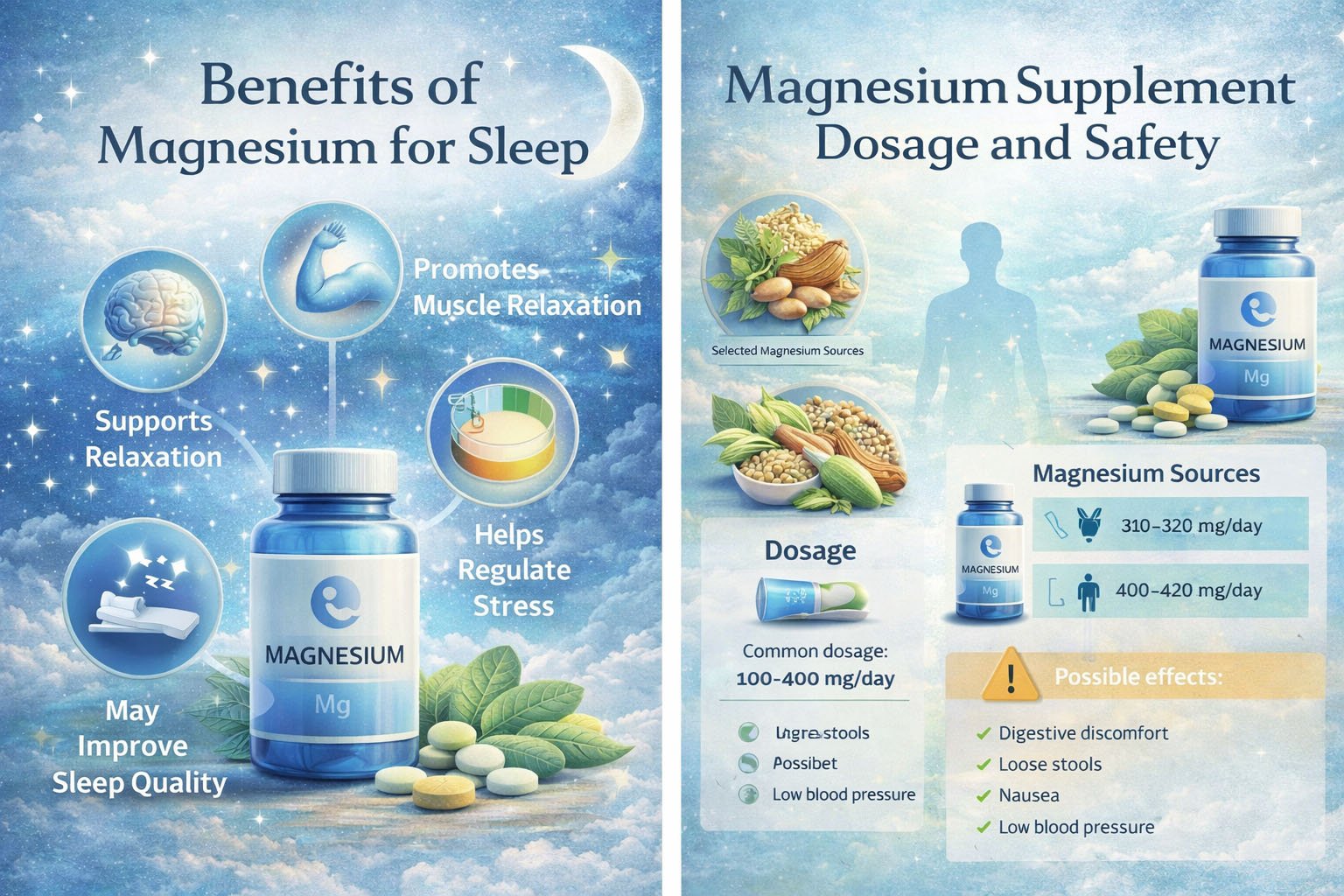
Magnesium contributes to sleep in several ways:
- Supporting normal nerve function
- Helping regulate the stress response
- Promoting muscle relaxation
- Participating in melatonin production
- Supporting healthy circadian rhythm regulation
Low magnesium levels have been associated with symptoms such as:
- Difficulty falling asleep
- Frequent nighttime awakenings
- Restless muscles or cramps
- Increased stress or anxiety
- Fatigue and low energy
These symptoms do not automatically indicate deficiency, but they may suggest that nutritional factors are worth evaluating.
How Magnesium May Support Sleep and Relaxation
Magnesium does not act as a sleeping pill. Instead, it supports the body’s natural ability to transition into a relaxed state, which is necessary for healthy sleep.
Research suggests magnesium may help:
Improve Sleep Quality
Some studies have found that magnesium supplementation may improve subjective sleep quality, particularly in individuals with low magnesium intake or mild sleep disturbances.
Possible mechanisms include:
- Regulation of melatonin secretion
- Support of gamma-aminobutyric acid (GABA) activity
- Reduction of nervous system excitability
Promote Muscle Relaxation
Magnesium helps regulate muscle contraction and relaxation. Inadequate levels may contribute to muscle tension, cramps, or restlessness, which can interfere with sleep.
This is especially relevant for:
- Individuals with restless legs symptoms
- People experiencing nighttime muscle cramps
- Those under high physical or mental stress
Support Stress Regulation
Magnesium plays a role in the regulation of cortisol and other stress-related hormones. Chronic stress can deplete magnesium levels, and low magnesium may further increase stress sensitivity, creating a cycle that negatively affects sleep.
Supplementation may help support resilience to stress in some individuals.
Who May Benefit From Magnesium Supplementation
Magnesium supplementation is not necessary for everyone. Many people obtain adequate amounts through diet. However, certain groups may be at higher risk of inadequate intake.
Magnesium may be helpful for:
Individuals with poor sleep quality
People experiencing chronic stress
Older adults
People with low dietary intake of magnesium
Individuals with frequent muscle cramps
Those with restless sleep patterns
People with certain medical conditions affecting absorption
Common risk factors for low magnesium include:
- Highly processed diets
- Low intake of vegetables, nuts, and whole grains
- Chronic stress
- Aging
- Gastrointestinal conditions
- Certain medications (such as diuretics)
If symptoms are persistent or severe, medical evaluation is recommended before starting supplementation.
Dietary Sources of Magnesium
Before considering supplements, improving dietary intake is often the first and safest step.
Foods naturally rich in magnesium include:
Leafy green vegetables
Nuts and seeds
Whole grains
Legumes
Avocados
Dark chocolate
Bananas
A balanced diet can provide substantial magnesium, and in many cases, dietary changes alone may improve intake.
Types of Magnesium Supplements
Magnesium is available in several forms, each with different absorption characteristics and potential uses.
Magnesium Glycinate
Often used for relaxation and sleep support.
Generally well tolerated.
Less likely to cause digestive discomfort.
Magnesium Citrate
Commonly used to support digestion.
Well absorbed.
May have a mild laxative effect.
Magnesium Oxide
Contains a high amount of elemental magnesium.
Lower absorption compared to other forms.
Often used for short-term digestive support.
Magnesium Threonate
May cross the blood-brain barrier more effectively.
Sometimes used in cognitive and neurological support research.
The choice of form depends on individual needs, tolerance, and health status.
How Much Magnesium Do Adults Need
Recommended daily intake varies by age and sex.
Typical adult requirements:
Men
400–420 mg per day
Women
310–320 mg per day
Supplement doses commonly used for sleep support:
100–400 mg per day
Higher doses should only be used under professional guidance.
Safety and Possible Side Effects
Magnesium is generally safe when used appropriately, but excessive intake can cause unwanted effects.
Possible side effects include:
Digestive discomfort
Loose stools
Nausea
Abdominal cramping
Very high doses may lead to:
Low blood pressure
Irregular heartbeat
Confusion
Weakness
These effects are rare but more likely in individuals with kidney disease or impaired elimination of minerals.
Who Should Be Cautious With Magnesium Supplements
Magnesium supplementation may not be appropriate for everyone.
Consult a healthcare professional before use if you:
Have kidney disease
Take medications affecting mineral balance
Are pregnant or breastfeeding
Have chronic medical conditions
Take prescription medications regularly
Magnesium may interact with:
Antibiotics
Diuretics
Blood pressure medications
Certain heart medications
Professional guidance helps reduce risk.
When Magnesium May Not Be Necessary
Supplementation is not always needed.
Magnesium may not be necessary if:
Dietary intake is adequate
Sleep problems are caused by lifestyle factors
Stress, caffeine, or irregular sleep schedules are the main drivers
Medical conditions require different treatment
In many cases, improving sleep habits may be more effective than supplementation.
Practical Tips for Using Magnesium Safely
If magnesium supplementation is considered, the following practices may help support safe use.
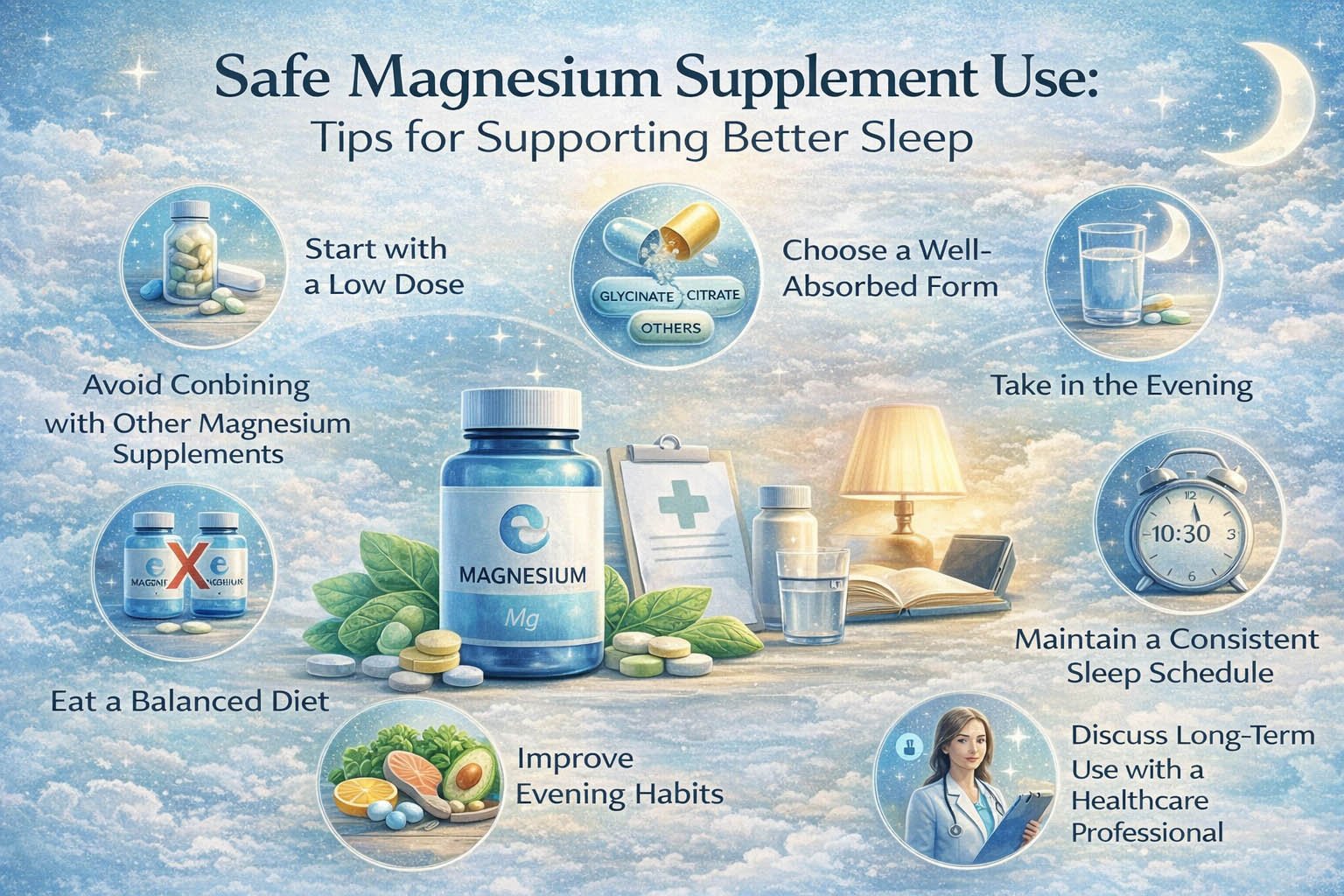
Start with a low dose
Take magnesium in the evening if used for sleep support
Choose well-absorbed forms such as glycinate or citrate
Avoid combining multiple magnesium products
Monitor for digestive symptoms
Discuss long-term use with a healthcare professional
Supplementation works best when combined with:
Consistent sleep schedule
Reduced evening screen exposure
Balanced nutrition
Stress management
Regular physical activity
Evidence Summary
Current research suggests that magnesium may support sleep and relaxation in certain individuals, particularly those with low intake or mild sleep disturbances. However, magnesium is not a cure for insomnia or other sleep disorders, and results vary between individuals.
Magnesium should be viewed as a supportive tool within a broader approach to health that includes nutrition, lifestyle, and medical evaluation when necessary.
Medical Disclaimer
This content is for informational purposes only and does not constitute medical advice. Always consult a qualified healthcare professional.
Editorial Transparency
This article was created following evidence-based health content guidelines and reviewed by the VitaCoreBalance Editorial Team.
SOURCES:
- National Institutes of Health (NIH) — Office of Dietary Supplements
- https://ods.od.nih.gov/factsheets/Magnesium-HealthProfessional/
- Sleep Foundation
- https://www.sleepfoundation.org/magnesium
- Cleveland Clinic
- https://health.clevelandclinic.org/what-does-magnesium-do/
- Mayo Clinic
- https://www.mayoclinic.org/drugs-supplements-magnesium/art-20363044
- National Center for Biotechnology Information (NCBI) — PubMed Central
- https://www.ncbi.nlm.nih.gov/pmc/articles/PMC3703169/
- Harvard T.H. Chan School of Public Health
- https://www.hsph.harvard.edu/nutritionsource/magnesium/