
L-Theanine for Sleep: Benefits, Dosage, Safety, and Best Supplements
VitaCoreBalance Editorial Team | Research-based health content · Editorial review process | March 2026 – April 2026
L-Theanine is a naturally occurring amino acid widely used to support relaxation, stress management, and healthy sleep patterns. Although it is found in tea leaves and available as a dietary supplement, modern lifestyle factors such as stress, irregular schedules, and high mental demands may contribute to sleep disturbances in some individuals.
L-Theanine is a naturally occurring amino acid found primarily in green tea leaves. It is widely used as a dietary supplement to support relaxation, reduce stress, and improve sleep quality — without causing sedation.
Unlike traditional sleep aids, L-theanine promotes calmness by influencing brain chemicals associated with relaxation and focus. Many people use it to ease anxiety, quiet racing thoughts, and support deeper, more restorative sleep.
Because of its gentle effects and low risk of side effects, L-theanine is commonly included in sleep formulas, stress support supplements, and cognitive health products.
What Is L-Theanine
L-theanine is an amino acid naturally found in:
- Green tea
- Black tea
- Certain mushrooms
It is best known for promoting relaxation without causing drowsiness.
L-theanine works by influencing neurotransmitters in the brain, including:
- GABA
- Dopamine
- Serotonin
These chemicals play key roles in:
- Stress regulation
- Mood stability
- Sleep quality
- Mental focus
Research shows that L-theanine can increase alpha brain wave activity, a pattern associated with:
- Relaxed alertness
- Calm focus
- Reduced anxiety
This is why many people describe L-theanine as producing a state of:
“calm but awake.”
For sleep support, this effect is especially useful because it helps the mind relax without forcing sedation.
Benefits of L-Theanine for Sleep
L-theanine supports sleep primarily by reducing stress and calming the nervous system.
May Improve Sleep Quality
Studies suggest L-theanine can:
- Reduce sleep disturbances
- Improve sleep efficiency
- Promote deeper sleep
It does not act as a sedative. Instead, it helps create the mental state necessary for sleep.
May Reduce Anxiety and Stress
Stress and anxiety are among the most common causes of insomnia.
L-theanine may help:
- Reduce nervous system activation
- Lower perceived stress
- Improve emotional resilience
This can make it easier to fall asleep and stay asleep.
May Help with Racing Thoughts at Night
Many people struggle to sleep because their minds remain active.
L-theanine may:
- Quiet mental overactivity
- Reduce nighttime rumination
- Promote mental calmness
This makes it especially useful for:
- Stress-related insomnia
- Work-related anxiety
- Overthinking at bedtime
May Improve Focus During the Day
Better daytime focus can indirectly support sleep.
L-theanine may:
- Improve attention
- Enhance cognitive performance
- Reduce mental fatigue
This helps regulate the sleep-wake cycle.
Who May Benefit from L-Theanine
L-theanine may be particularly helpful for people who experience sleep problems related to stress or mental tension.
You may benefit if you:
- Have difficulty falling asleep due to anxiety
- Experience racing thoughts at night
- Feel mentally overstimulated before bed
- Have mild insomnia
- Work in high-stress environments
- Want a non-sedating sleep aid
- Are sensitive to traditional sleep medications
It may also be useful for:
- Shift workers
- Students
- Professionals under chronic stress
- Older adults with sleep disturbances
Safety and Dosage
L-theanine is generally considered safe for most healthy adults when used appropriately.
Typical Dosage
Common daily doses include:
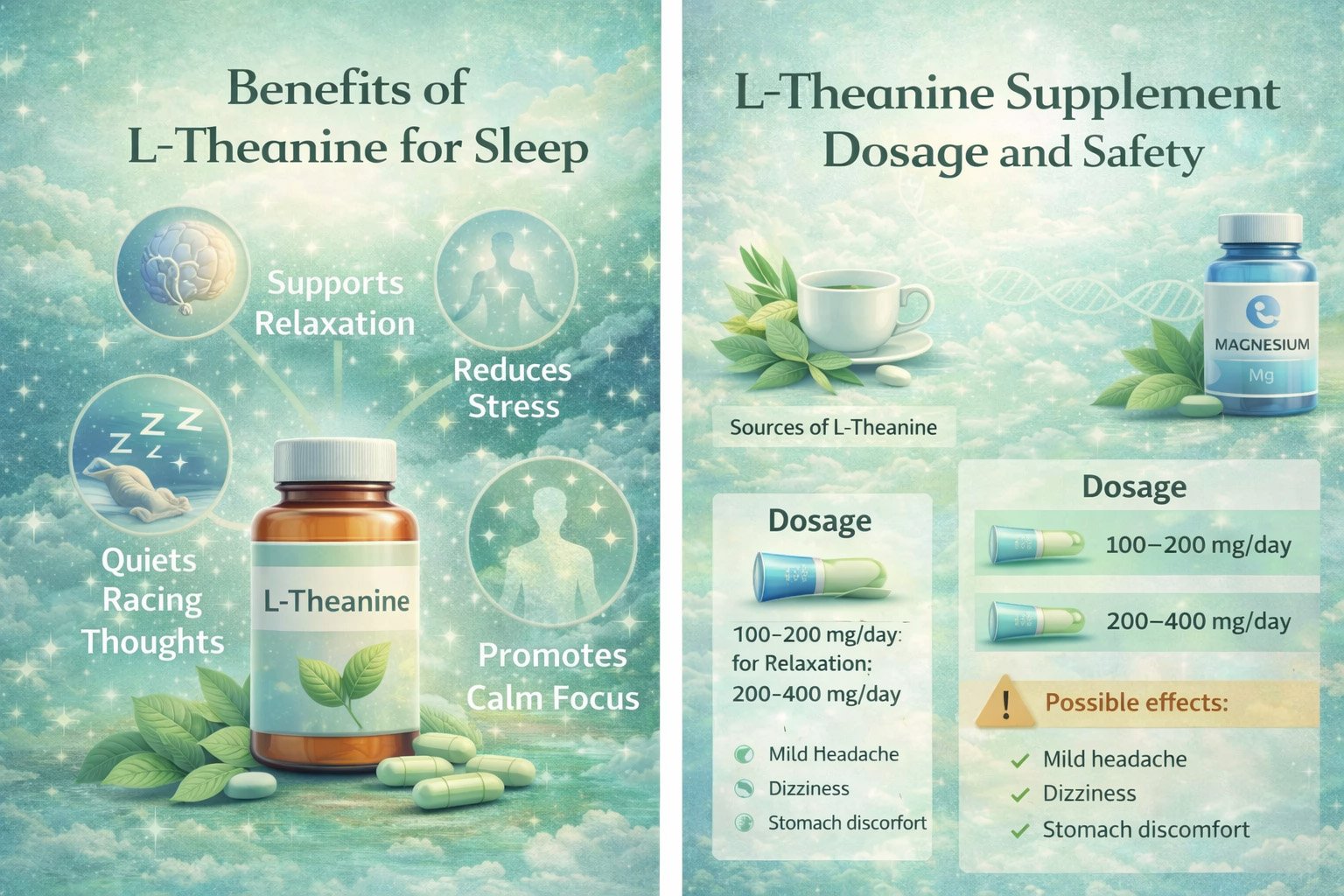
100–200 mg
for relaxation and sleep support
200–400 mg
for stronger calming effects
Many sleep supplements combine:
This combination targets multiple sleep pathways.
When to Take L-Theanine
For sleep support:
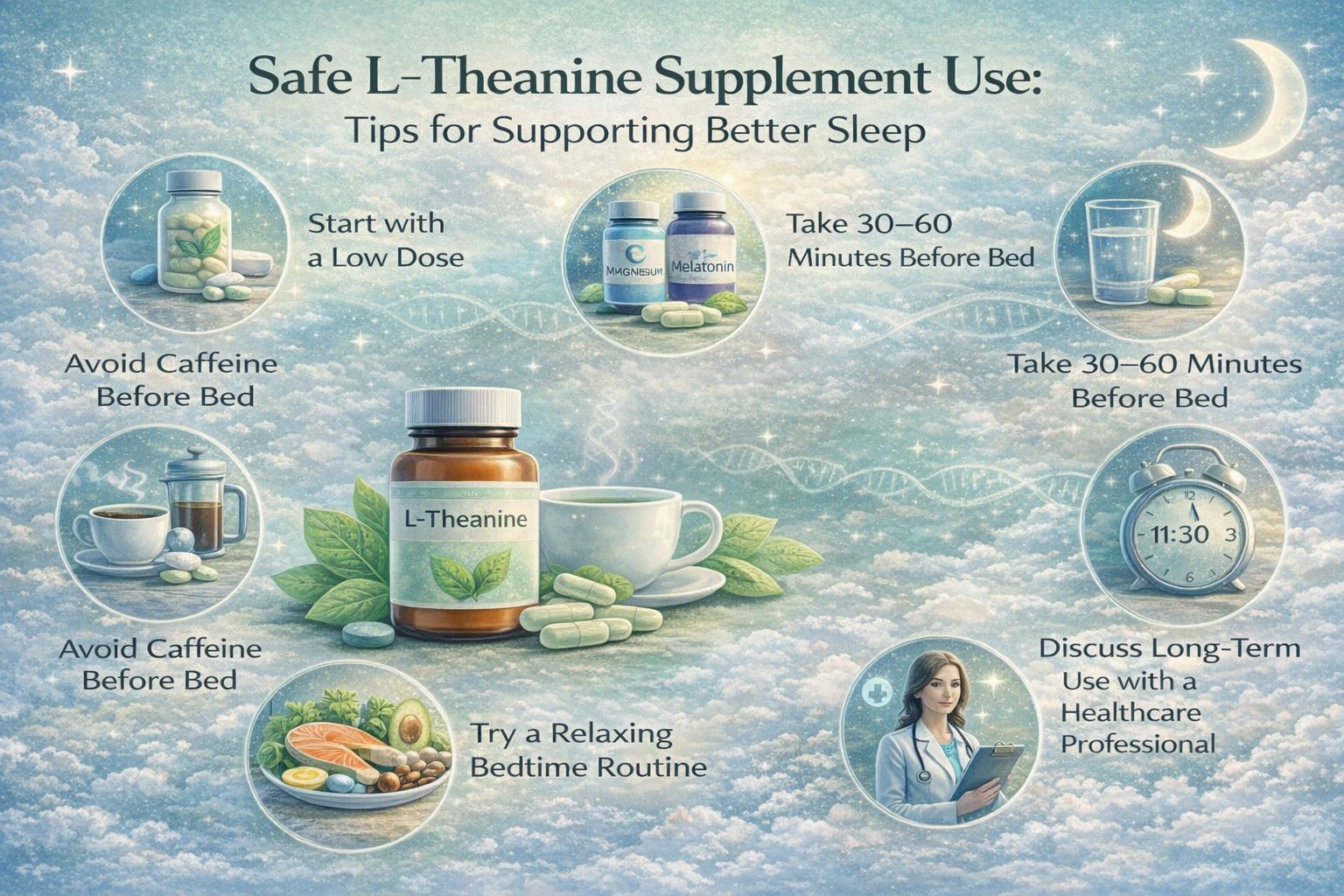
30 to 60 minutes before bedtime
For daytime stress:
Morning or early afternoon
Safety Considerations
L-theanine is typically well tolerated.
Possible mild side effects may include:
- Headache
- Dizziness
- Gastrointestinal discomfort
Rare but possible:
- Lower blood pressure
Who Should Use Caution
Consult a healthcare professional before use if you:
- Take blood pressure medication
- Are pregnant or breastfeeding
- Use sedatives or sleep medications
- Have chronic medical conditions
Evidence and Research
Scientific evidence supports the calming and sleep-supporting effects of L-theanine.
Research suggests L-theanine may:
Improve sleep quality
Reduce anxiety and stress
Promote relaxation
Increase alpha brain wave activity
Support cognitive performance
Clinical studies have shown improvements in:
- Sleep efficiency
- Sleep latency
- Stress response
- Attention and focus
L-theanine is considered:
Low risk
Well tolerated
Evidence-supported
However, responses vary depending on:
- Stress levels
- Sleep habits
- Overall health
- Lifestyle factors
Best L-Theanine Supplements
When choosing a high-quality L-theanine supplement, look for:
- Third-party testing
- Transparent labeling
- Appropriate dosage (100–200 mg)
- Minimal additives
- Reputable manufacturers
Common supplement forms include:
- Capsules
- Tablets
- Powder
- Combination sleep formulas
Some products combine L-theanine with:
- Magnesium
- Melatonin
- Ashwagandha
- GABA
These combinations may provide broader sleep support.
FAQ About L-Theanine
Does L-Theanine Make You Sleepy?
No.
L-theanine promotes relaxation rather than sedation. It helps create the mental conditions necessary for sleep.
How Fast Does L-Theanine Work?
Most people feel effects within:
30 to 60 minutes
Can You Take L-Theanine Every Night?
Yes.
It is generally safe for regular use when taken within recommended doses.
Is L-Theanine Safe for Older Adults?
Yes.
L-theanine is considered low risk and is often used by older adults to support sleep and reduce anxiety.
Can L-Theanine Be Taken with Melatonin?
Yes.
These supplements are commonly used together and may have complementary effects.
Medical Disclaimer
This content is for informational purposes only and does not constitute medical advice. Always consult a qualified healthcare professional.
Editorial Transparency
This article was created following evidence-based health content guidelines and reviewed by the VitaCoreBalance Editorial Team.