
Berberine for Metabolic Health

VitaCoreBalance Editorial Team | Research-based health content · Editorial review process | March 2026
Berberine is a plant-derived compound widely used to support metabolic health, blood sugar regulation, and lipid balance. Although it is commonly used as a botanical supplement, modern lifestyle factors such as poor diet, sedentary habits, and metabolic stress may contribute to metabolic imbalances in some individuals.
Blood Sugar, Insulin Sensitivity, and Metabolic Support
Berberine is a plant-derived compound widely used to support healthy blood sugar levels, improve insulin sensitivity, and promote overall metabolic health. It has been studied extensively for its role in glucose metabolism, lipid regulation, and weight management.
Often compared to pharmaceutical agents for its metabolic effects, berberine works by activating key cellular pathways involved in energy balance and glucose regulation. For individuals concerned about blood sugar control, metabolic syndrome, or insulin resistance, berberine is one of the most researched natural supplements available.
What Is Berberine?
Berberine is a bioactive alkaloid found in several plants, including:
- Barberry
- Goldenseal
- Oregon grape
- Tree turmeric
It has been used in traditional medicine for centuries, particularly in Asian herbal systems, and is now widely recognized in modern clinical research for its metabolic effects.
Berberine supports metabolic health primarily by:
- Improving insulin sensitivity
- Reducing glucose production in the liver
- Supporting healthy cholesterol levels
- Enhancing energy metabolism
- Supporting gut microbiome balance
One of its most important mechanisms involves activation of AMPK, sometimes referred to as the body’s:
“metabolic master switch.”
This pathway regulates:
- Glucose uptake
- Fat metabolism
- Energy production
- Cellular metabolism
Because of these broad metabolic effects, berberine is commonly used for:
- Blood sugar management
- Insulin resistance
- Prediabetes support
- Metabolic syndrome
- Weight management
- Cardiometabolic health
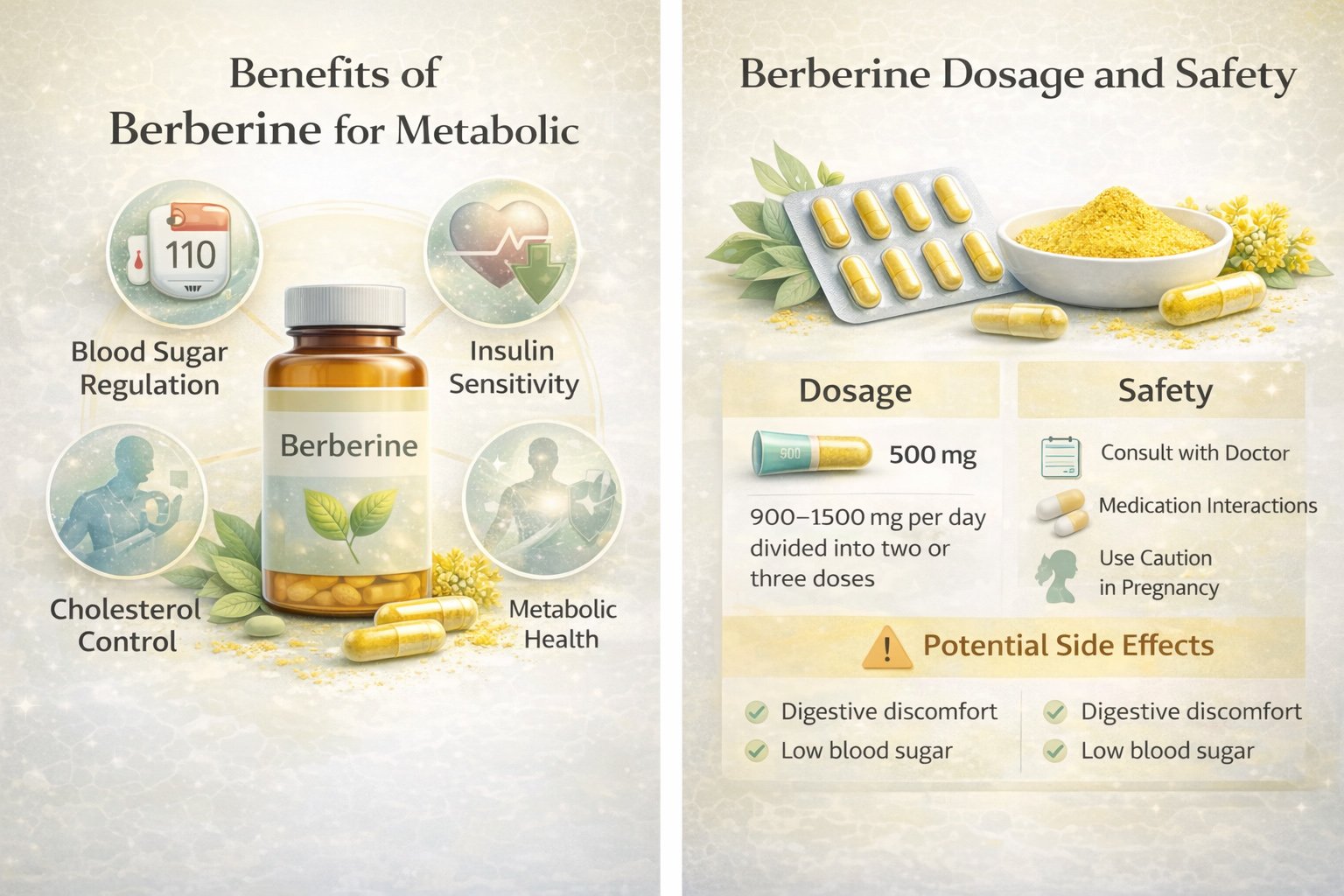
Benefits of Berberine
Blood Sugar Regulation
Berberine is best known for its ability to help maintain healthy blood glucose levels.
Research shows it may:
- Improve insulin sensitivity
- Reduce fasting blood sugar
- Reduce post-meal glucose spikes
- Support long-term glucose control
This makes it particularly relevant for individuals managing:
- Prediabetes
- Insulin resistance
- Metabolic syndrome
Improved Insulin Sensitivity
Insulin resistance is a core driver of metabolic dysfunction.
Berberine helps:
- Increase cellular glucose uptake
- Improve insulin signaling
- Reduce insulin resistance
These effects support more efficient energy use and metabolic stability.
Cholesterol and Lipid Support
Berberine may help improve lipid markers associated with cardiovascular and metabolic health.
Studies show potential reductions in:
- LDL cholesterol
- Triglycerides
- Total cholesterol
And increases in:
- HDL cholesterol
This dual effect makes berberine valuable for:
- Metabolic syndrome
- Cardiometabolic risk management
Weight and Metabolic Support
Berberine may support healthy body composition through metabolic regulation.
Potential effects include:
- Improved fat metabolism
- Reduced fat storage
- Reduced appetite regulation signals
- Support for weight management
It is not a stimulant and does not act like traditional weight-loss supplements.
Instead, it works by improving metabolic efficiency.
Who May Benefit from Berberine
Berberine may be particularly helpful for individuals who:
- Have insulin resistance
- Have prediabetes
- Have metabolic syndrome
- Experience blood sugar fluctuations
- Are overweight or managing weight
- Have elevated triglycerides or cholesterol
- Have difficulty maintaining stable energy levels
- Want metabolic support during aging
It is commonly used in:
- Metabolic health protocols
- Blood sugar support plans
- Weight management strategies
- Longevity and metabolic optimization programs

Safety and Dosage
Typical Dosage Range
Most clinical studies use:
900–1500 mg per day
Typically divided into:
300–500 mg
taken
2–3 times daily
This dosing pattern helps maintain stable blood levels and improves tolerability.
When to Take Berberine
Berberine is commonly taken:
- With meals
- Before carbohydrate-rich meals
- Divided across the day
This timing supports:
- Glucose regulation
- Insulin response
- Metabolic stability
Safety Considerations
Berberine is generally considered safe for most adults when used appropriately.
However, it may:
- Cause mild gastrointestinal discomfort
- Interact with medications
- Lower blood sugar significantly in some individuals
People who should consult a healthcare professional before use include:
- Individuals taking diabetes medications
- Individuals taking blood pressure medications
- Pregnant or breastfeeding women
- Individuals with chronic medical conditions
Evidence and Research
Berberine is one of the most extensively studied natural compounds for metabolic health.
Clinical research suggests:
Berberine may:
- Improve glycemic control
- Improve insulin sensitivity
- Reduce triglycerides
- Reduce LDL cholesterol
- Support weight management
Some studies have reported effects comparable to certain metabolic medications in specific metabolic markers.
Mechanisms studied include:
- AMPK activation
- Reduced hepatic glucose production
- Improved insulin signaling
- Gut microbiome modulation
Because of its multi-system effects, berberine is widely used in:
- Metabolic health programs
- Integrative medicine
- Preventive health strategies
Best Berberine Supplements
(Products will be inserted here following the same pattern used in Sleep Support pages.)
Recommended forms typically include:
- Berberine HCl
- Berberine phytosome (enhanced absorption)
- Sustained-release berberine
Key quality indicators:
- Third-party testing
- Standardized potency
- Transparent labeling
- Reputable manufacturing standards
FAQ About Berberine
How long does berberine take to work?
Some metabolic effects may begin within:
2–4 weeks
More significant improvements in metabolic markers often occur within:
8–12 weeks
Can berberine help with weight loss?
Berberine may support weight management indirectly by improving metabolic function, insulin sensitivity, and fat metabolism.
It is not a stimulant and does not produce rapid weight loss.
Is berberine safe for long-term use?
Research suggests berberine can be used safely for extended periods when taken at appropriate doses and monitored appropriately.
Periodic evaluation is recommended for individuals using it long-term.
Can berberine be taken with other metabolic supplements?
Yes. It is commonly combined with:
- Magnesium
- Alpha-lipoic acid
- Chromium
- Fiber supplements
- Probiotics
These combinations are frequently used in metabolic health protocols.
Medical Disclaimer
This content is for informational purposes only and does not constitute medical advice. Always consult a qualified healthcare professional.
Editorial Transparency
This article was created following evidence-based health content guidelines and reviewed by the VitaCoreBalance Editorial Team.
SOURCES:
- National Institutes of Health — Office of Dietary Supplements
Berberine: Scientific overview and supplement safety information
https://ods.od.nih.gov
- National Center for Complementary and Integrative Health (NCCIH)
Herbal supplements and metabolic health research
https://www.nccih.nih.gov
- PubMed — National Library of Medicine
Efficacy of berberine in patients with type 2 diabetes mellitus
https://pubmed.ncbi.nlm.nih.gov/18543348/
- PubMed — National Library of Medicine
Berberine in the treatment of metabolic syndrome: A systematic review
https://pubmed.ncbi.nlm.nih.gov/23468190/
- Journal of Clinical Endocrinology & Metabolism
Effects of berberine on glucose metabolism and insulin sensitivity
https://academic.oup.com/jcem
- Frontiers in Pharmacology
Berberine and metabolic health: Mechanisms and clinical applications
https://www.frontiersin.org/articles/10.3389/fphar.2018.00504/full