
Creatine for Energy and Fatigue Support
VitaCoreBalance Editorial Team | Research-based health content · Editorial review process | March 2026 – Updated: April 2026
How Creatine Supports Cellular Energy, Physical Performance, and Cognitive Function
Creatine is a naturally occurring compound found in muscle and brain tissue that plays a central role in cellular energy production. It helps replenish adenosine triphosphate (ATP), the primary energy currency used by cells during physical and mental activity.
Creatine supplementation is widely used to support strength, endurance, recovery, and cognitive performance. It is also increasingly studied for its potential role in reducing fatigue, supporting brain health, and maintaining muscle mass during aging.
Because creatine directly supports energy availability at the cellular level, it is considered one of the most researched and effective supplements for improving performance, resilience, and overall vitality.
What Is Creatine?
A Naturally Occurring Compound That Supports Cellular Energy Production
Creatine is a nitrogen-containing compound synthesized from amino acids, primarily in the liver and kidneys. It is stored mainly in skeletal muscle but is also present in the brain, heart, and other tissues.
The body uses creatine to produce phosphocreatine, which helps regenerate ATP during periods of increased energy demand.
Creatine supports:
- Cellular energy production
- Muscle performance
- Brain function
- Physical endurance
- Recovery processes
- Neuromuscular function
- Healthy aging
Although creatine can be obtained from foods such as meat and fish, supplementation is often required to achieve optimal levels, particularly for individuals with high physical or cognitive demands.
Benefits of Creatine
Supports Energy, Strength, Brain Function, and Recovery
1) Supports Cellular Energy Production
Creatine plays a direct role in ATP regeneration, which is essential for energy availability during demanding activities.
It may help:
- Improve energy output
- Support physical performance
- Enhance endurance
- Maintain cellular function
Creatine is one of the few supplements with strong evidence supporting its role in energy metabolism.
2) Improves Physical Performance and Strength
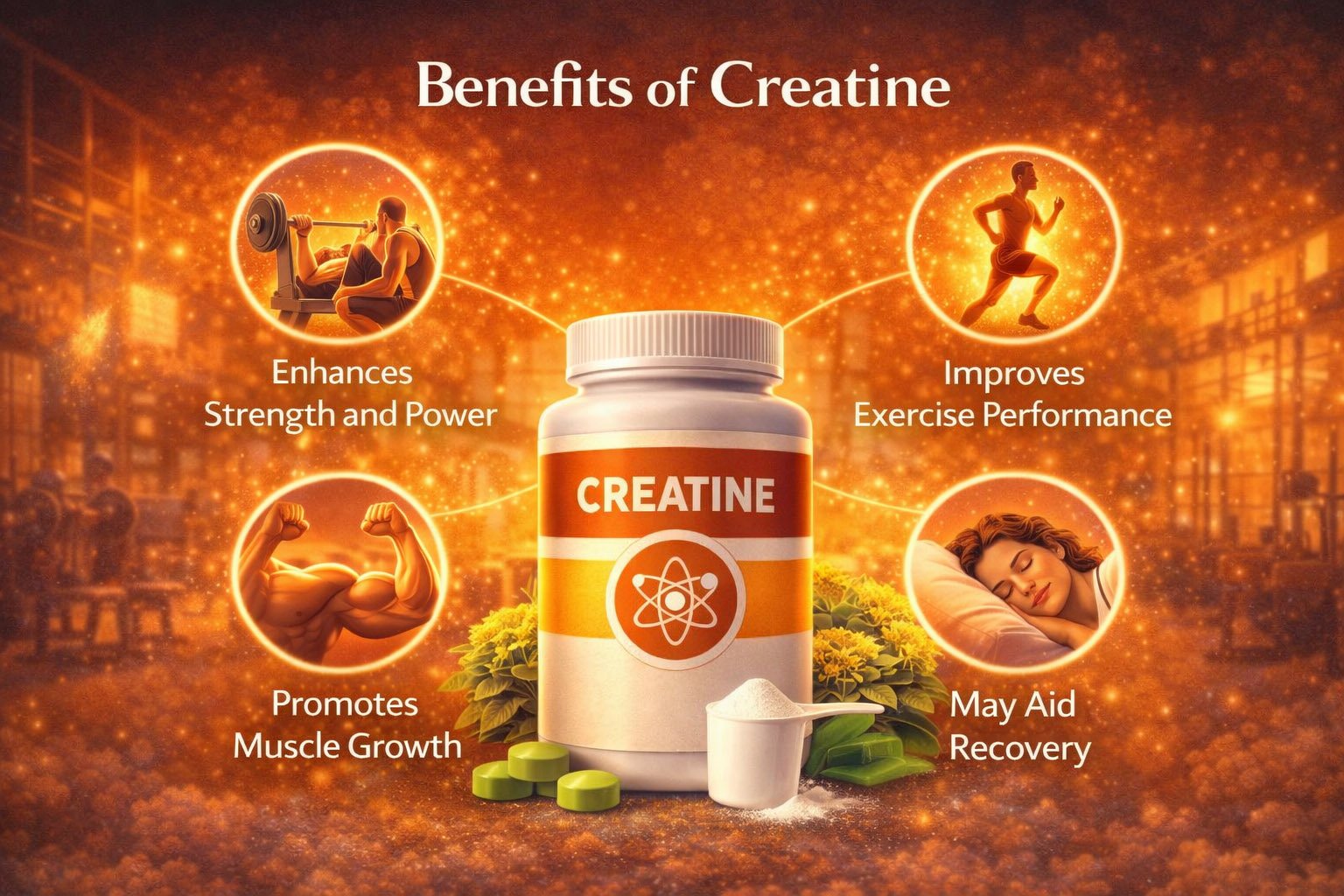
Creatine is widely used to support muscle performance during high-intensity activities.
It may help:
- Increase strength
- Improve power output
- Support muscle growth
- Enhance training capacity
- Reduce fatigue during exercise
These benefits make creatine one of the most studied supplements in sports science.
3) Supports Brain Function and Mental Performance
Creatine is present in brain tissue and contributes to energy supply for neurons.
Adequate creatine levels may help:
- Improve mental clarity
- Support memory
- Enhance cognitive performance
- Reduce mental fatigue
- Support brain resilience
Research suggests creatine may be particularly beneficial during periods of sleep deprivation or intense mental effort.
4) Supports Muscle Recovery and Reduced Fatigue
Creatine supports recovery processes after physical exertion.
It may help:
- Reduce muscle fatigue
- Improve recovery time
- Support muscle repair
- Maintain performance during repeated activity
These effects are relevant not only for athletes but also for physically active individuals.
5) Supports Healthy Aging and Muscle Preservation
Creatine may help preserve muscle mass and strength during aging.
It may support:
- Muscle maintenance
- Physical independence
- Functional capacity
- Mobility
- Healthy aging
Loss of muscle mass is a common contributor to fatigue and reduced quality of life in older adults.
6) Supports Neuromuscular and Nervous System Health
Creatine plays a role in neuromuscular communication and energy supply to nerve cells.
It may help support:
- Neuromuscular function
- Coordination
- Motor performance
- Nervous system resilience
Research is ongoing regarding its potential role in neurological health.
7) Supports Overall Energy and Vitality
Because creatine supports cellular energy production, it may help maintain consistent energy levels throughout the day.
This may support:
- Physical stamina
- Daily productivity
- Reduced fatigue
- Improved performance
Who May Benefit from Creatine
Creatine supplementation may be beneficial for individuals with increased energy demands or reduced muscle or brain energy availability.
Common groups include:
Athletes and physically active individuals
Individuals with fatigue or low energy
Older adults
People with reduced muscle mass
Vegetarians and vegans
Individuals with high cognitive demands
People undergoing physical rehabilitation
Individuals seeking improved recovery
People with physically demanding jobs
Creatine is one of the most widely used and researched performance-support supplements.
Safety and Dosage
Recommended Intake and Safe Supplementation
Typical Daily Dosage
Maintenance:
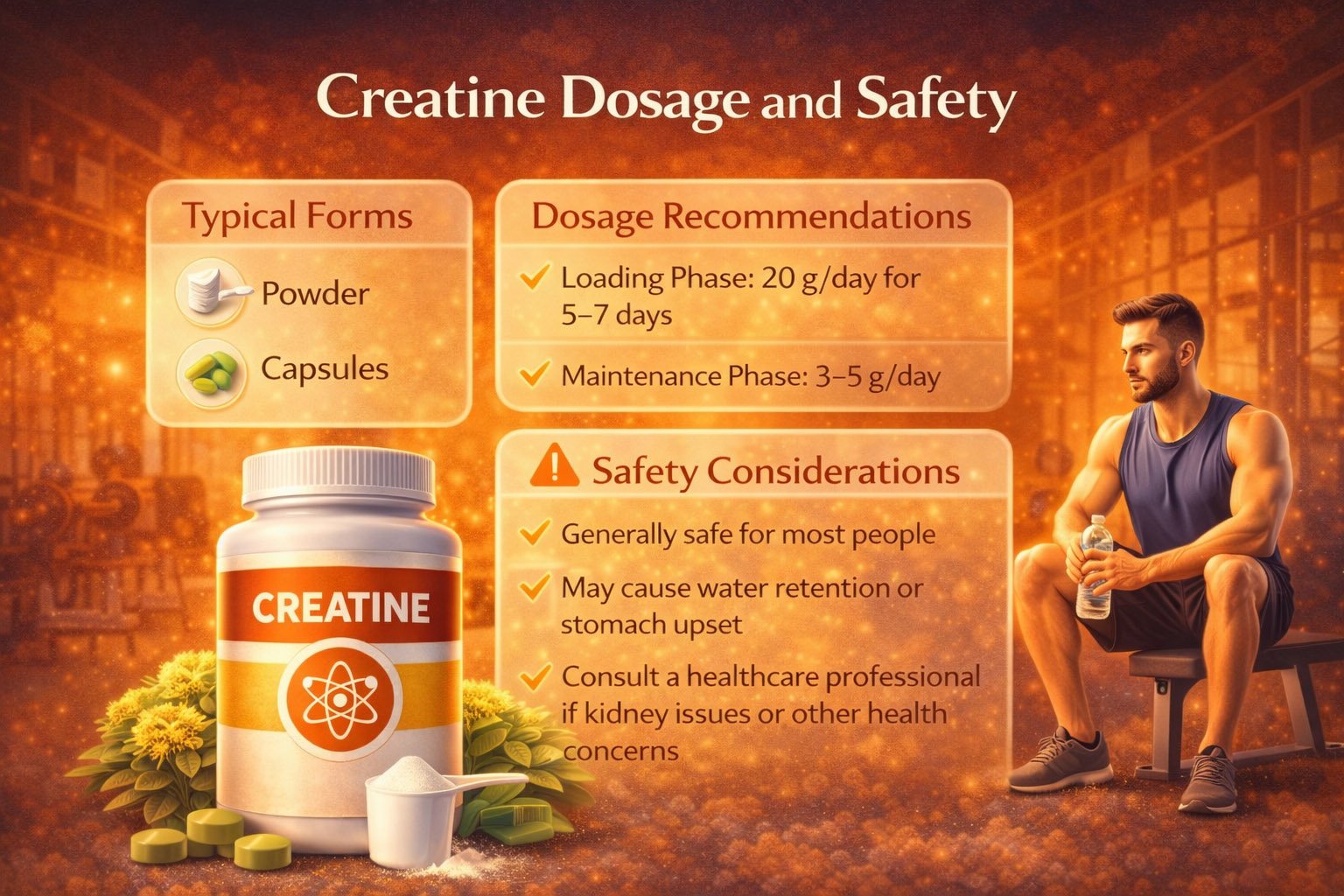
3 to 5 grams per day
Loading phase (optional):
20 grams per day
Divided into 4 doses
For 5 to 7 days
After loading:
3 to 5 grams per day
Many individuals use creatine without a loading phase.
Best Time to Take Creatine
Creatine is commonly taken:
After exercise
With meals
At consistent daily timing
Consistency is more important than timing.
Possible Side Effects
Creatine is generally well tolerated.
Possible mild effects may include:
Water retention
Temporary weight gain
Digestive discomfort
These effects are typically mild and manageable.
Safety Considerations
Creatine is considered safe for long-term use in healthy individuals when used at recommended doses.
Medical guidance is recommended for:
Kidney disease
Chronic medical conditions
Pregnancy
Medication use
Adequate hydration is recommended during supplementation.
Evidence and Research
Creatine is one of the most extensively studied dietary supplements.
Research consistently shows that creatine supplementation:
Improves muscle strength and performance
Supports energy production
Enhances physical endurance
Improves recovery after exercise
Supports cognitive function under stress
Helps maintain muscle mass during aging
Long-term studies indicate that creatine is safe when used at recommended doses in healthy individuals.
Best Supplements
Common Forms of Creatine
Creatine Monohydrate
Most widely studied form
High effectiveness
Excellent safety profile
Cost-effective
Considered the gold standard form of creatine.
Micronized Creatine
Improved solubility
Easier digestion
Similar effectiveness
Creatine Hydrochloride (HCl)
Highly soluble
May require smaller doses
Buffered Creatine
Designed to reduce stomach discomfort
Creatine Gummies or Powder
Convenient formats
Easy to use
FAQ
Does creatine help with fatigue?
Yes. Creatine supports cellular energy production, which may help reduce fatigue and improve performance during physical and mental activity.
Is creatine safe for long-term use?
Research suggests that creatine is safe for long-term use in healthy individuals when taken at recommended doses.
Do I need a loading phase for creatine?
No. A loading phase is optional. Many people take a consistent daily dose of 3 to 5 grams without loading.
Can creatine improve brain function?
Creatine supports energy supply to brain cells and may help improve cognitive performance, particularly during demanding mental tasks.
Can vegetarians benefit from creatine?
Yes. Vegetarians and vegans often have lower dietary creatine intake and may benefit from supplementation.
Medical Disclaimer
This content is for informational purposes only and does not constitute medical advice. Always consult a qualified healthcare professional.
Editorial Transparency
This article was created following evidence-based health content guidelines and reviewed by the VitaCoreBalance Editorial Team.
SOURCES:
- National Institutes of Health (NIH) — Creatine
https://ods.od.nih.gov/factsheets/Creatine-HealthProfessional/ - Mayo Clinic — Creatine
https://www.mayoclinic.org/drugs-supplements-creatine/art-20347591 - Cleveland Clinic — Creatine Supplements
https://health.clevelandclinic.org/creatine - Harvard Health Publishing — Creatine: What You Need to Know
https://www.health.harvard.edu/exercise-and-fitness/creatine - International Society of Sports Nutrition (ISSN) — Position Stand: Creatine Supplementation
https://jissn.biomedcentral.com/articles/10.1186/s12970-017-0173-z - Mount Sinai — Creatine
https://www.mountsinai.org/health-library/supplement/creatine