
Omega-3 Fatty Acids for Heart Health Support

VitaCoreBalance Editorial Team | Research-based health content · Editorial review process | March 2026
How Omega-3 Supports Cardiovascular Function, Circulation, and Overall Wellness
Omega-3 fatty acids are essential polyunsaturated fats that play a fundamental role in heart health, inflammation regulation, and cellular function. These fats are considered “essential” because the body cannot produce them on its own and must obtain them through diet or supplementation.
Omega-3 fatty acids are widely studied for their ability to support cardiovascular health, maintain healthy blood vessels, and promote balanced cholesterol and triglyceride levels. They also contribute to brain function, immune health, and overall metabolic stability.
Because cardiovascular disease remains one of the leading causes of death worldwide, maintaining adequate omega-3 intake is considered an important component of long-term heart health and preventive care.
What Is Omega-3?
Essential Fatty Acids That Support Heart, Brain, and Cellular Health
Omega-3 fatty acids are a group of fats required for normal physiological function. The most important forms for human health include:
- EPA (eicosapentaenoic acid)
- DHA (docosahexaenoic acid)
- ALA (alpha-linolenic acid)
EPA and DHA are primarily found in marine sources such as fatty fish, while ALA is found in plant-based foods like flaxseed and walnuts.
Omega-3 fatty acids are incorporated into cell membranes throughout the body and influence numerous biological processes.
They support:
- Cardiovascular function
- Circulation and blood vessel health
- Inflammation regulation
- Brain and nervous system function
- Eye health
- Metabolic balance
- Immune function
Omega-3 intake is often lower than recommended in modern diets, making supplementation a common strategy to support overall health.
Benefits of Omega-3 Fatty Acids
Supports Heart Function, Circulation, and Long-Term Cardiovascular Health
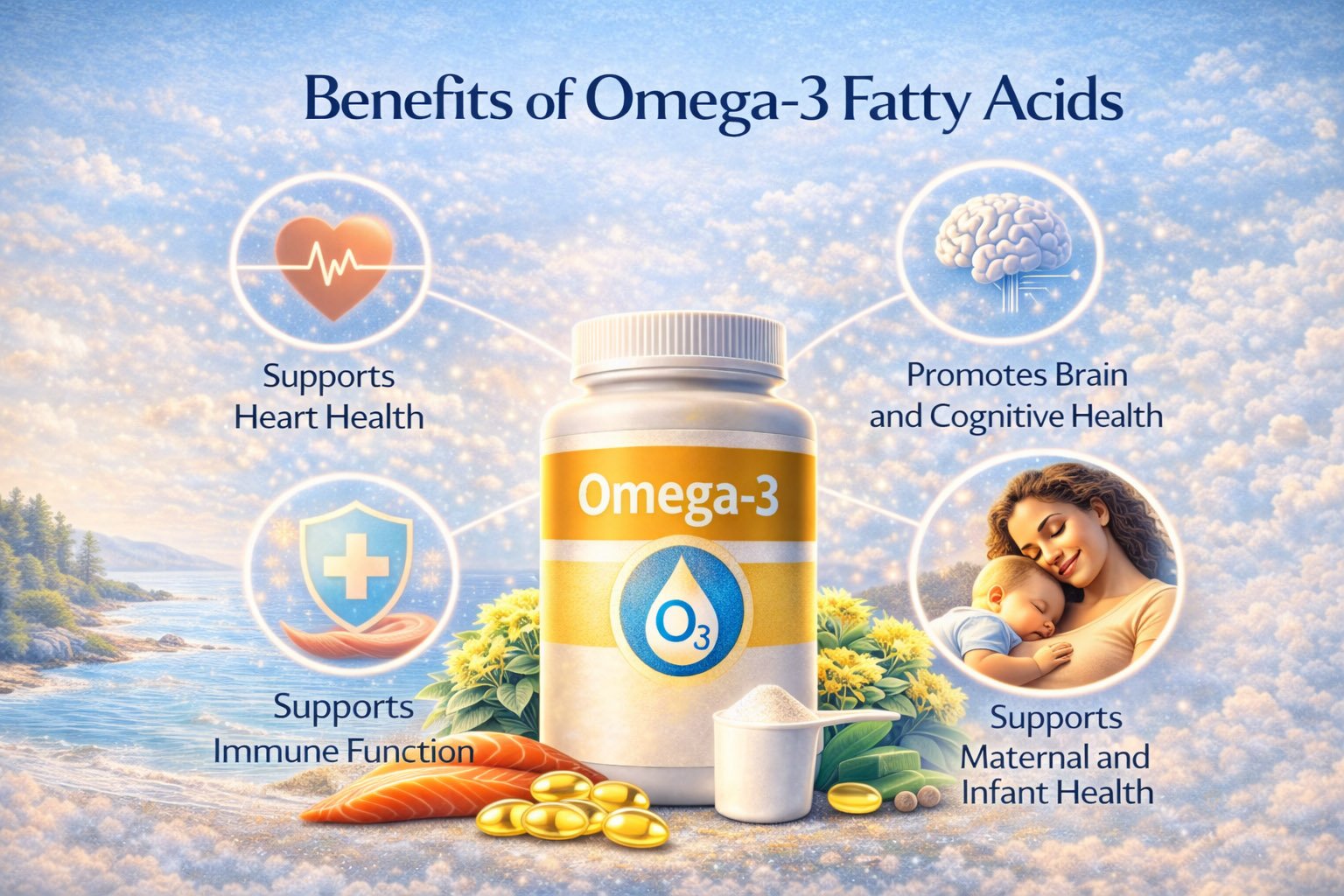
1) Supports Heart Health and Cardiovascular Function
Omega-3 fatty acids are widely recognized for their role in supporting heart health.
They may help:
- Maintain healthy heart rhythm
- Support blood vessel function
- Promote healthy circulation
- Reduce cardiovascular risk factors
- Support overall heart function
These effects make omega-3 one of the most commonly recommended nutrients for cardiovascular support.
2) Supports Healthy Triglyceride Levels
Omega-3 fatty acids are known to help regulate triglycerides, a type of fat in the bloodstream associated with cardiovascular risk when elevated.
Adequate omega-3 intake may help:
- Lower triglyceride levels
- Improve lipid balance
- Support metabolic health
- Maintain healthy cardiovascular markers
This is one of the most well-established benefits of omega-3 supplementation.
3) Supports Blood Vessel Health and Circulation
Omega-3 fatty acids help maintain flexibility and function of blood vessels.
They may support:
- Healthy blood flow
- Vascular elasticity
- Endothelial function
- Circulatory health
Healthy blood vessels are essential for oxygen and nutrient delivery throughout the body.
4) Supports Anti-Inflammatory Balance
Chronic inflammation is a major contributor to cardiovascular disease and other chronic conditions.
Omega-3 fatty acids help regulate inflammatory processes.
They may support:
- Reduced inflammatory signaling
- Immune balance
- Tissue recovery
- Long-term health
5) Supports Brain and Cognitive Function
Omega-3 fatty acids, particularly DHA, are essential for brain structure and function.
They may help support:
- Memory
- Focus
- Cognitive performance
- Emotional well-being
- Neurological health
Adequate omega-3 intake is associated with healthy brain aging.
6) Supports Eye Health
DHA is a major structural component of the retina.
Omega-3 fatty acids help support:
- Visual function
- Retinal health
- Eye comfort
- Long-term vision health
7) Supports Metabolic and Overall Health
Omega-3 fatty acids influence metabolic pathways involved in energy balance and cellular function.
They may support:
- Metabolic regulation
- Healthy body composition
- Energy balance
- Overall wellness
Who May Benefit from Omega-3
Omega-3 supplementation may be beneficial for individuals seeking to support cardiovascular health or maintain balanced lipid levels.
Common groups include:
Adults concerned about heart health
Individuals with elevated triglycerides
People with low fish intake
Older adults
Individuals with inflammatory conditions
People with metabolic risk factors
Individuals seeking preventive cardiovascular support
People with sedentary lifestyles
Individuals with family history of heart disease
Omega-3 intake is often below recommended levels in many populations.
Safety and Dosage
Recommended Intake and Safe Supplementation
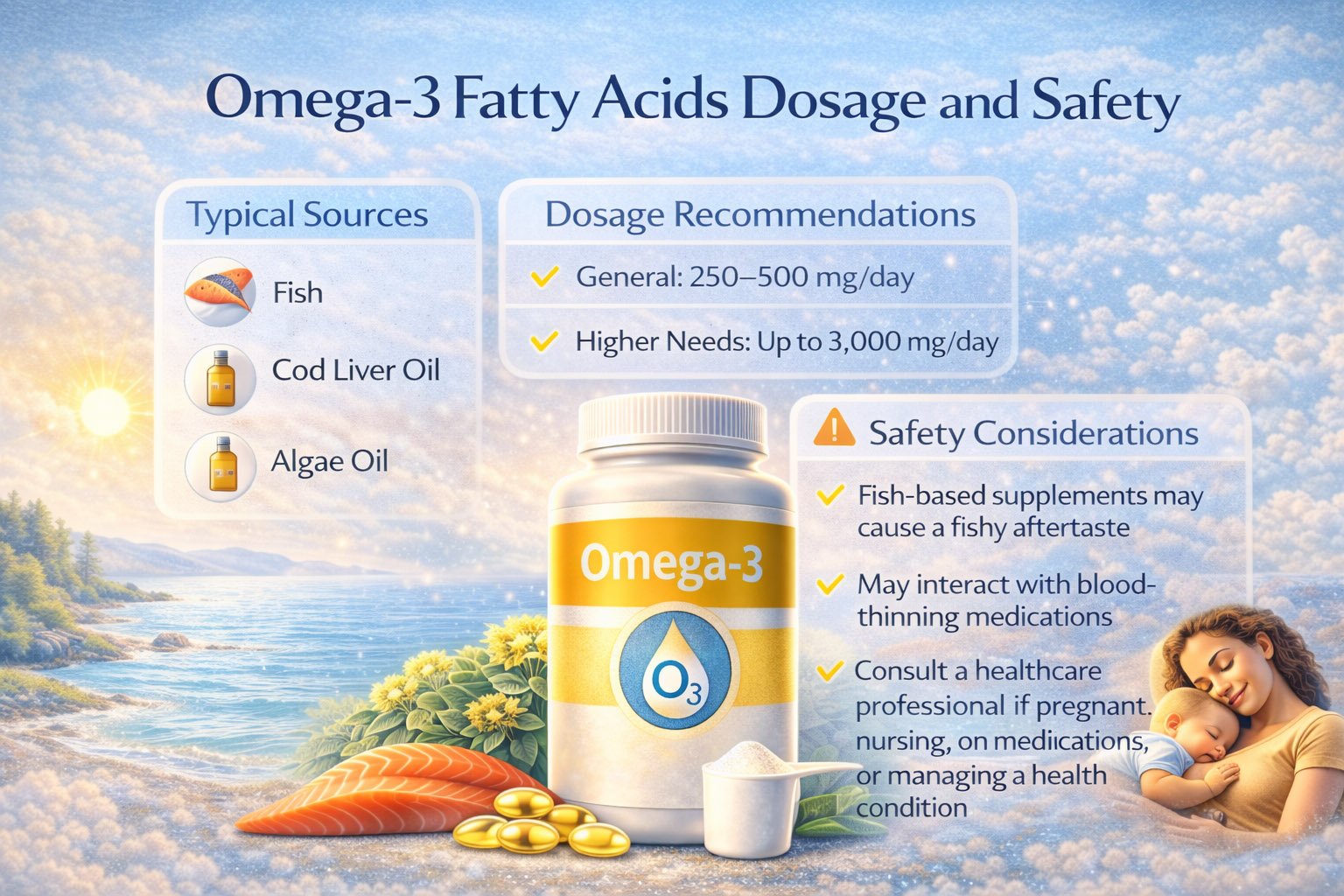
Typical Daily Intake
General health support:
1,000 mg per day
Cardiovascular support:
1,000 to 2,000 mg per day
Triglyceride management (medical supervision):
2,000 to 4,000 mg per day
Dosage may vary depending on individual needs and clinical guidance.
Best Time to Take Omega-3
Omega-3 supplements are typically taken:
With meals
With dietary fat
At consistent daily timing
Taking omega-3 with food improves absorption and reduces digestive discomfort.
Possible Side Effects
Omega-3 supplements are generally well tolerated.
Possible mild effects may include:
Fishy aftertaste
Mild digestive discomfort
Nausea
Loose stools
These effects are usually temporary.
Safety Considerations
Consult a healthcare professional before use if:
Taking blood-thinning medications
Preparing for surgery
Managing chronic medical conditions
Pregnant or breastfeeding
High doses should be used under medical supervision.
Evidence and Research
Omega-3 fatty acids are among the most extensively studied nutrients in cardiovascular health research.
Clinical studies consistently show that omega-3 supplementation:
Supports cardiovascular health
Reduces triglyceride levels
Supports blood vessel function
Helps regulate inflammation
Supports heart rhythm stability
Promotes overall cardiovascular wellness
Omega-3 intake is widely recommended as part of heart-healthy dietary patterns.
Best Supplements
Common Forms of Omega-3
Fish Oil
Most widely used form
Contains EPA and DHA
Well studied
Cost-effective
Krill Oil
Contains omega-3 bound to phospholipids
May support absorption
Often includes antioxidants
Algal Oil
Plant-based source of DHA and EPA
Suitable for vegetarians and vegans
Concentrated Omega-3
Higher EPA and DHA content
Used for targeted cardiovascular support
Liquid Omega-3
Flexible dosing
Easy to swallow
Suitable for individuals who prefer liquid supplements
FAQ
Does omega-3 support heart health?
Yes. Omega-3 fatty acids are widely studied for their role in supporting cardiovascular health, circulation, and healthy triglyceride levels.
How much omega-3 should I take daily?
Many adults take:
1,000 mg per day
Higher doses may be recommended under medical supervision for specific health goals.
Can omega-3 lower triglycerides?
Yes. Omega-3 fatty acids are known to help reduce triglyceride levels and support lipid balance.
Is omega-3 safe for long-term use?
Omega-3 supplements are generally considered safe for long-term use when taken at recommended doses.
Can people who do not eat fish benefit from omega-3 supplements?
Yes. Individuals who consume little or no fish often benefit from supplementation to maintain adequate omega-3 intake.
Medical Disclaimer
This content is for informational purposes only and does not constitute medical advice. Always consult a qualified healthcare professional.
Editorial Transparency
This article was created following evidence-based health content guidelines and reviewed by the VitaCoreBalance Editorial Team.
SOURCES:
- National Institutes of Health (NIH) — Omega-3 Fatty Acids Fact Sheet for Health Professionals
https://ods.od.nih.gov/factsheets/Omega3FattyAcids-HealthProfessional/ - American Heart Association (AHA) — Fish and Omega-3 Fatty Acids
https://www.heart.org/en/healthy-living/healthy-eating/eat-smart/fats/fish-and-omega-3-fatty-acids - Mayo Clinic — Fish Oil
https://www.mayoclinic.org/drugs-supplements-fish-oil/art-20364810 - Harvard T.H. Chan School of Public Health — Omega-3 Fatty Acids
https://www.hsph.harvard.edu/nutritionsource/omega-3-fats/ - Cleveland Clinic — Omega-3 Fatty Acids
https://my.clevelandclinic.org/health/articles/17290-omega-3-fatty-acids - European Food Safety Authority (EFSA) — Scientific Opinion on Omega-3 Fatty Acids
https://www.efsa.europa.eu/en/efsajournal/pub/2815