Arterial Health and Aging
VitaCoreBalance Editorial Team | Research-based health content • Editorial review process | March 2026
Arteries are essential components of the cardiovascular system, responsible for delivering oxygen-rich blood to tissues and organs throughout the body. As people age, natural structural and functional changes occur in the arteries, affecting their flexibility, strength, and ability to regulate blood flow. Maintaining arterial health is therefore a key factor in preserving heart health, cognitive function, and overall vitality during aging.
Arterial aging is influenced by multiple systems, including Heart Health, Metabolism, and Nutrition, while also being affected by inflammation, blood sugar regulation, and hormonal balance addressed in Blood Sugar, Hormone Health, and Sleep Health. Because arterial health reflects the cumulative effects of lifestyle, environment, and metabolic function, protecting the arteries is one of the most effective strategies for preventing chronic disease and supporting healthy aging.
Understanding how arteries change with age provides a practical framework for reducing cardiovascular risk and maintaining long-term health.
What Is Arterial Health?
Arterial health refers to the condition and function of the blood vessels that carry blood away from the heart. Healthy arteries are flexible, elastic, and capable of expanding and contracting as needed to maintain stable circulation.
Healthy arteries typically have:
- Smooth inner walls
- Adequate elasticity
- Efficient blood flow
- Low levels of inflammation
- Balanced blood pressure
When arteries lose flexibility or become damaged, blood flow may become restricted, increasing the risk of cardiovascular disease.
Arterial function is closely connected to cardiovascular stability discussed in Heart Health.
How Aging Affects Arteries (Physiology)
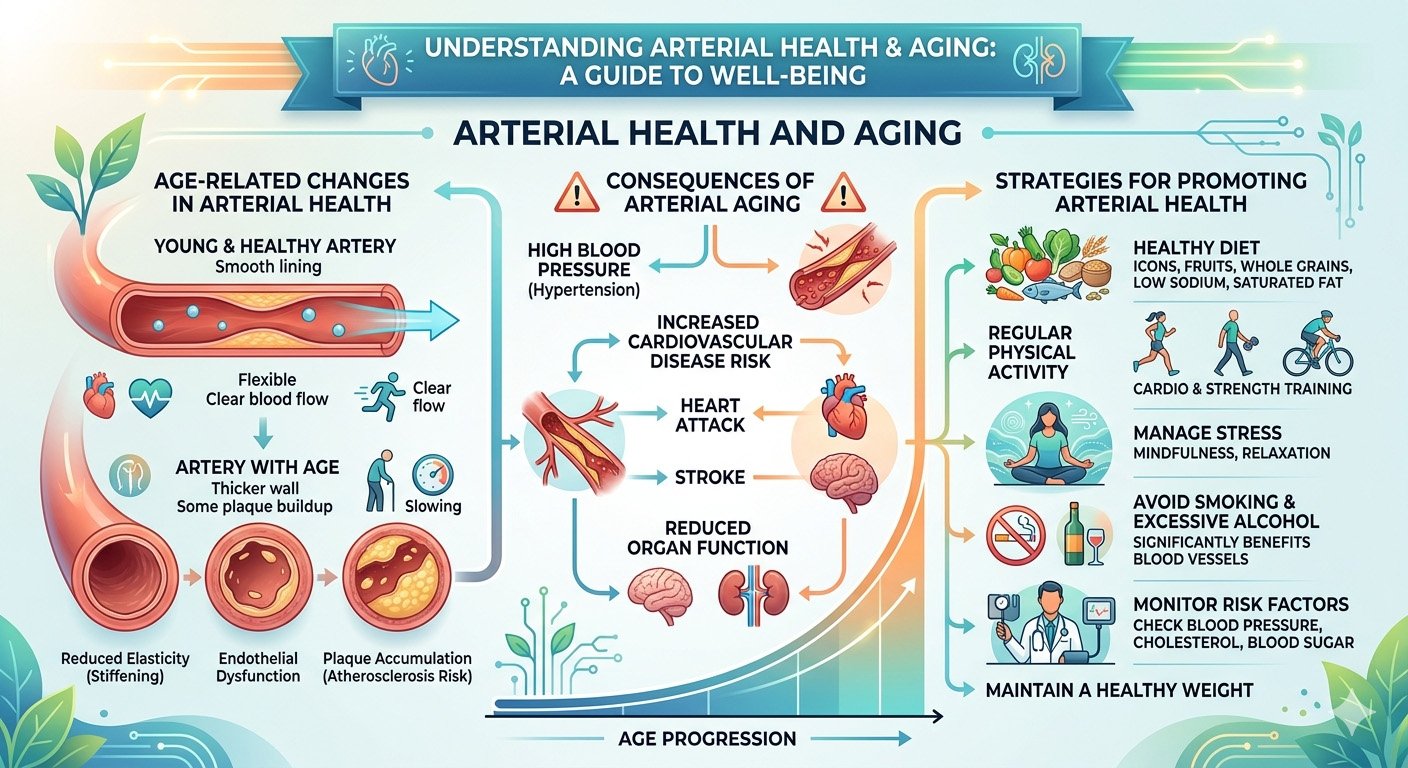
Aging causes gradual changes in arterial structure and function. These changes are influenced by genetics, lifestyle habits, and long-term exposure to metabolic stress.
Key physiological changes include:
- Reduced arterial elasticity
- Increased stiffness
- Thickening of arterial walls
- Reduced nitric oxide production
- Increased inflammation
These changes can affect circulation and blood pressure regulation.
Arterial function is closely connected to metabolic regulation discussed in Metabolism.
Arterial Stiffness
One of the most significant changes associated with aging is arterial stiffness. Over time, elastic fibers in the arterial walls become less flexible, making it harder for arteries to expand during blood flow.
Arterial stiffness may lead to:
- Increased blood pressure
- Reduced circulation
- Increased heart workload
- Increased cardiovascular risk
Blood pressure regulation is closely connected to systems discussed in Heart Health.
Endothelial Function
The endothelium is the thin inner lining of blood vessels that helps regulate blood flow and inflammation.
Healthy endothelial function supports:
- Smooth blood circulation
- Reduced inflammation
- Stable blood pressure
- Healthy vascular tone
Endothelial dysfunction is closely linked to metabolic imbalance discussed in Blood Sugar.
Inflammation and Oxidative Stress
Chronic inflammation and oxidative stress accelerate arterial aging.
These processes may lead to:
- Damage to blood vessel walls
- Reduced elasticity
- Plaque formation
- Increased cardiovascular risk
Inflammatory processes are closely connected to metabolic health discussed in Metabolism.
Risk Factors That Accelerate Arterial Aging
Several factors can speed up age-related changes in the arteries.
High Blood Pressure
Chronic high blood pressure places continuous stress on arterial walls.
This may lead to:
- Arterial thickening
- Reduced elasticity
- Increased risk of heart disease
Blood pressure regulation is closely connected to cardiovascular stability discussed in Heart Health.
High Blood Sugar
Elevated blood sugar can damage blood vessels over time.
Long-term effects may include:
- Reduced arterial flexibility
- Increased inflammation
- Increased plaque formation
Glucose regulation is closely connected to metabolic function discussed in Blood Sugar.
Poor Nutrition
Unhealthy dietary patterns can increase inflammation and vascular damage.
Dietary factors that influence arterial health include:
- High saturated fat intake
- Excess sugar consumption
- Low fiber intake
- Low antioxidant intake
Healthy nutrition supports vascular health discussed in Nutrition.
Physical Inactivity
Lack of movement reduces circulation and weakens cardiovascular function.
Physical inactivity may lead to:
- Reduced blood flow
- Increased arterial stiffness
- Increased cardiovascular risk
Physical activity supports cardiovascular stability discussed in Heart Health.
Smoking
Smoking damages blood vessel walls and accelerates arterial aging.
Effects may include:
- Increased inflammation
- Reduced oxygen delivery
- Increased plaque buildup
Smoking is one of the strongest risk factors for cardiovascular disease.
Signs of Poor Arterial Health
Early changes in arterial health may not produce noticeable symptoms. However, certain warning signs can appear as damage progresses.
Common signs include:
- Elevated blood pressure
- Reduced exercise tolerance
- Chest discomfort
- Fatigue
- Shortness of breath
- Cold hands or feet
These symptoms often overlap with conditions discussed in Energy & Fatigue.
Health Conditions Linked to Arterial Aging
Long-term arterial damage can increase the risk of several chronic conditions.
Atherosclerosis
Atherosclerosis occurs when plaque builds up inside the arteries.
This condition may lead to:
- Reduced blood flow
- Heart attack
- Stroke
Atherosclerosis is closely connected to cardiovascular health discussed in Heart Health.
Coronary Artery Disease
Coronary artery disease develops when arteries that supply the heart become narrowed or blocked.
This condition may result in:
- Chest pain
- Reduced physical endurance
- Increased risk of heart attack
Cardiovascular risk is closely connected to systems discussed in Heart Health.
Stroke
Reduced blood flow to the brain can lead to stroke.
Risk factors include:
- High blood pressure
- Diabetes
- Smoking
Stroke risk is closely connected to metabolic function discussed in Blood Sugar.
Practical Strategies to Protect Arterial Health During Aging
Healthy lifestyle habits can slow arterial aging and support long-term cardiovascular health.
Maintain Healthy Blood Pressure
Keeping blood pressure within a healthy range reduces stress on arteries.
Helpful habits include:
- Reducing sodium intake
- Staying physically active
- Managing stress
Blood pressure control supports cardiovascular stability discussed in Heart Health.
Eat a Heart-Healthy Diet
Diet plays a central role in protecting arteries.
Helpful dietary habits include:
- Eating fruits and vegetables
- Choosing whole grains
- Limiting processed foods
- Including healthy fats
Healthy dietary patterns align with guidance discussed in Nutrition.
Stay Physically Active
Regular exercise improves circulation and supports arterial flexibility.
Benefits include:
- Improved blood flow
- Reduced inflammation
- Improved metabolic efficiency
Physical activity supports prevention strategies discussed in Metabolism.
Manage Blood Sugar
Stable glucose levels help protect blood vessels from long-term damage.
Healthy habits include:
- Balanced meals
- Regular physical activity
- Consistent sleep patterns
Glucose regulation supports metabolic stability discussed in Blood Sugar.
Prioritize Sleep
Sleep supports cardiovascular recovery and hormone regulation.
Healthy sleep supports:
- Reduced inflammation
- Improved circulation
- Stable blood pressure
Sleep patterns support recovery discussed in Sleep Health.
Why Arterial Health Matters for Healthy Aging
Arterial health is a major determinant of longevity and quality of life. Healthy arteries support efficient circulation, stable blood pressure, and proper organ function. When arterial health declines, the risk of cardiovascular disease, cognitive decline, and reduced physical performance increases.
Protecting arterial health supports:
- Healthy circulation
- Improved heart function
- Reduced disease risk
- Healthy aging
Because arterial function influences multiple body systems simultaneously, maintaining vascular health supports prevention strategies across Heart Health, Metabolism, Nutrition, Blood Sugar, and Energy & Fatigue.
Final Thoughts
Aging is a natural process, but the rate at which arteries age can be influenced by lifestyle habits and metabolic health. By supporting cardiovascular function through healthy nutrition, regular physical activity, quality sleep, and stress management, individuals can slow arterial aging and maintain long-term health.
Protecting arteries is one of the most effective ways to protect overall health during aging.
Medical Disclaimer
This content is for informational purposes only and does not constitute medical advice. Always consult a qualified healthcare professional.
Editorial Transparency
This article was created following evidence-based health content guidelines and reviewed by the VitaCoreBalance Editorial Team.
Sources
Medical Institutions
National Institutes of Health (NIH)
Mayo Clinic — Arterial Health and Aging
Cleveland Clinic — Vascular Health
American Heart Association (AHA)
Global Organizations
World Health Organization (WHO) — Cardiovascular Disease and Aging
Peer-Reviewed Studies
Lakatta EG
Arterial aging and cardiovascular risk
Circulation
Mitchell GF
Arterial stiffness and aging
Journal of the American College of Cardiology
Scientific Review
North BJ, Sinclair DA
The intersection between aging and cardiovascular health
Nature Reviews Cardiology