
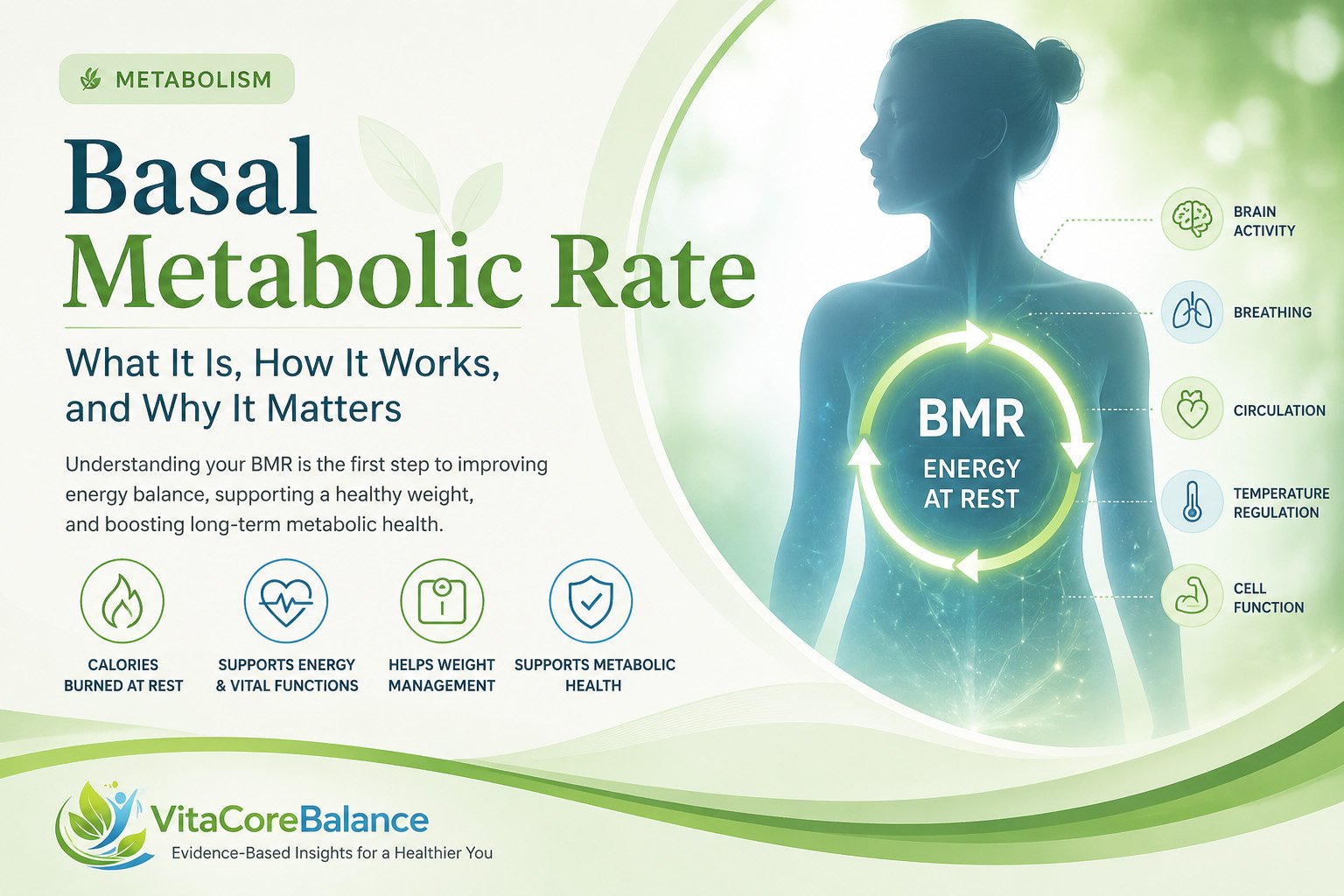
Basal Metabolic Rate: What It Is, How It Works, and Why It Matters
VitaCoreBalance Editorial Team | Research-based health content • Editorial review process | April 2026
Basal metabolic rate (BMR) represents the minimum amount of energy your body needs to maintain essential life functions at rest. Even when you are not moving, thinking intensely, or digesting food, your body continuously uses energy to keep your heart beating, lungs breathing, brain functioning, and cells repairing themselves. This baseline energy requirement plays a central role in metabolism, weight management, energy levels, and long-term health.
Understanding basal metabolic rate helps explain why some people burn calories faster than others and why metabolism can change with age, body composition, and lifestyle habits. It also provides a practical foundation for managing weight, improving energy levels, and supporting metabolic health.
What Is Basal Metabolic Rate?
Basal metabolic rate is the number of calories your body requires to sustain basic physiological processes while at complete rest in a fasted state and in a neutral temperature environment. These processes include:
-
- Breathing and oxygen circulation
-
- Heartbeat and blood flow
-
- Brain and nervous system activity
-
- Cellular repair and regeneration
-
- Hormone production and regulation
-
- Maintenance of body temperature
For most adults, BMR accounts for 60% to 75% of total daily calorie expenditure, making it the largest contributor to overall energy use. Physical activity, digestion, and movement make up the remaining portion of daily energy expenditure.
Why Basal Metabolic Rate Matters
Basal metabolic rate influences many aspects of health and daily functioning. Changes in BMR can affect body weight, energy levels, and metabolic efficiency over time.
Key reasons BMR is important include:
-
- Determines baseline calorie needs
-
- Influences weight gain or weight loss
-
- Affects daily energy levels
-
- Reflects metabolic health and efficiency
-
- Helps guide nutrition and exercise planning
When BMR is lower than expected, the body may burn fewer calories at rest, making weight management more challenging. When BMR is higher, the body uses more energy, which can support easier weight maintenance and improved metabolic flexibility.
How Basal Metabolic Rate Is Calculated
Basal metabolic rate can be estimated using standardized formulas that consider factors such as age, sex, weight, and height. One commonly used method is the Mifflin-St Jeor equation, which provides a practical estimate for daily resting calorie needs.
While these formulas are useful, they provide estimates rather than exact measurements. More precise testing can be performed in clinical settings using indirect calorimetry, which measures oxygen consumption and carbon dioxide production.
Typical BMR ranges vary widely depending on body size and composition. For example:
-
- Smaller adults may have a BMR of 1,200 to 1,400 calories per day
-
- Average adults may have a BMR of 1,400 to 1,800 calories per day
- Larger or more muscular individuals may have a BMR above 2,000 calories per day
Factors That Affect Basal Metabolic Rate
Multiple biological and lifestyle factors influence how quickly the body uses energy at rest.
1) Body Composition
Lean muscle tissue requires more energy to maintain than body fat. Individuals with higher muscle mass typically have a higher BMR because muscle is metabolically active tissue.
2) Age
Basal metabolic rate generally declines with age, partly due to natural muscle loss and hormonal changes. This gradual decrease can contribute to weight gain and reduced energy levels over time.
3) Sex
Men often have a higher BMR than women due to greater average muscle mass and lower body fat percentage.
4) Genetics
Genetic factors influence metabolic efficiency, hormone levels, and body composition, all of which affect BMR.
5) Hormones
Hormones such as thyroid hormones, insulin, cortisol, and growth hormone play key roles in regulating metabolism and energy use.
6) Physical Activity Level
Regular exercise, especially strength training, can increase muscle mass and support a higher resting metabolic rate.
7) Nutrition and Calorie Intake
Severe calorie restriction or prolonged dieting can temporarily lower BMR as the body adapts to conserve energy.
Basal Metabolic Rate vs. Metabolism vs. Resting Metabolic Rate
These terms are closely related but not identical.
Basal Metabolic Rate (BMR)
-
- Energy used at complete rest under controlled conditions
-
- Represents the body’s minimum energy requirement
Resting Metabolic Rate (RMR)
-
- Energy used at rest in normal daily conditions
-
- Typically slightly higher than BMR
Metabolism
-
- The total set of chemical reactions that convert food into energy
-
- Includes BMR, physical activity, digestion, and other processes
Understanding these distinctions helps clarify how energy is used throughout the day and why daily calorie needs vary between individuals.
Signs Your Basal Metabolic Rate May Be Lower Than Expected
A slower-than-expected metabolic rate can develop gradually and may be influenced by aging, inactivity, hormonal changes, or prolonged dieting.
Common signs may include:
-
- Persistent fatigue or low energy
-
- Difficulty losing weight
-
- Unexplained weight gain
-
- Feeling cold more often than usual
-
- Reduced physical endurance
-
- Slower recovery after exercise
These symptoms are not diagnostic but can indicate changes in metabolic efficiency that may benefit from lifestyle adjustments.
How to Support a Healthy Basal Metabolic Rate
Supporting metabolic health does not require extreme measures. Consistent habits that improve muscle mass, nutrition, and overall health can help maintain a stable metabolic rate over time.
Build and Maintain Muscle Mass
Strength training is one of the most effective ways to support BMR because muscle tissue requires more energy than fat tissue. Even modest increases in muscle mass can contribute to higher resting calorie use.
Examples of effective resistance exercises include:
-
- Bodyweight training
-
- Weightlifting
-
- Resistance band exercises
-
- Functional strength movements
Stay Physically Active
Regular movement helps maintain metabolic efficiency and supports long-term energy balance.
Helpful strategies include:
-
- Daily walking
-
- Structured exercise routines
-
- Short activity breaks during sedentary work
-
- Consistent weekly activity patterns
Eat Enough Protein
Protein supports muscle maintenance and repair, which helps sustain metabolic activity.
High-protein foods include:
-
- Eggs
-
- Fish
-
- Poultry
-
- Lean meats
-
- Beans and legumes
-
- Dairy products
Avoid Extreme Dieting
Very low-calorie diets can trigger metabolic adaptation, reducing energy expenditure to conserve resources. Gradual, sustainable dietary changes are generally more effective for long-term metabolic health.
Prioritize Sleep and Stress Management
Sleep deprivation and chronic stress can disrupt hormone regulation and negatively affect metabolism.
Healthy sleep habits may include:
-
- Maintaining a consistent sleep schedule
-
- Reducing screen exposure before bedtime
-
- Creating a comfortable sleep environment
- Managing stress through relaxation techniques
Supplements That May Help Support Energy Metabolism
Some nutrients play a direct role in cellular energy production and metabolic processes. Supplements may help fill nutritional gaps when dietary intake is insufficient.
B-Complex Vitamins
Support energy metabolism and nervous system function.
Magnesium
Supports ATP production, muscle function, and metabolic processes.
Coenzyme Q10 (CoQ10)
Supports mitochondrial energy production and cellular function.
Iron
Supports oxygen transport and energy production, particularly in individuals with low iron levels.
These supplements are not substitutes for healthy lifestyle habits but may support metabolic health when used appropriately.
When to Seek Medical Advice
Persistent changes in metabolism or energy levels may sometimes be linked to underlying medical conditions.
Consider consulting a healthcare professional if you experience:
-
- Severe or unexplained fatigue
-
- Rapid or unexplained weight changes
-
- Persistent intolerance to cold or heat
-
- Hair thinning or brittle nails
-
- Irregular heart rate
-
- Long-term difficulty managing weight despite healthy habits
Conditions such as thyroid disorders, hormonal imbalances, anemia, or metabolic disorders can affect basal metabolic rate and may require medical evaluation.
Frequently Asked Questions (FAQ)
What is a normal basal metabolic rate?
A normal basal metabolic rate varies based on age, sex, body size, and body composition. Most adults have a BMR between approximately 1,200 and 2,000 calories per day.
Does metabolism slow with age?
Yes. Metabolism often slows gradually with age due to changes in muscle mass, hormone levels, and physical activity patterns. However, regular exercise and healthy nutrition can help maintain metabolic efficiency.
Can exercise increase basal metabolic rate?
Yes. Strength training and regular physical activity can increase muscle mass, which supports a higher resting metabolic rate over time.
Is basal metabolic rate the same as daily calorie needs?
No. Basal metabolic rate represents energy used at rest. Total daily calorie needs also include physical activity, digestion, and daily movement.
Can dieting reduce basal metabolic rate?
Yes. Prolonged or extreme calorie restriction can lower metabolic rate as the body adapts to conserve energy. Balanced, sustainable dietary changes are generally more effective for long-term results.
The Bottom Line
Basal metabolic rate is the foundation of energy use in the body and plays a critical role in weight management, energy levels, and overall metabolic health. While factors such as age and genetics influence metabolic rate, consistent lifestyle habits—especially strength training, balanced nutrition, adequate sleep, and regular activity—can help support a healthy metabolism over time.
Understanding your basal metabolic rate provides a practical starting point for improving energy balance, maintaining a healthy weight, and supporting long-term wellness.