
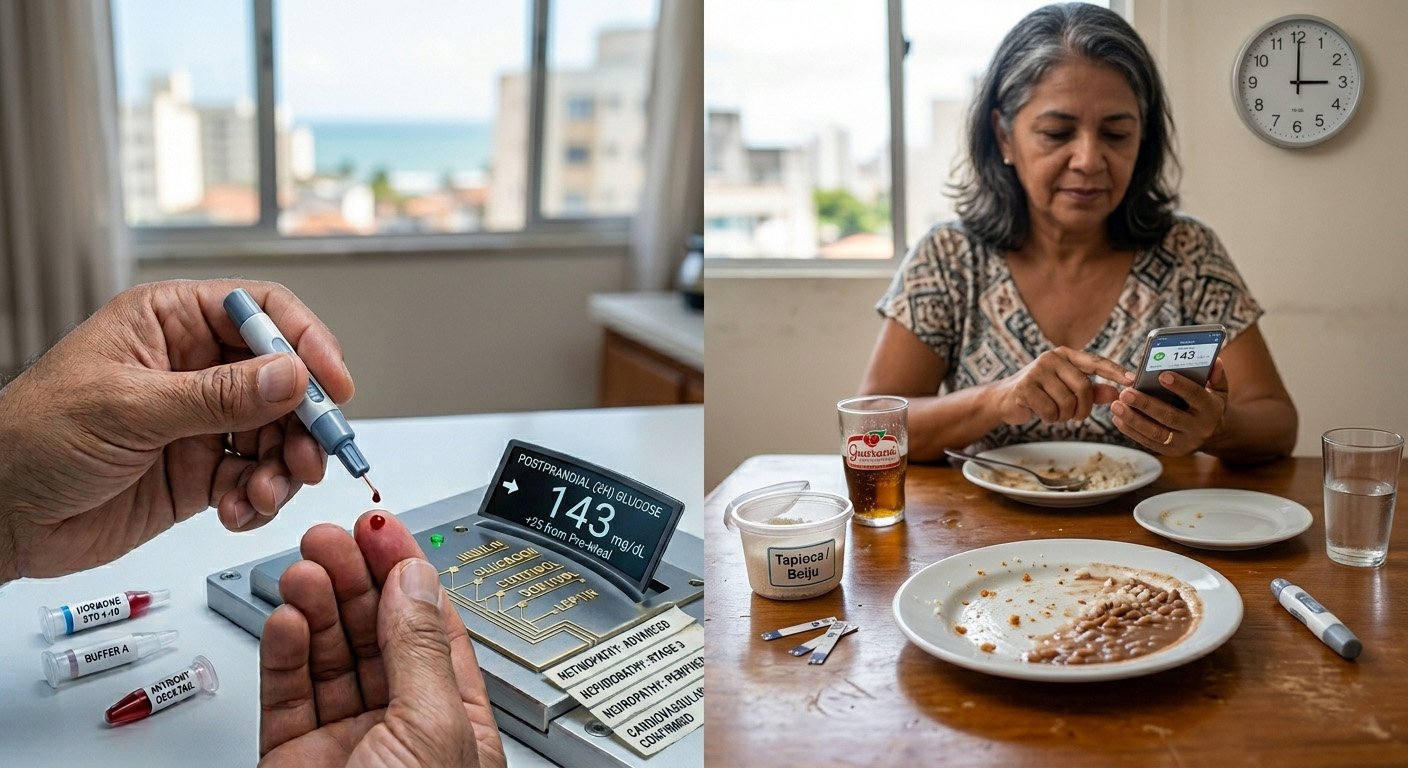
Blood Sugar After Meals (Postprandial Blood Sugar)
VitaCoreBalance Editorial Team | Research-based health content • Editorial review process | March 2026
Introduction
Blood sugar levels naturally rise after eating as the body digests carbohydrates and releases glucose into the bloodstream. This process, known as postprandial blood sugar, is a normal part of metabolism. However, when blood sugar rises too high or remains elevated for too long after meals, it may signal underlying metabolic dysfunction.
Understanding blood sugar after meals is essential for maintaining stable Metabolism, supporting healthy Hormone Health, and preventing long-term complications. Post-meal glucose levels are closely linked to Nutrition, insulin sensitivity, cardiovascular health, and energy regulation. In fact, postprandial glucose spikes are often one of the earliest measurable signs of insulin resistance and prediabetes.
Monitoring and managing blood sugar after meals helps protect overall metabolic health and reduces the risk of chronic disease.
What Is Blood Sugar After Meals?
Blood sugar after meals, also called postprandial glucose, refers to the level of glucose in the bloodstream following food consumption.
Clinically, post-meal blood sugar is typically measured:
- 1–2 hours after eating
- After the body has begun digesting carbohydrates
- When insulin response is actively regulating glucose levels
General reference ranges:
- Normal: less than 140 mg/dL
- Prediabetes: 140–199 mg/dL
- Diabetes: 200 mg/dL or higher
These thresholds are widely used in clinical practice and help assess how effectively the body manages glucose following meals.
Maintaining healthy post-meal glucose levels is a key component of stable Blood Sugar regulation and long-term metabolic resilience.
How Blood Sugar Changes After Eating (Physiology)
After a meal, carbohydrates are broken down into glucose, which enters the bloodstream. In response, the pancreas releases insulin to help cells absorb glucose and maintain balance.
The process typically follows this pattern:
- Food is digested into glucose
- Blood sugar rises
- Insulin is released
- Cells absorb glucose
- Blood sugar returns to baseline
In healthy individuals:
- Blood sugar rises moderately
- Peaks within about 60 minutes
- Returns to normal within 2–3 hours
When this process becomes impaired:
- Blood sugar spikes higher than normal
- Insulin response becomes inefficient
- Glucose remains elevated longer
This dysfunction is strongly associated with changes in Metabolism, insulin resistance, and impaired Hormone Health.
Why Blood Sugar Spikes After Meals
Post-meal glucose spikes are influenced by multiple physiological and lifestyle factors.
1) Carbohydrate Quantity and Type
The type and amount of carbohydrates consumed have the strongest impact on post-meal blood sugar.
Foods that raise blood sugar quickly include:
- Refined grains
- Sugary drinks
- White bread
- Desserts
- Ultra-processed foods
Foods that support stable glucose levels include:
- High-fiber vegetables
- Whole grains
- Lean protein
- Healthy fats
Balanced dietary patterns are central to Nutrition and metabolic health.
2) Insulin Sensitivity
Insulin sensitivity determines how effectively the body uses insulin to move glucose into cells.
Reduced insulin sensitivity can cause:
- Higher blood sugar after meals
- Slower glucose clearance
- Increased risk of metabolic disease
This condition is closely tied to Hormone Health and long-term changes in Metabolism.
3) Meal Size and Timing
Large meals or irregular eating patterns can overwhelm the body’s ability to regulate glucose.
Common triggers include:
- Overeating
- Late-night meals
- Skipping meals followed by large meals
- Frequent snacking
Consistent meal timing helps stabilize blood sugar and supports healthy Sleep Health and metabolic rhythms.
4) Physical Activity
Muscle tissue uses glucose for energy. When physical activity is low:
- Glucose uptake decreases
- Insulin sensitivity declines
- Post-meal blood sugar rises
Regular movement improves glucose regulation and supports sustainable Weight Loss.
5) Stress and Hormones
Stress hormones such as cortisol increase blood sugar by stimulating glucose production.
Chronic stress can:
- Raise post-meal glucose levels
- Increase insulin resistance
- Disrupt appetite regulation
This highlights the connection between stress, Hormone Health, and Energy & Fatigue patterns.
Symptoms of High Blood Sugar After Meals
Many people do not immediately notice symptoms of elevated post-meal blood sugar, especially in early stages. However, repeated spikes can produce recognizable signs.
Common symptoms include:
- Fatigue after eating
- Increased thirst
- Brain fog
- Headaches
- Sleepiness
- Blurred vision
- Increased hunger
- Irritability
These symptoms often reflect unstable glucose regulation and may overlap with issues discussed in Energy & Fatigue and Sleep Health.
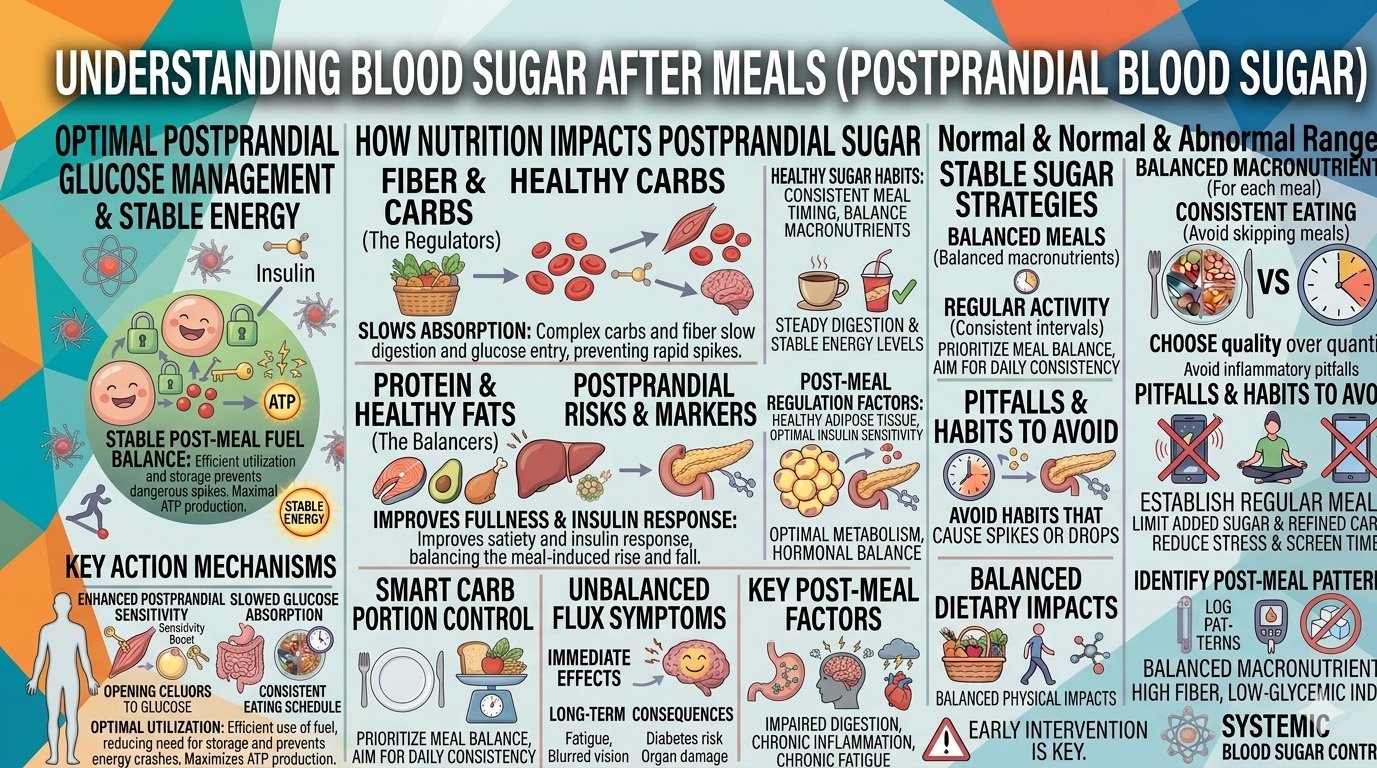
Health Risks of Repeated Post-Meal Blood Sugar Spikes
Frequent post-meal glucose spikes can contribute to long-term metabolic damage, even when fasting blood sugar appears normal.
Metabolic Risks
- Insulin resistance
- Prediabetes
- Type 2 diabetes
- Metabolic syndrome
- Weight gain
These conditions reflect impaired Metabolism and reduced insulin efficiency.
Cardiovascular Risks
Post-meal hyperglycemia is strongly associated with cardiovascular disease.
Potential risks include:
- Inflammation of blood vessels
- Increased oxidative stress
- Atherosclerosis
- Heart disease
This connection highlights the importance of controlling post-meal glucose for long-term Heart Health.
Energy and Cognitive Effects
Rapid changes in blood sugar can affect brain function and daily performance.
Possible effects include:
- Energy crashes
- Difficulty concentrating
- Mood changes
- Reduced productivity
These symptoms are commonly linked to instability in Energy & Fatigue regulation.
How to Measure Blood Sugar After Meals
Monitoring post-meal glucose is a useful tool for identifying early metabolic dysfunction.
Common methods include:
Fingerstick Glucose Testing
Typically performed:
- 1 hour after eating
- 2 hours after eating
This method is widely used for daily monitoring.
Continuous Glucose Monitoring (CGM)
CGM devices provide:
- Real-time glucose tracking
- Trend analysis
- Detection of glucose spikes
These tools are increasingly used to improve Blood Sugar awareness and metabolic management.
Practical Strategies to Control Blood Sugar After Meals
Evidence-based strategies can significantly reduce post-meal glucose spikes.
Build Balanced Meals
Include:
- Protein
- Fiber
- Healthy fats
- Complex carbohydrates
Balanced meals slow glucose absorption and support stable Nutrition.
Eat Fiber-Rich Foods
Fiber helps:
- Slow digestion
- Reduce glucose spikes
- Improve insulin sensitivity
Examples include:
- Vegetables
- Legumes
- Whole grains
- Seeds
Fiber intake is strongly associated with better Gut Health and metabolic stability.
Move After Meals
Light physical activity after eating can:
- Improve glucose uptake
- Reduce post-meal spikes
- Enhance insulin sensitivity
Examples:
- Walking
- Light stretching
- Household activity
This supports both Metabolism and sustainable Weight Loss.
Improve Sleep Quality
Sleep affects hormone balance and glucose regulation.
Poor sleep can:
- Increase insulin resistance
- Raise post-meal glucose
- Increase appetite
Optimizing Sleep Health is essential for stable blood sugar control.
Manage Stress
Reducing stress helps regulate cortisol and glucose production.
Effective strategies include:
- Regular physical activity
- Relaxation techniques
- Structured daily routines
- Adequate recovery time
These behaviors support long-term Hormone Health and metabolic resilience.
Why Blood Sugar After Meals Matters
Post-meal blood sugar is one of the earliest indicators of metabolic health.
It can reveal:
- Insulin resistance
- Early diabetes risk
- Poor dietary tolerance
- Hidden metabolic dysfunction
Because post-meal glucose reflects how the body handles real-world nutrition, it is often more sensitive than fasting glucose alone.
Monitoring blood sugar after meals helps protect:
- Metabolism
- Heart Health
- Energy levels
- Hormone balance
- Long-term health
Final Thoughts
Blood sugar after meals is a critical marker of metabolic function and overall health. While temporary increases are normal, repeated spikes can signal deeper metabolic stress and increase the risk of chronic disease.
Maintaining stable post-meal glucose requires coordination between:
- Metabolism
- Nutrition
- Hormone Health
- Sleep Health
- Energy & Fatigue
- Heart Health
- Gut Health
- Weight Loss
Understanding how your body responds to food is one of the most powerful steps toward long-term metabolic health.
FAQ — Blood Sugar After Meals
What is a normal blood sugar level after eating?
Most guidelines consider:
- Less than 140 mg/dL normal
- 140–199 mg/dL elevated
- 200 mg/dL or higher high
Measured about 2 hours after eating.
How long should blood sugar stay elevated after meals?
In healthy individuals:
- Blood sugar peaks within 1 hour
- Returns to baseline within 2–3 hours
Persistent elevation may indicate insulin resistance.
Is it normal to feel sleepy after eating?
Mild sleepiness can occur after meals, but persistent fatigue may suggest blood sugar fluctuations or poor metabolic regulation.
Medical Disclaimer
This content is for informational purposes only and does not constitute medical advice. Always consult a qualified healthcare professional.
Editorial Transparency
This article was created following evidence-based health content guidelines and reviewed by the VitaCoreBalance Editorial Team.
Sources
Centers for Disease Control and Prevention (CDC)
National Institute of Diabetes and Digestive and Kidney Diseases (NIDDK)
American Diabetes Association (ADA)
World Health Organization (WHO)
Monnier L. “Postprandial glucose and cardiovascular risk.”
Diabetes Care
Ceriello A. “Postprandial hyperglycemia and cardiovascular complications.”
Diabetes Research and Clinical Practice
American Heart Association — Blood Sugar and Cardiovascular Health