
Blood Sugar and Heart Disease
VitaCoreBalance Editorial Team | Research-based health content • Editorial review process | March 2026
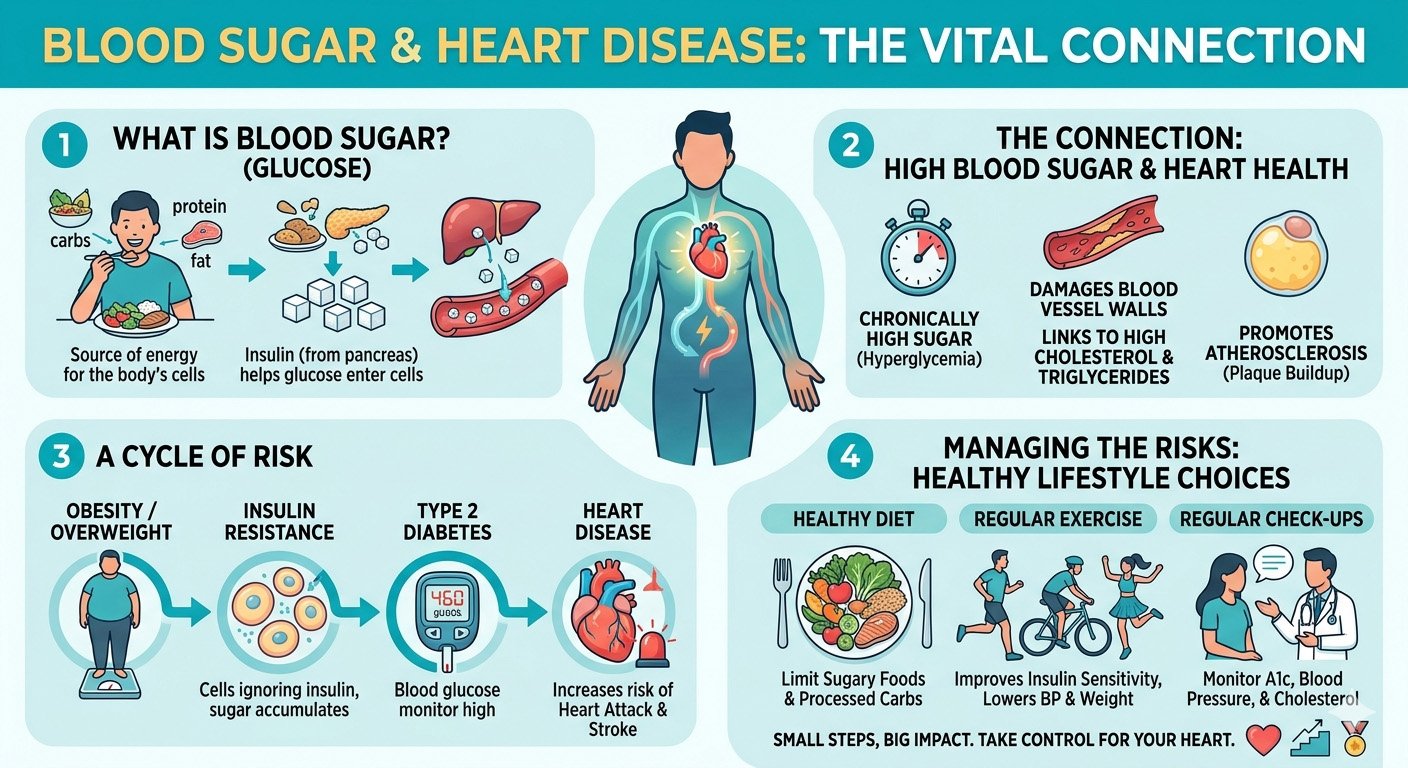
Blood sugar plays a central role in cardiovascular health. When blood sugar levels remain elevated over time, they can damage blood vessels, increase inflammation, and disrupt metabolic balance — all of which increase the risk of heart disease. Even mild elevations in blood sugar, especially when persistent, can contribute to long-term cardiovascular complications.
The relationship between blood sugar and heart disease reflects the close interaction between multiple body systems, including Metabolism, Nutrition, and Hormone Health. Factors such as insulin resistance, obesity, poor sleep, and chronic stress can all influence blood sugar regulation and cardiovascular risk.
Understanding how blood sugar affects the heart helps identify early warning signs and supports effective prevention strategies.
What Is Blood Sugar?
Blood sugar, also known as blood glucose, refers to the amount of sugar circulating in the bloodstream. Glucose is the body’s primary source of energy and is derived from carbohydrates in food.
After eating:
- Carbohydrates are broken down into glucose
- Glucose enters the bloodstream
- Insulin helps move glucose into cells
- Cells use glucose for energy
Healthy blood sugar regulation depends on balanced metabolic processes discussed in Metabolism and stable hormone signaling addressed in Hormone Health.
How High Blood Sugar Affects the Heart (Physiology)
When blood sugar remains elevated, it triggers biological changes that can damage the cardiovascular system over time. These changes often develop gradually and without obvious symptoms.
Blood Vessel Damage
High blood sugar damages the inner lining of blood vessels, known as the endothelium.
This damage can lead to:
- Reduced blood vessel flexibility
- Increased plaque buildup
- Narrowed arteries
- Reduced circulation
These changes increase the risk of heart attack and stroke.
Blood vessel health is closely linked to metabolic regulation discussed in Heart Health.
Inflammation
Chronic high blood sugar increases inflammation throughout the body.
Inflammation can:
- Damage blood vessel walls
- Promote plaque formation
- Increase clotting risk
- Accelerate cardiovascular disease
Inflammatory responses are strongly influenced by dietary patterns discussed in Nutrition and metabolic balance addressed in Metabolism.
Insulin Resistance
Insulin resistance occurs when cells become less responsive to insulin, causing blood sugar levels to rise.
This condition can lead to:
- High blood sugar
- Weight gain
- Increased inflammation
- Increased cardiovascular risk
Insulin resistance is one of the strongest links between blood sugar and heart disease.
This mechanism is closely connected to metabolic dysfunction addressed in Blood Sugar and Weight Loss.
Increased Blood Pressure
High blood sugar can increase blood pressure by affecting kidney function and fluid balance.
This can result in:
- Increased sodium retention
- Increased vascular resistance
- Elevated blood pressure
Blood pressure regulation is a central component of cardiovascular health discussed in Heart Health.
Abnormal Cholesterol Levels
High blood sugar can disrupt lipid metabolism, leading to unhealthy cholesterol patterns.
These patterns may include:
- High triglycerides
- Low HDL cholesterol
- Increased small dense LDL particles
These changes increase the risk of plaque buildup and cardiovascular disease.
Cholesterol metabolism is closely linked to metabolic health addressed in Metabolism.

Who Is at Higher Risk?
Certain individuals are more likely to experience blood sugar-related cardiovascular problems.
Risk factors include:
- Diabetes
- Prediabetes
- Obesity
- Sedentary lifestyle
- High blood pressure
- Poor diet
- Smoking
- Chronic stress
- Poor sleep
These risk factors are often addressed through lifestyle changes discussed in Nutrition, Weight Loss, and Sleep Health.
Cardiovascular Conditions Linked to High Blood Sugar
High blood sugar is associated with several serious cardiovascular conditions.
Coronary Artery Disease
Elevated blood sugar accelerates plaque buildup in coronary arteries.
This can lead to:
- Reduced blood flow to the heart
- Chest pain (angina)
- Heart attack
Heart Failure
High blood sugar increases strain on the heart and can weaken heart muscle over time.
Risk increases due to:
- Increased inflammation
- Reduced circulation
- Structural changes in the heart
Heart function is closely connected to metabolic health discussed in Metabolism.
Stroke
High blood sugar increases the risk of stroke by damaging blood vessels and increasing clot formation.
Stroke risk rises significantly when high blood sugar is combined with:
- High blood pressure
- High cholesterol
- Obesity
Peripheral Artery Disease
High blood sugar can reduce circulation to the limbs by narrowing blood vessels.
This condition may cause:
- Leg pain
- Reduced mobility
- Slow wound healing
Peripheral artery disease is a common complication of diabetes.
Key Signs of Blood Sugar-Related Heart Risk
Early detection can help prevent long-term complications.
Common warning signs include:
- Frequent fatigue
- Increased thirst
- Blurred vision
- Slow wound healing
- Shortness of breath
- Chest discomfort
- High blood pressure
- Unexplained weight gain
These symptoms often reflect metabolic changes discussed in Energy & Fatigue and Metabolism.
Practical Strategies to Protect Heart Health
Managing blood sugar is one of the most effective ways to reduce cardiovascular risk.
Maintain Stable Blood Sugar Levels
Helpful strategies include:
- Eating balanced meals
- Limiting added sugar
- Increasing fiber intake
- Choosing whole foods
- Avoiding frequent overeating
These dietary patterns support metabolic stability discussed in Nutrition.
Stay Physically Active
Regular physical activity improves insulin sensitivity and cardiovascular health.
Benefits include:
- Lower blood sugar
- Improved circulation
- Reduced inflammation
- Better weight management
Exercise is strongly associated with prevention strategies discussed in Weight Loss.
Maintain a Healthy Body Weight
Healthy body weight reduces strain on both metabolic and cardiovascular systems.
Weight management can:
- Improve insulin sensitivity
- Lower blood pressure
- Reduce inflammation
- Reduce heart disease risk
Weight regulation is closely linked to metabolic balance discussed in Metabolism.
Prioritize Sleep
Sleep plays a critical role in blood sugar regulation.
Poor sleep can lead to:
- Insulin resistance
- Increased appetite
- Increased inflammation
- Increased cardiovascular risk
Healthy sleep patterns support metabolic regulation discussed in Sleep Health.
Monitor Blood Sugar and Cardiovascular Health
Regular monitoring helps detect risk early.
Important metrics include:
- Fasting blood sugar
- Hemoglobin A1C
- Blood pressure
- Cholesterol levels
- Body weight
Monitoring supports prevention strategies discussed in Heart Health.
Why Blood Sugar Control Matters for Heart Health
High blood sugar is one of the strongest drivers of cardiovascular disease. Many people associate diabetes primarily with blood sugar, but the most serious complications often involve the heart and blood vessels.
Chronic high blood sugar can lead to:
- Atherosclerosis
- Hypertension
- Heart attack
- Stroke
- Heart failure
Because blood sugar regulation affects multiple body systems, improving metabolic health supports prevention strategies across Metabolism, Heart Health, Nutrition, and Hormone Health.
Final Thoughts
Blood sugar and heart disease are closely connected through shared metabolic and cardiovascular pathways. Persistent high blood sugar damages blood vessels, increases inflammation, and places continuous strain on the heart.
Fortunately, blood sugar is a highly modifiable risk factor. Small, consistent improvements in nutrition, physical activity, sleep, and stress management can significantly reduce cardiovascular risk.
Protecting heart health begins with managing blood sugar.
Medical Disclaimer
This content is for informational purposes only and does not constitute medical advice. Always consult a qualified healthcare professional.
Editorial Transparency
This article was created following evidence-based health content guidelines and reviewed by the VitaCoreBalance Editorial Team.
Sources
Medical Institutions
American Heart Association (AHA)
National Institutes of Health (NIH)
Centers for Disease Control and Prevention (CDC)
Mayo Clinic — Diabetes and Heart Disease
Global Organizations
World Health Organization (WHO) — Cardiovascular Disease and Diabetes
Peer-Reviewed Studies
Emerging Risk Factors Collaboration
Diabetes mellitus, fasting glucose, and risk of vascular disease
The Lancet
Sarwar N et al.
Diabetes and risk of coronary heart disease
The Lancet
Scientific Review
Low Wang CC et al.
Clinical update: Cardiovascular disease in diabetes
Circulation