

Blood Sugar and Hormones
VitaCoreBalance Editorial Team | Research-based health content • Editorial review process | March 2026
Introduction: The Hormonal Control System Behind Blood Sugar
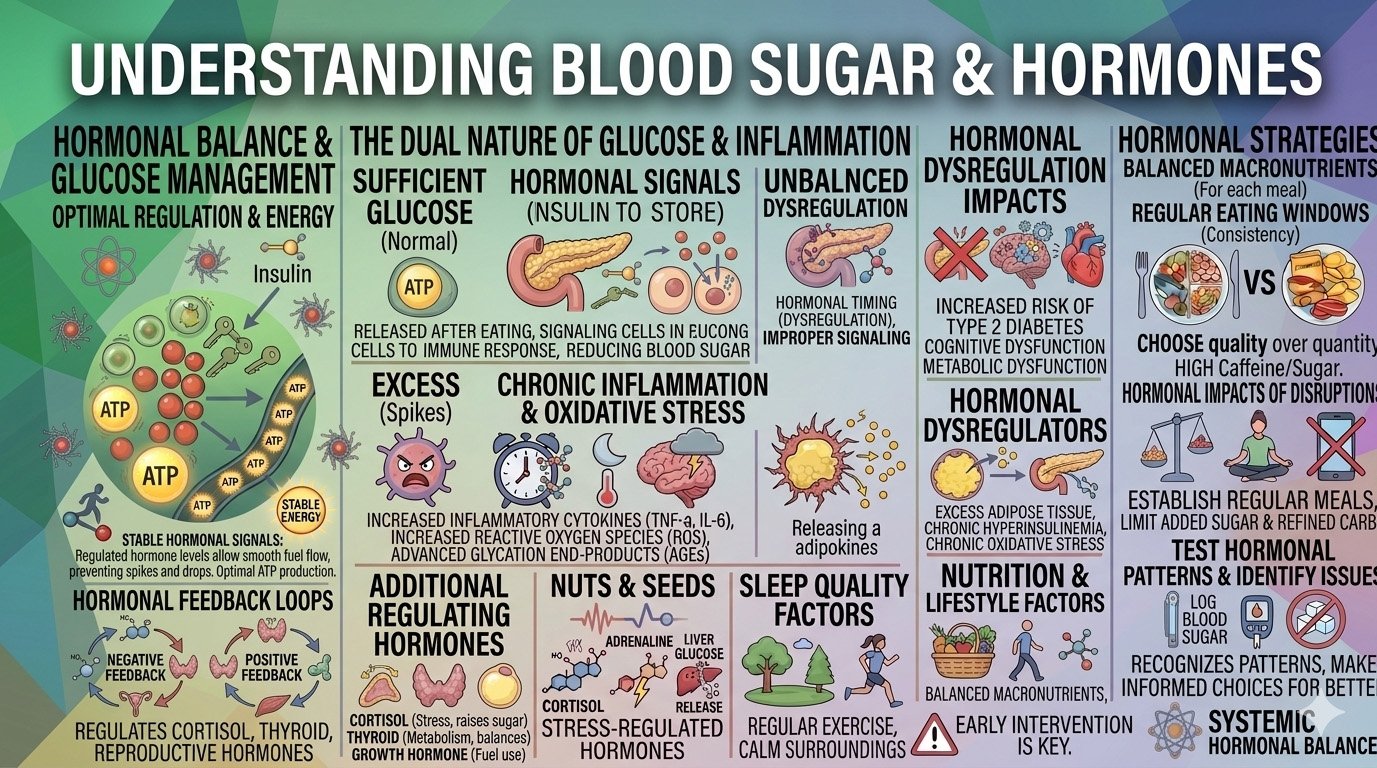
Blood sugar regulation is not controlled by a single process—it is managed by a complex network of hormones that coordinate how the body produces, stores, and uses energy. These hormones act as messengers, ensuring that glucose levels remain stable throughout the day and night. When this system functions properly, energy levels stay consistent, appetite is balanced, and metabolism operates efficiently.
However, hormonal imbalances can disrupt blood sugar regulation, leading to fatigue, weight gain, cravings, and increased risk of metabolic disease. This relationship connects directly to Hormone Health, Metabolism, and Nutrition, as well as sleep quality, stress response, and cardiovascular health.
Understanding how hormones influence blood sugar helps explain why stable glucose levels depend not only on diet, but also on sleep, stress, and overall metabolic balance.
What Is the Relationship Between Blood Sugar and Hormones?
Hormones are chemical messengers released by glands such as the pancreas, adrenal glands, thyroid, and pituitary gland. These hormones regulate how glucose enters cells, how much energy is stored, and how the body responds to changes in energy demand.
Healthy blood sugar regulation typically involves:
- Balanced insulin and glucagon activity
- Stable energy levels
- Controlled appetite
- Efficient metabolism
- Normal hormone signaling
When hormone levels become unbalanced, the body may struggle to regulate glucose effectively. This can lead to:
- Blood sugar spikes or drops
- Increased hunger
- Fatigue
- Weight gain
- Insulin resistance
This is why blood sugar stability is closely linked to both Blood Sugar management and long-term Energy & Fatigue regulation.
Key Hormones That Control Blood Sugar
Several hormones play essential roles in maintaining stable glucose levels.
1) Insulin: The Primary Blood Sugar Regulator
Insulin is the most important hormone for lowering blood sugar.
Produced by:
The pancreas
Insulin helps:
- Move glucose into cells
- Store excess glucose as glycogen
- Reduce blood sugar levels
When insulin works properly, blood sugar remains stable. When insulin resistance develops, glucose builds up in the bloodstream, increasing the risk of metabolic disease.
Insulin function is central to Metabolism and long-term glucose regulation.
2) Glucagon: The Counterbalance to Insulin
Glucagon raises blood sugar when levels drop too low.
Produced by:
The pancreas
Glucagon helps:
- Release stored glucose from the liver
- Prevent dangerously low blood sugar
- Maintain energy between meals
Insulin and glucagon work together to maintain glucose balance.
3) Cortisol: The Stress Hormone
Cortisol increases blood sugar during stress.
Produced by:
The adrenal glands
Cortisol helps:
- Release glucose into the bloodstream
- Provide energy during stress
- Maintain alertness
Chronic stress can lead to:
- Elevated blood sugar
- Insulin resistance
- Increased fat storage
This connection highlights the role of Hormone Health in metabolic regulation.
4) Adrenaline (Epinephrine): Rapid Energy Response
Adrenaline prepares the body for immediate action.
Produced by:
The adrenal glands
Adrenaline causes:
- Rapid glucose release
- Increased heart rate
- Increased alertness
While useful in emergencies, frequent adrenaline surges can create unstable blood sugar patterns.
5) Growth Hormone
Growth hormone supports tissue repair and metabolism.
Produced by:
The pituitary gland
Growth hormone can:
- Increase blood sugar slightly
- Support muscle growth
- Regulate energy balance
Growth hormone plays an important role in metabolic health, particularly during sleep, linking it to Sleep Health.
6) Thyroid Hormones
Thyroid hormones regulate metabolic rate and energy production.
Produced by:
The thyroid gland
Thyroid hormones influence:
- How quickly the body uses glucose
- Energy expenditure
- Body temperature
- Weight regulation
Thyroid dysfunction can lead to fatigue, weight changes, and blood sugar instability, connecting thyroid function to Energy & Fatigue regulation.
How Hormonal Imbalances Affect Blood Sugar
When hormones fall out of balance, the body’s ability to regulate glucose becomes less efficient.
Insulin Resistance
A condition where cells respond poorly to insulin.
Effects include:
- Elevated blood sugar
- Increased hunger
- Fat storage
- Reduced energy efficiency
Insulin resistance is strongly associated with Weight Loss challenges and metabolic dysfunction.
Chronic Stress and Elevated Cortisol
Persistent stress can lead to chronically high cortisol levels.
This can cause:
- Increased glucose production
- Increased appetite
- Abdominal fat gain
- Fatigue
Stress-related hormonal imbalance is a major contributor to metabolic disease.
Thyroid Disorders
Both hypothyroidism and hyperthyroidism can affect blood sugar regulation.
Common symptoms include:
- Fatigue
- Weight changes
- Temperature sensitivity
- Changes in energy levels
These conditions highlight the importance of balanced hormones for metabolic health.
Poor Sleep and Hormonal Disruption
Sleep plays a critical role in hormone regulation.
Sleep disruption can affect:
- Insulin sensitivity
- Cortisol levels
- Appetite hormones
- Energy balance
This connection reinforces the importance of Sleep Health in maintaining stable blood sugar.
Signs That Hormones May Be Affecting Blood Sugar
Hormonal imbalance often produces subtle symptoms that develop gradually.
Common signs include:
- Persistent fatigue
- Sugar cravings
- Mood changes
- Weight gain
- Difficulty losing weight
- Irregular sleep patterns
- Brain fog
These symptoms frequently overlap with issues in Energy & Fatigue regulation.
Lifestyle Factors That Influence Hormones and Blood Sugar
Several daily habits can help maintain hormonal balance and stable glucose levels.
Nutrition
Balanced meals support hormone regulation and blood sugar stability.
Helpful habits include:
- Eating whole foods
- Limiting refined carbohydrates
- Including protein and fiber
- Maintaining consistent meal timing
Healthy eating patterns are central to Nutrition and metabolic health.
Physical Activity
Regular movement improves hormone sensitivity and glucose control.
Exercise helps:
- Increase insulin sensitivity
- Reduce stress hormones
- Improve metabolism
- Stabilize blood sugar
Stress Management
Reducing stress helps regulate cortisol and improve glucose stability.
Helpful strategies include:
- Relaxation techniques
- Mindfulness
- Deep breathing
- Regular physical activity
Sleep
Consistent, high-quality sleep supports hormone balance.
Healthy sleep helps:
- Regulate cortisol
- Improve insulin sensitivity
- Stabilize appetite hormones
This reinforces the importance of Sleep Health.
Why Hormonal Balance Matters for Blood Sugar Control
Hormones act as the control system for blood sugar regulation.
When hormone levels remain balanced, the body can:
- Maintain stable glucose levels
- Produce consistent energy
- Regulate appetite
- Support healthy metabolism
When hormones become disrupted, blood sugar regulation becomes less predictable.
Over time, hormonal imbalance can contribute to:
- Insulin resistance
- Chronic fatigue
- Weight gain
- Metabolic disease
- Cardiovascular risk
Maintaining hormonal balance is essential for long-term metabolic health.
Final Thoughts: Hormones Are the Command Center of Blood Sugar
Blood sugar regulation depends on more than diet alone—it depends on hormonal balance.
Insulin, glucagon, cortisol, thyroid hormones, and growth hormone all work together to maintain stable energy and metabolic function. Supporting these hormonal systems through healthy lifestyle habits can help prevent blood sugar instability and reduce long-term disease risk.
Understanding the connection between Blood Sugar, Hormone Health, Metabolism, Sleep Health, and Nutrition provides a comprehensive framework for improving daily health and long-term well-being.
FAQ
Which hormone has the biggest effect on blood sugar?
Insulin has the most direct effect on lowering blood sugar, while glucagon raises blood sugar when levels drop.
Can hormone imbalance cause high blood sugar?
Yes. Hormonal imbalances—especially involving insulin, cortisol, or thyroid hormones—can disrupt blood sugar regulation.
Does stress affect hormones and blood sugar?
Yes. Stress increases cortisol and adrenaline, which can raise blood sugar and reduce insulin sensitivity.
Can improving hormone balance stabilize blood sugar?
Yes. Healthy sleep, balanced nutrition, regular exercise, and stress management can significantly improve hormone function and glucose regulation.
Medical Disclaimer
This content is for informational purposes only and does not constitute medical advice. Always consult a qualified healthcare professional.
Editorial Transparency
This article was created following evidence-based health content guidelines and reviewed by the VitaCoreBalance Editorial Team.
Sources
National Institute of Diabetes and Digestive and Kidney Diseases (NIDDK)
Hormones and Blood Sugar Regulation
American Diabetes Association (ADA)
Endocrine Society
Saltiel AR, Kahn CR
Insulin Signaling and the Regulation of Glucose and Lipid Metabolism
Nature
Kahn SE et al.
Mechanisms Linking Obesity to Insulin Resistance and Type 2 Diabetes
Nature
Chrousos GP
Stress and Disorders of the Stress System
Nature Reviews Endocrinology