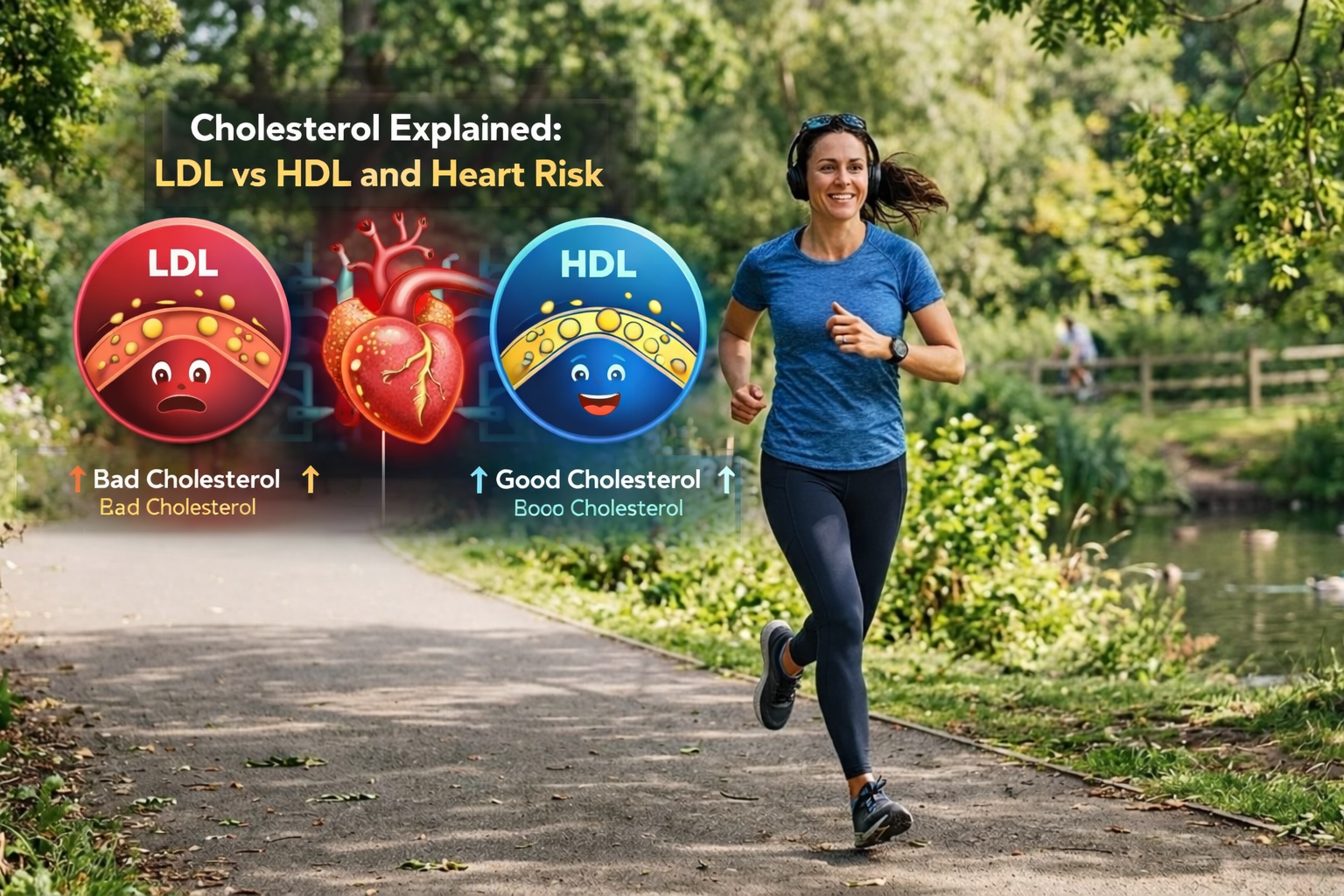
Cholesterol Explained: LDL vs HDL and Heart Risk
VitaCoreBalance Editorial Team | Research-based health content • Editorial review process | March 2026
Cholesterol is one of the most discussed — and often misunderstood — factors in cardiovascular health. While commonly associated with heart disease, cholesterol is not inherently harmful. In fact, it plays a vital role in essential biological functions, including hormone production, cell membrane integrity, and vitamin D synthesis.
The real issue lies not in cholesterol itself, but in how it is transported, regulated, and balanced within the body. Understanding the difference between LDL and HDL cholesterol — and how they relate to metabolism, blood sugar, and inflammation — is fundamental for reducing cardiovascular risk and supporting long-term Heart Health.
What Is Cholesterol and Why Does It Matter?
Cholesterol is a lipid (fat-like substance) produced primarily by the liver and also obtained through diet. Because it is not water-soluble, it travels through the bloodstream attached to proteins called lipoproteins.
These lipoproteins determine how cholesterol behaves in the body — whether it contributes to arterial health or promotes plaque buildup.
Cholesterol metabolism is closely linked to broader systems such as Metabolism, Blood Sugar, and Hormone Health, making it a central component of overall physiological balance.
LDL vs HDL: Understanding the Difference
LDL (Low-Density Lipoprotein) — “Bad” Cholesterol
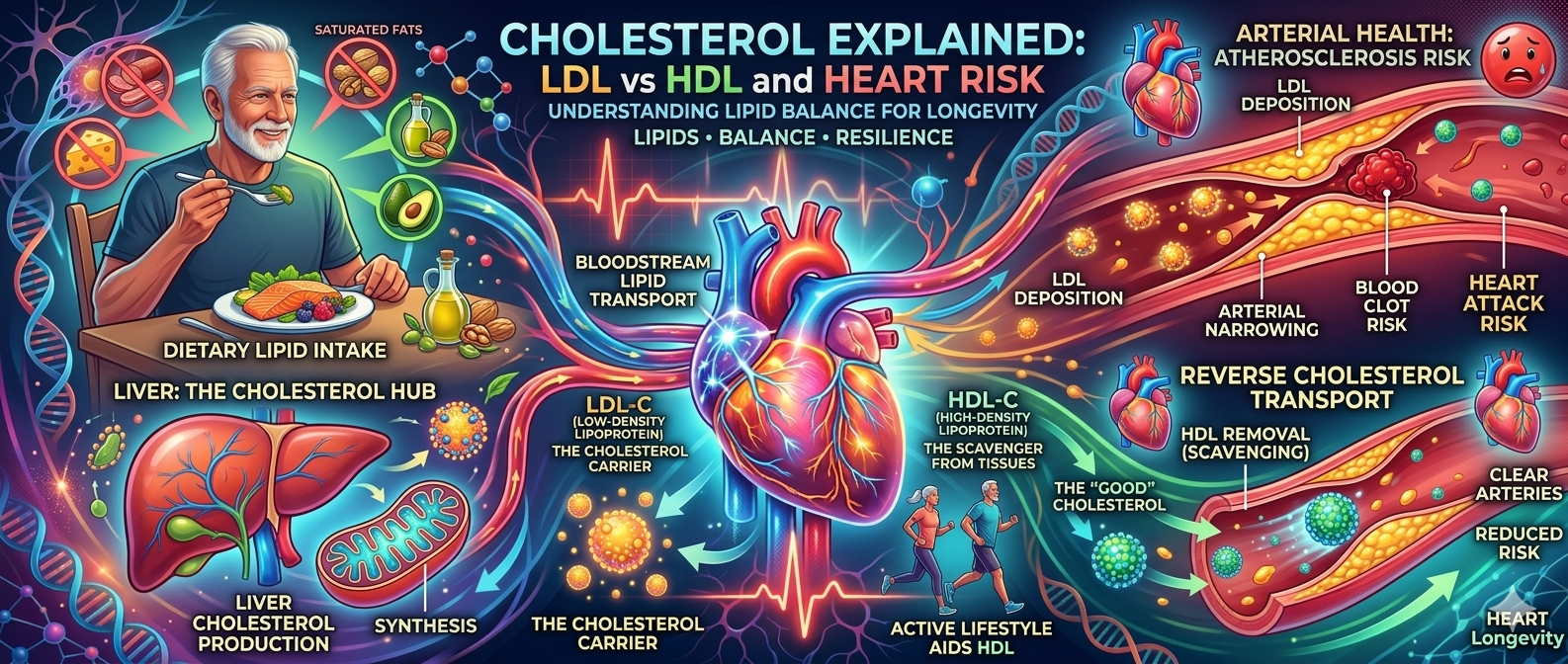
LDL cholesterol carries cholesterol from the liver to tissues. When present in excess, it can deposit cholesterol into the walls of arteries.
This process contributes to plaque formation, a key feature of Atherosclerosis Explained, which can narrow blood vessels and reduce blood flow.
Elevated LDL levels are strongly associated with:
-
increased cardiovascular risk
-
arterial stiffness
-
chronic inflammation (see: Inflammation and Heart Disease)
LDL is particularly harmful when combined with metabolic dysfunction, such as Insulin Resistance Explained and unstable glucose levels.
HDL (High-Density Lipoprotein) — “Good” Cholesterol
HDL cholesterol plays a protective role by transporting excess cholesterol away from tissues and back to the liver for removal.
This process, known as reverse cholesterol transport, helps reduce plaque accumulation and supports vascular health.
Higher HDL levels are often associated with:
-
lower cardiovascular risk
-
improved metabolic function
-
better lipid balance
HDL function is influenced by lifestyle factors such as diet, exercise, and sleep, all of which are explored in Nutrition, Exercise and Heart Health, and Sleep Health.
How Cholesterol Affects Heart Disease Risk
Cholesterol becomes a risk factor when imbalance occurs — particularly when LDL is elevated and HDL is insufficient.
Over time, excess LDL can penetrate arterial walls, triggering an inflammatory response. This leads to plaque formation, reduced vessel flexibility, and impaired circulation.
This process is central to:
-
coronary artery disease
-
heart attacks
-
strokes
The interaction between cholesterol and cardiovascular risk is further amplified by:
-
Blood Sugar and Heart Disease
-
Metabolic Syndrome and Heart Risk
-
chronic inflammation
Understanding this interaction is key to preventing long-term damage.
The Link Between Cholesterol, Blood Sugar, and Metabolism
Cholesterol does not act in isolation. It is deeply interconnected with metabolic health.
Conditions such as:
-
elevated blood glucose (see: What Causes Blood Sugar Spikes)
-
insulin resistance (see: Blood Sugar and Metabolism)
-
excess fat accumulation (see: Blood Sugar and Weight Gain)
can significantly alter lipid profiles.
In many cases, poor blood sugar control leads to:
-
higher triglycerides
-
increased LDL particles
-
reduced HDL levels
This is why improving glucose regulation is often essential for improving cholesterol levels.
Inflammation and Cholesterol: A Hidden Driver of Risk
Chronic inflammation plays a critical role in how cholesterol impacts the body.
Inflammation damages the inner lining of blood vessels, making it easier for LDL cholesterol to accumulate and form plaque.
This relationship is explored in:
-
Blood Sugar and Inflammation
-
Gut Health and Inflammation
-
Hormones and Cardiovascular Health
Reducing inflammation is therefore not only beneficial for general health but also essential for cardiovascular protection.
What Causes High Cholesterol?
High cholesterol levels can result from a combination of lifestyle and biological factors.
Common contributors include:
-
diets high in ultra-processed foods (see: Worst Foods for Heart Health)
-
low intake of fiber and healthy fats (see: Best Foods for Heart Health)
-
physical inactivity (see: Exercise and Metabolic Rate)
-
poor sleep quality (see: Sleep and Blood Sugar Regulation)
-
chronic stress (see: How Stress Affects Blood Sugar)
Genetic factors may also influence how the body processes cholesterol.
Cholesterol Levels: What Is Considered Normal?
Cholesterol levels are typically measured through a lipid panel.
General reference ranges include:
-
Total cholesterol: below 200 mg/dL
-
LDL cholesterol: below 100 mg/dL
-
HDL cholesterol: above 40–50 mg/dL
-
Triglycerides: below 150 mg/dL
However, optimal levels may vary depending on individual risk factors, including those described in Heart Disease Risk Factors.
How to Improve Cholesterol Levels Naturally
Improving cholesterol levels requires a comprehensive approach that targets metabolism, lifestyle, and long-term habits.
1. Improve Diet Quality
Focus on whole foods, fiber, and healthy fats.
-
see: Nutrition and Metabolism
-
see: Best Foods for Blood Sugar Control
2. Increase Physical Activity
Regular movement improves HDL levels and reduces LDL.
-
see: Exercise and Heart Health
3. Stabilize Blood Sugar
Reducing glucose spikes helps improve lipid balance.
-
see: How to Lower Blood Sugar Naturally
4. Improve Sleep
Sleep supports hormone regulation and metabolic recovery.
-
see: Sleep and Heart Health
5. Manage Stress
Chronic stress negatively impacts lipid metabolism.
-
see: Stress and Heart Health
Why Cholesterol Is Only Part of the Story
While cholesterol is important, it is only one piece of a larger system.
Cardiovascular risk is influenced by:
-
blood sugar regulation
-
inflammation levels
-
hormonal balance
-
metabolic efficiency
This is why focusing solely on cholesterol numbers without addressing broader health factors may be insufficient.
A holistic approach — integrating Metabolism, Blood Sugar, Gut Health, and Hormone Health — provides a more complete path to long-term cardiovascular health.
Final Thoughts
Cholesterol is not inherently harmful — it is essential for life. The real concern lies in imbalance, particularly elevated LDL and reduced HDL levels combined with metabolic dysfunction.
By understanding how cholesterol interacts with metabolism, blood sugar, and inflammation, it becomes possible to take a more strategic and effective approach to heart health.
Small, consistent lifestyle changes can improve lipid balance, reduce cardiovascular risk, and support long-term health.
Frequently Asked Questions About Cholesterol
What is cholesterol?
Cholesterol is a waxy, fat-like substance found in the blood. It is essential for building cell membranes, producing hormones, and synthesizing vitamin D.
The body produces cholesterol naturally, but it is also obtained from certain foods. Maintaining balanced levels is important for overall cardiovascular health and is closely linked to Heart Health and Nutrition and Metabolism.
What is the difference between LDL and HDL cholesterol?
LDL (low-density lipoprotein) is often referred to as “bad cholesterol” because it can contribute to plaque buildup in the arteries — a process explained in Atherosclerosis Explained.
HDL (high-density lipoprotein) is considered “good cholesterol” because it helps remove excess cholesterol from the bloodstream and transports it to the liver for elimination.
A healthy balance between LDL and HDL is essential for reducing cardiovascular risk and is strongly influenced by Metabolic Health and Blood Sugar and Metabolism.
Why is high LDL cholesterol harmful?
High levels of LDL cholesterol can lead to plaque accumulation in the arteries, reducing blood flow and increasing the risk of heart attack and stroke.
This process is closely associated with Inflammation and Heart Disease and may be worsened by Blood Sugar and Inflammation and Insulin Resistance Explained.
Can HDL cholesterol protect the heart?
HDL cholesterol helps remove excess cholesterol from the bloodstream, which may reduce plaque formation.
Higher HDL levels are generally associated with better cardiovascular outcomes and are often influenced by lifestyle factors such as Exercise and Heart Health and Best Foods for Heart Health.
What are normal cholesterol levels?
Cholesterol levels are typically measured through a lipid panel and include total cholesterol, LDL, HDL, and triglycerides.
These markers are often evaluated alongside other indicators of metabolic health, such as those discussed in Fasting Blood Sugar Explained and Metabolic Syndrome and Heart Risk.
What causes high cholesterol levels?
Several factors contribute to elevated cholesterol, including:
-
diets high in processed and unhealthy fats (see: Worst Foods for Heart Health)
-
lack of physical activity (see: Exercise and Metabolic Rate)
-
excess body weight (see: Weight Loss and Metabolism)
-
chronic stress (see: Stress and Heart Health)
-
metabolic dysfunction (see: Insulin Resistance Explained)
Cholesterol is rarely an isolated issue — it is deeply connected to broader metabolic systems.
Can diet improve cholesterol levels?
Yes, diet plays a central role in regulating cholesterol.
Foods that may support healthy cholesterol levels include those highlighted in:
-
Best Foods for Blood Sugar Control
-
Best Foods for Heart Health
-
Nutrition and Metabolism
Dietary patterns that stabilize blood sugar also tend to improve lipid balance.
How does cholesterol relate to heart disease?
Cholesterol is one of the primary drivers of cardiovascular disease. Elevated LDL levels contribute to plaque buildup, which can impair circulation.
This relationship is explored further in:
-
Heart Disease Risk Factors
-
Blood Pressure and Heart Health
-
Blood Sugar and Heart Disease
Together, these factors form the foundation of long-term cardiovascular risk.
Is cholesterol linked to blood sugar and metabolism?
Yes. Cholesterol metabolism is strongly connected to glucose regulation and overall metabolic health.
Conditions such as insulin resistance can negatively affect lipid levels, often increasing LDL and triglycerides.
Learn more in:
-
Blood Sugar and Metabolism
-
What Causes Blood Sugar Spikes
-
Blood Sugar and Weight Gain
This connection highlights why metabolic health is essential for cardiovascular protection.
Can lifestyle changes lower cholesterol?
Lifestyle habits play a major role in cholesterol management.
Effective strategies include:
-
regular physical activity (see: Exercise and Heart Health)
-
improving diet quality (see: Nutrition and Metabolism)
-
optimizing sleep (see: Sleep and Heart Health)
-
managing stress (see: How Stress Affects Blood Sugar)
These changes also support broader systems such as Hormone Health and Gut Health, both of which influence metabolic and cardiovascular function.
Scientific Sources & References
-
American Heart Association (AHA)
https://www.heart.org/en/health-topics/cholesterol -
Centers for Disease Control and Prevention (CDC)
https://www.cdc.gov/cholesterol/index.htm -
National Heart, Lung, and Blood Institute (NHLBI)
https://www.nhlbi.nih.gov/health-topics/high-blood-cholesterol -
Harvard T.H. Chan School of Public Health
https://www.hsph.harvard.edu/nutritionsource/cholesterol/ -
Mayo Clinic
https://www.mayoclinic.org/diseases-conditions/high-blood-cholesterol -
World Health Organization (WHO)
https://www.who.int/news-room/fact-sheets/detail/cardiovascular-diseases -
National Institutes of Health (NIH)
https://medlineplus.gov/cholesterol.html
Medical Disclaimer
The information on VitaCoreBalance is provided for educational and informational purposes only. Content within each health topic may reference scientific research but should not be considered medical advice, diagnosis, or treatment.
Always consult qualified healthcare professionals regarding personal health decisions.
Editorial Transparency
VitaCoreBalance Editorial Team
Editorial Process
This article was researched and written by the VitaCoreBalance Editorial Team using peer-reviewed scientific studies, clinical research publications, and trusted medical sources.
The VitaCoreBalance editorial process follows evidence-based health content guidelines designed to ensure accuracy, transparency, and responsible communication of health information.
Our editorial process includes:
• Review of peer-reviewed scientific literature
• Verification of medical and scientific accuracy
• Use of reputable academic and institutional sources
• Periodic updates when new research becomes available
This content is intended for informational purposes only and does not replace professional medical advice.
Editorial Page
Learn more about our editorial standards and review process.
Contact / Company transparency
For questions regarding our editorial process or content accuracy:
contact@vitacorebalance.com
Read the full Medical Disclaimer.