
Comparative Health Risks Across Populations
VitaCoreBalance Editorial Team | Research-based health content • Editorial review process | March 2026
Introduction
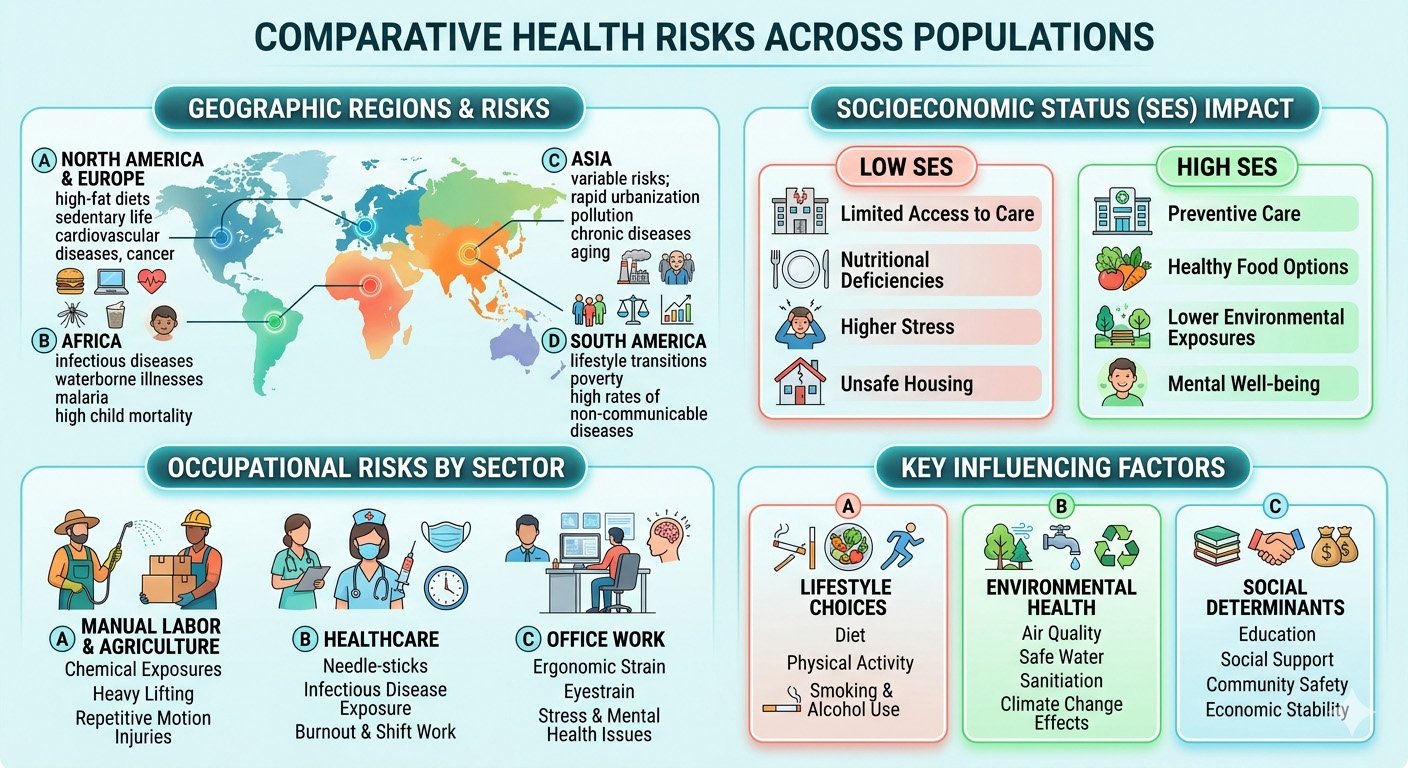
Health risks vary significantly across populations due to differences in genetics, environment, socioeconomic conditions, healthcare access, and lifestyle behaviors. Understanding how health risks compare across regions, age groups, and demographic populations is essential for improving public health strategies and reducing disease burden worldwide.
Comparative health risk analysis allows researchers and policymakers to identify patterns in disease vulnerability and determine which populations are most affected by specific health conditions. These insights help guide prevention programs, healthcare planning, and targeted interventions.
Major global health risks commonly studied across populations include:
- Cardiovascular disease
- Diabetes
- Obesity
- Respiratory disease
- Cancer
- Infectious diseases
- Mental health disorders
- Environmental health risks
By comparing health risks across populations, public health systems can better allocate resources, improve health outcomes, and reduce inequalities in healthcare access and disease prevention.
What Are Comparative Health Risks?
Comparative health risks refer to the evaluation of how different populations are exposed to and affected by various health threats. These comparisons often consider demographic and environmental factors that influence disease risk.
Common variables used in comparative health risk studies include:
Age
Gender
Income level
Education
Geographic location
Urban vs rural residence
Occupation
Lifestyle behaviors
Healthcare access
Comparative risk assessment is widely used in epidemiology to measure how risk factors contribute to disease and mortality in different groups.
Major Health Risk Factors Worldwide
Global health organizations have identified several major risk factors responsible for a large proportion of disease and death worldwide.
High Blood Pressure
High blood pressure is one of the leading risk factors for cardiovascular disease and stroke.
It is strongly associated with:
Heart disease
Kidney disease
Stroke
Heart failure
Hypertension prevalence varies across populations due to differences in diet, healthcare access, and lifestyle behaviors.
Tobacco Use
Tobacco use remains one of the most preventable causes of disease and death globally.
Health risks associated with smoking include:
Lung cancer
Heart disease
Chronic respiratory disease
Stroke
Smoking rates vary widely between countries due to cultural, economic, and regulatory factors.
Obesity
Obesity is a growing global health risk affecting both developed and developing countries.
It is linked to:
Type 2 diabetes
Heart disease
Hypertension
Sleep disorders
Certain cancers
Urbanization and sedentary lifestyles have contributed to increasing obesity rates worldwide.
Air Pollution
Air pollution is a major environmental health risk affecting populations in urban and industrial regions.
Exposure to polluted air is associated with:
Respiratory disease
Cardiovascular disease
Lung cancer
Asthma
Air quality differences significantly influence health outcomes across regions.
Poor Nutrition
Nutritional risk factors include both undernutrition and unhealthy dietary patterns.
Examples include:
Micronutrient deficiencies
High sugar consumption
High sodium intake
Low fruit and vegetable intake
Nutrition-related risks vary widely depending on economic development and food availability.
Health Risks by Age Group
Health risks change significantly throughout the lifespan.
Children
Common health risks in children include:
Infectious diseases
Malnutrition
Respiratory infections
Developmental disorders
Vaccination and improved sanitation have significantly reduced childhood mortality in many countries.
Adults
Adults face increasing risk of chronic diseases.
Common health risks include:
Heart disease
Diabetes
Obesity
Mental health disorders
Work-related injuries
Lifestyle behaviors strongly influence health risk during adulthood.
Older Adults
Older populations have higher risk of chronic disease and disability.
Common health risks include:
Cardiovascular disease
Cancer
Alzheimer’s disease
Osteoporosis
Frailty
Population aging is one of the main drivers of healthcare demand worldwide.
Health Risks by Gender
Men and women often face different health risks due to biological, behavioral, and social factors.
Men’s Health Risks
Men tend to have higher risk of:
Cardiovascular disease
Workplace injuries
Substance use disorders
Risk-taking behaviors
Men also generally have shorter life expectancy compared to women.
Women’s Health Risks
Women face unique health risks related to reproductive and hormonal factors.
Examples include:
Breast cancer
Osteoporosis
Autoimmune disorders
Maternal health complications
Women often live longer but may experience more chronic conditions later in life.
Geographic Differences in Health Risks
Health risks vary significantly between regions due to environmental and socioeconomic conditions.
High-Income Countries
Common risks:
Chronic diseases
Obesity
Mental health disorders
Sedentary lifestyle
These countries typically have advanced healthcare systems and longer life expectancy.
Low- and Middle-Income Countries
Common risks:
Infectious diseases
Malnutrition
Limited healthcare access
Environmental hazards
Economic development strongly influences health outcomes.
Socioeconomic Inequality and Health Risks
Socioeconomic status is one of the strongest predictors of health risk.
Lower-income populations often experience:
Limited healthcare access
Poor nutrition
Higher stress levels
Unsafe living conditions
Increased exposure to environmental hazards
Reducing inequality is a key strategy for improving population health.
Environmental Health Risks
Environmental conditions play a major role in disease risk across populations.
Examples include:
Air pollution
Water contamination
Climate change
Occupational hazards
Extreme temperatures
Environmental health risks are expected to increase due to urbanization and climate change.
The Role of Lifestyle in Health Risk
Lifestyle behaviors are among the most modifiable health risk factors.
Key behaviors include:
Smoking
Physical inactivity
Poor diet
Excess alcohol consumption
Sleep deprivation
Chronic stress
Public health programs often focus on changing these behaviors to reduce disease burden.
Global Health Risk Trends
Several trends are shaping health risks worldwide.
Population Aging
Older populations increase the prevalence of chronic disease.
Urbanization
Urban living changes diet, activity levels, and environmental exposure.
Climate Change
Climate-related risks include:
Heat waves
Air pollution
Infectious disease spread
Food insecurity
Technological Change
Technology influences health through:
Healthcare innovation
Digital health tools
Sedentary behavior
These trends will continue to shape global health patterns.
Prevention Strategies for Reducing Health Risks
Preventive healthcare is one of the most effective ways to reduce disease burden.
Key strategies include:
Vaccination
Health education
Healthy diet promotion
Physical activity programs
Smoking cessation programs
Environmental protection
Early disease screening
Prevention improves health outcomes and reduces healthcare costs.
Conclusion
Comparative health risk analysis provides valuable insight into how disease risk varies across populations and regions. These comparisons help identify vulnerable groups, guide public health policy, and improve healthcare planning.
Understanding health risks across populations is essential for reducing health disparities, improving prevention strategies, and promoting long-term population health.
As global demographics and environmental conditions continue to change, comparative health risk assessment will remain a critical tool for protecting public health worldwide.
Medical Disclaimer
This content is for informational purposes only and does not constitute medical advice. Always consult a qualified healthcare professional.
Editorial Transparency
This article was created following evidence-based health content guidelines and reviewed by the VitaCoreBalance Editorial Team.
Scientific Sources
- World Health Organization (WHO) — Global Health Risks: Mortality and Burden of Disease Attributable to Selected Major Risks
https://www.who.int/publications/i/item/9789241563871 - Institute for Health Metrics and Evaluation (IHME) — Global Burden of Disease Risk Factors
https://www.healthdata.org/research-analysis/gbd - World Bank — Health, Nutrition and Population Statistics
https://data.worldbank.org/topic/health - Centers for Disease Control and Prevention (CDC) — Risk Factors for Leading Causes of Death
https://www.cdc.gov/chronicdisease/resources/publications/factsheets/risk-factors.htm - Our World in Data — Risk Factors for Disease
https://ourworldindata.org/risk-factors - Organisation for Economic Co-operation and Development (OECD) — Health at a Glance
https://www.oecd.org/health/health-at-a-glance/