
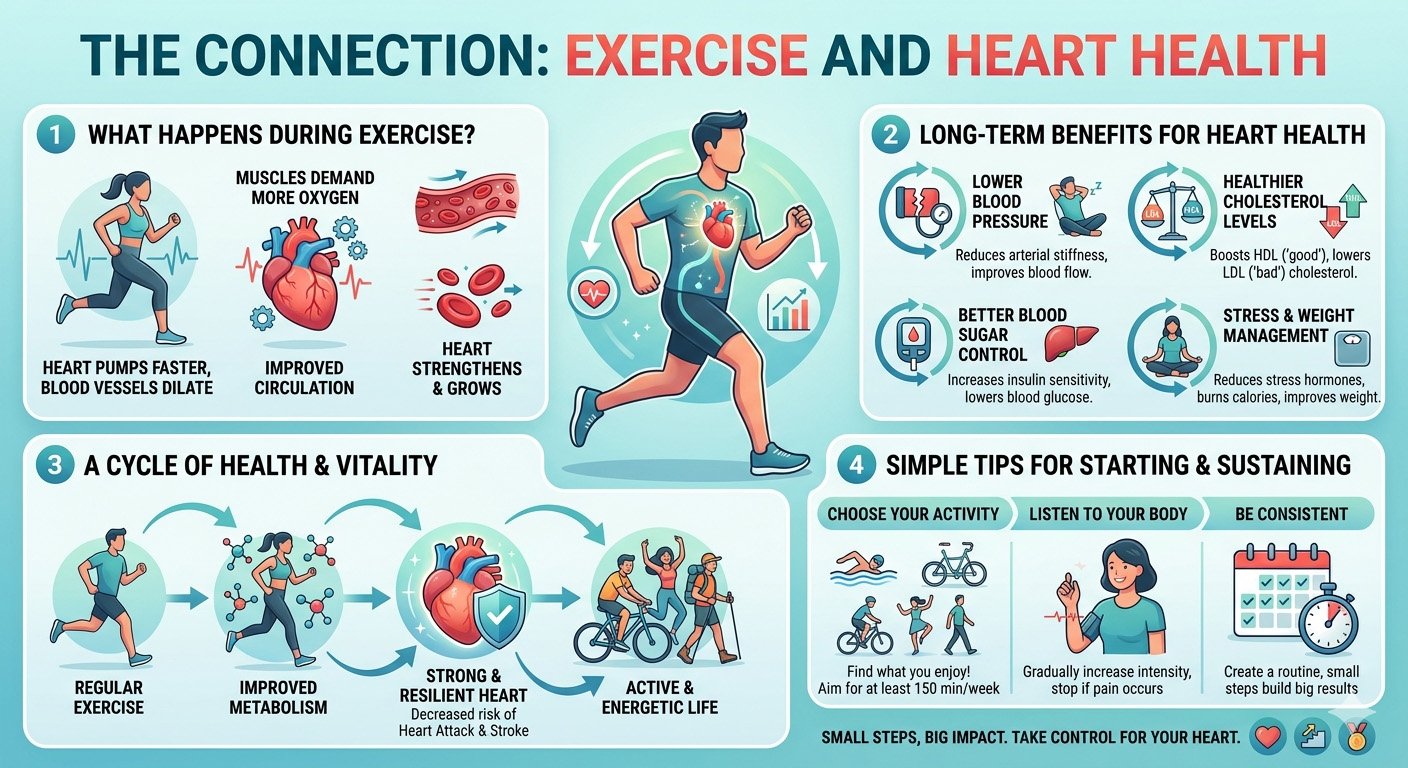
Exercise and Heart Health
Regular physical activity is one of the most effective ways to protect heart health. Exercise strengthens the heart muscle, improves circulation, lowers blood pressure, and supports metabolic balance. It also helps regulate blood sugar, reduce inflammation, and maintain a healthy body weight — all critical factors in preventing cardiovascular disease.
The benefits of exercise extend beyond the cardiovascular system. Physical activity influences Metabolism, Hormone Health, and Blood Sugar, while also improving sleep quality and energy levels. Because these systems are interconnected, consistent movement plays a central role in long-term health and disease prevention.
Understanding how exercise affects heart function helps individuals make informed decisions about physical activity and cardiovascular health.
What Is Cardiovascular Exercise?
Cardiovascular exercise, often called aerobic exercise, refers to activities that increase heart rate and breathing for sustained periods. These activities challenge the heart and lungs, improving their ability to deliver oxygen to muscles and organs.
Common examples include:
- Walking
- Running
- Cycling
- Swimming
- Dancing
- Rowing
- Hiking
Cardiovascular exercise is a cornerstone of prevention strategies discussed in Heart Health and supports metabolic regulation addressed in Metabolism.
How Exercise Strengthens the Heart (Physiology)
The heart is a muscle, and like any muscle, it becomes stronger with regular use. Exercise improves the heart’s ability to pump blood efficiently and maintain stable circulation.
Regular physical activity can:
- Increase heart strength
- Improve blood vessel flexibility
- Lower resting heart rate
- Improve oxygen delivery
- Reduce inflammation
- Improve metabolic efficiency
These physiological changes support long-term cardiovascular health and reduce disease risk.
Exercise also plays a key role in metabolic stability discussed in Blood Sugar and hormonal regulation addressed in Hormone Health.
Improved Blood Vessel Function
Exercise helps maintain healthy blood vessels by improving endothelial function — the ability of blood vessels to expand and contract.
Healthy blood vessels help:
- Lower blood pressure
- Improve circulation
- Reduce plaque buildup
- Reduce risk of heart disease
This mechanism directly supports cardiovascular protection discussed in Heart Health.
Reduced Inflammation
Regular physical activity helps regulate inflammatory processes.
Exercise can:
- Lower inflammatory markers
- Improve immune function
- Reduce cardiovascular risk
- Support metabolic health
Inflammation control is closely linked to metabolic balance discussed in Metabolism and digestive health addressed in Gut Health.
Improved Cholesterol Levels
Exercise positively affects cholesterol balance.
Benefits include:
- Increased HDL (good cholesterol)
- Reduced triglycerides
- Improved lipid metabolism
These changes reduce the risk of plaque buildup in arteries and support cardiovascular health.
Cholesterol regulation is closely connected to dietary patterns discussed in Nutrition.
Better Blood Sugar Control
Exercise improves insulin sensitivity, allowing the body to use glucose more efficiently.
Benefits include:
- Lower blood sugar levels
- Reduced insulin resistance
- Improved energy production
- Reduced risk of diabetes
Blood sugar regulation is a central component of metabolic health discussed in Blood Sugar.

Types of Exercise That Support Heart Health
Different forms of physical activity provide unique cardiovascular benefits.
Aerobic Exercise
Aerobic exercise is the most effective type of activity for improving cardiovascular health.
Examples include:
- Brisk walking
- Jogging
- Swimming
- Cycling
Health benefits include:
- Lower blood pressure
- Improved circulation
- Increased endurance
- Reduced cardiovascular risk
Aerobic exercise is strongly associated with improved outcomes discussed in Heart Health.
Strength Training
Strength training helps build muscle and improve metabolic efficiency.
Examples include:
- Weight lifting
- Resistance bands
- Bodyweight exercises
Benefits include:
- Increased muscle mass
- Improved metabolism
- Better blood sugar control
- Reduced body fat
Strength training supports metabolic regulation discussed in Metabolism and weight management addressed in Weight Loss.
Flexibility and Mobility Training
Flexibility exercises help maintain joint health and reduce injury risk.
Examples include:
- Stretching
- Yoga
- Pilates
Benefits include:
- Improved mobility
- Reduced muscle tension
- Better recovery
- Reduced stress
These activities also support stress regulation discussed in Hormone Health.
How Much Exercise Is Recommended?
Health organizations recommend regular physical activity for cardiovascular protection.
For most adults:
At least 150 minutes of moderate-intensity exercise per week
or
75 minutes of vigorous-intensity exercise per week
Additional benefits may occur with:
- Increased activity frequency
- Strength training at least twice per week
- Reduced sedentary time
These guidelines support prevention strategies discussed in Heart Health.
Risk Factors That Improve With Exercise
Regular exercise helps reduce many major cardiovascular risk factors.
These include:
- High blood pressure
- High cholesterol
- High blood sugar
- Obesity
- Inflammation
- Insulin resistance
- Stress
- Poor sleep
Physical activity improves outcomes across multiple systems, including Metabolism, Sleep Health, and Weight Loss.
Signs Your Heart Benefits From Exercise
Consistent physical activity can lead to measurable improvements in health.
Positive signs include:
- Lower resting heart rate
- Improved endurance
- Better energy levels
- Improved sleep quality
- Stable blood pressure
- Improved mood
These improvements often reflect better metabolic efficiency discussed in Energy & Fatigue.
Safety Considerations Before Starting Exercise
Most people can safely begin moderate physical activity, but certain individuals should consult a healthcare professional before starting a new exercise program.
This may be important for individuals with:
- Heart disease
- High blood pressure
- Diabetes
- Obesity
- Chest pain during activity
- Shortness of breath
Gradual progression helps reduce injury risk and supports long-term consistency.
Practical Strategies to Support Heart Health Through Exercise
Sustainable habits are more important than intense short-term efforts.
Start Slowly
Begin with manageable activities such as walking or light cycling.
Gradual increases help:
- Build endurance
- Reduce injury risk
- Improve consistency
Choose Activities You Enjoy
Enjoyable activities increase long-term adherence.
Examples include:
- Walking with friends
- Dancing
- Swimming
- Cycling
Consistency is the most important factor for cardiovascular health.
Be Consistent
Regular activity is more effective than occasional intense exercise.
Helpful strategies include:
- Scheduling exercise sessions
- Setting realistic goals
- Tracking progress
Consistency supports metabolic regulation discussed in Metabolism.
Combine Exercise With Healthy Nutrition
Exercise works best when combined with healthy dietary habits.
Balanced nutrition supports:
- Energy production
- Muscle recovery
- Cardiovascular health
These habits align with guidance discussed in Nutrition.
Why Exercise Matters for Long-Term Heart Health
Heart disease develops gradually over time, often influenced by daily lifestyle habits. Exercise is one of the most powerful protective factors because it improves cardiovascular function, metabolic health, and inflammatory balance simultaneously.
Regular physical activity can:
- Reduce cardiovascular disease risk
- Improve heart strength
- Lower blood pressure
- Improve cholesterol levels
- Improve metabolic health
- Extend life expectancy
Because exercise affects multiple systems, it supports prevention strategies across Heart Health, Metabolism, Blood Sugar, Sleep Health, and Weight Loss.
Final Thoughts
Exercise is one of the most effective and accessible tools for protecting heart health. Even moderate physical activity can produce meaningful improvements in cardiovascular function, metabolic stability, and overall well-being.
Small, consistent movement patterns can significantly reduce long-term cardiovascular risk.
Protecting heart health begins with staying active.
Medical Disclaimer
This content is for informational purposes only and does not constitute medical advice. Always consult a qualified healthcare professional.
Editorial Transparency
This article was created following evidence-based health content guidelines and reviewed by the VitaCoreBalance Editorial Team.
Sources
Medical Institutions
American Heart Association (AHA)
Centers for Disease Control and Prevention (CDC)
National Institutes of Health (NIH)
Mayo Clinic — Exercise and Heart Health
Global Organizations
World Health Organization (WHO) — Physical Activity Guidelines
Peer-Reviewed Studies
Warburton DER et al.
Health benefits of physical activity
CMAJ
Lee IM et al.
Effect of physical inactivity on major diseases
The Lancet
Scientific Review
Lavie CJ et al.
Exercise and cardiovascular health
Progress in Cardiovascular Diseases