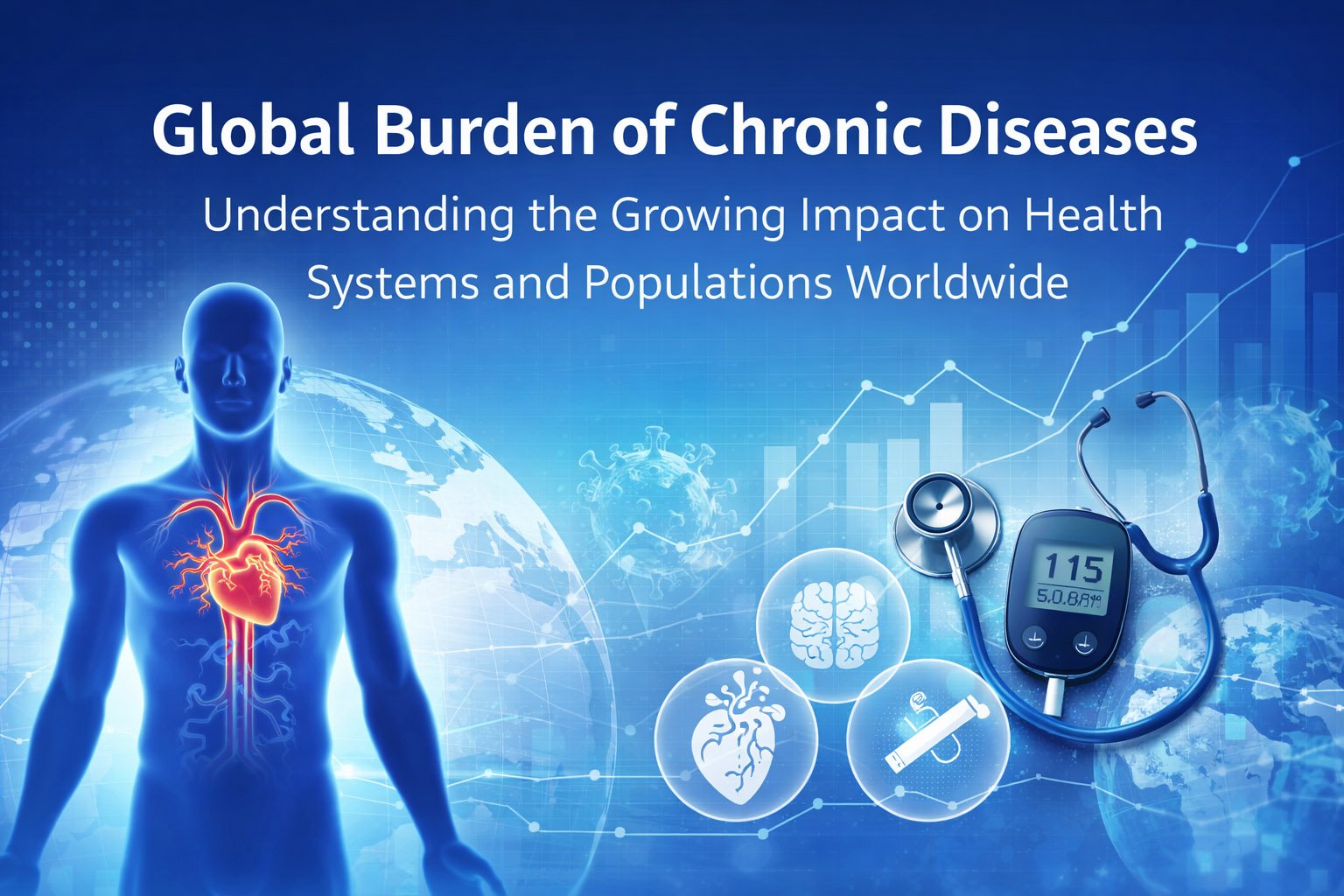
Global burden of chronic diseases illustration showing human body, global health data, and medical monitoring devices

Global Burden of Chronic Diseases

Understanding the Growing Impact on Health Systems and Populations Worldwide

VitaCoreBalance Editorial Team | Research-based health content • Editorial review process | April 2026

Chronic diseases are now the leading cause of death and disability worldwide, affecting millions of people across all regions and income levels. Conditions such as heart disease, diabetes, cancer, and chronic respiratory illnesses place enormous pressure on individuals, families, healthcare systems, and national economies.

The global burden of chronic diseases continues to rise due to aging populations, urbanization, sedentary lifestyles, unhealthy diets, environmental factors, and longer life expectancy. Unlike infectious diseases, chronic conditions often develop slowly and require long-term management rather than short-term treatment.

Understanding this growing burden is essential for designing effective prevention strategies, improving healthcare planning, and promoting healthier populations.


What Are Chronic Diseases?

Chronic diseases — also known as noncommunicable diseases (NCDs) — are conditions that typically last for years and often require ongoing medical care or lifestyle management.

Common Characteristics

  • Long duration
  • Slow progression
  • Often preventable
  • Require long-term treatment
  • Major cause of disability and death
  • Strong link to lifestyle and environmental factors

The Most Common Chronic Diseases Worldwide

Cardiovascular Diseases

https://images.openai.com/static-rsc-4/A8tfjBhbGC_dWXi7h4vYP0bWRnBsL3KtssHstMN5hOcoHJOQLV63adCBpWYeRlLLxJ9DMNbZBO3SHX0niB3Lp5DuZQPU1ODcud1W7l__kK2W9SkUF9m2l5ZnxshCR4u-sEjTUOPAnngA3G-LWF1ph0mxcBi2-M0kZVB17N9i5s8-CtGATdgA3H9-5L493luS?purpose=fullsize
https://images.openai.com/static-rsc-4/BTG0bLHH_X_zCoJNFiaYDngnQAHkCrUe3bWdOaSllf8ZB35XvaQfJLIjxNB7zBMvpSM56y6HE7OARFQA9OnVMLMR9juBdaCTy2DBlVE9wqwO1US7MQ088SpbVpqUBXMX_6icg3H4VOHSrPxxqhBfRNEj2D-06x7DHOMjepx-GUMN0ewp9ErsMuSZZTDvJFy0?purpose=fullsize
https://images.openai.com/static-rsc-4/5c94g0YZiPlnqSQwqjsKVkZ69aaoS77jHbDwfkaD2M70xZ9xGWot6QyiRLSX_8wKXyP3dzKLVqeydnY371EOpPAUyI27OK-oE09_c-CnhXs-0RksNR406mMW3Kvr_YfHKoEyK6l7Wh3QF2ghCdnJOYY8e4bEyNFFsb-4oR4pM6ExB9vXhn2uQEmTu_p2uJyl?purpose=fullsize

Cardiovascular diseases remain the leading cause of death globally. These include heart attacks, strokes, and hypertension-related complications.

Key risk factors:

  • High blood pressure
  • High cholesterol
  • Smoking
  • Obesity
  • Physical inactivity
  • Poor diet
Global burden of chronic diseases statistics showing global deaths, obesity, and diabetes prevalence worldwide

Diabetes

https://images.openai.com/static-rsc-4/ZaloXOIzjJgVLeytiqC9x93q9BziMpH0BS6xjsDY77StNqRq99JaYB5nYuhHGXej6jObdmp5ybpelCz4Y4FsWkpghUwTdOYlLkD9Jq2OCRGAZoqmZmBFR7Yg8sMo_lXEixrqCsG9MtBdLFezTUSmlwyfapD5gfp_2qLA_6c4MZ1t13VO056j72aEJynyuDok?purpose=fullsize
https://images.openai.com/static-rsc-4/E2dVh9KvG2DkXzeQolUNvjSrLAn8nyMRqVu542OSBfw4eYPgOmELEBUaTTvJauR8wYrKtIw7kOdyD_SGeNKI1Y2n1Ma1GiKeQLRDncHRaTDvQlzSWXJ1hIDu2fdW_iw5YuKcUKMSMuF1DozXWHs5CRR5oajUVfacA35zAG-kAAWyXjUO4AR0bfGipuXc4o8e?purpose=fullsize
https://images.openai.com/static-rsc-4/wkzLbazEW7DW0YIXYwEG41pva_nl9Hi_nmieyjnmwGZwdf8N9ZVp3HOqEDYFk6f7Dl5Kr5zQM6-8k0Ws2F-egZbcM_HHNBCTdWC-pcPgehvzF0C2tPx9obDpbfXsTpyvWJLCBTLYg3NaXy80tMfFR_GbegB4ruq2H9sWdFTLKHtUsByJptvrzB2QVjWVa721?purpose=fullsize
5

Diabetes is one of the fastest-growing chronic conditions worldwide, particularly Type 2 diabetes, which is strongly associated with obesity and sedentary lifestyles.

Common complications:

  • Heart disease
  • Kidney failure
  • Vision loss
  • Nerve damage
  • Stroke

Chronic Respiratory Diseases

https://images.openai.com/static-rsc-4/8FoWKzy03cjEDmzLSv7gLTLHINkONEB9wI4JX4JTbvJMb7UM8PE3m0fpZCkhNNP7Vco2L7xbKOmkGKPqeurAO6FG5vNwZI416hvoLhapEdlbIWNTJaRyAZavUMLGYrOUyfT4wkTlFWxmOQhdk_wpfZWmfTdpuM3WOgkv8bAZo8s1SxER50qqpurQkG1w5AN0?purpose=fullsize
https://images.openai.com/static-rsc-4/4jJy_nSO4A6jfw0g4CJXnIxQ28liHJGTJnZpIU_4UyY4gDaUTA600NVemvichBhAPa852MK5JMLpUOYi3YBUZKqJpKP_B4Xeaq_VqOv_CFjH4pLv55bk0eXWsM9JME8A09yqTKQRHCgH2EfRcem65HaFYZZwCQeJCQRQbXuJ9JXFwya2dUpEc6puYW-X37Sl?purpose=fullsize
https://images.openai.com/static-rsc-4/c4RdK8feI-uQJvl0ZwHxFaGxc2saKjfCtJrbSAZ1nnObOL8_0eyj4Qnv3GgwWpWHX_wTEXOe_IPtTMDUlMs-vs8gDUvmZjVaG7EGHCCi4u2g6CSxuk1VEnVYeHmo0CnKhZqRcCUC81IIUhl9BV60OOotOC8xeTn08SDk83N2pJLA4RQdvf9E1qKD2jBDP8pn?purpose=fullsize
5

Chronic respiratory diseases affect breathing and lung function and are often linked to environmental exposure and smoking.

Examples include:

  • Chronic obstructive pulmonary disease (COPD)
  • Asthma
  • Occupational lung diseases

Cancer

https://images.openai.com/static-rsc-4/65hFcTlTL6Tl7Eg6yRD-6w5q41AnHZuPZqXsVrLLgDI9T08IMJxlXJGmPtLf9sCh6QVBQFA_IQjlqvhpaTDrDSdWVgxPR8Rn8nox6aynsalQiNbUWO6Jx86B98xIdIiQFkfDmMO1J147Ttsv4qcNingZfm7_GXg3sJin_my0HZ99QIkEHIh9x7zNNfN37pAe?purpose=fullsize
https://images.openai.com/static-rsc-4/1gT8Hcd9FbNv3GA96gc4o8EAKjc5EmGMONmdpQv6BukH1-Ztupk3hdDr8eddKY6Bj5mQHTAkGXDDpRau9_knroiIQsez9A6MJBAaTg4xEPwxgU3LVnGFHdFD70o0rtnCuuEp20S0fJQ996IMEDdWc1-sJbIRvbR95CdL5aXoO2SGJRV9mDwd9Sx3OWpPbP9X?purpose=fullsize
https://images.openai.com/static-rsc-4/TNnHC4E1v8TTQbl4DKwv44L4Z0LOJtEMP-DjB5N8Ig2iSRvuM1hiwPrOyJ3Se3peE2Aii6nZFGBP7x3YB0l7fMzyQhvN9vWsxmAU7fCvoy1lt78cFbCLkxHVjdfjezdwM_oIygWZjh91rnBBafW_bE4dZQKL7Fh_dQMJoDV-qnkyD2wUrgUk8BgRiod40t8l?purpose=fullsize
7

Cancer is a major contributor to global mortality and disability. Early detection and prevention play a critical role in reducing its impact.

Major risk factors:

  • Tobacco use
  • Alcohol consumption
  • Poor diet
  • Environmental exposure
  • Aging

Why the Global Burden Is Increasing

Several large-scale changes in society are driving the rapid growth of chronic diseases worldwide.

Population Aging

People are living longer than ever before. As life expectancy increases, the likelihood of developing chronic conditions also rises.

Urbanization

Urban lifestyles often involve:

  • Reduced physical activity
  • Increased processed food consumption
  • Higher stress levels
  • Greater exposure to pollution

Lifestyle Changes

Modern habits significantly contribute to chronic disease risk.

Key contributors:

  • Sedentary behavior
  • Poor nutrition
  • Tobacco use
  • Excess alcohol consumption
  • Chronic stress
  • Sleep deprivation
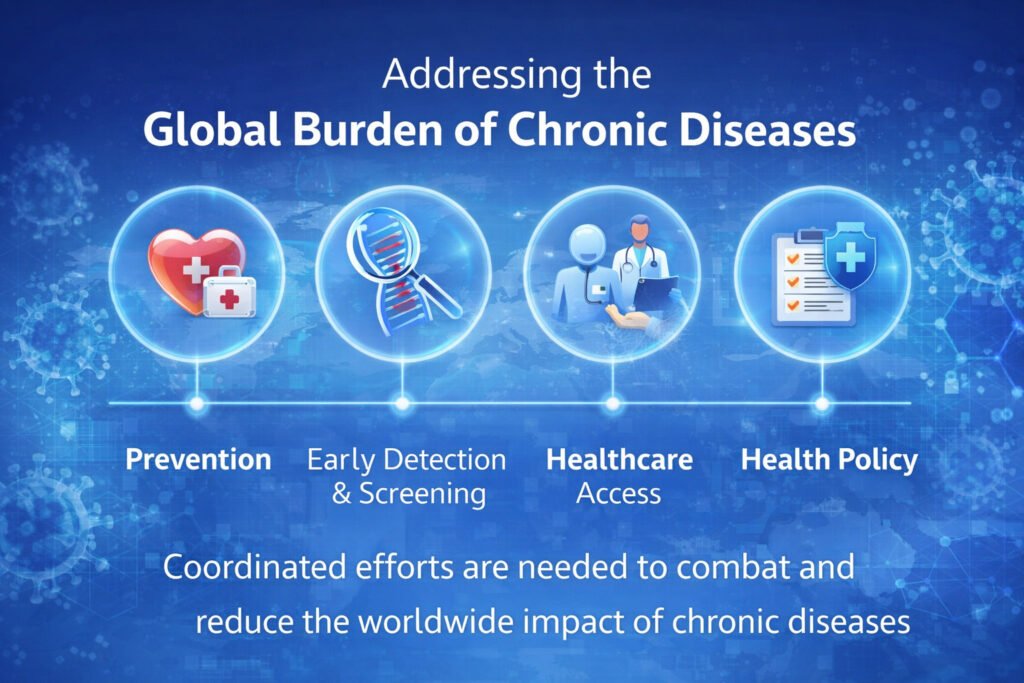
Strategies to address the global burden of chronic diseases including prevention, screening, healthcare access, and health policy

The Economic Impact of Chronic Diseases

Chronic diseases do not only affect health — they also create substantial economic consequences.

Direct Costs

  • Hospital care
  • Medications
  • Medical procedures
  • Long-term treatment
  • Rehabilitation services

Indirect Costs

  • Lost productivity
  • Disability
  • Early retirement
  • Caregiver burden
  • Reduced workforce participation

In many countries, chronic diseases account for the majority of healthcare spending.


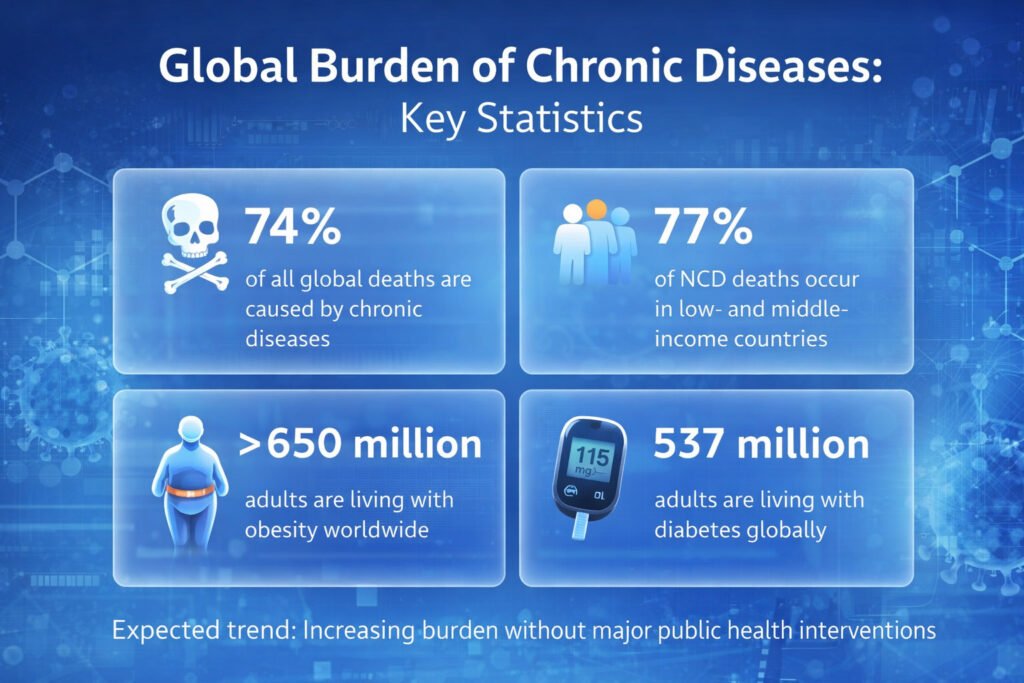
Global Trends and Statistics

The global burden of chronic diseases has shifted dramatically over the past decades.

Key Global Patterns

  • Chronic diseases cause the majority of deaths worldwide
  • Low- and middle-income countries carry a growing share of the burden
  • Obesity rates are increasing globally
  • Diabetes prevalence continues to rise
  • Cardiovascular disease remains the leading cause of death
  • Many chronic conditions are preventable

These trends are expected to continue without major public health interventions.


Major Risk Factors Driving Chronic Disease

Most chronic diseases share a small group of common risk factors.

Behavioral Risk Factors

  • Unhealthy diet
  • Physical inactivity
  • Tobacco use
  • Harmful alcohol consumption

Metabolic Risk Factors

  • High blood pressure
  • High blood sugar
  • High cholesterol
  • Overweight and obesity

Environmental Risk Factors

  • Air pollution
  • Occupational exposure
  • Urban infrastructure
  • Climate-related health risks

Prevention Strategies That Reduce the Burden

The good news is that many chronic diseases are preventable or manageable through evidence-based interventions.

Individual-Level Prevention

  • Regular physical activity
  • Balanced diet
  • Weight management
  • Smoking cessation
  • Stress reduction
  • Routine health screening

Population-Level Prevention

Public health policies play a major role in reducing chronic disease risk.

Examples include:

  • Tobacco control laws
  • Food labeling regulations
  • Urban planning that promotes walking and cycling
  • Air quality standards
  • Preventive healthcare programs
  • Vaccination programs for cancer-related infections

The Role of Healthcare Systems

Healthcare systems must adapt to the long-term nature of chronic disease management.

Key System Needs

  • Preventive care services
  • Early diagnosis programs
  • Chronic disease management plans
  • Accessible primary care
  • Affordable medications
  • Integrated health data systems

Future Challenges

Several emerging challenges will shape the future of chronic disease prevention and management.

Major Concerns

  • Aging populations
  • Rising obesity rates
  • Health inequalities
  • Climate change impacts
  • Healthcare workforce shortages
  • Increasing healthcare costs

Addressing these issues will require coordinated efforts across governments, healthcare providers, communities, and individuals.


Key Takeaway

The global burden of chronic diseases is one of the defining public health challenges of the modern world. While these conditions are widespread and costly, many are preventable through healthier lifestyles, strong public health systems, and early intervention.

Reducing this burden will depend on prevention, education, and long-term investment in population health.

Medical Disclaimer
This content is for informational purposes only and does not constitute medical advice. Always consult a qualified healthcare professional.

Editorial Transparency
This article was created following evidence-based health content guidelines and reviewed by the VitaCoreBalance Editorial Team.