
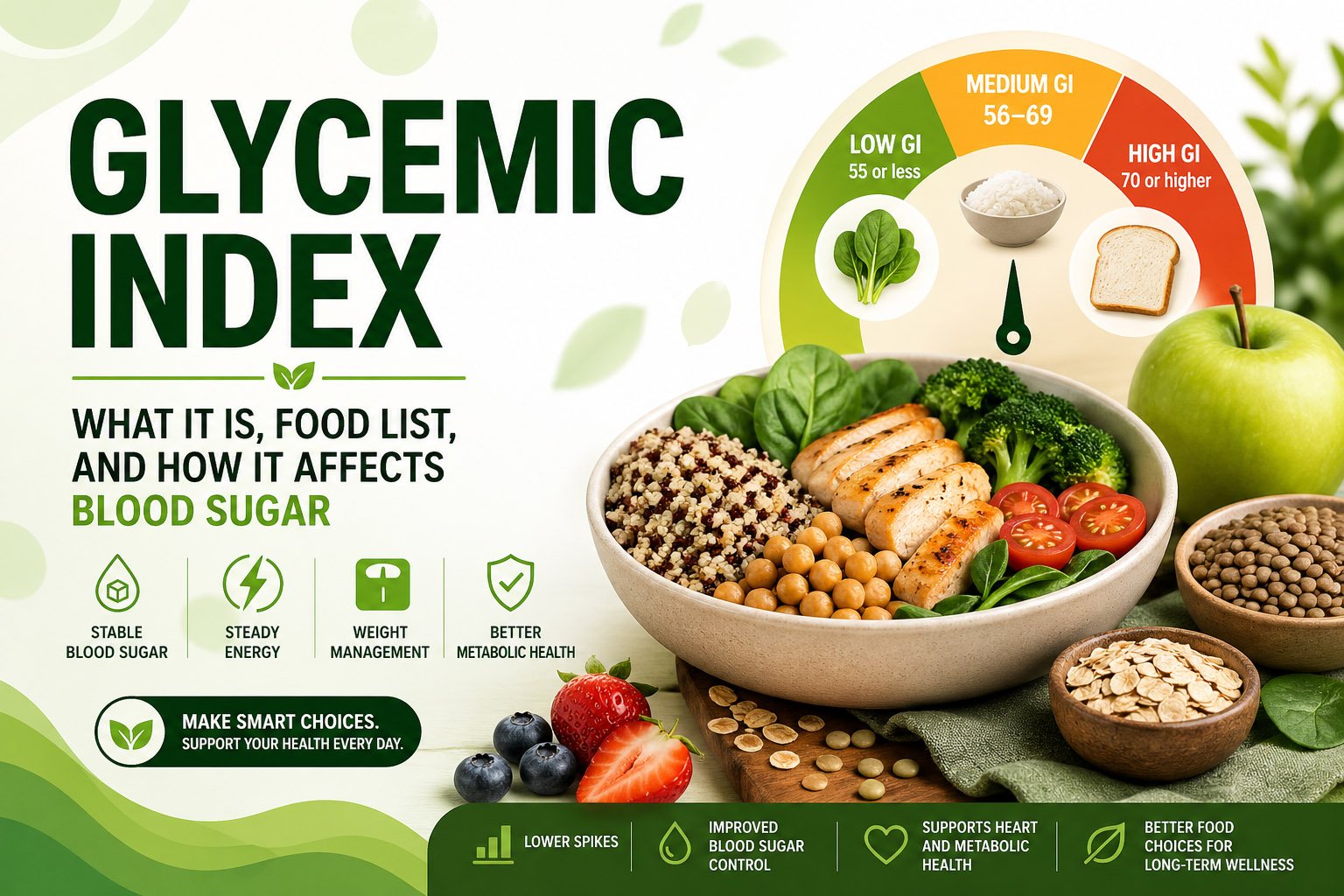
Glycemic Index: A Practical Guide to Managing Blood Sugar Through Food Choices
VitaCoreBalance Editorial Team | Research-based health content • Editorial review process | April 2026
The glycemic index (GI) is a simple but powerful tool for understanding how different foods affect blood sugar levels. It ranks carbohydrates based on how quickly they raise glucose in the bloodstream after eating.
For people focused on blood sugar control, weight management, or metabolic health, understanding the glycemic index can make daily food choices more predictable and effective.
Rather than eliminating carbohydrates, the glycemic index helps identify which ones provide steady energy and which ones may cause rapid spikes followed by energy crashes.
What Is the Glycemic Index?
The glycemic index is a numerical scale from 0 to 100 that measures how quickly a carbohydrate-containing food raises blood glucose levels.
Foods are typically classified into three categories:
Low Glycemic Index (GI 55 or less)
These foods raise blood sugar slowly and steadily.
Medium Glycemic Index (GI 56–69)
These foods produce a moderate increase in blood sugar.
High Glycemic Index (GI 70 or higher)
These foods cause rapid spikes in blood sugar.
Low-GI foods are often recommended for:
- Blood sugar stability
- Diabetes prevention and management
- Sustained energy
- Appetite control
- Long-term metabolic health
Why the Glycemic Index Matters for Blood Sugar Control
When you eat carbohydrates, your body converts them into glucose. The speed of this process determines how quickly blood sugar rises.
High-GI foods can lead to:
- Rapid glucose spikes
- Increased insulin demand
- Energy crashes
- Increased hunger
- Greater fat storage over time
Low-GI foods, on the other hand, help support:
- Stable blood sugar levels
- Improved insulin response
- Longer-lasting energy
- Better appetite regulation
- Reduced risk of metabolic dysfunction
This is why the glycemic index is widely used in nutrition planning for individuals managing:
- Prediabetes
- Type 2 diabetes
- Insulin resistance
- Weight control
- Metabolic syndrome
How the Glycemic Index Works in the Body
The glycemic index reflects how quickly carbohydrates are digested and absorbed.
Several factors influence a food’s GI:
Fiber Content
Foods high in fiber slow digestion and reduce the speed of glucose absorption.
Examples:
- Whole grains
- Vegetables
- Legumes
- Seeds
Fat and Protein
Adding protein or healthy fats to a meal can lower the overall glycemic response.
Food Processing
Highly processed foods are digested faster and typically have a higher GI.
For example:
- Whole oats → lower GI
- Instant oats → higher GI
Cooking Method
Cooking time can change the glycemic index.
Examples:
- Al dente pasta → lower GI
- Overcooked pasta → higher GI
Low, Medium, and High Glycemic Index Foods
Low Glycemic Index Foods (Best for Blood Sugar Stability)
- Oats
- Lentils
- Chickpeas
- Apples
- Berries
- Sweet potatoes
- Non-starchy vegetables
- Quinoa
- Brown rice
- Yogurt
These foods provide:
- Gradual energy release
- Reduced blood sugar fluctuations
- Better appetite control
Medium Glycemic Index Foods
- Whole wheat bread
- Couscous
- Pineapple
- Bananas (ripe)
- Brown rice (overcooked)
These foods can be included in balanced meals, especially when combined with protein or fiber.
High Glycemic Index Foods (Limit or Balance Carefully)
- White bread
- White rice
- Sugary cereals
- Potatoes (mashed)
- Pastries
- Soda
- Candy
- Refined snacks
These foods are more likely to trigger rapid blood sugar spikes and energy crashes.
Glycemic Index vs Glycemic Load: What’s the Difference?
While the glycemic index measures how quickly a food raises blood sugar, glycemic load (GL) considers both:
- The speed of absorption
- The amount of carbohydrates in a serving
This makes glycemic load a more practical measure in real-life eating.
For example:
Watermelon has a high GI but a low glycemic load because it contains relatively few carbohydrates per serving.
In everyday nutrition planning:
Glycemic index = speed
Glycemic load = total impact
Both are useful tools for managing blood sugar.
Medical Disclaimer
This content is for informational purposes only and does not constitute medical advice. Always consult a qualified healthcare professional.
Editorial Transparency
This article was created following evidence-based health content guidelines and reviewed by the VitaCoreBalance Editorial Team.
Sources:
https://www.health.harvard.edu/staying-healthy/understanding-glycemic-index
https://www.cdc.gov/diabetes/managing/eat-well/glycemic-index.html
https://www.nhs.uk/live-well/eat-well/what-is-the-glycaemic-index-gi/
https://www.diabetes.org.uk/guide-to-diabetes/enjoy-food/eating-with-diabetes/glycaemic-index
https://www.mayoclinic.org/healthy-lifestyle/nutrition-and-healthy-eating/in-depth/glycemic-index/art-20048478
https://www.hsph.harvard.edu/nutritionsource/carbohydrates/glycemic-index/