
Heart Disease Risk Factors
VitaCoreBalance Editorial Team | Research-based health content • Editorial review process | March 2026
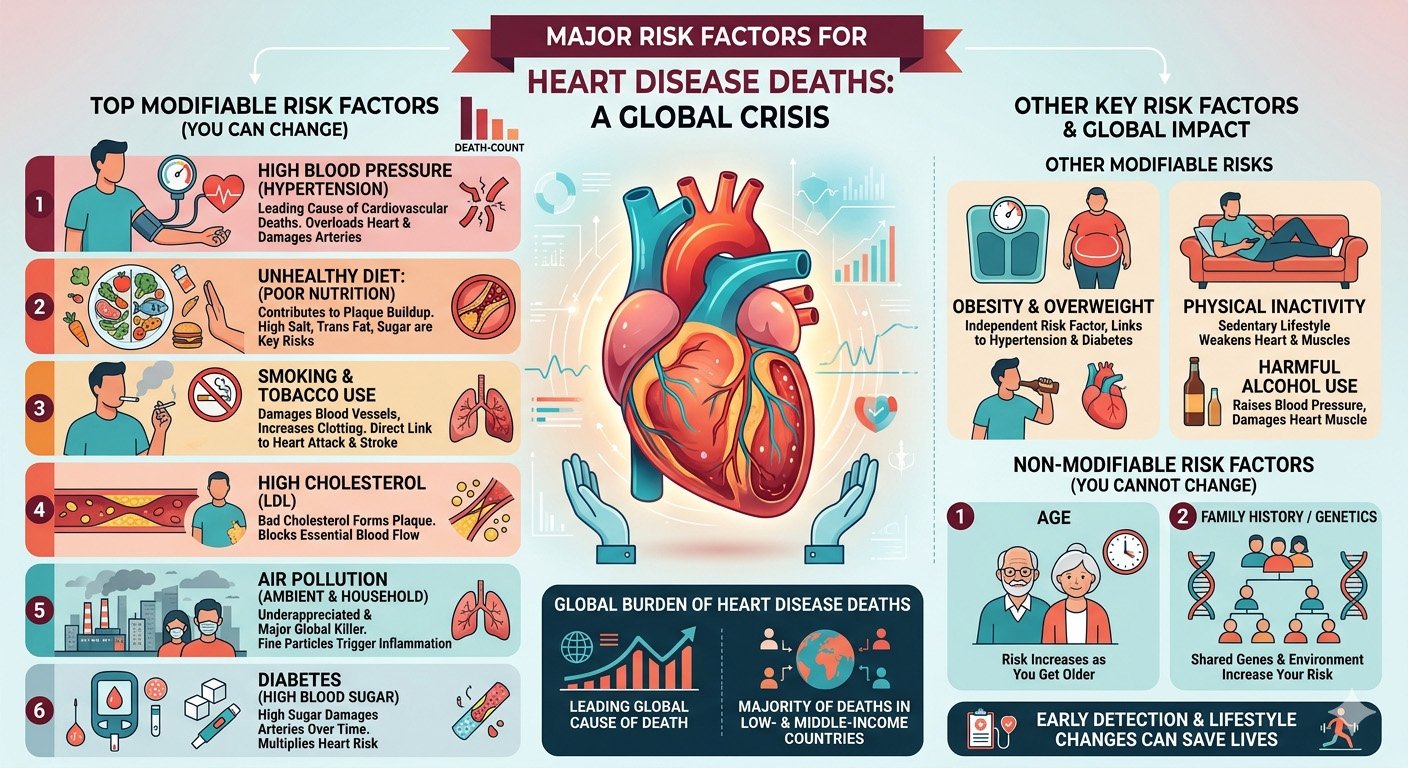
Heart disease remains the leading cause of death worldwide, but many of its risk factors are well understood and, in many cases, preventable. Cardiovascular disease develops gradually through the interaction of metabolic, hormonal, lifestyle, and environmental factors that place stress on the heart and blood vessels over time.
Understanding heart disease risk factors helps identify early warning signs and supports proactive prevention. These risks are closely connected to systems discussed in Metabolism, Nutrition, Hormone Health, and Blood Sugar, highlighting the importance of a whole-body approach to cardiovascular health.
What Are Heart Disease Risk Factors?
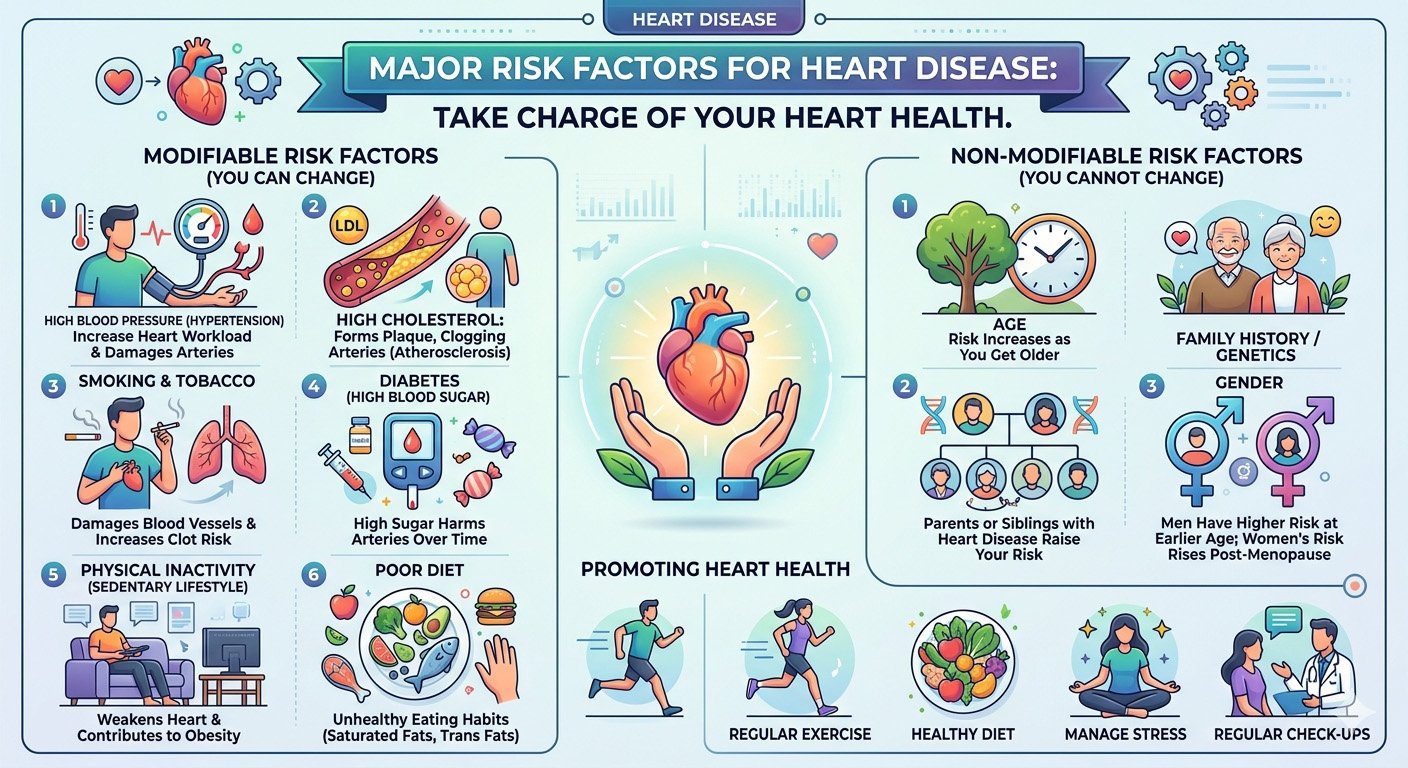
Heart disease risk factors are characteristics, behaviors, or medical conditions that increase the likelihood of developing cardiovascular disease. These factors can damage blood vessels, raise blood pressure, disrupt metabolism, or promote inflammation.
Risk factors are generally divided into two categories:
Modifiable Risk Factors
These can be improved through lifestyle changes or medical treatment.
Examples include:
- High blood pressure
- High cholesterol
- Smoking
- Obesity
- Physical inactivity
- Poor diet
- Diabetes
- Chronic stress
- Poor sleep
These risks are strongly influenced by daily habits addressed in Nutrition, Weight Loss, and Sleep Health.
Non-Modifiable Risk Factors
These cannot be changed but help determine baseline risk.
Examples include:
- Age
- Genetics
- Family history
- Sex
- Ethnicity
Even when non-modifiable risks are present, managing lifestyle-related factors in Metabolism and Heart Health can significantly reduce overall risk.
How Risk Factors Lead to Heart Disease (Physiology)
Heart disease usually develops through a process called atherosclerosis, where plaque builds up inside arteries.
Over time, this process can:
- Narrow blood vessels
- Reduce blood flow
- Increase blood pressure
- Trigger inflammation
- Lead to heart attack or stroke
Most risk factors contribute to this process by affecting:
- Blood pressure regulation
- Cholesterol levels
- Blood sugar control
- Hormone balance
- Inflammatory responses
These pathways connect cardiovascular health to Blood Sugar, Hormone Health, and Metabolism.
Major Risk Factors for Heart Disease
High Blood Pressure (Hypertension)
High blood pressure is one of the strongest predictors of heart disease. It forces the heart to work harder and damages blood vessel walls.
Over time, hypertension can lead to:
- Artery damage
- Heart enlargement
- Stroke
- Heart failure
Blood pressure is influenced by lifestyle patterns discussed in Nutrition, Sleep Health, and Metabolism.
High Cholesterol
Cholesterol is a fatty substance that circulates in the blood. When levels of low-density lipoprotein (LDL) cholesterol are high, plaque can accumulate in arteries.
Risk increases with:
- Poor diet
- Sedentary lifestyle
- Obesity
- Insulin resistance
Cholesterol regulation is closely linked to metabolic health addressed in Metabolism and Nutrition.
Diabetes and High Blood Sugar
High blood sugar damages blood vessels and accelerates plaque formation.
People with diabetes have a significantly higher risk of:
- Heart disease
- Stroke
- Kidney disease
- Nerve damage
Blood sugar control is a central component of cardiovascular protection discussed in Blood Sugar and Weight Loss.
Obesity
Excess body weight increases strain on the heart and contributes to metabolic dysfunction.
Obesity is associated with:
- High blood pressure
- Insulin resistance
- Inflammation
- Abnormal cholesterol levels
Weight management strategies addressed in Weight Loss and Metabolism can significantly reduce cardiovascular risk.
Smoking
Smoking damages blood vessels, increases inflammation, and reduces oxygen delivery to the heart.
Health effects include:
- Increased blood pressure
- Increased clotting risk
- Reduced oxygen supply
- Accelerated atherosclerosis
Smoking remains one of the most preventable causes of cardiovascular disease.
Physical Inactivity
A sedentary lifestyle reduces cardiovascular fitness and increases metabolic risk.
Physical inactivity is associated with:
- Obesity
- High blood pressure
- Poor blood sugar control
- Increased inflammation
Regular movement supports cardiovascular health and energy regulation discussed in Energy & Fatigue.
Chronic Stress
Long-term stress increases cortisol and activates the nervous system, raising blood pressure and inflammation.
Chronic stress can lead to:
- Hypertension
- Insulin resistance
- Sleep disruption
- Hormonal imbalance
Stress management plays a key role in Hormone Health and Sleep Health.
Poor Sleep
Sleep deprivation and sleep disorders are increasingly recognized as major cardiovascular risk factors.
Poor sleep can contribute to:
- High blood pressure
- Inflammation
- Metabolic dysfunction
- Hormonal imbalance
Sleep quality is essential for cardiovascular recovery and regulation discussed in Sleep Health.
Emerging and Often Overlooked Risk Factors
Research has identified additional factors that influence cardiovascular risk.
Chronic Inflammation
Persistent inflammation damages blood vessels and accelerates plaque formation.
Common drivers include:
- Poor diet
- Chronic stress
- Obesity
- Gut imbalance
Inflammation is closely linked to immune regulation discussed in Gut Health.
Hormonal Imbalance
Hormones regulate blood pressure, metabolism, and energy use.
Disruptions in hormones such as:
- Cortisol
- Insulin
- Thyroid hormones
- Estrogen and testosterone
can increase cardiovascular risk.
Hormonal regulation is addressed in Hormone Health.
Insulin Resistance
Insulin resistance occurs when cells become less responsive to insulin.
This condition can lead to:
- High blood sugar
- Weight gain
- Inflammation
- Increased cardiovascular risk
This mechanism connects metabolic health to Metabolism and Blood Sugar.
Excess Alcohol Consumption
Heavy alcohol intake can raise blood pressure and contribute to heart damage.
Health effects may include:
- Hypertension
- Irregular heart rhythm
- Cardiomyopathy
- Stroke
Moderation is essential for cardiovascular protection.
Risk Factors That Often Occur Together
Heart disease risk rarely comes from a single factor. Instead, multiple risks often cluster together.
This pattern is sometimes called:
cardiometabolic risk
Common combinations include:
- High blood pressure
- High blood sugar
- Abdominal obesity
- High triglycerides
- Low HDL cholesterol
These clusters are strongly influenced by lifestyle patterns addressed in Metabolism, Nutrition, and Weight Loss.
Practical Strategies to Reduce Heart Disease Risk
Reducing cardiovascular risk does not require extreme changes. Small, consistent improvements can produce meaningful long-term benefits.
Maintain Healthy Blood Pressure
Helpful actions include:
- Reducing sodium intake
- Staying physically active
- Managing stress
- Maintaining a healthy weight
Improve Nutrition Quality
Diet strongly influences cardiovascular health.
Helpful habits include:
- Eating whole foods
- Increasing fiber intake
- Choosing healthy fats
- Limiting added sugar
- Reducing ultra-processed foods
These strategies align with guidance discussed in Nutrition.
Stay Physically Active
Regular exercise improves heart function and metabolic health.
Benefits include:
- Lower blood pressure
- Improved cholesterol levels
- Better blood sugar control
- Reduced inflammation
Maintain Healthy Sleep Patterns
Consistent sleep supports cardiovascular recovery.
Helpful habits include:
- Going to bed at the same time each night
- Limiting screen exposure before sleep
- Creating a quiet sleep environment
These behaviors support long-term health discussed in Sleep Health.
Monitor Key Health Metrics
Tracking basic health indicators helps detect early risk.
Important metrics include:
- Blood pressure
- Cholesterol levels
- Blood sugar
- Body weight
- Waist circumference
Regular monitoring supports prevention and early intervention.
Why Understanding Risk Factors Matters
Heart disease often develops silently over many years before symptoms appear. Identifying risk factors early allows individuals to take action before serious complications occur.
Managing risk factors can:
- Reduce the likelihood of heart attack
- Improve energy levels
- Support metabolic stability
- Extend life expectancy
- Improve quality of life
Because cardiovascular health depends on multiple systems, prevention requires coordinated support for Metabolism, Hormone Health, Blood Sugar, Sleep Health, and Nutrition.
Final Thoughts
Heart disease risk factors are not isolated problems — they are interconnected signals from the body’s metabolic, hormonal, and cardiovascular systems. Most cardiovascular disease develops gradually through long-term exposure to preventable risks.
Understanding and managing these factors provides one of the most effective strategies for protecting heart health over time.
Small changes made consistently — in sleep, nutrition, physical activity, and stress management — can significantly reduce cardiovascular risk and support lifelong health.
Medical Disclaimer
This content is for informational purposes only and does not constitute medical advice. Always consult a qualified healthcare professional.
Editorial Transparency
This article was created following evidence-based health content guidelines and reviewed by the VitaCoreBalance Editorial Team.
Sources
Medical Institutions
Centers for Disease Control and Prevention (CDC)
American Heart Association (AHA)
National Institutes of Health (NIH) — National Heart, Lung, and Blood Institute
Mayo Clinic — Heart Disease Risk Factors
Global Organizations
World Health Organization (WHO) — Cardiovascular Disease Risk Factors
Peer-Reviewed Studies
Yusuf S et al.
Effect of potentially modifiable risk factors associated with myocardial infarction in 52 countries (INTERHEART Study)
The Lancet
Kivimäki M et al.
Risk factors for cardiovascular disease
European Heart Journal
Scientific Review
Benjamin EJ et al.
Heart disease and stroke statistics update
Circulation