
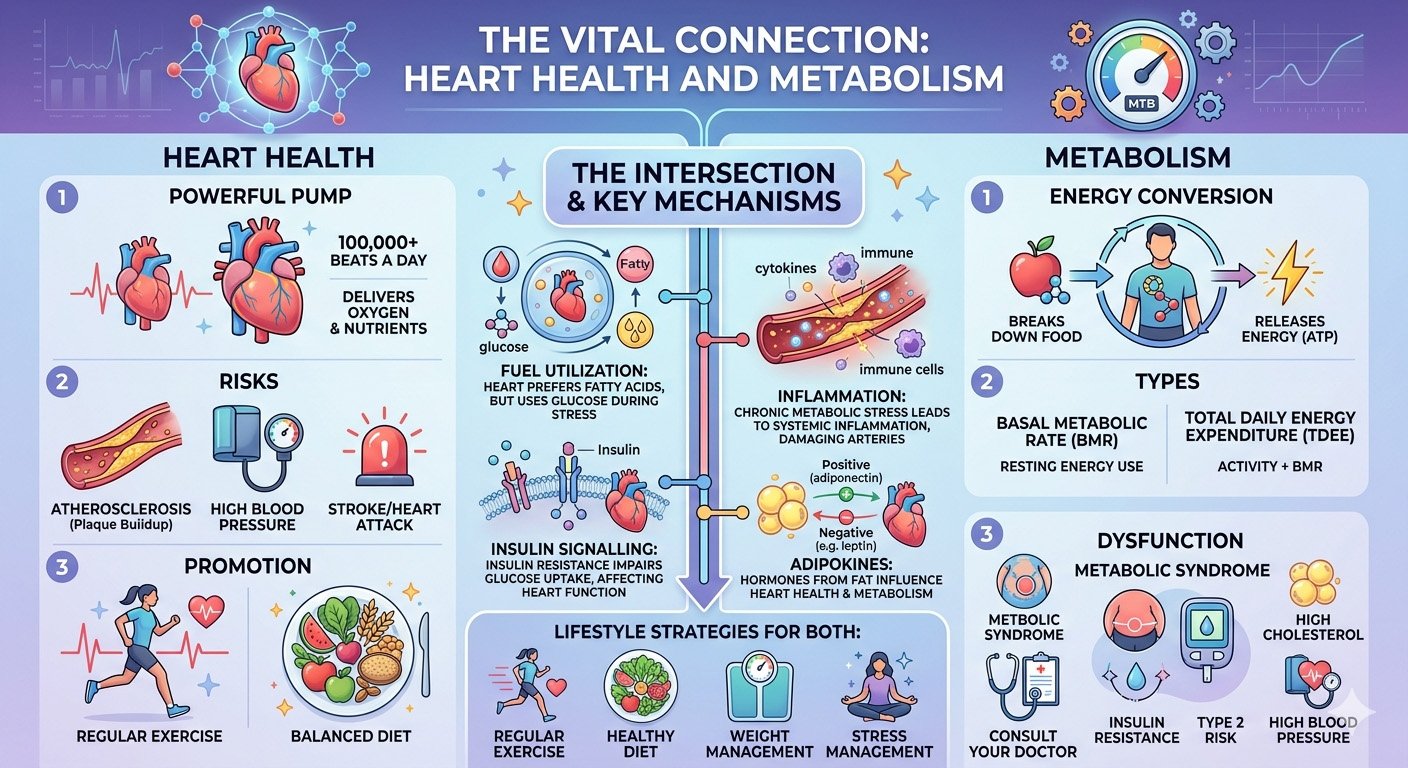
Heart Health and Metabolism
VitaCoreBalance Editorial Team | Research-based health content • Editorial review process | March 2026
Heart health and metabolism are deeply interconnected systems that influence energy production, blood circulation, hormone balance, and long-term disease risk. The heart depends on efficient metabolic processes to generate energy, regulate blood sugar, and maintain stable blood pressure. At the same time, metabolic health determines how well the cardiovascular system functions under daily stress.
Disruptions in metabolism — such as insulin resistance, chronic inflammation, or hormonal imbalance — can significantly increase the risk of cardiovascular disease. This is why heart health is closely linked to Metabolism, Nutrition, and Hormone Health, as well as related systems like Blood Sugar, Weight Loss, and Sleep Health.
Understanding the relationship between metabolism and heart function provides a foundation for preventing heart disease and supporting long-term health.
What Is Metabolism?
Metabolism refers to the chemical processes that convert food into energy and maintain essential body functions. These processes regulate how the body uses nutrients, produces energy, and maintains internal balance.
Metabolism includes:
- Energy production (calorie burning)
- Blood sugar regulation
- Fat storage and breakdown
- Hormone activity
- Cellular repair
- Temperature regulation
A healthy metabolism supports efficient energy use and cardiovascular stability. When metabolism becomes impaired, the risk of heart disease increases significantly.
Metabolic regulation is influenced by lifestyle patterns discussed in Nutrition, physical activity habits related to Weight Loss, and sleep quality addressed in Sleep Health.
How Metabolism Supports Heart Function (Physiology)
The heart is a high-energy organ that requires a constant supply of fuel to function properly. Metabolic processes determine how efficiently the heart receives and uses this energy.
Healthy metabolism supports:
- Stable blood sugar levels
- Efficient oxygen delivery
- Balanced cholesterol levels
- Healthy blood pressure
- Reduced inflammation
When metabolism is disrupted, the heart may receive less energy, blood vessels may become damaged, and cardiovascular risk increases.
These mechanisms connect metabolic health to systems discussed in Blood Sugar and Hormone Health.
Energy Production and the Heart
The heart beats continuously, requiring a steady supply of energy from nutrients such as glucose and fatty acids.
Efficient energy production allows:
- Consistent heart rhythm
- Strong cardiac contractions
- Stable blood circulation
- Adequate oxygen delivery
Metabolic dysfunction can reduce energy efficiency and increase cardiovascular strain.
This relationship also influences symptoms discussed in Energy & Fatigue, where reduced metabolic efficiency can lead to persistent tiredness.
Blood Sugar Regulation
Blood sugar control is a central component of metabolic and cardiovascular health.
When blood sugar remains elevated:
- Blood vessels become damaged
- Inflammation increases
- Plaque buildup accelerates
- Cardiovascular risk rises
Insulin resistance is one of the strongest links between metabolic dysfunction and heart disease.
This connection highlights the importance of managing blood sugar levels discussed in Blood Sugar and maintaining metabolic balance in Metabolism.
Cholesterol and Lipid Metabolism
Cholesterol plays an essential role in cell structure and hormone production. However, abnormal lipid metabolism can increase cardiovascular risk.
Unhealthy lipid patterns include:
- High LDL cholesterol
- Low HDL cholesterol
- High triglycerides
These patterns contribute to plaque buildup in arteries and increase the risk of heart disease.
Lipid metabolism is strongly influenced by dietary patterns addressed in Nutrition.
Inflammation and Vascular Health
Chronic inflammation is a key driver of both metabolic and cardiovascular disease.
Inflammation can:
- Damage blood vessel walls
- Promote plaque formation
- Reduce blood vessel flexibility
- Increase blood pressure
Inflammation is often linked to metabolic imbalance and gut-related factors discussed in Gut Health.

Key Metabolic Conditions That Affect Heart Health
Several metabolic disorders significantly increase cardiovascular risk.
Insulin Resistance
Insulin resistance occurs when cells become less responsive to insulin, causing blood sugar levels to rise.
Over time, insulin resistance can lead to:
- Type 2 diabetes
- High blood pressure
- Weight gain
- Increased inflammation
- Elevated cardiovascular risk
This condition is a central focus of metabolic health discussed in Metabolism and Blood Sugar.
Metabolic Syndrome
Metabolic syndrome is a cluster of risk factors that occur together and significantly increase heart disease risk.
These risk factors include:
- High blood pressure
- High blood sugar
- Excess abdominal fat
- High triglycerides
- Low HDL cholesterol
This pattern is often addressed through lifestyle changes discussed in Weight Loss and Nutrition.
Obesity
Excess body weight increases strain on the heart and disrupts metabolic regulation.
Obesity is associated with:
- Insulin resistance
- Inflammation
- Hormonal imbalance
- Increased cardiovascular risk
Weight management plays a critical role in reducing risk, as discussed in Weight Loss.
Dyslipidemia
Dyslipidemia refers to abnormal cholesterol or triglyceride levels.
This condition can:
- Accelerate plaque buildup
- Increase cardiovascular risk
- Reduce blood vessel health
Managing lipid levels is an important component of metabolic health discussed in Metabolism.
Lifestyle Factors That Connect Metabolism and Heart Health
Daily habits strongly influence both metabolic and cardiovascular function.
Diet Quality
Diet directly affects metabolism, inflammation, and heart health.
Helpful dietary patterns include:
- Whole, minimally processed foods
- High fiber intake
- Healthy fats
- Balanced protein intake
- Reduced added sugar
These dietary strategies align with guidance discussed in Nutrition.
Physical Activity
Regular movement improves metabolic efficiency and cardiovascular strength.
Benefits include:
- Improved insulin sensitivity
- Lower blood pressure
- Reduced inflammation
- Better cholesterol balance
Physical activity also supports energy regulation discussed in Energy & Fatigue.
Sleep
Sleep plays a critical role in metabolic and cardiovascular regulation.
Poor sleep can lead to:
- Insulin resistance
- Increased inflammation
- Hormonal imbalance
- Increased cardiovascular risk
Sleep quality is a central focus of Sleep Health.
Stress Management
Chronic stress disrupts metabolism and increases cardiovascular strain.
Stress-related effects include:
- Elevated cortisol
- Increased blood pressure
- Increased inflammation
- Disrupted blood sugar control
Stress regulation is closely linked to Hormone Health.
Why the Connection Between Heart Health and Metabolism Matters
Heart disease rarely develops from a single cause. Instead, it often emerges from long-term metabolic dysfunction.
Metabolic health influences:
- Blood pressure
- Cholesterol levels
- Inflammation
- Blood sugar control
- Body weight
- Hormone balance
Because these factors are interconnected, improving metabolism can significantly reduce cardiovascular risk.
Managing metabolic health supports prevention strategies discussed in Heart Health, Blood Sugar, and Weight Loss.
Final Thoughts
Heart health and metabolism are inseparable components of long-term health. The heart depends on efficient metabolic processes to produce energy, regulate blood flow, and maintain stable blood pressure.
When metabolism becomes impaired, the risk of cardiovascular disease increases — often silently and gradually. Fortunately, metabolic health is highly responsive to lifestyle changes.
Improving nutrition, maintaining physical activity, managing stress, and supporting sleep can significantly strengthen both metabolic and cardiovascular function.
Protecting the heart begins with supporting metabolism.
Medical Disclaimer
This content is for informational purposes only and does not constitute medical advice. Always consult a qualified healthcare professional.
Editorial Transparency
This article was created following evidence-based health content guidelines and reviewed by the VitaCoreBalance Editorial Team.
Sources
Medical Institutions
American Heart Association (AHA)
National Institutes of Health (NIH)
Mayo Clinic — Metabolic Syndrome
Cleveland Clinic — Metabolism and Heart Health
Global Organizations
World Health Organization (WHO) — Cardiovascular Disease
Peer-Reviewed Studies
Grundy SM
Metabolic syndrome and cardiovascular disease
Circulation
Eckel RH et al.
The metabolic syndrome
The Lancet
Scientific Review
Saklayen MG
The global epidemic of metabolic syndrome
Current Hypertension Reports