
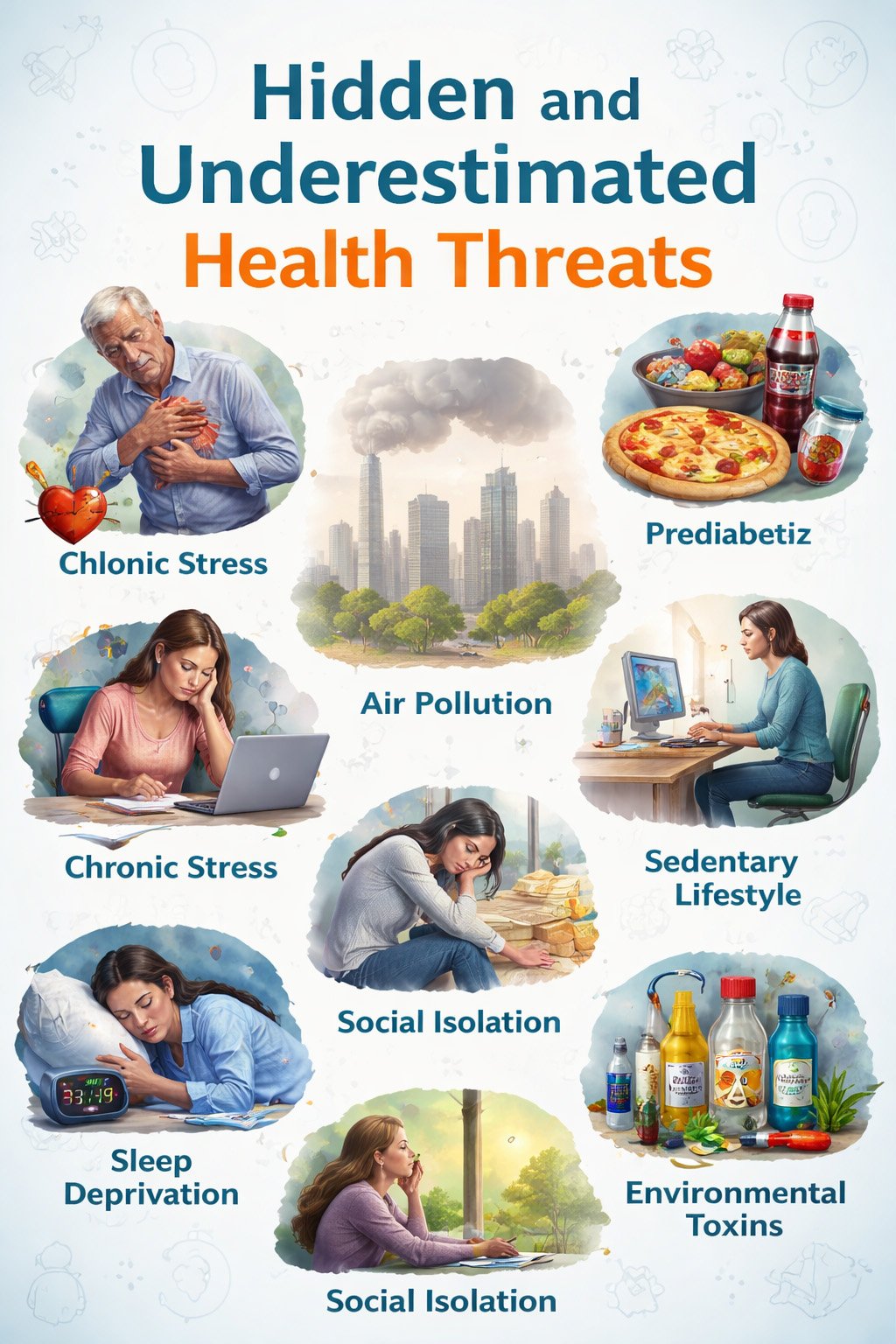
Hidden and Underestimated Health Threats
VitaCoreBalance Editorial Team | Research-based health content • Editorial review process | March 2026
Many of the most dangerous health threats are not dramatic, sudden, or highly visible. Instead, they develop quietly over time, often without obvious symptoms until significant damage has already occurred. These hidden and underestimated health threats contribute substantially to chronic disease, disability, and premature death worldwide. Because they progress silently, they are frequently overlooked by individuals and sometimes underestimated by health systems.
Modern public health increasingly recognizes that prevention requires identifying risks that operate below the surface—environmental exposures, lifestyle factors, metabolic conditions, mental health challenges, and social determinants of health. These threats may not cause immediate illness, but their cumulative impact can be profound. Understanding them is essential for early detection, prevention, and long-term health protection.
This article explores the most significant hidden health threats affecting populations today, explaining how they develop, why they are often underestimated, and what strategies can reduce their impact.
Why Hidden Health Threats Are So Dangerous
Hidden health threats are particularly dangerous because they often progress silently. Individuals may feel healthy while underlying biological changes gradually increase disease risk. By the time symptoms appear, the condition may already be advanced.
Several characteristics make these threats difficult to detect:
- Slow progression
- Lack of early symptoms
- Limited public awareness
- Delayed diagnosis
- Underestimation of risk
Early recognition is therefore critical for prevention and effective treatment.
High Blood Pressure: The Silent Killer
High blood pressure, also known as hypertension, is one of the most common hidden health threats worldwide. It is frequently called the “silent killer” because it often produces no symptoms until serious complications occur.
Why High Blood Pressure Is Dangerous
Uncontrolled blood pressure can damage blood vessels and vital organs over time. This damage increases the risk of:
- Heart disease
- Stroke
- Kidney disease
- Vision loss
- Cognitive decline
Many individuals are unaware they have high blood pressure until routine screening reveals the condition.
Prevention and Control Strategies
Effective prevention includes:
- Regular blood pressure monitoring
- Reduced sodium intake
- Healthy diet
- Regular physical activity
- Stress management
- Medication when necessary
Routine screening is the most reliable method for early detection.
Chronic Stress: A Hidden Driver of Disease
Stress is a normal biological response, but chronic stress can become a major health threat when it persists over long periods. Unlike acute stress, which resolves quickly, chronic stress keeps the body in a constant state of physiological activation.
Health Effects of Chronic Stress
Long-term stress can lead to:
- Cardiovascular disease
- Weakened immune function
- Digestive disorders
- Sleep disturbances
- Anxiety and depression
- Metabolic disorders
Because stress often becomes part of daily life, its health effects are frequently underestimated.
Managing Chronic Stress
Protective strategies include:
- Regular physical activity
- Relaxation techniques
- Adequate sleep
- Social support
- Time management
- Professional counseling
Managing stress is essential for both physical and mental health.
Sleep Deprivation: An Overlooked Public Health Risk
Sleep deprivation is increasingly recognized as a major public health concern. Modern lifestyles, technology use, and work demands have reduced sleep duration and quality for many individuals.
Health Risks of Poor Sleep
Insufficient sleep is associated with:
- Increased risk of heart disease
- Reduced immune function
- Obesity and metabolic disorders
- Depression and anxiety
- Impaired concentration
- Increased accident risk
Sleep deprivation also affects productivity, safety, and overall quality of life.
Improving Sleep Health
Effective sleep strategies include:
- Maintaining consistent sleep schedules
- Limiting screen exposure before bedtime
- Creating a comfortable sleep environment
- Avoiding caffeine late in the day
- Practicing relaxation techniques
Sleep health is a fundamental component of disease prevention.
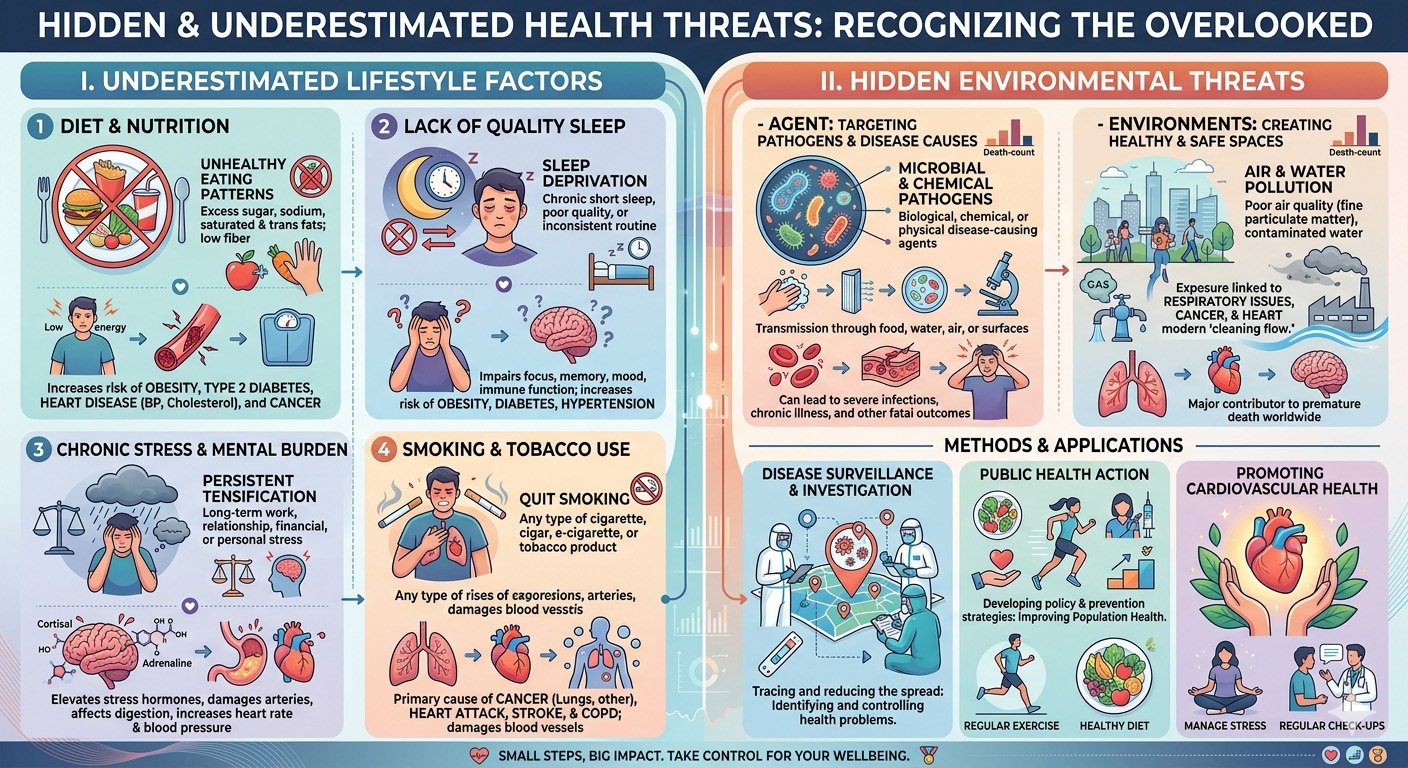
Air Pollution: A Global Health Threat
Air pollution is one of the leading environmental health risks worldwide. Exposure to polluted air contributes to respiratory disease, cardiovascular disease, and premature death.
Sources of Air Pollution
Common sources include:
- Vehicle emissions
- Industrial pollution
- Burning of fossil fuels
- Indoor air contaminants
- Wildfires
Air pollution affects both urban and rural populations and can impact individuals across all age groups.
Health Consequences
Long-term exposure to polluted air increases the risk of:
- Lung disease
- Heart disease
- Stroke
- Asthma
- Cancer
Reducing air pollution requires coordinated environmental and public health policies.
Prediabetes and Insulin Resistance
Prediabetes is a metabolic condition in which blood sugar levels are higher than normal but not yet high enough to be diagnosed as diabetes. Many individuals with prediabetes are unaware of their condition.
Why Prediabetes Is Dangerous
Without intervention, prediabetes can progress to type 2 diabetes and increase the risk of:
- Heart disease
- Kidney disease
- Nerve damage
- Vision problems
Because symptoms may be mild or absent, regular screening is essential.
Prevention Strategies
Effective prevention includes:
- Healthy diet
- Regular exercise
- Weight management
- Blood sugar monitoring
- Medical guidance
Early intervention can prevent disease progression.
Sedentary Lifestyle: The Modern Health Risk
Physical inactivity is one of the most underestimated health threats in modern society. Many individuals spend long hours sitting at work, during transportation, and at home.
Health Risks of Physical Inactivity
Sedentary behavior increases the risk of:
- Cardiovascular disease
- Obesity
- Type 2 diabetes
- Musculoskeletal problems
- Depression
Physical inactivity also contributes to reduced life expectancy.
Increasing Physical Activity
Simple strategies include:
- Walking regularly
- Using stairs instead of elevators
- Taking movement breaks
- Participating in exercise programs
- Engaging in recreational activities
Even moderate physical activity can produce significant health benefits.
Mental Health Conditions: Often Invisible but Serious
Mental health conditions are frequently hidden due to stigma, lack of awareness, or limited access to care. Depression, anxiety, and other mental health disorders can significantly affect physical health and daily functioning.
Why Mental Health Is Often Underestimated
Mental health symptoms may be:
- Invisible to others
- Misinterpreted as personal weakness
- Ignored or minimized
- Untreated due to stigma
Untreated mental health conditions can lead to serious consequences, including chronic disease and reduced quality of life.
Supporting Mental Health
Protective strategies include:
- Early screening
- Access to mental health services
- Social support
- Stress management
- Community awareness
Mental health is an essential part of overall health.
Environmental Toxins and Chemical Exposure
Exposure to harmful chemicals in the environment can pose long-term health risks. These exposures may occur in workplaces, homes, or communities.
Common Environmental Toxins
Pesticides
Heavy metals
Industrial chemicals
Household cleaning products
Airborne pollutants
Chronic exposure to toxins can contribute to cancer, neurological disorders, and reproductive health problems.
Reducing Exposure
Preventive measures include:
- Using protective equipment
- Improving ventilation
- Following safety guidelines
- Monitoring environmental conditions
- Choosing safer products
Environmental health protections are essential for community safety.
Social Isolation and Loneliness
Social isolation is increasingly recognized as a significant public health risk. Lack of social connection can affect both mental and physical health.
Health Effects of Social Isolation
Loneliness has been linked to:
- Depression
- Heart disease
- Cognitive decline
- Weakened immune function
- Increased mortality risk
Social relationships are important protective factors for health.
Promoting Social Connection
Effective strategies include:
- Community engagement
- Support networks
- Volunteer programs
- Social activities
- Access to communication tools
Strong social connections improve health and well-being.
The Importance of Early Detection and Prevention
Many hidden health threats can be managed or prevented through early detection and lifestyle changes. Screening programs and routine health checkups are essential tools for identifying risk factors before disease develops.
Key Prevention Strategies
Regular medical screenings
Healthy lifestyle habits
Environmental safety measures
Mental health support
Public health education
Prevention reduces disease burden and improves quality of life.
Conclusion
Hidden and underestimated health threats represent a major challenge for modern public health. Conditions such as high blood pressure, chronic stress, sleep deprivation, air pollution, and sedentary lifestyles often develop silently but have profound long-term consequences.
By increasing awareness, improving screening programs, and promoting healthy behaviors, individuals and communities can reduce the impact of these hidden risks. Prevention, early detection, and informed decision-making remain the most effective tools for protecting health and extending life expectancy.
Medical Disclaimer
This content is for informational purposes only and does not constitute medical advice. Always consult a qualified healthcare professional.
Editorial Transparency
This article was created following evidence-based health content guidelines and reviewed by the VitaCoreBalance Editorial Team.
Sources:
World Health Organization (WHO) — Preventing Noncommunicable Diseases
https://www.who.int/health-topics/noncommunicable-diseases
Centers for Disease Control and Prevention (CDC) — Chronic Disease Prevention and Health Promotion
https://www.cdc.gov/chronicdisease
National Heart, Lung, and Blood Institute (NHLBI) — High Blood Pressure (Hypertension)
https://www.nhlbi.nih.gov/health/high-blood-pressure
Harvard T.H. Chan School of Public Health — The Nutrition Source: Sleep and Health
https://www.hsph.harvard.edu/nutritionsource/sleep
American Psychological Association (APA) — Stress Effects on the Body
https://www.apa.org/topics/stress/body
Environmental Protection Agency (EPA) — Health Effects of Air Pollution
https://www.epa.gov/pm-pollution/health-and-environmental-effects-particulate-matter