
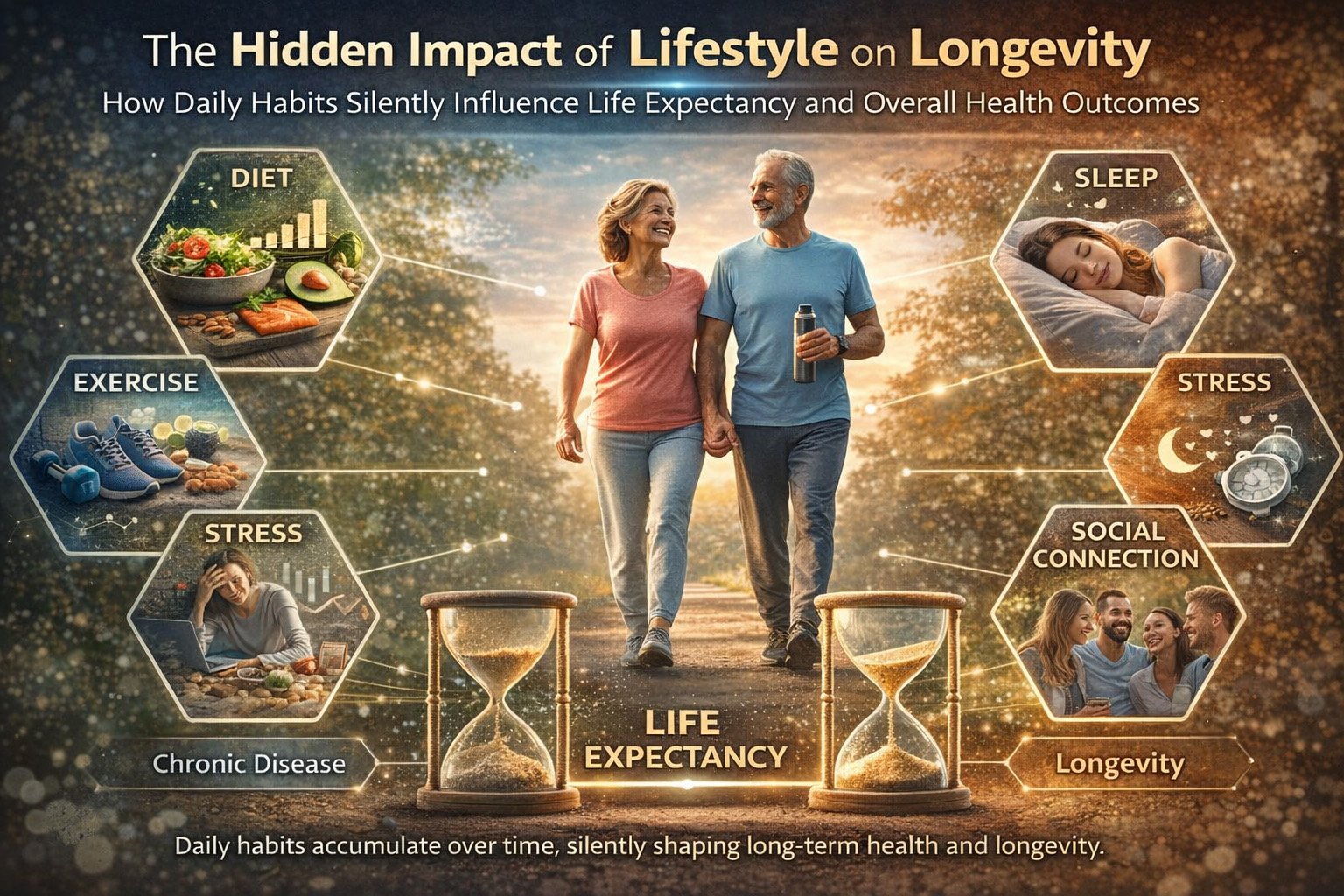
The Hidden Impact of Lifestyle on Longevity
How Daily Habits Silently Influence Life Expectancy and Overall Health Outcomes
VitaCoreBalance Editorial Team | Research-based health content • Editorial review process | March 2026
Longevity is often associated with genetics, advanced medicine, or major life events. Yet one of the most powerful forces shaping how long and how well people live is far less dramatic: daily habits. Small, repeated behaviors — eating patterns, sleep routines, physical activity, stress management, and environmental exposures — accumulate over years and decades, gradually influencing health outcomes.
These influences are often invisible in the short term. A single unhealthy meal rarely causes disease, and one missed night of sleep rarely changes life expectancy. However, the cumulative effect of daily habits can significantly alter the risk of chronic illness, functional decline, and premature mortality.
Lifestyle operates quietly, but continuously. It shapes the body’s internal environment every day.
Longevity Is Not Only About Living Longer — It Is About Living Well
Modern health science distinguishes between lifespan and healthspan.
- Lifespan refers to the total number of years lived
- Healthspan refers to the number of years lived in good health
A person may live to an advanced age but spend many years managing chronic disease, disability, or reduced independence. Conversely, individuals with healthier lifestyles often maintain physical and cognitive function longer, even if their total lifespan is similar.
Lifestyle habits strongly influence both lifespan and healthspan. They determine not only how long the body survives, but how well it functions throughout life.
The Accumulation Effect: Small Habits, Large Outcomes
One of the defining features of lifestyle-related health outcomes is the accumulation effect. Health is shaped by repeated exposures rather than isolated events.
Examples of cumulative habits include:
- Daily dietary choices
- Sleep duration and quality
- Physical activity patterns
- Tobacco and alcohol use
- Stress levels
- Social engagement
- Environmental exposures
Over time, these factors influence:
- Blood pressure
- Blood sugar regulation
- Inflammation levels
- Hormonal balance
- Immune function
- Metabolic health
The body responds to patterns, not single moments. Repeated behaviors become biological signals that guide long-term health trajectories.
The Role of Diet in Longevity
Nutrition is one of the most consistent predictors of long-term health outcomes. Diet influences nearly every major system in the body, including metabolism, immune function, cardiovascular health, and brain function.
Dietary patterns associated with longer life expectancy often include:
- High intake of fruits and vegetables
- Regular consumption of whole grains
- Moderate intake of healthy fats
- Adequate protein
- Limited ultra-processed foods
- Balanced calorie intake
In contrast, dietary patterns high in refined sugars, processed foods, and excess sodium are linked to increased risk of chronic disease.
Nutrition affects longevity through mechanisms such as:
- Inflammation regulation
- Blood sugar control
- Cholesterol balance
- Gut microbiome stability
- Cellular repair processes
These processes operate continuously, often without noticeable symptoms until disease develops.
Physical Activity and Functional Longevity
Movement is one of the strongest predictors of healthy aging. Regular physical activity supports cardiovascular health, muscle strength, metabolic function, and mental well-being.
People who remain physically active throughout life tend to:
- Maintain mobility longer
- Preserve muscle mass
- Reduce risk of chronic disease
- Improve balance and coordination
- Sustain independence in older age
Physical inactivity, by contrast, accelerates functional decline and increases the likelihood of disability.
Importantly, physical activity does not need to be intense to provide benefits. Consistent moderate movement — walking, stretching, or daily activity — can significantly improve long-term health outcomes.
Sleep: The Silent Regulator of Health
Sleep is often underestimated as a determinant of longevity, yet it plays a central role in biological repair and regulation.
During sleep, the body performs essential processes such as:
- Cellular repair
- Memory consolidation
- Hormone regulation
- Immune system activation
- Energy restoration
Chronic sleep disruption has been associated with:
- Cardiovascular disease
- Obesity
- Diabetes
- Depression
- Cognitive decline
Sleep quality and consistency are as important as sleep duration. Irregular sleep patterns can disrupt circadian rhythms and impair metabolic and immune function.
Stress and the Biology of Wear and Tear
Stress is a normal physiological response to challenge, but chronic stress can produce long-term biological strain.
Repeated activation of the stress response leads to elevated levels of stress hormones, particularly cortisol. Over time, this can contribute to:
- High blood pressure
- Immune suppression
- Metabolic imbalance
- Inflammation
- Sleep disruption
Scientists sometimes refer to this cumulative burden as allostatic load — the total wear and tear on the body caused by repeated stress.
Managing stress does not require eliminating challenges. It requires balancing periods of demand with adequate recovery.
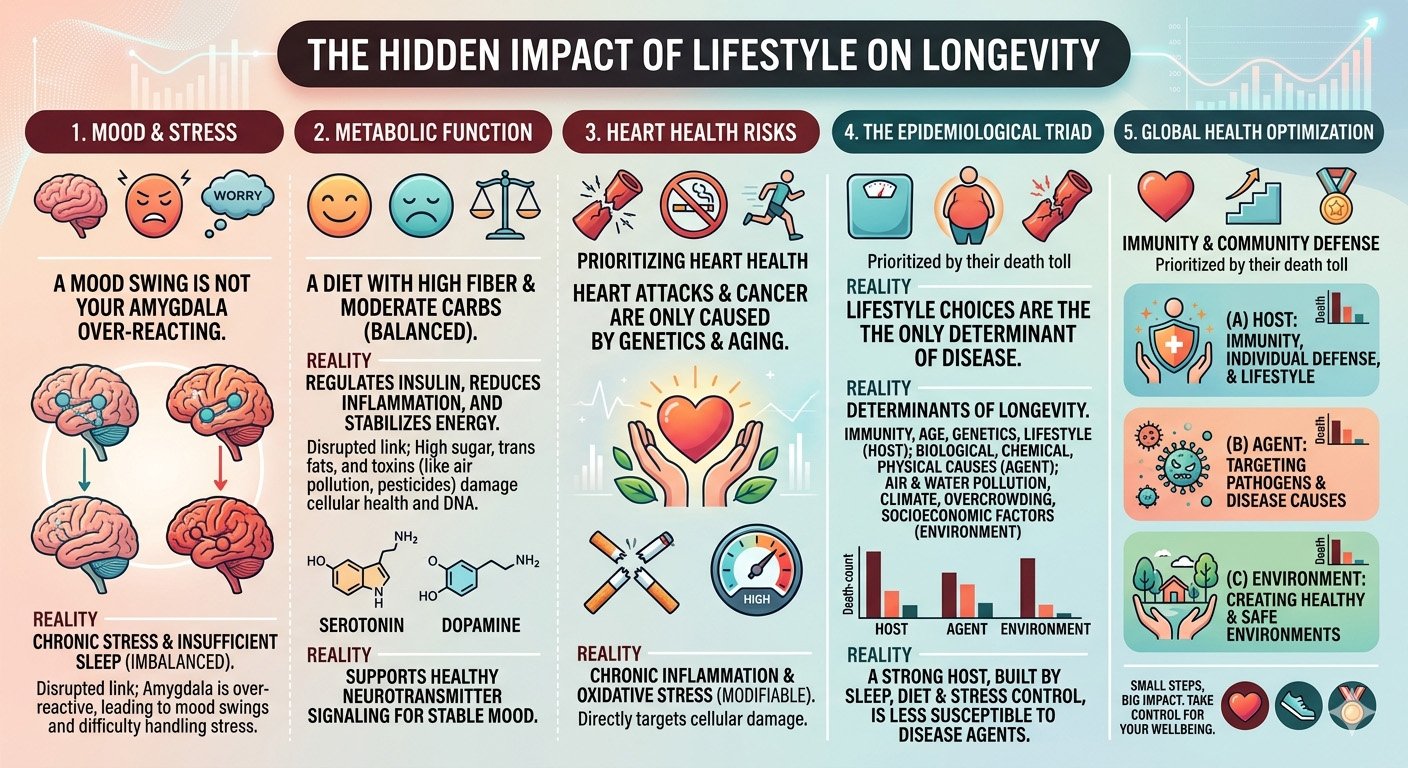
Social Connection and Longevity
Human health is influenced not only by biological factors but also by social relationships. Social connection has been consistently linked to longer life expectancy and improved mental health.
Supportive relationships can:
- Reduce stress
- Improve emotional resilience
- Encourage healthy behaviors
- Enhance recovery from illness
- Lower mortality risk
Conversely, chronic loneliness and social isolation have been associated with increased risk of:
- Cardiovascular disease
- Depression
- Cognitive decline
- Premature death
Social interaction acts as a protective factor for both mental and physical health.
Environmental and Behavioral Risk Factors
Lifestyle is shaped not only by personal choices but also by environmental conditions.
Key environmental influences include:
- Air quality
- Access to healthy food
- Opportunities for physical activity
- Noise exposure
- Workplace conditions
- Socioeconomic factors
These influences can affect health outcomes through chronic exposure.
For example:
- Air pollution is linked to respiratory and cardiovascular disease
- Limited access to nutritious food increases risk of obesity and diabetes
- Sedentary work environments contribute to metabolic dysfunction
Understanding these environmental factors helps explain why health outcomes vary across populations.
The Biology of Aging and Lifestyle
Aging is a natural biological process, but its speed and impact vary widely between individuals. Lifestyle plays a major role in determining how quickly age-related changes occur.
Lifestyle influences biological aging through mechanisms such as:
- Inflammation
- Oxidative stress
- Cellular damage
- Hormonal regulation
- Immune system function
Healthy behaviors can slow these processes, helping preserve physical and cognitive function.
This does not mean aging can be stopped. It means its progression can be influenced.
The Power of Consistency Over Intensity
One of the most important insights from long-term health research is that consistency matters more than occasional effort.
Sustainable habits are more effective than extreme changes.
Examples of consistent behaviors include:
- Regular sleep schedules
- Balanced meals
- Daily physical activity
- Routine stress management
- Periodic medical checkups
- Stable social connections
These behaviors create a stable biological environment that supports resilience and recovery.
Lifestyle and Preventable Disease
A large proportion of chronic diseases are strongly influenced by lifestyle factors.
Conditions commonly associated with lifestyle include:
- Heart disease
- Type 2 diabetes
- Obesity
- Stroke
- Certain cancers
- Chronic respiratory disease
Many of these conditions develop gradually over years, often without early symptoms.
This delayed progression makes lifestyle-related disease both dangerous and preventable.
Early Signals of Lifestyle Imbalance
The body often provides subtle warning signs before serious disease develops.
Common early indicators include:
- Persistent fatigue
- Poor sleep quality
- Weight gain or loss
- Reduced physical endurance
- Frequent illness
- Mood changes
- Difficulty concentrating
These signals can reflect underlying stress, metabolic imbalance, or lifestyle strain.
Recognizing early symptoms allows for timely adjustments before long-term damage occurs.
Longevity as a Daily Process
Longevity is not determined by a single decision, event, or medical intervention. It emerges from thousands of daily actions repeated across years.
Every day, the body responds to:
- What we eat
- How we move
- How we sleep
- How we manage stress
- How we connect with others
- How we interact with our environment
These responses accumulate silently, shaping long-term health outcomes.
The Quiet Influence of Everyday Choices
The most powerful determinants of longevity are often the least noticeable. They are embedded in routine behaviors performed without much thought.
Lifestyle does not act suddenly. It acts gradually.
Healthy habits build resilience. Harmful habits increase vulnerability. Over time, the difference becomes measurable in disease risk, functional ability, and life expectancy.
Longevity is not controlled by a single factor. It is guided by daily patterns — quiet, persistent influences that shape health across the lifespan.
Medical Disclaimer
This content is for informational purposes only and does not constitute medical advice. Always consult a qualified healthcare professional.
Editorial Transparency
This article was created following evidence-based health content guidelines and reviewed by the VitaCoreBalance Editorial Team.
Sources
- https://www.who.int/news-room/fact-sheets/detail/noncommunicable-diseases
- https://www.cdc.gov/chronicdisease/about/index.htm
- https://www.ncbi.nlm.nih.gov/pmc/articles/PMC6125071/
- https://www.hsph.harvard.edu/nutritionsource/healthy-lifestyle/
- https://www.nia.nih.gov/health/longevity
- https://www.who.int/health-topics/healthy-lifestyle