
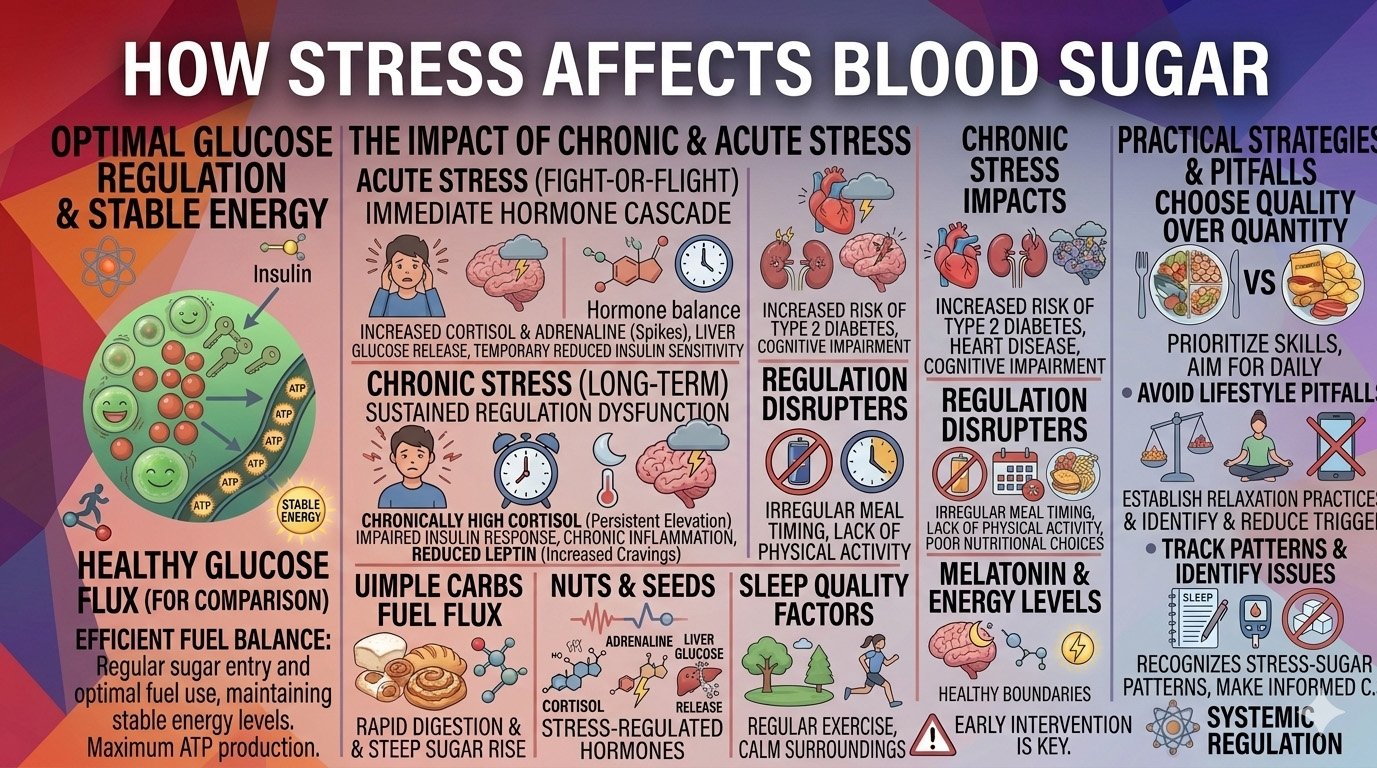
How Stress Affects Blood Sugar
VitaCoreBalance Editorial Team | Research-based health content • Editorial review process | March 2026
Introduction: Stress as a Hidden Driver of Blood Sugar Changes
Stress is a normal part of life, but when it becomes frequent or chronic, it can significantly affect blood sugar levels. The body’s stress response triggers hormonal changes designed to provide quick energy, increasing glucose in the bloodstream. While this response is helpful in short-term situations, repeated activation can disrupt metabolic balance and increase the risk of insulin resistance and fatigue.
This relationship connects directly to Hormone Health, Metabolism, and Blood Sugar regulation, as well as daily energy patterns, appetite control, and cardiovascular health. Modern research shows that chronic stress is not only an emotional or psychological issue—it is also a metabolic one.
Understanding how stress affects blood sugar helps explain why managing stress is an essential component of long-term metabolic health.
What Happens to Blood Sugar During Stress?
When the body perceives stress—whether physical, emotional, or psychological—it activates the fight-or-flight response, a biological system designed to help the body respond quickly to threats.
During this response:
- Stress hormones are released
- Glucose is released from the liver
- Blood sugar rises
- Energy becomes immediately available
This process is controlled primarily by hormones such as cortisol and adrenaline, making stress a key factor in Hormone Health and glucose regulation.
Short-term stress typically causes temporary increases in blood sugar. However, frequent or prolonged stress can lead to persistent glucose elevation and metabolic strain.
How Stress Raises Blood Sugar (Physiology)
Stress affects blood sugar through several interconnected mechanisms involving hormones, the nervous system, and metabolism.
1) Cortisol Increases Glucose Production
Cortisol is the primary stress hormone responsible for increasing blood sugar.
It works by:
- Stimulating glucose production in the liver
- Reducing insulin sensitivity
- Slowing glucose uptake by cells
Chronic cortisol elevation can contribute to:
- Insulin resistance
- Weight gain
- Persistent fatigue
This mechanism highlights the strong link between stress and Metabolism.
2) Adrenaline Triggers Rapid Energy Release
Adrenaline prepares the body for immediate action.
It causes:
- Rapid glucose release
- Increased heart rate
- Increased alertness
- Temporary energy boost
While useful in emergencies, repeated adrenaline surges can create unstable glucose patterns and energy crashes.
3) Stress Increases Insulin Resistance
Long-term stress can make cells less responsive to insulin.
This condition leads to:
- Higher blood sugar levels
- Increased hunger
- Fat storage
- Reduced energy efficiency
Insulin resistance is a central feature of metabolic dysfunction and is closely connected to Weight Loss and long-term glucose control.
4) Stress Changes Eating Behavior
Stress often affects food choices and eating patterns.
Common responses include:
- Increased cravings for sugar
- Emotional eating
- Skipping meals
- Overeating
These behaviors can worsen blood sugar instability and contribute to fatigue, linking stress to both Nutrition and daily Energy & Fatigue regulation.
Types of Stress That Affect Blood Sugar
Not all stress is the same. Different forms of stress can influence blood sugar in different ways.
Acute Stress
Short-term stress lasting minutes to hours.
Examples:
- Deadlines
- Exams
- Public speaking
- Sudden emergencies
Effects:
- Temporary blood sugar increase
- Rapid energy release
- Short-lived hormonal response
The body usually returns to normal once the stress resolves.
Chronic Stress
Long-term stress lasting weeks, months, or years.
Examples:
- Work pressure
- Financial concerns
- Family responsibilities
- Ongoing health problems
Effects:
- Persistent cortisol elevation
- Insulin resistance
- Increased appetite
- Weight gain
- Fatigue
Chronic stress is strongly associated with long-term metabolic disease.

Physical Stress
Stress caused by illness, injury, or sleep deprivation.
Examples:
- Infection
- Surgery
- Poor sleep
- Chronic pain
Physical stress can significantly raise blood sugar, even in people without diabetes.
This connection highlights the role of Sleep Health in metabolic regulation.
Signs That Stress May Be Affecting Blood Sugar
People often overlook stress as a cause of metabolic symptoms.
Common signs include:
- Sudden fatigue
- Sugar cravings
- Brain fog
- Increased hunger
- Difficulty sleeping
- Irritability
- Weight gain
These symptoms frequently overlap with issues in Energy & Fatigue regulation and hormonal balance.
Long-Term Health Risks of Chronic Stress and Blood Sugar Imbalance
Repeated stress-related glucose increases can contribute to several chronic health conditions.
These include:
- Insulin resistance
- Type 2 diabetes
- Obesity
- Metabolic syndrome
- Hypertension
- Cardiovascular disease
Chronic stress is increasingly recognized as a major contributor to poor Heart Health and metabolic dysfunction.
Practical Strategies to Reduce Stress and Stabilize Blood Sugar
Managing stress is one of the most effective ways to support healthy blood sugar levels.
Prioritize Regular Physical Activity
Exercise helps:
- Lower stress hormones
- Improve insulin sensitivity
- Stabilize blood sugar
- Improve mood
Even moderate activity can produce meaningful benefits.
Maintain Consistent Sleep
Sleep plays a critical role in regulating stress hormones.
Healthy sleep supports:
- Cortisol balance
- Glucose regulation
- Energy stability
Consistent sleep habits are a core component of Sleep Health and metabolic balance.
Practice Stress-Reduction Techniques
Effective strategies include:
- Deep breathing
- Meditation
- Mindfulness
- Relaxation exercises
- Time management
These methods can reduce cortisol levels and improve metabolic health.
Eat Balanced Meals
Balanced nutrition helps prevent stress-related blood sugar swings.
Include:
- Fiber
- Protein
- Healthy fats
- Complex carbohydrates
Healthy eating patterns support both Nutrition and long-term metabolic stability.
Limit Caffeine and Sugar During Stress
High caffeine and sugar intake can worsen stress responses and increase blood sugar variability.
Reducing intake helps stabilize energy and hormonal balance.
Why Managing Stress Matters for Blood Sugar Control
Stress is often overlooked in discussions about blood sugar, but it is one of the most powerful drivers of metabolic change.
Managing stress helps:
- Improve insulin sensitivity
- Stabilize blood sugar
- Reduce fatigue
- Support healthy weight
- Lower disease risk
Effective stress management is a core component of both prevention and long-term metabolic health.
Final Thoughts: Stress Is Both Emotional and Metabolic
Stress is not just a mental experience—it is a biological one.
Every stress response triggers hormonal changes that affect glucose, energy, and metabolism. When stress becomes chronic, these changes can disrupt blood sugar regulation and increase the risk of metabolic disease.
Understanding the relationship between stress, Hormone Health, Metabolism, Blood Sugar, and Sleep Health provides a practical foundation for improving daily health and long-term well-being.
FAQ
Can stress raise blood sugar even without diabetes?
Yes. Stress hormones can increase glucose levels in anyone, regardless of diabetes status.
Does stress cause insulin resistance?
Chronic stress can contribute to insulin resistance by increasing cortisol and reducing insulin sensitivity.
How quickly can stress affect blood sugar?
Blood sugar can rise within minutes of a stressful event due to the release of stress hormones.
Can reducing stress improve blood sugar control?
Yes. Stress management can improve insulin sensitivity and stabilize blood sugar levels, especially when combined with healthy lifestyle habits.
Medical Disclaimer
This content is for informational purposes only and does not constitute medical advice. Always consult a qualified healthcare professional.
Editorial Transparency
This article was created following evidence-based health content guidelines and reviewed by the VitaCoreBalance Editorial Team.
Sources
American Diabetes Association (ADA)
Stress and Diabetes Management
National Institute of Diabetes and Digestive and Kidney Diseases (NIDDK)
Centers for Disease Control and Prevention (CDC)
McEwen BS
Protective and Damaging Effects of Stress Mediators
New England Journal of Medicine
Hackett RA et al.
Stress and Risk of Type 2 Diabetes
Psychoneuroendocrinology
Joseph JJ, Golden SH
Cortisol and Type 2 Diabetes
Endocrine Reviews