
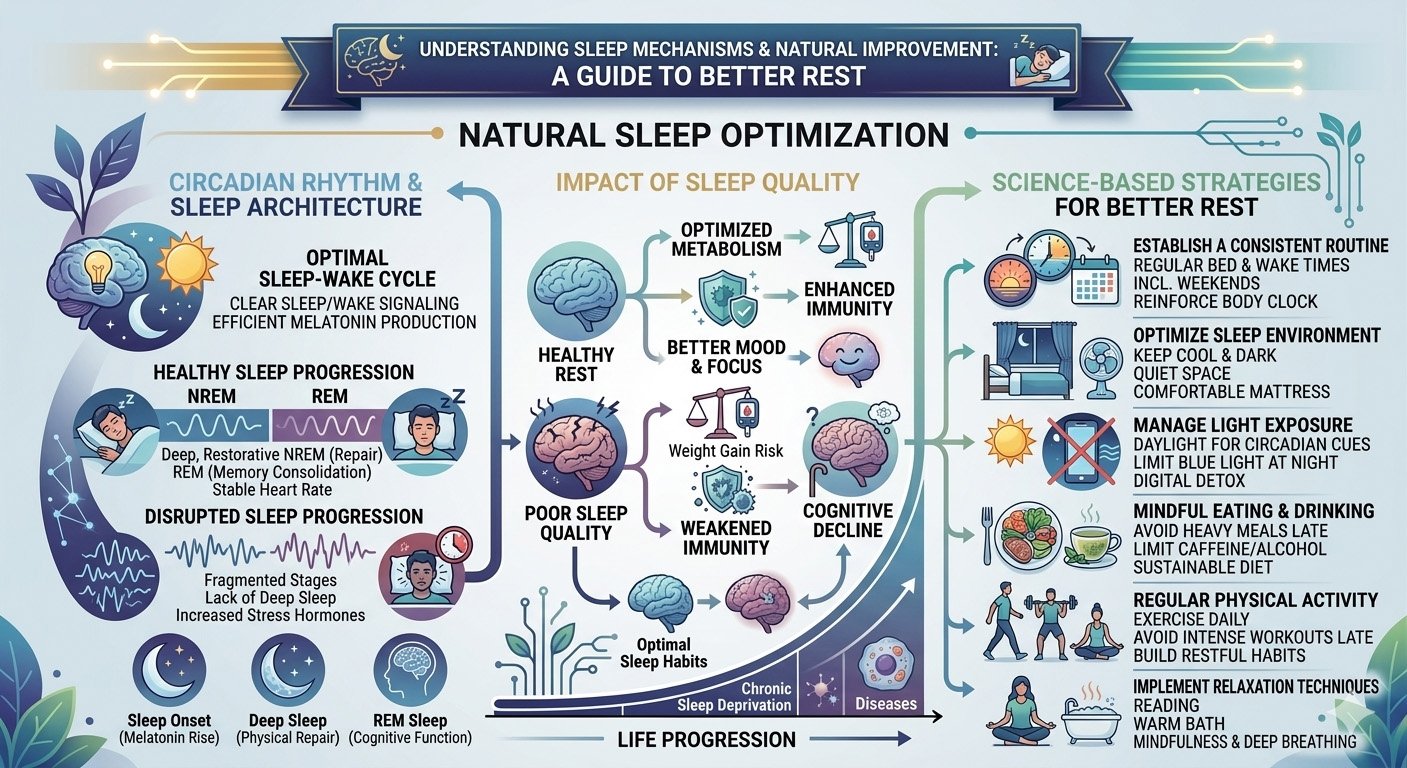
Improve Sleep Quality Naturally: Science-Based Strategies for Better Rest and Recovery
VitaCoreBalance Editorial Team | Research-based health content • Editorial review process | March 2026
Sleep is one of the most important pillars of health, influencing energy levels, metabolism, immune function, hormone balance, and cardiovascular health. Yet millions of people struggle with poor sleep quality due to stress, irregular schedules, screen exposure, and lifestyle habits. Improving sleep naturally can significantly enhance daily performance, long-term health, and overall well-being.
Sleep quality affects systems discussed across Sleep Health, Metabolism, Hormone Health, Heart Health, and Energy & Fatigue. When sleep improves, the body regulates blood sugar more effectively, balances hormones, reduces inflammation, and supports physical and mental recovery.
What Does Sleep Quality Mean?
Sleep quality refers to how well you sleep — not just how long you sleep. High-quality sleep allows the body to repair tissues, regulate hormones, consolidate memory, and restore energy.
Good sleep quality typically includes:
- Falling asleep within 15–30 minutes
- Sleeping through the night with minimal awakenings
- Feeling rested upon waking
- Maintaining consistent sleep patterns
- Experiencing adequate deep and REM sleep
Poor sleep quality, even with sufficient sleep duration, can still impair health and performance.
Why Sleep Quality Matters for Overall Health
Sleep is essential for regulating nearly every biological system. Chronic sleep disruption increases the risk of metabolic disorders, cardiovascular disease, weight gain, and hormonal imbalance.
Healthy sleep supports:
- Stable energy production
- Balanced hormones
- Improved immune function
- Healthy metabolism
- Reduced inflammation
- Mental clarity and focus
Sleep regulation is closely connected to systems discussed in Metabolism, Nutrition, and Heart Health.
Common Causes of Poor Sleep Quality
Many factors interfere with healthy sleep patterns. Understanding these causes is the first step toward improving sleep naturally.
Stress and Anxiety
Stress increases cortisol — the body’s primary stress hormone — which can delay sleep and reduce sleep depth.
Stress-related sleep problems may include:
- Difficulty falling asleep
- Frequent nighttime awakenings
- Light or restless sleep
- Morning fatigue
Stress regulation supports sleep quality discussed in Hormone Health.
Irregular Sleep Schedule
Going to bed and waking up at inconsistent times disrupts the body’s circadian rhythm.
Circadian disruption may lead to:
- Difficulty falling asleep
- Reduced sleep efficiency
- Daytime fatigue
- Hormonal imbalance
Consistent sleep timing supports systems discussed in Sleep Health.
Excess Screen Exposure
Blue light from phones, tablets, and computers suppresses melatonin — the hormone responsible for sleep regulation.
Screen exposure before bedtime may cause:
- Delayed sleep onset
- Reduced melatonin production
- Shorter sleep duration
- Poor sleep quality
Light exposure management supports hormonal balance discussed in Hormone Health.
Poor Diet
Certain dietary habits can disrupt sleep.
Sleep-disrupting habits may include:
- High caffeine intake
- Heavy meals late at night
- Excess sugar consumption
- Alcohol use before bedtime
Nutrition plays a central role in sleep regulation discussed in Nutrition.
Lack of Physical Activity
Physical inactivity reduces sleep efficiency and energy regulation.
Sedentary behavior may lead to:
- Difficulty falling asleep
- Reduced deep sleep
- Increased fatigue
- Reduced metabolic function
Physical activity supports recovery discussed in Heart Health.
Signs of Poor Sleep Quality
Poor sleep often develops gradually and may go unnoticed.
Common signs include:
- Persistent fatigue
- Difficulty concentrating
- Mood changes
- Increased hunger or cravings
- Reduced physical performance
- Frequent illness
- Brain fog
These symptoms often reflect disrupted recovery and metabolic imbalance.
Natural Ways to Improve Sleep Quality
Healthy lifestyle habits can significantly improve sleep without medication.
Maintain a Consistent Sleep Schedule
Going to bed and waking up at the same time every day helps regulate the body’s internal clock.
Benefits include:
- Faster sleep onset
- Improved sleep quality
- Better hormone regulation
- Increased energy levels
Consistency is one of the most effective sleep strategies.

Create a Sleep-Friendly Environment
The sleep environment plays a major role in sleep quality.
Helpful adjustments include:
- Keeping the bedroom dark
- Maintaining a cool temperature
- Reducing noise
- Using comfortable bedding
Environmental control supports deep sleep and recovery.
Reduce Screen Time Before Bed
Limiting screen exposure in the evening supports natural melatonin production.
Helpful habits include:
- Avoiding screens 1–2 hours before sleep
- Using blue light filters
- Reading or relaxing instead of scrolling
These habits support hormonal regulation and sleep timing.
Exercise Regularly
Physical activity improves sleep efficiency and recovery.
Benefits include:
- Increased deep sleep
- Reduced stress
- Improved metabolism
- Better energy balance
Exercise supports systems discussed in Energy & Fatigue.
Manage Stress Before Bed
Relaxation techniques help calm the nervous system.
Helpful strategies include:
- Deep breathing
- Meditation
- Gentle stretching
- Journaling
Stress reduction supports sleep quality and hormonal balance.
Limit Caffeine and Alcohol
Caffeine stimulates the nervous system and can delay sleep. Alcohol may initially cause drowsiness but disrupts sleep later in the night.
Reducing these substances supports:
- Better sleep continuity
- Improved recovery
- Stable energy levels
Substance regulation supports metabolic health.
Get Natural Light During the Day
Sunlight helps regulate the circadian rhythm and improves nighttime sleep.
Benefits include:
- Stronger sleep signals at night
- Improved mood
- Better energy regulation
- Balanced hormones
Light exposure supports systems discussed in Hormone Health.
How Sleep Supports Metabolic and Heart Health
Sleep is essential for maintaining metabolic stability and cardiovascular health.
Healthy sleep helps regulate:
- Blood sugar levels
- Appetite hormones
- Fat metabolism
- Blood pressure
- Inflammation
Poor sleep increases the risk of:
- Obesity
- Type 2 diabetes
- Hypertension
- Cardiovascular disease
Sleep quality is closely connected to systems discussed in Heart Health, Metabolism, and Weight Loss.
Long-Term Benefits of Improving Sleep Naturally
Improving sleep quality produces measurable health benefits over time.
These benefits may include:
- Increased energy
- Improved concentration
- Reduced stress
- Stronger immune function
- Improved metabolism
- Reduced chronic disease risk
Sleep is one of the most powerful natural tools for improving overall health.
When to Seek Medical Advice
Persistent sleep problems may require professional evaluation.
Consult a healthcare provider if you experience:
- Severe insomnia
- Loud snoring
- Breathing interruptions during sleep
- Extreme daytime fatigue
- Sleep problems lasting several weeks
Early intervention helps prevent long-term health complications.
Why Natural Sleep Improvement Matters
Natural sleep strategies address the root causes of sleep disruption rather than simply masking symptoms. Improving sleep quality supports metabolic balance, cardiovascular health, hormone regulation, and immune function.
Healthy sleep supports:
- Daily energy
- Mental clarity
- Emotional stability
- Physical recovery
- Long-term health
Because sleep influences nearly every system in the body, improving sleep naturally is one of the most effective ways to protect overall health.
Final Thoughts
Improving sleep quality naturally does not require complex interventions. Small, consistent lifestyle changes — such as maintaining a regular schedule, managing stress, and creating a sleep-friendly environment — can produce significant improvements in sleep and overall health.
Better sleep supports better energy, better metabolism, and better long-term health.
Medical Disclaimer
This content is for informational purposes only and does not constitute medical advice. Always consult a qualified healthcare professional.
Editorial Transparency
This article was created following evidence-based health content guidelines and reviewed by the VitaCoreBalance Editorial Team.
Sources
1. National Sleep Foundation — Sleep Hygiene
Explica práticas baseadas em evidências para melhorar a qualidade do sono naturalmente, incluindo rotina, ambiente e hábitos.
2. Centers for Disease Control and Prevention (CDC) — Sleep and Sleep Disorders
Fonte oficial de saúde pública sobre a importância do sono para energia, metabolismo, imunidade e prevenção de doenças.
3. National Institutes of Health (NIH) — Sleep Deprivation and Deficiency
Aborda como a privação de sono afeta o coração, metabolismo, hormônios e desempenho cognitivo.
4. Mayo Clinic — Insomnia: Symptoms and Causes
Fonte clínica confiável sobre causas comuns de insônia e estratégias naturais para melhorar o sono.
5. Harvard Medical School — Improving Sleep
Recomendações baseadas em ciência para melhorar o sono, incluindo luz, rotina e comportamento.
6. World Health Organization (WHO) — Sleep and Health
Destaca a relação entre sono, doenças crônicas, saúde mental e qualidade de vida.