
LDL, HDL, and Triglycerides: Understanding Blood Lipids and Heart Health
VitaCoreBalance Editorial Team | Research-based health content • Editorial review process | March 2026
Cholesterol and triglycerides are essential components of the body’s metabolism, playing critical roles in cell structure, hormone production, and energy storage. However, when lipid levels become unbalanced, they can contribute to plaque buildup in arteries and increase the risk of cardiovascular disease. Understanding the differences between LDL, HDL, and triglycerides is a key step in protecting long-term heart and metabolic health.
Blood lipid levels are closely connected to systems discussed in Heart Health, Metabolism, and Nutrition, while also being influenced by blood sugar regulation, inflammation, and lifestyle habits addressed in Blood Sugar, Weight Loss, and Energy & Fatigue. Because lipid balance reflects overall metabolic function, monitoring and managing cholesterol and triglyceride levels is essential for preventing chronic disease and supporting healthy aging.
What Are LDL, HDL, and Triglycerides?
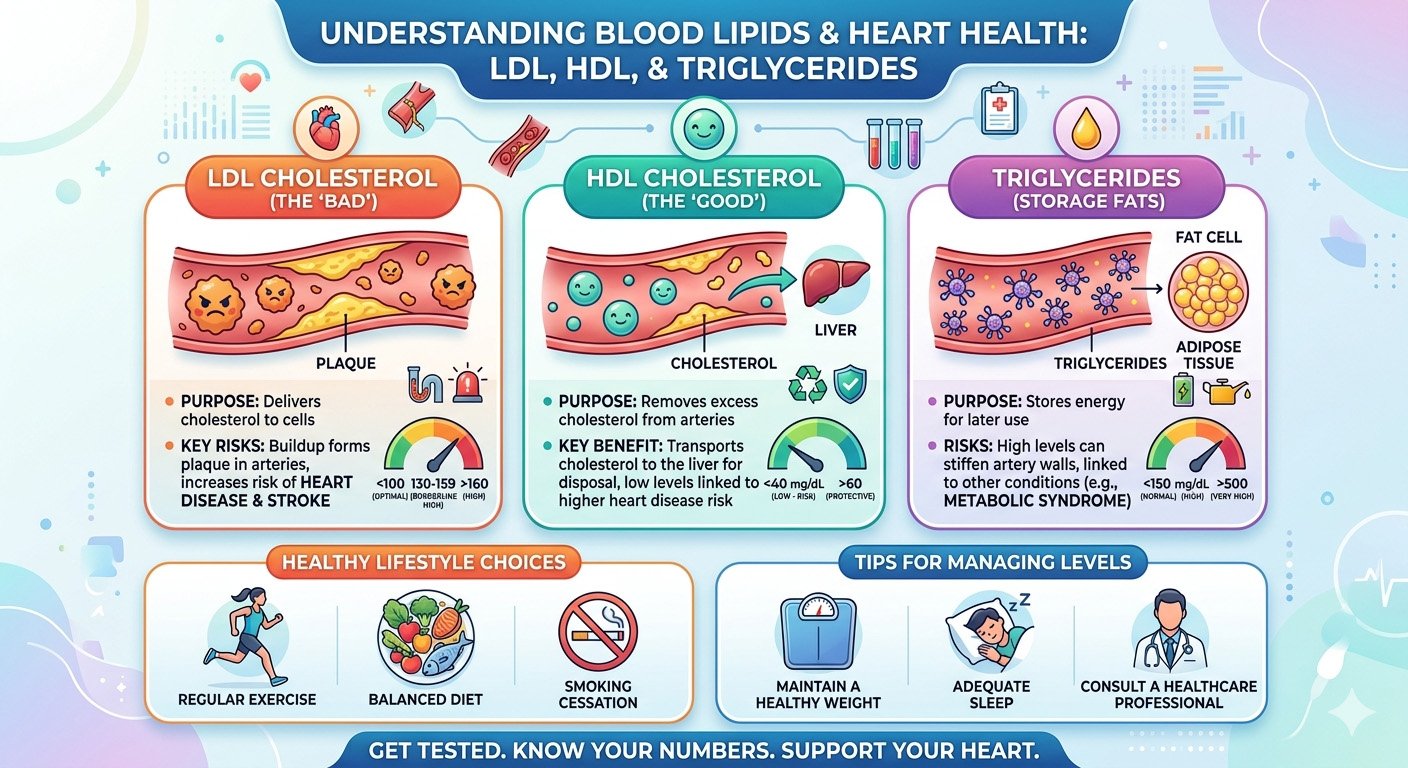
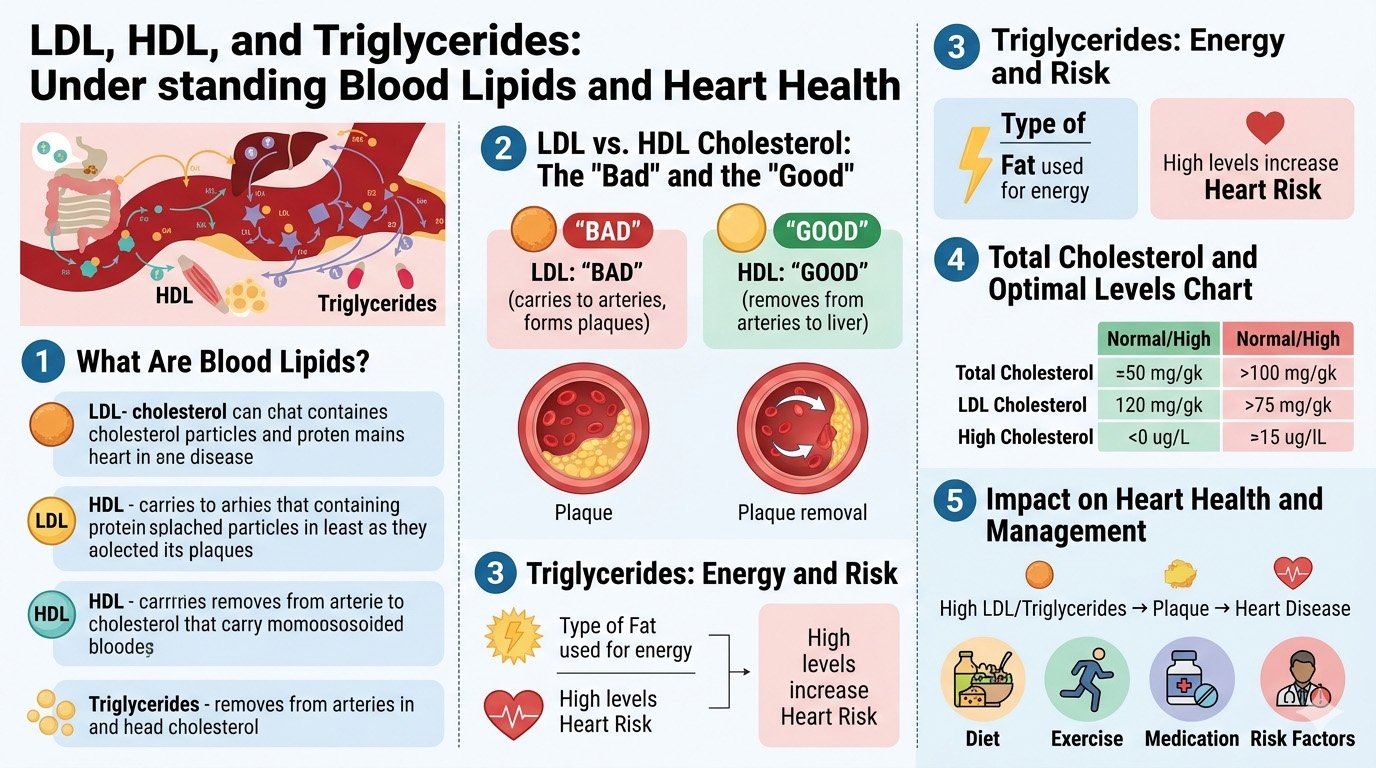
LDL, HDL, and triglycerides are types of lipids — fats that circulate in the bloodstream. These lipids are transported by proteins called lipoproteins, which carry cholesterol and fat to different parts of the body.
Each lipid plays a different role:
- LDL (Low-Density Lipoprotein) — often called “bad cholesterol” because high levels can lead to plaque buildup in arteries
- HDL (High-Density Lipoprotein) — often called “good cholesterol” because it helps remove excess cholesterol from the bloodstream
- Triglycerides — a type of fat used for energy storage
Healthy lipid balance supports cardiovascular stability discussed in Heart Health.
How Blood Lipids Work in the Body (Physiology)
Lipids are essential for normal body function. They help build cell membranes, produce hormones, and provide energy reserves. However, excessive lipid levels can damage blood vessels over time.
Key physiological functions of blood lipids include:
- Transporting cholesterol throughout the body
- Storing energy for later use
- Supporting hormone production
- Maintaining cell structure
- Regulating metabolism
These processes connect lipid metabolism to systems discussed in Metabolism and dietary patterns addressed in Nutrition.
LDL Cholesterol: The Transporter of Cholesterol
LDL carries cholesterol from the liver to tissues throughout the body. While cholesterol is necessary for normal function, excess LDL can accumulate in artery walls.
High LDL levels may lead to:
- Plaque buildup in arteries
- Reduced blood flow
- Increased risk of heart attack
- Increased risk of stroke
LDL regulation is closely connected to cardiovascular risk discussed in Heart Health.
HDL Cholesterol: The Cleaner of Excess Cholesterol
HDL helps remove excess cholesterol from the bloodstream and transport it back to the liver, where it can be processed and eliminated.
Healthy HDL levels support:
- Reduced plaque formation
- Improved circulation
- Reduced inflammation
- Improved cardiovascular protection
HDL function supports vascular health discussed in Heart Health.
Triglycerides: Energy Storage and Metabolic Health
Triglycerides store unused calories for future energy. After meals, excess energy from food is converted into triglycerides and stored in fat cells.
Elevated triglyceride levels may result from:
- Excess calorie intake
- High sugar consumption
- Physical inactivity
- Insulin resistance
Triglyceride regulation is closely connected to metabolic processes discussed in Metabolism.
Healthy Lipid Levels (General Guidelines)
While exact targets may vary by age and medical history, general reference ranges for adults include:
- LDL cholesterol: Less than 100 mg/dL
- HDL cholesterol: 40 mg/dL or higher for men, 50 mg/dL or higher for women
- Triglycerides: Less than 150 mg/dL
- Total cholesterol: Less than 200 mg/dL
Maintaining healthy lipid levels supports prevention strategies discussed in Heart Health.
Risk Factors That Affect LDL, HDL, and Triglycerides
Multiple lifestyle and biological factors influence blood lipid levels.
Poor Diet
Dietary patterns high in processed foods and added sugars can increase harmful lipid levels.
Unhealthy dietary habits may lead to:
- Elevated LDL
- Reduced HDL
- Increased triglycerides
- Increased inflammation
Healthy nutrition supports lipid balance discussed in Nutrition.
Physical Inactivity
Lack of movement reduces the body’s ability to regulate lipids.
Physical inactivity may lead to:
- Increased LDL
- Increased triglycerides
- Reduced HDL
Regular movement supports metabolic regulation discussed in Energy & Fatigue.
Excess Body Weight
Excess body fat can impair lipid metabolism.
Weight-related effects may include:
- Elevated triglycerides
- Increased LDL
- Reduced HDL
Weight regulation is closely connected to metabolic balance discussed in Weight Loss.
Insulin Resistance
Insulin resistance affects both blood sugar and lipid metabolism.
This condition may lead to:
- Increased triglycerides
- Reduced HDL
- Increased cardiovascular risk
Insulin resistance is closely connected to glucose regulation discussed in Blood Sugar.
Aging
Lipid metabolism changes with age.
Age-related changes may include:
- Increased LDL
- Reduced HDL
- Increased triglycerides
These changes highlight the importance of maintaining healthy habits throughout life.
Health Conditions Linked to Abnormal Lipid Levels
Unbalanced lipid levels can increase the risk of several chronic conditions.
Atherosclerosis
Atherosclerosis occurs when plaque accumulates in artery walls.
This condition may lead to:
- Narrowed arteries
- Reduced circulation
- Heart attack
- Stroke
Atherosclerosis risk is closely connected to systems discussed in Heart Health.
Coronary Artery Disease
High LDL and triglyceride levels increase the risk of coronary artery disease.
This condition may result in:
- Chest pain
- Reduced physical endurance
- Increased cardiovascular risk
Cardiovascular disease is closely connected to metabolic regulation discussed in Metabolism.
Metabolic Syndrome
Metabolic syndrome involves a combination of risk factors that increase disease risk.
These include:
- High triglycerides
- Low HDL
- Elevated blood pressure
- High blood sugar
Metabolic syndrome is closely connected to metabolic stability discussed in Blood Sugar.
Practical Strategies to Improve Lipid Balance
Healthy lifestyle habits can significantly improve cholesterol and triglyceride levels.
Eat a Heart-Healthy Diet
Diet plays a central role in lipid regulation.
Helpful dietary habits include:
- Eating fruits and vegetables
- Choosing whole grains
- Including healthy fats
- Limiting processed foods
Healthy dietary patterns align with guidance discussed in Nutrition.
Increase Physical Activity
Regular movement improves lipid metabolism.
Benefits include:
- Reduced LDL
- Increased HDL
- Reduced triglycerides
- Improved cardiovascular health
Physical activity supports prevention strategies discussed in Heart Health.
Maintain a Healthy Weight
Healthy weight management supports balanced lipid levels.
Benefits include:
- Improved metabolism
- Reduced inflammation
- Reduced cardiovascular risk
Weight management supports metabolic stability discussed in Weight Loss.
Limit Added Sugar
High sugar intake can significantly raise triglyceride levels.
Reducing sugar consumption supports:
- Stable blood sugar
- Improved lipid balance
- Reduced metabolic stress
Sugar regulation is closely connected to metabolic health discussed in Blood Sugar.
Avoid Smoking
Smoking damages blood vessels and worsens lipid balance.
Avoiding smoking supports:
- Improved circulation
- Reduced inflammation
- Reduced cardiovascular risk
Smoking cessation supports cardiovascular protection discussed in Heart Health.
Why Lipid Balance Matters for Long-Term Health
LDL, HDL, and triglycerides provide valuable insight into cardiovascular and metabolic health. Balanced lipid levels support healthy circulation, stable energy metabolism, and reduced inflammation. Unbalanced lipid levels increase the risk of heart disease, stroke, and metabolic disorders.
Healthy lipid regulation supports:
- Cardiovascular protection
- Improved circulation
- Stable metabolism
- Reduced disease risk
- Healthy aging
Because lipid balance reflects overall metabolic function, maintaining healthy cholesterol and triglyceride levels supports prevention strategies across Heart Health, Metabolism, Nutrition, Blood Sugar, and Weight Loss.
Final Thoughts
LDL, HDL, and triglycerides are essential indicators of cardiovascular and metabolic health. Understanding how these lipids function — and how lifestyle habits influence their levels — empowers individuals to make informed decisions that protect long-term health.
Small, consistent lifestyle changes can significantly improve lipid balance and reduce the risk of chronic disease.
Protecting heart health begins with understanding blood lipids.
Medical Disclaimer
This content is for informational purposes only and does not constitute medical advice. Always consult a qualified healthcare professional.
Editorial Transparency
This article was created following evidence-based health content guidelines and reviewed by the VitaCoreBalance Editorial Team.
Sources
Medical Institutions
National Institutes of Health (NIH)
American Heart Association (AHA)
Mayo Clinic — Cholesterol and Triglycerides
Cleveland Clinic — Lipid Panel and Heart Health
Global Organizations
World Health Organization (WHO) — Cardiovascular Risk Factors
Peer-Reviewed Studies
Ference BA
LDL cholesterol and cardiovascular risk
Journal of the American College of Cardiology
Nordestgaard BG
Triglycerides and cardiovascular disease
Circulation
Scientific Review
Grundy SM
Cholesterol and cardiovascular disease prevention
The Lancet