
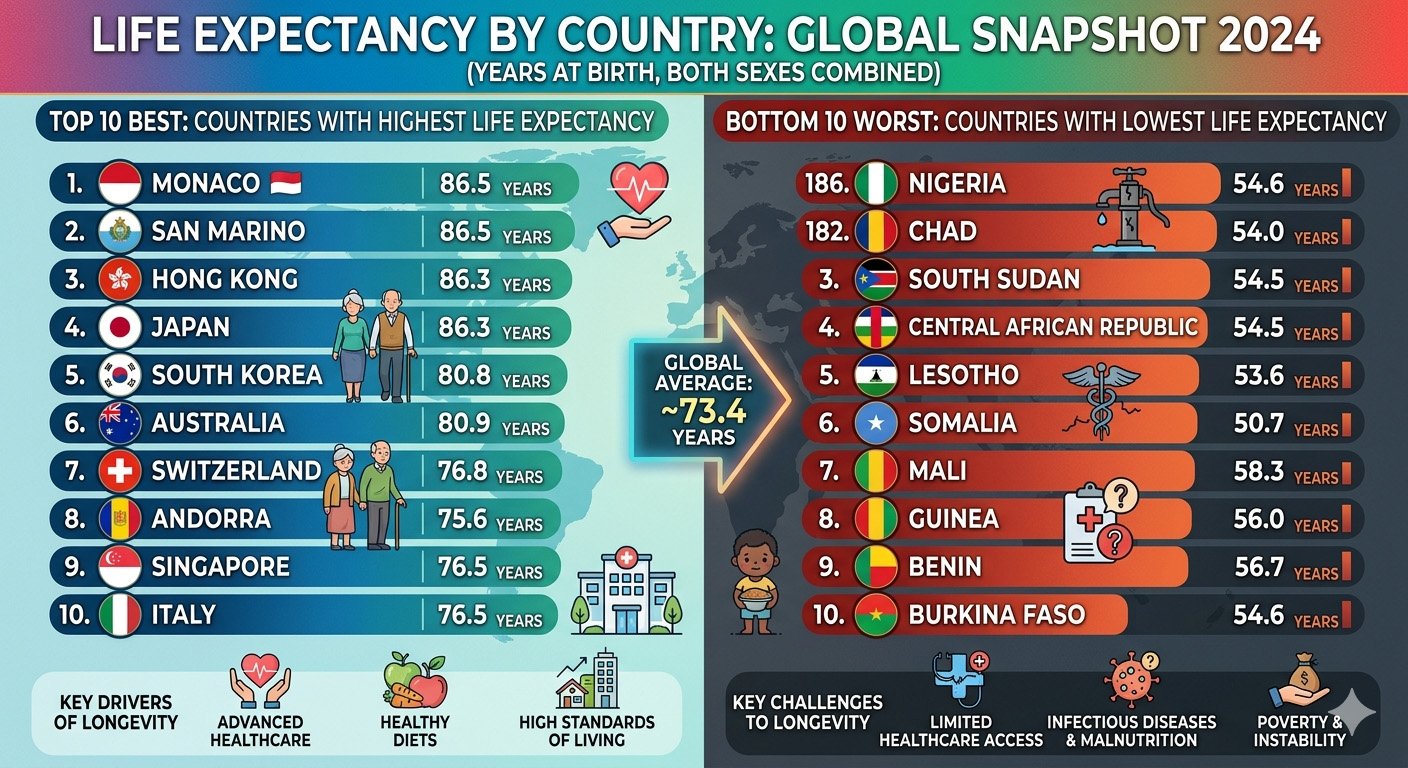
Life Expectancy by Country
VitaCoreBalance Editorial Team | Research-based health content • Editorial review process | March 2026
Introduction
Life expectancy is one of the most important indicators of population health and social development. It reflects the average number of years a person is expected to live based on current mortality patterns, healthcare access, living conditions, and socioeconomic factors.
Globally, life expectancy has increased significantly over the past century due to improvements in:
- Healthcare systems
- Sanitation and hygiene
- Nutrition
- Vaccination programs
- Public health interventions
- Education and income levels
However, life expectancy varies widely between countries due to differences in economic development, healthcare quality, lifestyle factors, environmental conditions, and public health policies.
Understanding life expectancy by country helps identify health disparities, evaluate healthcare performance, and guide policy decisions aimed at improving population health and longevity.
What Is Life Expectancy?
Life expectancy is a statistical measure that estimates the average number of years a newborn is expected to live if current mortality rates remain constant throughout their lifetime.
There are two main types:
Life Expectancy at Birth
This is the most commonly reported measure and represents the expected lifespan of a newborn under current mortality conditions.
Life Expectancy at Age 60 or 65
This measure reflects the expected remaining years of life for older adults and is often used to assess aging populations and healthcare system performance.
Life expectancy is influenced by:
Healthcare access
Income level
Education
Nutrition
Lifestyle behaviors
Environmental conditions
Public health policies
Disease burden
It is considered one of the most reliable indicators of population health.
Global Trends in Life Expectancy
Over the last century, global life expectancy has increased dramatically.
Historical estimates show:
1900 — approximately 32 years
1950 — approximately 46 years
2000 — approximately 67 years
2020 — approximately 73 years
These gains were largely driven by:
Reduced infant mortality
Improved maternal care
Vaccination programs
Antibiotics
Better sanitation
Chronic disease management
However, progress has slowed in some regions due to:
Aging populations
Chronic diseases
Health inequalities
Pandemics
Economic instability
Recent global health events have also temporarily reduced life expectancy in several countries.
Countries With the Highest Life Expectancy
Countries with the highest life expectancy typically share similar characteristics:
Strong healthcare systems
High income levels
Healthy lifestyles
Low crime rates
Clean environments
Effective public health policies
Top Countries by Life Expectancy (Recent Estimates)
Japan
Switzerland
Singapore
Spain
Italy
Australia
South Korea
Canada
Norway
France
Average life expectancy in these countries:
Approximately 82 to 85 years
Common contributing factors include:
Universal healthcare
Healthy diets
Low smoking rates
Active lifestyles
Strong social support systems
Japan has consistently ranked among the top countries due to:
Diet rich in fish and vegetables
Low obesity rates
Strong preventive healthcare
High life satisfaction
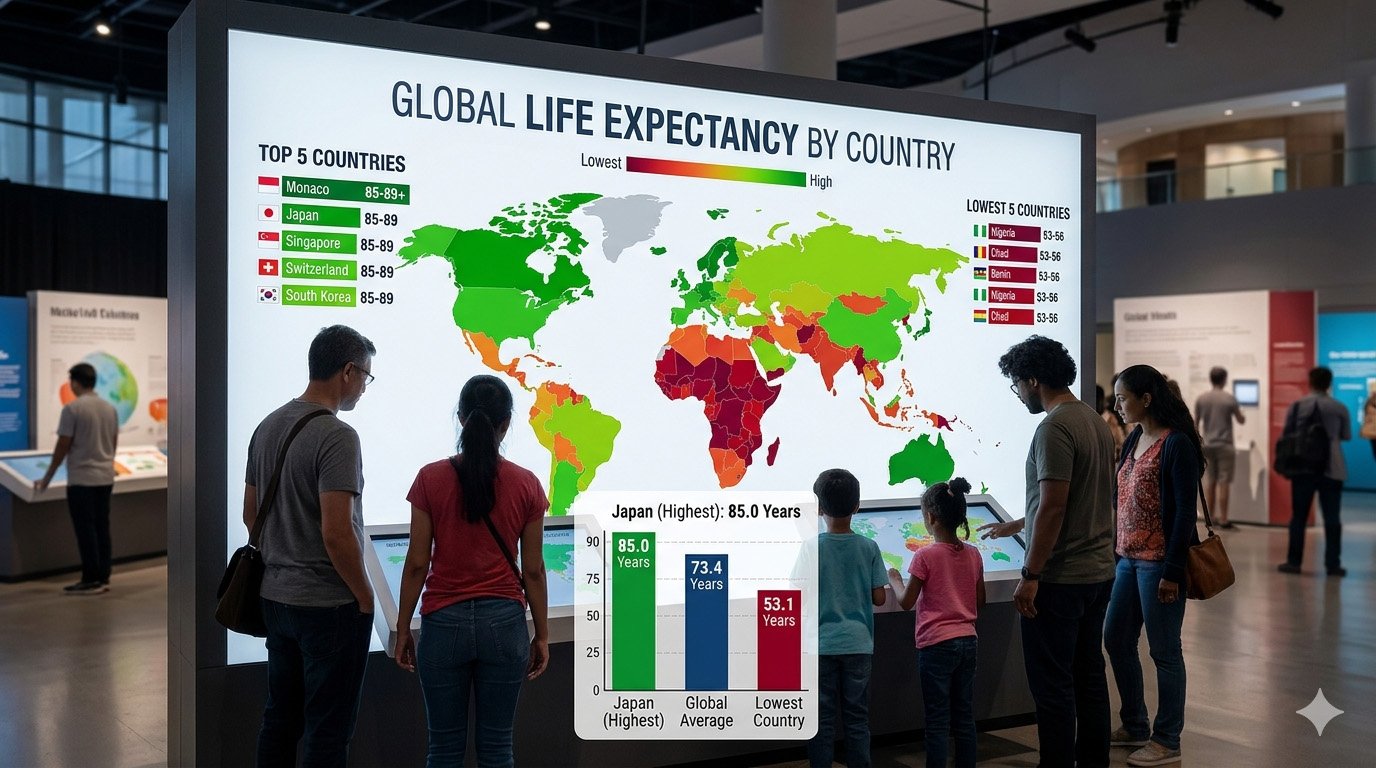
Countries With Lower Life Expectancy
Countries with lower life expectancy often face significant health and socioeconomic challenges.
Common contributing factors include:
Limited healthcare access
High infectious disease burden
Malnutrition
Poor sanitation
Political instability
Conflict
Economic inequality
Regions With Lower Life Expectancy
Sub-Saharan Africa
Parts of South Asia
Conflict-affected regions
Low-income countries
Average life expectancy in some of these regions:
Approximately 55 to 65 years
Major causes include:
Infectious diseases
Maternal and child mortality
Malnutrition
Limited healthcare infrastructure
Improvements in vaccination and public health programs have gradually increased life expectancy in many of these regions.
Life Expectancy in Major Countries
United States
Life expectancy:
Approximately 76 to 78 years
Key factors affecting life expectancy:
Chronic diseases
Obesity
Opioid-related deaths
Healthcare disparities
Lifestyle factors
The United States spends more on healthcare than most countries but has lower life expectancy than several developed nations.
China
Life expectancy:
Approximately 77 to 78 years
Major drivers of improvement:
Economic growth
Healthcare expansion
Reduced poverty
Improved sanitation
China has experienced one of the fastest increases in life expectancy in recent decades.
Brazil
Life expectancy:
Approximately 75 to 76 years
Key factors:
Expansion of public healthcare
Vaccination programs
Urbanization
Improved living conditions
Challenges include:
Violence
Chronic diseases
Regional inequality
Healthcare access disparities
India
Life expectancy:
Approximately 69 to 70 years
Major influences:
Economic development
Public health programs
Improved maternal care
Challenges include:
Air pollution
Healthcare access
Infectious diseases
Malnutrition
Gender Differences in Life Expectancy
Women generally live longer than men in nearly all countries.
Typical difference:
Women live approximately 4 to 6 years longer than men
Reasons include:
Biological factors
Hormonal protection
Lower risk-taking behavior
Lower rates of smoking and alcohol use
Better healthcare utilization
However, women often experience more years with chronic disease in older age.
Factors That Influence Life Expectancy
Life expectancy is shaped by multiple interacting factors.
Healthcare Access
Access to quality healthcare significantly improves survival rates and disease management.
Examples:
Preventive care
Vaccination
Early diagnosis
Chronic disease treatment
Lifestyle Behaviors
Lifestyle choices are among the strongest predictors of life expectancy.
Key behaviors include:
Smoking
Diet
Physical activity
Alcohol consumption
Sleep quality
Stress management
These factors directly influence the risk of:
Heart disease
Diabetes
Cancer
Respiratory disease
Socioeconomic Status
Income and education strongly affect life expectancy.
Higher socioeconomic status is associated with:
Better healthcare access
Healthier lifestyles
Safer living environments
Lower stress levels
Socioeconomic inequality contributes significantly to health disparities.
Environmental Conditions
Environmental factors also play a major role.
Examples include:
Air quality
Water quality
Housing conditions
Climate
Occupational safety
Exposure to pollution and unsafe environments increases disease risk and reduces lifespan.
The Impact of Chronic Diseases on Life Expectancy
Chronic diseases are the leading causes of death worldwide.
Major contributors include:
Cardiovascular disease
Cancer
Diabetes
Chronic respiratory disease
Kidney disease
These conditions account for the majority of deaths in high-income countries.
Prevention and early treatment are key to improving life expectancy.
Life Expectancy and Public Health
Life expectancy is widely used to measure the effectiveness of public health systems.
It helps governments:
Monitor population health
Identify health disparities
Evaluate healthcare systems
Allocate resources
Plan aging services
Increases in life expectancy often reflect improvements in:
Medical technology
Public health programs
Living standards
Health education
Healthy Life Expectancy (HALE)
Healthy Life Expectancy (HALE) measures not only how long people live, but how many years they live in good health.
This metric considers:
Disease burden
Disability
Quality of life
Functional health
Many countries are now focusing on increasing healthy life expectancy rather than simply extending lifespan.
Future Trends in Life Expectancy
Life expectancy is expected to continue increasing globally, but at a slower pace.
Future drivers may include:
Medical innovation
Personalized medicine
Artificial intelligence in healthcare
Preventive medicine
Public health interventions
However, emerging risks could slow progress.
These include:
Obesity
Chronic diseases
Climate change
Antimicrobial resistance
Population aging
Public health strategies will play a critical role in shaping future longevity.
Conclusion
Life expectancy is one of the most important indicators of population health, reflecting the combined effects of healthcare, lifestyle, environment, and socioeconomic conditions.
Although global life expectancy has increased significantly over the past century, large differences remain between countries due to disparities in healthcare access, economic development, and public health infrastructure.
Improving life expectancy requires a comprehensive approach that includes preventive care, healthy lifestyles, strong healthcare systems, and effective public health policies.
Understanding life expectancy trends helps societies identify health challenges, reduce inequalities, and promote longer, healthier lives.
Medical Disclaimer
This content is for informational purposes only and does not constitute medical advice. Always consult a qualified healthcare professional.
Editorial Transparency
This article was created following evidence-based health content guidelines and reviewed by the VitaCoreBalance Editorial Team.
Scientific Sources
- World Health Organization (WHO) — Global Health Observatory: Life Expectancy
- World Bank — Life Expectancy at Birth (Years)
- United Nations (UN) — World Population Prospects
- Our World in Data — Life Expectancy
- Centers for Disease Control and Prevention (CDC) — Life Expectancy Data
- Organisation for Economic Co-operation and Development (OECD) — Health Statistics: Life Expectancy