
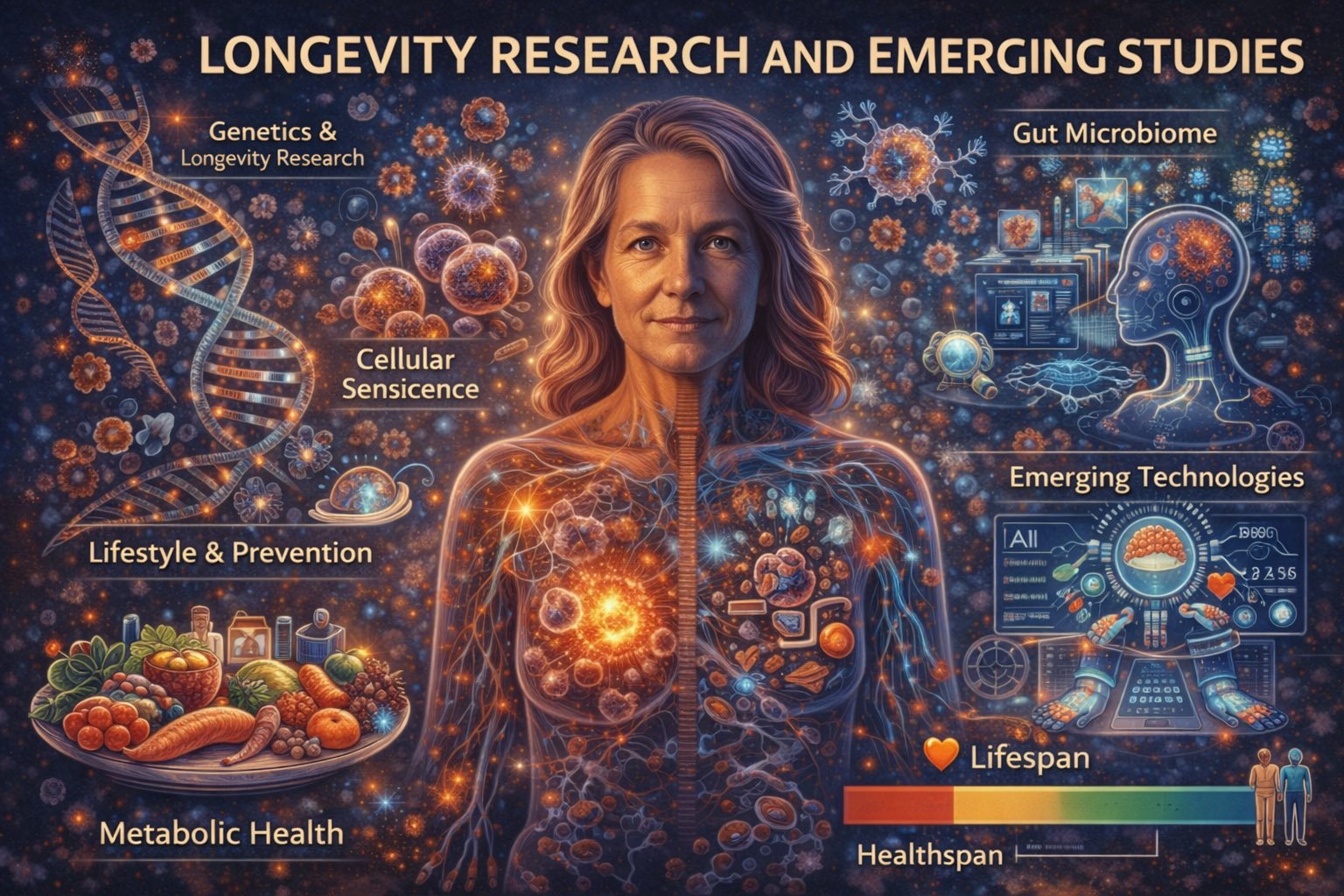
Longevity Research and Emerging Studies
Exploring the Science Behind Longer, Healthier Lives
VitaCoreBalance Editorial Team | Research-based health content • Editorial review process | March 2026
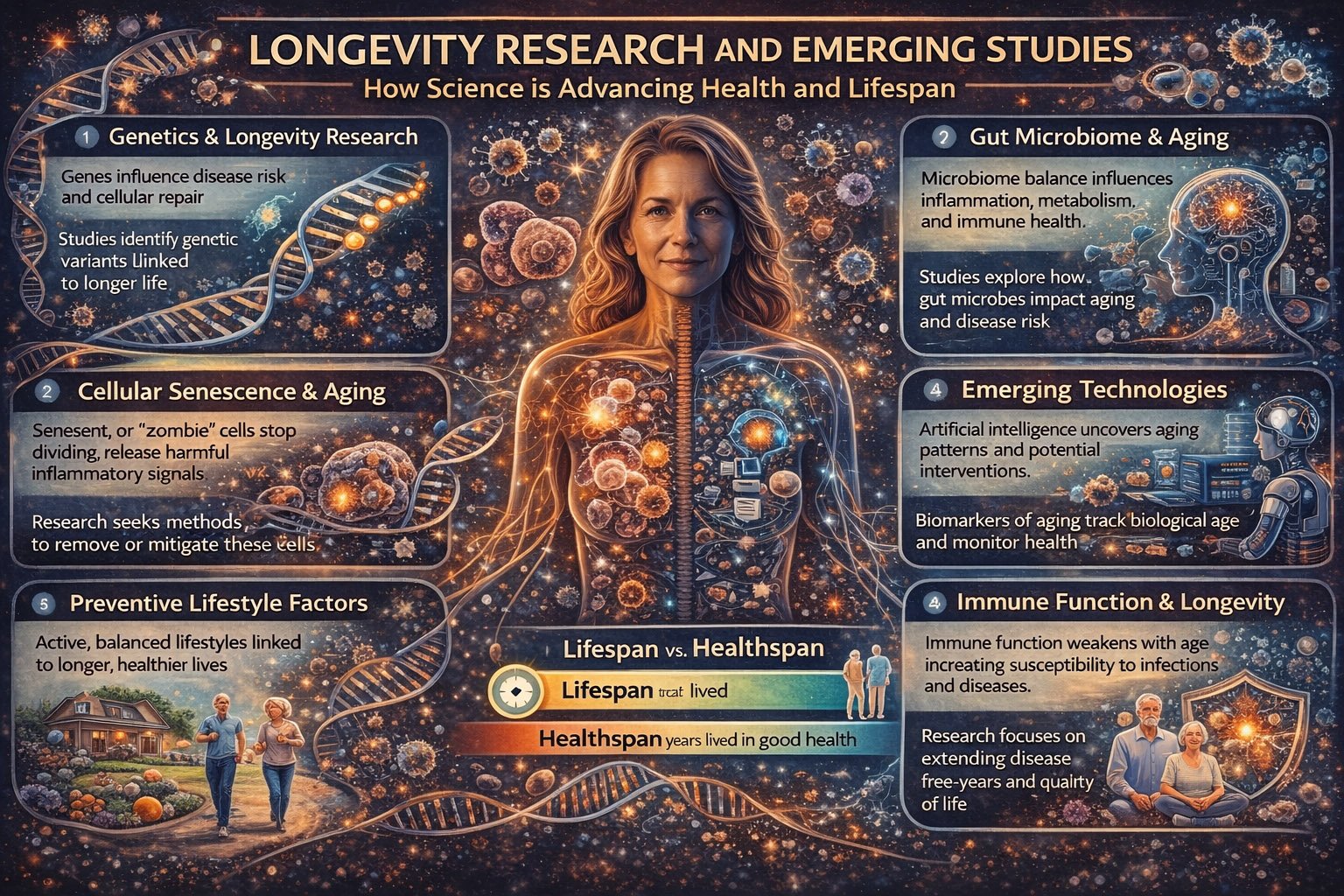
Longevity research has become one of the fastest-growing fields in modern science. Advances in genetics, molecular biology, and preventive medicine have transformed how researchers understand aging and lifespan. Rather than focusing solely on extending life expectancy, scientists increasingly emphasize improving healthspan—the years of life spent in good health, free from significant disability or chronic disease.
Emerging studies suggest that longevity is influenced by a complex interaction of biological processes, lifestyle behaviors, environmental exposures, and medical innovation. These discoveries are reshaping healthcare, public health strategies, and individual approaches to aging.
Understanding current longevity research helps clarify what is scientifically supported, what remains experimental, and what practical steps can promote long-term health.
Genetics and Longevity
DNA Influences Lifespan — But Does Not Fully Determine It
Genetics plays a role in longevity, but research indicates that genes account for only a portion of lifespan differences between individuals.
Studies of twins and families suggest that:
- Genetic factors may explain 20–30% of lifespan variation
- Lifestyle and environment contribute the majority of differences
- Certain genetic variants are associated with disease resistance and longevity
Scientists have identified genes linked to:
- DNA repair
- Cellular stress resistance
- Immune regulation
- Metabolic efficiency
However, genetic predisposition does not guarantee outcomes. Preventive behaviors often have a stronger influence on long-term health than inherited traits.
Caloric Intake and Metabolic Health
Controlled Energy Intake May Influence Aging Processes
One of the most studied areas in longevity research is caloric intake.
Research in animals and humans suggests that moderate caloric reduction—without malnutrition—may influence biological pathways associated with aging.
Potential effects include:
- Improved metabolic efficiency
- Reduced inflammation
- Enhanced cellular repair
- Better insulin sensitivity
Scientists are investigating how these metabolic changes affect:
- Disease risk
- Cognitive function
- Physical performance
- Lifespan
This area of research remains active, and long-term effects continue to be evaluated.
Cellular Senescence
Aging Cells Accumulate Over Time
Cells eventually reach a state where they stop dividing but remain metabolically active.
This condition is called:
Cellular senescence.
Senescent cells can:
- Release inflammatory signals
- Disrupt tissue function
- Contribute to age-related disease
Researchers are studying therapies designed to target or remove senescent cells.
These approaches may:
- Improve tissue function
- Reduce inflammation
- Delay disease progression
Many of these therapies are still experimental.
The Microbiome and Longevity
Gut Health May Influence Aging and Disease Risk
The human microbiome—the community of microorganisms living in the digestive system—has become a major focus in longevity research.
Emerging studies suggest that microbiome balance may affect:
- Immune system function
- Inflammation levels
- Nutrient absorption
- Metabolic regulation
Changes in the microbiome have been associated with:
- Cardiovascular disease
- Diabetes
- Obesity
- Cognitive decline
Maintaining microbial diversity is considered an important factor in long-term health.
Physical Activity and Longevity
Movement Is One of the Most Reliable Predictors of Healthy Aging
Among all lifestyle factors studied, physical activity consistently shows one of the strongest associations with longevity.
Regular exercise is linked to:
- Reduced risk of chronic disease
- Improved cardiovascular health
- Better cognitive function
- Stronger immune response
- Lower mortality risk
Physical activity supports nearly every biological system in the body.
Even moderate activity can produce measurable health benefits.
Sleep and Circadian Rhythms
Biological Timing Systems Influence Longevity
Sleep plays a central role in maintaining physiological balance.
Poor sleep is associated with increased risk of:
- Cardiovascular disease
- Metabolic disorders
- Immune dysfunction
- Cognitive decline
Circadian rhythms regulate:
- Hormone production
- Body temperature
- Metabolism
- Cellular repair
Emerging research suggests that consistent sleep patterns support long-term health and resilience.
Emerging Technologies in Longevity Research
New Tools Are Expanding Scientific Understanding
Modern technologies are accelerating progress in longevity science.
Key areas of innovation include:
Biomarkers of Aging
Researchers are developing biological indicators that measure aging more accurately than chronological age.
Examples include:
- DNA methylation patterns
- Inflammatory markers
- Metabolic indicators
These biomarkers help scientists:
- Predict disease risk
- Monitor aging processes
- Evaluate treatment effectiveness
Artificial Intelligence in Longevity Research
Artificial intelligence is increasingly used to analyze large datasets in aging research.
AI systems can:
- Identify patterns in health data
- Predict disease progression
- Support personalized medicine
- Accelerate drug discovery
These technologies are expected to play a major role in future healthcare.
Preventive Medicine and Longevity
Small Daily Habits Can Have Large Long-Term Effects
Longevity research consistently emphasizes prevention.
Preventive strategies associated with longer life include:
- Regular physical activity
- Balanced nutrition
- Adequate sleep
- Stress management
- Avoiding tobacco use
- Routine medical checkups
These behaviors reduce risk of:
- Heart disease
- Diabetes
- Cancer
- Cognitive decline
Preventive care remains one of the most effective tools for improving population health.
The Concept of Healthspan
Living Well Matters More Than Living Longer
Modern longevity science focuses on maintaining function and independence throughout life.
Healthspan reflects:
- Physical mobility
- Cognitive ability
- Emotional well-being
- Disease-free years
Extending healthspan reduces healthcare burden and improves quality of life.
This shift represents one of the most important changes in modern medicine.
Conclusion
Longevity research continues to expand our understanding of aging, health, and disease prevention. Emerging studies reveal that lifespan is shaped not only by genetics but also by daily habits, environmental factors, and medical innovation.
While many experimental therapies remain under investigation, current evidence consistently supports preventive health strategies as the most reliable path to healthy aging. As scientific knowledge grows, future discoveries may further improve how people live longer, healthier lives.
Medical Disclaimer
This content is for informational purposes only and does not constitute medical advice. Always consult a qualified healthcare professional.
Editorial Transparency
This article was created following evidence-based health content guidelines and reviewed by the VitaCoreBalance Editorial Team.
Sources
World Health Organization (WHO)
https://www.who.int
National Institute on Aging (NIA)
https://www.nia.nih.gov
National Institutes of Health (NIH)
https://www.nih.gov
Harvard T.H. Chan School of Public Health
https://www.hsph.harvard.edu
Mayo Clinic
https://www.mayoclinic.org
Nature Aging Journal
https://www.nature.com/natureaging