
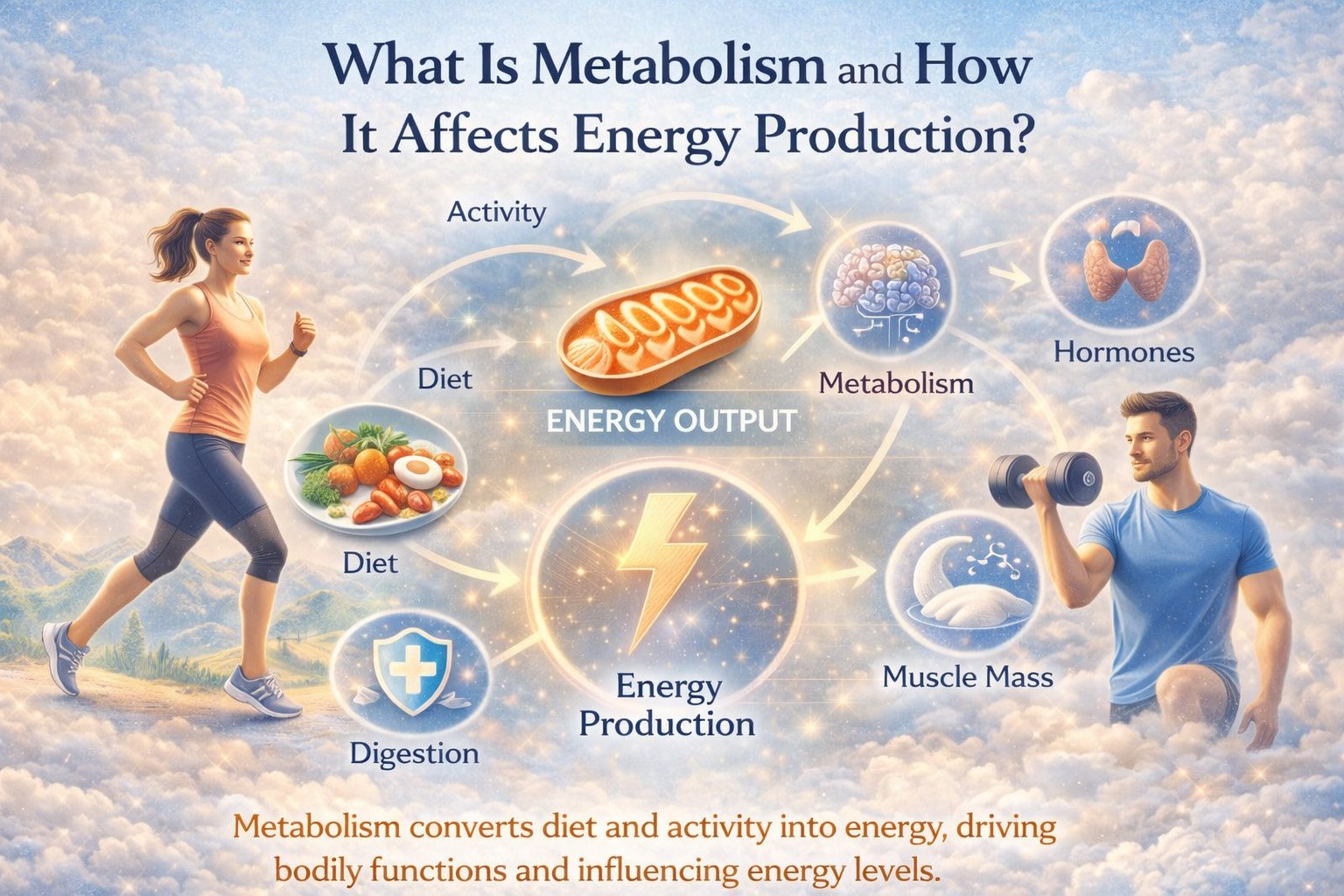
What Is Metabolism and How It Affects Energy Production
VitaCoreBalance Editorial Team | Research-based health content · Editorial review process | April 2026
Metabolism is the collection of chemical processes that allow the body to convert food into energy. Every heartbeat, breath, and movement depends on metabolic activity. From the brain to the muscles to the immune system, metabolism determines how efficiently the body produces and uses energy throughout the day. When metabolism functions properly, energy levels remain stable, organs perform efficiently, and recovery processes occur smoothly. When metabolism becomes impaired, fatigue, weight gain, and chronic disease risk can increase.
Energy production is one of the most critical functions of metabolism. The body’s ability to generate energy depends on nutrient intake, hormone regulation, oxygen delivery, and cellular health. These processes are closely connected to systems discussed in Nutrition, Hormone Health, and Blood Sugar, while also influencing cardiovascular performance and physical endurance addressed in Heart Health and Energy & Fatigue.
Understanding metabolism and energy production helps explain why lifestyle habits such as diet, sleep, physical activity, and stress management have such a powerful effect on daily performance and long-term health.
What Is Metabolism?
Metabolism refers to all the chemical reactions that occur in the body to maintain life. These reactions allow the body to:
- Convert food into energy
- Build and repair tissues
- Regulate body temperature
- Maintain organ function
- Support immune responses
- Remove waste products
Metabolism operates continuously, even during rest and sleep. The amount of energy the body uses at rest is known as the basal metabolic rate (BMR).
Metabolic efficiency is a central concept discussed in Metabolism, particularly in relation to long-term health and disease prevention.
How the Body Produces Energy (Physiology)
Energy production occurs inside cells through a process called cellular respiration. This process converts nutrients into a molecule called adenosine triphosphate (ATP), which serves as the body’s primary energy source.
The basic steps of energy production include:
- Food is digested into nutrients
- Nutrients enter the bloodstream
- Cells absorb nutrients
- Mitochondria convert nutrients into ATP
This process requires oxygen, enzymes, and nutrients to function efficiently.
Energy production depends on stable metabolic regulation discussed in Blood Sugar and nutrient availability addressed in Nutrition.
The Role of Mitochondria
Mitochondria are small structures inside cells often called the “powerhouses” of the body because they produce most of the cell’s energy.
Healthy mitochondrial function supports:
- Physical endurance
- Mental clarity
- Muscle performance
- Immune function
- Recovery
When mitochondrial function declines, energy production becomes less efficient, which can lead to fatigue and reduced performance.
Mitochondrial health is closely connected to metabolic efficiency discussed in Energy & Fatigue.
Carbohydrates and Energy Production
Carbohydrates are the body’s primary source of quick energy.
After digestion, carbohydrates are converted into glucose, which is used by cells to produce ATP.
Stable carbohydrate metabolism supports:
- Brain function
- Physical performance
- Blood sugar stability
Carbohydrate regulation is closely connected to systems discussed in Blood Sugar.
Fats and Long-Term Energy
Fats provide a slower, more sustained source of energy.
Fat metabolism supports:
- Endurance
- Hormone production
- Energy storage
- Cell structure
Healthy fat metabolism is closely connected to metabolic stability discussed in Metabolism.
Proteins and Tissue Repair
Proteins support muscle maintenance and tissue repair.
Protein metabolism helps:
- Build muscle
- Support immune function
- Maintain metabolic rate
- Aid recovery
Protein intake supports physical recovery discussed in Energy & Fatigue.
Factors That Influence Metabolism and Energy Production
Several biological and lifestyle factors determine how efficiently the body produces energy.
Nutrition
Diet provides the raw materials required for energy production.
Nutritional factors that influence metabolism include:
- Macronutrient balance
- Calorie intake
- Vitamin and mineral availability
- Hydration
Balanced dietary patterns support metabolic efficiency discussed in Nutrition.
Hormones
Hormones regulate metabolic rate and energy production.
Important hormones include:
- Insulin
- Thyroid hormones
- Cortisol
- Growth hormone
Hormonal regulation is closely connected to systems discussed in Hormone Health.
Physical Activity
Exercise increases energy demand and improves metabolic efficiency.
Benefits include:
- Improved mitochondrial function
- Increased muscle mass
- Improved insulin sensitivity
- Improved circulation
Physical activity supports metabolic stability discussed in Metabolism.
Sleep
Sleep allows the body to restore energy and regulate hormones.
Poor sleep can lead to:
- Reduced energy production
- Increased fatigue
- Hormonal imbalance
- Increased inflammation
Sleep patterns strongly influence metabolic regulation discussed in Sleep Health.
Age
Metabolic rate naturally changes with age.
Age-related changes may include:
- Reduced muscle mass
- Slower metabolic rate
- Reduced energy production
These changes highlight the importance of maintaining metabolic health throughout life.
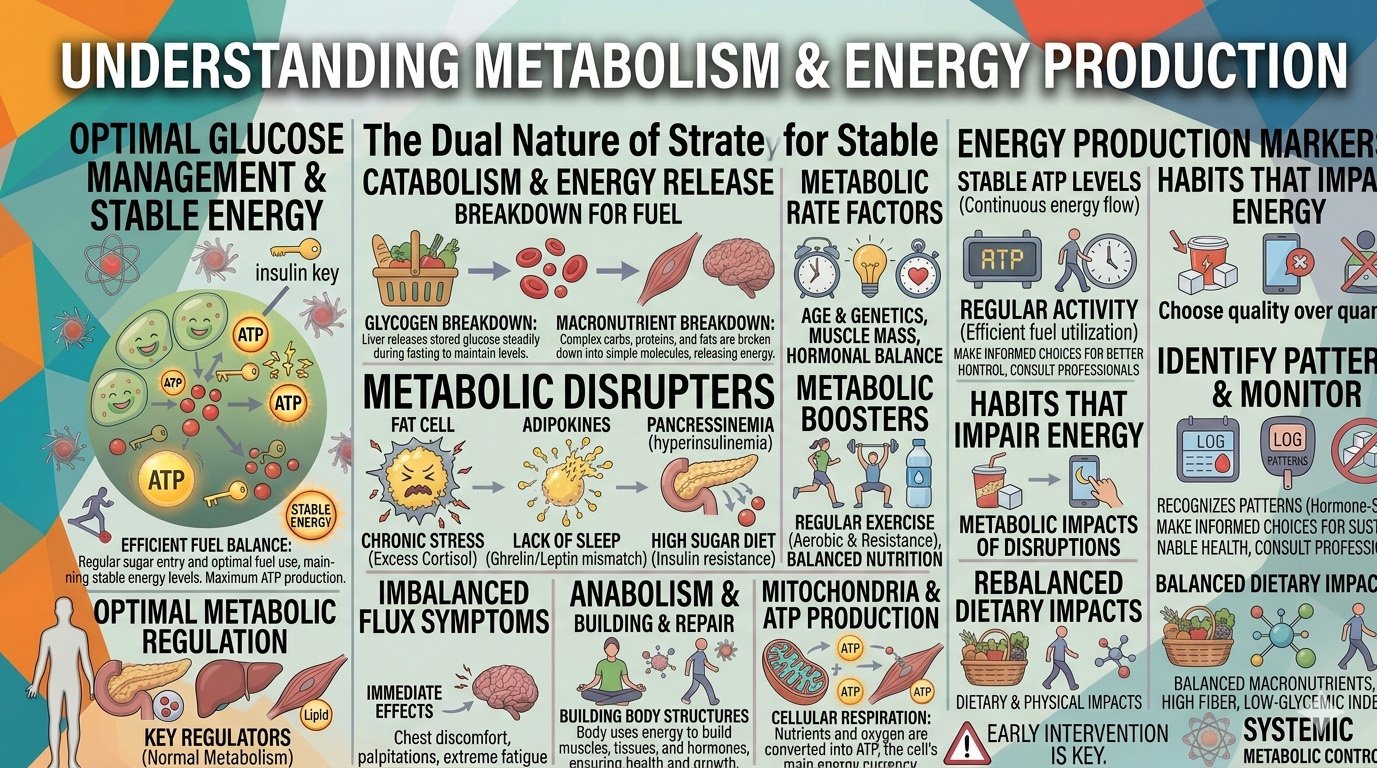
Signs of Impaired Energy Production
Reduced metabolic efficiency can produce noticeable symptoms.
Common signs include:
- Persistent fatigue
- Low energy levels
- Difficulty concentrating
- Reduced physical endurance
- Slow recovery after activity
- Unexplained weight changes
These symptoms often overlap with conditions discussed in Energy & Fatigue.
Health Conditions Linked to Poor Metabolism
Long-term metabolic dysfunction can increase the risk of several chronic conditions.
Metabolic Syndrome
Metabolic syndrome is a cluster of risk factors that increase disease risk.
These include:
- Elevated blood sugar
- High blood pressure
- Abdominal obesity
- Abnormal cholesterol levels
Metabolic syndrome is closely connected to metabolic balance discussed in Metabolism.
Type 2 Diabetes
Impaired glucose regulation can lead to diabetes.
This condition may result in:
- Chronic high blood sugar
- Nerve damage
- Kidney disease
- Cardiovascular risk
Blood sugar regulation is a central focus of metabolic health discussed in Blood Sugar.
Cardiovascular Disease
Poor metabolism can contribute to blood vessel damage and inflammation.
Long-term effects may include:
- Atherosclerosis
- Heart attack
- Stroke
Cardiovascular risk is closely connected to systems discussed in Heart Health.
Chronic Fatigue
Persistent metabolic inefficiency can reduce energy production and physical performance.
This may lead to:
- Reduced productivity
- Reduced physical endurance
- Reduced quality of life
Energy regulation is closely connected to metabolic health discussed in Energy & Fatigue.
Practical Strategies to Support Metabolism and Energy Production
Healthy lifestyle habits can significantly improve metabolic efficiency.
Eat Balanced Meals
Balanced meals provide nutrients needed for energy production.
Helpful habits include:
- Including protein in meals
- Choosing whole foods
- Limiting added sugar
- Maintaining regular meal timing
These dietary patterns align with guidance discussed in Nutrition.
Stay Physically Active
Regular movement improves metabolic efficiency and energy production.
Benefits include:
- Increased muscle mass
- Improved circulation
- Improved insulin sensitivity
Physical activity supports prevention strategies discussed in Metabolism.
Prioritize Quality Sleep
Healthy sleep supports hormone regulation and energy recovery.
Helpful habits include:
- Consistent sleep schedule
- Limiting screen time before bed
- Maintaining a comfortable sleep environment
Healthy sleep patterns support recovery discussed in Sleep Health.
Manage Stress
Stress affects hormone balance and metabolic function.
Stress management can:
- Reduce cortisol levels
- Improve energy regulation
- Improve metabolic stability
Stress regulation supports systems discussed in Hormone Health.
Stay Hydrated
Water is essential for metabolic reactions.
Proper hydration supports:
- Nutrient transport
- Energy production
- Temperature regulation
Hydration supports metabolic efficiency discussed in Metabolism.
Why Metabolism Matters for Daily Energy and Long-Term Health
Metabolism determines how efficiently the body converts food into usable energy. When metabolism functions properly, energy levels remain stable, recovery improves, and disease risk decreases. When metabolism becomes impaired, fatigue, inflammation, and chronic disease risk increase.
Healthy metabolism supports:
- Stable energy levels
- Healthy body weight
- Improved physical performance
- Reduced disease risk
- Healthy aging
Because metabolism influences nearly every body system, improving metabolic function supports prevention strategies across Nutrition, Blood Sugar, Heart Health, Hormone Health, and Energy & Fatigue.
Final Thoughts
Metabolism is the engine that powers the body. Every cell relies on metabolic processes to produce energy, maintain health, and support recovery. Understanding how metabolism affects energy production helps explain why lifestyle habits — including nutrition, sleep, physical activity, and stress management — play such a critical role in overall well-being.
Protecting metabolism is essential for maintaining energy, resilience, and long-term health.
Medical Disclaimer
This content is for informational purposes only and does not constitute medical advice. Always consult a qualified healthcare professional.
Editorial Transparency
This article was created following evidence-based health content guidelines and reviewed by the VitaCoreBalance Editorial Team.
Sources
Medical Institutions
National Institutes of Health (NIH)
Mayo Clinic — Metabolism and Energy
Cleveland Clinic — Metabolic Health
Harvard Health Publishing — Understanding Metabolism
Global Organizations
World Health Organization (WHO) — Metabolic Health
Peer-Reviewed Studies
Rolfe DF, Brown GC
Cellular energy metabolism and mitochondrial function
Physiological Reviews
Wallace DC
Mitochondria and energy metabolism
Science
Scientific Review
Spinelli JB, Haigis MC
The multifaceted contributions of mitochondria to cellular metabolism
Nature