

Metabolism and Weight Management: The Energy Connection
VitaCoreBalance Editorial Team | Research-based health content • Editorial review process | March 2026
Weight management is fundamentally an energy balance process — the relationship between calories consumed and calories burned. However, this balance is strongly influenced by metabolism, which determines how efficiently the body converts food into energy, stores nutrients, and regulates fat usage. When metabolism functions properly, the body can maintain a healthy weight more easily. When metabolic processes become inefficient, weight gain and energy imbalance may occur.
Metabolism and weight management are closely connected to systems discussed in Metabolism, Nutrition, and Hormone Health, while also influencing energy levels, cardiovascular health, and long-term disease risk addressed in Energy & Fatigue, Heart Health, and Blood Sugar. Because the body’s energy regulation depends on multiple physiological systems working together, understanding the metabolic basis of weight management provides a more accurate and sustainable approach to maintaining a healthy body weight.
Recognizing the energy connection between metabolism and body weight helps explain why lifestyle habits — including diet, physical activity, sleep, and stress management — play such a powerful role in long-term weight control.
What Is Weight Management?
Weight management refers to maintaining a stable and healthy body weight over time through balanced energy intake and energy expenditure. It involves more than calorie counting — it includes metabolic efficiency, hormonal regulation, and behavioral habits.
Healthy weight management typically involves:
- Stable energy balance
- Efficient metabolism
- Healthy appetite regulation
- Adequate physical activity
- Consistent sleep patterns
These factors directly support metabolic stability discussed in Metabolism and dietary patterns addressed in Nutrition.
How Metabolism Influences Body Weight (Physiology)
Metabolism determines how the body processes calories and converts them into energy. The total number of calories the body uses each day is known as total daily energy expenditure (TDEE), which includes basal metabolism, physical activity, and digestion.
Key components of metabolic energy expenditure include:
Basal Metabolic Rate (BMR)
Basal metabolic rate represents the energy the body uses at rest to maintain vital functions such as breathing, circulation, and temperature regulation.
BMR accounts for:
- Approximately 60–75% of daily energy use
- Organ function
- Brain activity
- Cellular repair
BMR is strongly influenced by metabolic function discussed in Metabolism.
Physical Activity Energy Expenditure
Physical activity increases energy use and supports weight control.
Regular movement helps:
- Burn calories
- Improve metabolic efficiency
- Maintain muscle mass
- Improve insulin sensitivity
Physical activity supports metabolic regulation discussed in Energy & Fatigue.
Thermic Effect of Food
Digesting food requires energy. This process is known as the thermic effect of food.
Protein typically produces the highest thermic effect, followed by carbohydrates and fats.
This metabolic response supports energy balance discussed in Nutrition.
The Role of Energy Balance in Weight Management
Energy balance occurs when calorie intake matches energy expenditure. When calorie intake consistently exceeds energy use, excess energy is stored as body fat. When energy expenditure exceeds intake, stored fat is used for energy.
Healthy energy balance supports:
- Stable body weight
- Efficient metabolism
- Reduced inflammation
- Improved metabolic health
Energy balance is closely connected to metabolic processes discussed in Metabolism.
Hormones That Influence Weight and Energy Regulation
Hormones regulate hunger, metabolism, and fat storage. Even small hormonal changes can significantly affect body weight.
Insulin
Insulin regulates blood sugar and energy storage.
Healthy insulin function supports:
- Efficient glucose use
- Reduced fat storage
- Stable energy levels
Insulin resistance may lead to:
- Weight gain
- Increased hunger
- Increased disease risk
Insulin regulation is closely connected to systems discussed in Blood Sugar.
Leptin and Ghrelin
Leptin and ghrelin control appetite and satiety.
Leptin signals fullness, while ghrelin stimulates hunger.
Hormonal imbalance in these signals may lead to:
- Increased appetite
- Overeating
- Weight gain
Appetite regulation is closely connected to hormonal balance discussed in Hormone Health.
Thyroid Hormones
Thyroid hormones regulate metabolic rate.
Healthy thyroid function supports:
- Energy production
- Fat metabolism
- Body temperature regulation
Thyroid imbalance can slow metabolism and contribute to weight gain.
Thyroid regulation is closely connected to metabolic stability discussed in Metabolism.
Cortisol and Stress
Chronic stress can increase cortisol levels, which may promote fat storage — especially around the abdomen.
Elevated cortisol may lead to:
- Increased appetite
- Increased cravings
- Reduced metabolic efficiency
Stress regulation is closely connected to hormonal stability discussed in Hormone Health.
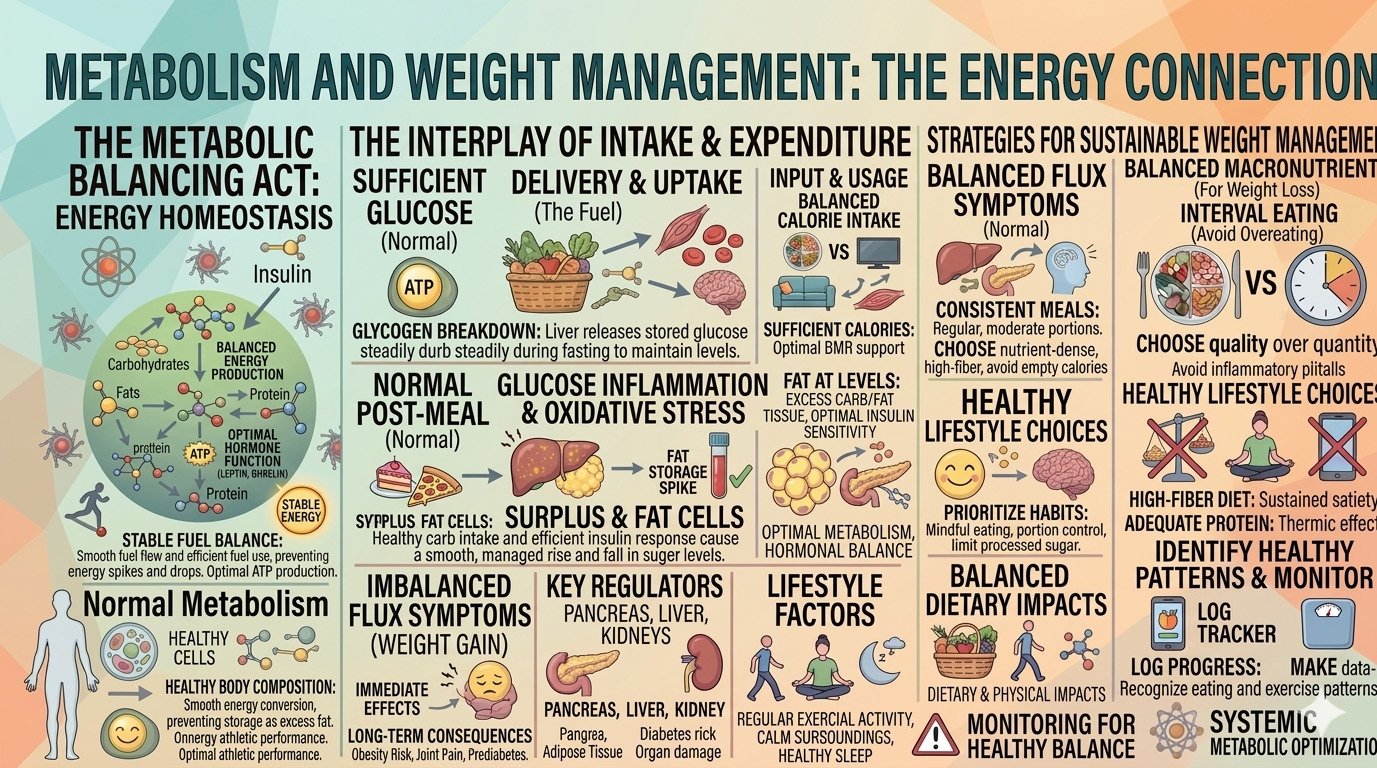
Factors That Affect Metabolism and Weight Management
Multiple lifestyle factors determine how efficiently metabolism supports weight control.
Nutrition
Diet directly affects metabolic function and energy balance.
Healthy dietary habits include:
- Balanced meals
- Adequate protein intake
- High-fiber foods
- Limited added sugar
Healthy nutrition supports metabolic regulation discussed in Nutrition.
Physical Activity
Exercise increases calorie expenditure and improves metabolic efficiency.
Benefits include:
- Increased muscle mass
- Improved fat metabolism
- Improved cardiovascular health
Physical activity supports prevention strategies discussed in Heart Health.
Sleep
Sleep influences hormone regulation and energy balance.
Poor sleep may lead to:
- Increased hunger hormones
- Reduced metabolic efficiency
- Increased fatigue
Sleep patterns strongly influence metabolic stability discussed in Sleep Health.
Stress
Stress affects appetite, metabolism, and energy use.
Chronic stress may lead to:
- Increased fat storage
- Increased inflammation
- Reduced metabolic efficiency
Stress regulation supports hormonal balance discussed in Hormone Health.
Age and Body Composition
Metabolic rate naturally changes with age.
Age-related changes may include:
- Reduced muscle mass
- Slower metabolism
- Reduced energy expenditure
Maintaining muscle mass helps support metabolic efficiency discussed in Metabolism.
Signs of Metabolic Imbalance Affecting Weight
Metabolic imbalance can produce noticeable symptoms.
Common signs include:
- Unexplained weight gain
- Persistent fatigue
- Increased hunger
- Difficulty losing weight
- Low energy levels
- Slow recovery after activity
These symptoms often overlap with conditions discussed in Energy & Fatigue.
Health Risks Linked to Poor Metabolic Weight Regulation
Long-term metabolic imbalance can increase the risk of chronic disease.
Obesity
Excess body fat increases the risk of multiple health conditions.
These include:
- Cardiovascular disease
- Type 2 diabetes
- Sleep disorders
- Joint problems
Obesity risk is closely connected to systems discussed in Heart Health.
Metabolic Syndrome
Metabolic syndrome involves a cluster of metabolic risk factors.
These include:
- High blood sugar
- High blood pressure
- Abdominal obesity
- Abnormal cholesterol levels
Metabolic syndrome is closely connected to metabolic balance discussed in Metabolism.
Type 2 Diabetes
Poor glucose regulation can lead to diabetes.
This condition may result in:
- Nerve damage
- Kidney disease
- Vision problems
Diabetes risk is closely connected to metabolic function discussed in Blood Sugar.
Practical Strategies to Support Healthy Metabolism and Weight Management
Healthy habits can significantly improve metabolic efficiency and weight control.
Prioritize Protein Intake
Protein helps maintain muscle mass and supports metabolic rate.
Helpful habits include:
- Including protein in each meal
- Choosing lean protein sources
- Maintaining balanced nutrition
Protein intake supports metabolic regulation discussed in Nutrition.
Stay Physically Active
Regular movement supports energy balance and metabolic health.
Benefits include:
- Increased calorie expenditure
- Improved insulin sensitivity
- Improved cardiovascular function
Physical activity supports prevention strategies discussed in Metabolism.
Maintain Consistent Sleep
Consistent sleep supports hormone regulation and appetite control.
Healthy sleep supports:
- Stable energy levels
- Reduced cravings
- Improved metabolic balance
Sleep patterns support recovery discussed in Sleep Health.
Manage Stress
Stress management supports hormone balance and metabolic efficiency.
Helpful strategies include:
- Regular physical activity
- Relaxation techniques
- Consistent daily routines
Stress regulation supports systems discussed in Hormone Health.
Focus on Sustainable Habits
Long-term weight management depends on consistent lifestyle habits rather than short-term solutions.
Sustainable habits support:
- Stable metabolism
- Healthy body composition
- Improved energy balance
Healthy routines support prevention strategies discussed in Metabolism.
Why Metabolism Matters for Weight Management
Metabolism determines how efficiently the body uses energy and regulates body weight. When metabolic processes function properly, maintaining a healthy weight becomes easier and energy levels remain stable. When metabolism becomes impaired, weight gain and chronic disease risk increase.
Healthy metabolism supports:
- Stable body weight
- Improved energy levels
- Reduced disease risk
- Improved long-term health
Because metabolism influences multiple systems simultaneously, improving metabolic function supports prevention strategies across Nutrition, Blood Sugar, Heart Health, Hormone Health, and Energy & Fatigue.
Final Thoughts
Weight management is not simply about calories — it is about how the body uses energy. Metabolism determines how efficiently nutrients are converted into fuel and how that fuel is stored or burned. Understanding the energy connection between metabolism and body weight provides a clearer path to sustainable health.
Small, consistent lifestyle habits can produce meaningful improvements in metabolic health and long-term weight stability.
Protecting metabolism is essential for managing weight and maintaining overall health.
Medical Disclaimer
This content is for informational purposes only and does not constitute medical advice. Always consult a qualified healthcare professional.
Editorial Transparency
This article was created following evidence-based health content guidelines and reviewed by the VitaCoreBalance Editorial Team.
Sources
Medical Institutions
National Institutes of Health (NIH)
Mayo Clinic — Metabolism and Weight Management
Cleveland Clinic — Metabolic Health and Weight
Harvard Health Publishing — Metabolism and Body Weight
Global Organizations
World Health Organization (WHO) — Obesity and Metabolic Health
Peer-Reviewed Studies
Hall KD
Energy balance and body weight regulation
American Journal of Clinical Nutrition
Rosenbaum M, Leibel RL
Adaptive thermogenesis in weight regulation
International Journal of Obesity
Scientific Review
Speakman JR
Energy balance and weight regulation
Annual Review of Nutrition