

Normal Blood Sugar Levels (By Age)
VitaCoreBalance Editorial Team | Research-based health content • Editorial review process | March 2026
Introduction: Why Blood Sugar Levels Change Across the Lifespan
Blood sugar levels are not the same for everyone. Age, growth, hormonal changes, activity level, and overall health can influence how the body regulates glucose. While the basic mechanisms of blood sugar control remain consistent, normal ranges and risk patterns may vary across different life stages.
Understanding normal blood sugar levels by age helps individuals recognize healthy patterns, detect early warning signs, and make informed health decisions. This topic connects closely to Metabolism, Hormone Health, and Nutrition, as well as growth, aging, and long-term disease prevention.
Monitoring blood sugar is not only important for people with diabetes—it is a valuable indicator of metabolic health for individuals of all ages.
What Are Normal Blood Sugar Levels?
Normal blood sugar levels refer to the range of glucose in the bloodstream that supports healthy energy production and metabolic function without causing harm to tissues or organs.
Blood sugar levels are typically measured:
- After fasting (no food for at least 8 hours)
- Before meals
- After meals
- Through long-term markers such as A1C
Healthy blood sugar regulation supports stable energy levels and reduces the risk of chronic disease. This is why understanding normal ranges is essential for managing Blood Sugar and maintaining consistent Energy & Fatigue balance.
Standard Blood Sugar Ranges for Adults
These ranges are widely used in clinical practice and recommended by major health organizations.
Fasting Blood Sugar (Adults)
Normal:
70 to 99 mg/dL
Prediabetes:
100 to 125 mg/dL
Diabetes:
126 mg/dL or higher
Blood Sugar After Meals (2 Hours)
Normal:
Less than 140 mg/dL
Prediabetes:
140 to 199 mg/dL
Diabetes:
200 mg/dL or higher
These thresholds are commonly used to diagnose and monitor metabolic conditions.
Normal Blood Sugar Levels by Age Group
Blood sugar regulation can vary slightly depending on age, lifestyle, and health status.
Children (0–12 Years)
Children have active metabolisms and often experience faster glucose fluctuations due to growth and physical activity.
Typical ranges:
Fasting:
70 to 100 mg/dL
After meals:
Up to 140 mg/dL
Factors that influence blood sugar in children include:
- Growth and development
- Physical activity
- Diet patterns
- Hormonal changes
Maintaining balanced nutrition and physical activity supports healthy Metabolism during childhood.
Teenagers (13–18 Years)
Adolescence involves major hormonal changes that can temporarily affect insulin sensitivity.
Typical ranges:
Fasting:
70 to 100 mg/dL
After meals:
Less than 140 mg/dL
Common influences during adolescence include:
- Puberty
- Growth spurts
- Increased stress
- Sleep patterns
Hormonal changes during this stage highlight the connection between blood sugar and Hormone Health.
Adults (19–59 Years)
Most adults maintain stable blood sugar when lifestyle habits support metabolic health.
Typical ranges:
Fasting:
70 to 99 mg/dL
After meals:
Less than 140 mg/dL
Key factors affecting blood sugar in adults include:
- Diet quality
- Physical activity
- Stress levels
- Body weight
- Sleep quality
Healthy lifestyle habits support both Nutrition and long-term metabolic balance.
Older Adults (60 Years and Above)
Blood sugar regulation may become less efficient with age due to changes in metabolism, muscle mass, and hormone function.
Typical ranges:
Fasting:
80 to 100 mg/dL
After meals:
Less than 140 to 150 mg/dL
Older adults may experience:
- Reduced insulin sensitivity
- Slower metabolism
- Increased risk of chronic disease
Maintaining physical activity and balanced nutrition supports healthy aging and Heart Health.
Why Blood Sugar Levels Can Change With Age
Several biological factors influence glucose regulation across the lifespan.
Hormonal Changes
Hormones play a central role in blood sugar regulation.
Examples include:
- Growth hormone in children
- Sex hormones during puberty
- Cortisol during stress
- Insulin sensitivity changes with aging
These hormonal shifts explain the strong relationship between blood sugar and Hormone Health.
Changes in Muscle Mass
Muscle tissue helps the body use glucose efficiently.
With aging:
- Muscle mass often decreases
- Glucose utilization may slow
- Blood sugar levels may rise
Maintaining muscle mass supports healthy Metabolism and glucose regulation.
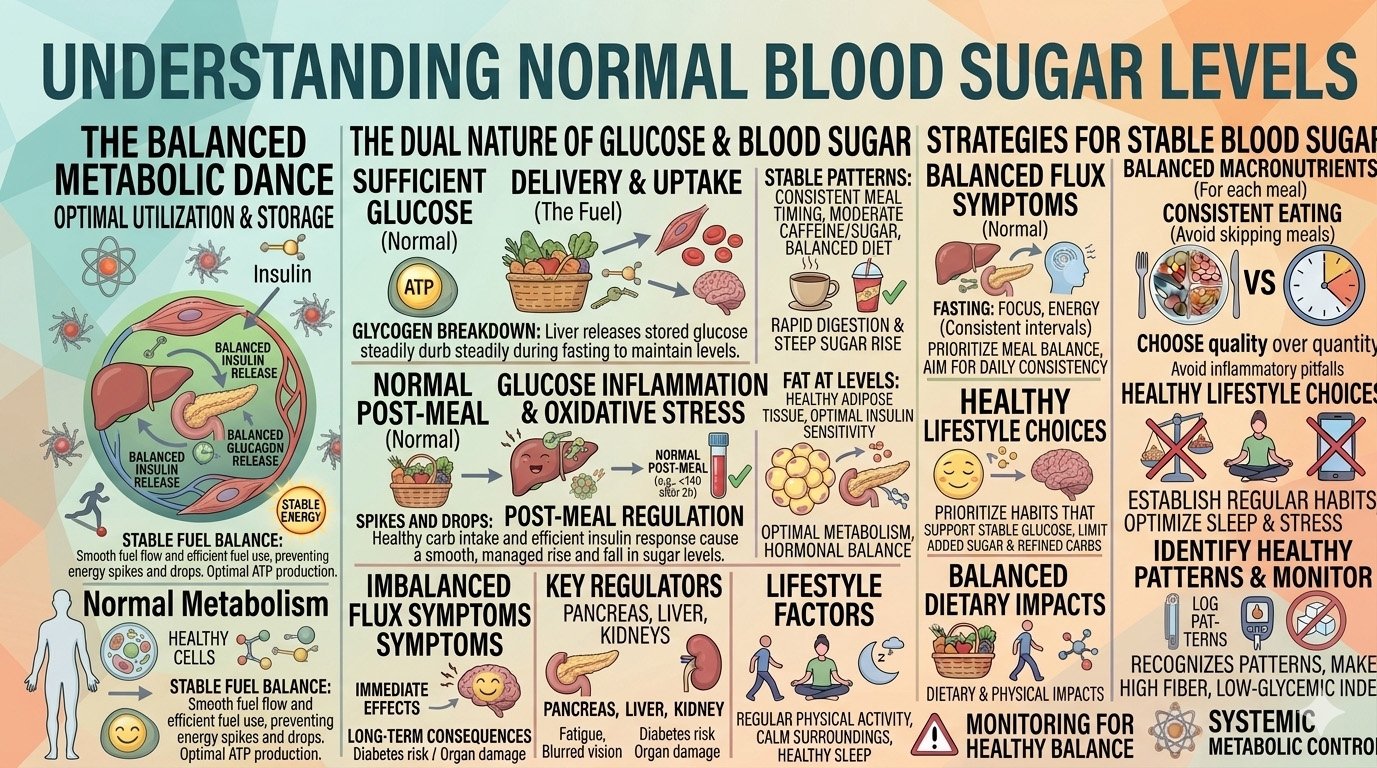
Lifestyle Factors
Daily habits strongly influence blood sugar levels at any age.
Key factors include:
- Diet quality
- Physical activity
- Sleep
- Stress
- Body weight
These habits directly affect both blood sugar and long-term health.
Symptoms of Abnormal Blood Sugar Levels
Recognizing symptoms can help detect potential problems early.
High Blood Sugar (Hyperglycemia)
Common symptoms include:
- Increased thirst
- Frequent urination
- Fatigue
- Blurred vision
- Slow wound healing
Low Blood Sugar (Hypoglycemia)
Common symptoms include:
- Shaking
- Sweating
- Dizziness
- Hunger
- Confusion
Both conditions can affect daily Energy & Fatigue patterns.
When Blood Sugar Levels May Require Medical Attention
Medical evaluation may be necessary if blood sugar levels consistently fall outside normal ranges.
Seek medical guidance if:
- Fasting blood sugar remains above 125 mg/dL
- Symptoms persist
- Blood sugar fluctuates frequently
- There is a family history of diabetes
- Energy levels decline unexpectedly
Early detection helps prevent complications.
Practical Strategies to Maintain Healthy Blood Sugar at Any Age
Healthy habits can support stable glucose levels throughout life.
Maintain Regular Physical Activity
Exercise helps:
- Improve insulin sensitivity
- Stabilize blood sugar
- Support cardiovascular health
- Increase energy
Physical activity supports both Metabolism and long-term health.
Follow a Balanced Diet
Healthy eating patterns help regulate glucose levels.
Focus on:
- Whole foods
- Fiber-rich meals
- Lean protein
- Healthy fats
Balanced nutrition supports both Nutrition and metabolic health.
Prioritize Sleep
Consistent sleep helps regulate hormones that control blood sugar.
Healthy sleep supports:
- Hormonal balance
- Stable energy
- Metabolic regulation
This reinforces the importance of Sleep Health.
Manage Stress
Stress can increase blood sugar through hormone release.
Reducing stress supports:
- Hormone balance
- Glucose regulation
- Energy stability
Stress management supports overall Hormone Health.
Why Understanding Blood Sugar Levels by Age Matters
Knowing normal blood sugar levels for different age groups helps:
- Detect early metabolic changes
- Prevent chronic disease
- Improve long-term health
- Maintain consistent energy
- Support healthy aging
Monitoring blood sugar is a proactive step toward protecting overall health.
Final Thoughts: Healthy Blood Sugar Is a Lifelong Priority
Blood sugar regulation is not a one-time concern—it is a lifelong process influenced by age, lifestyle, and metabolic health.
Stable glucose levels support:
- Consistent energy
- Healthy metabolism
- Balanced hormones
- Cardiovascular health
- Long-term well-being
Understanding normal ranges across different life stages provides a practical foundation for maintaining healthy Blood Sugar, supporting Metabolism, and protecting overall health.
FAQ
Do normal blood sugar levels change with age?
Yes. While the general ranges remain similar, older adults may experience slightly higher post-meal levels due to changes in metabolism and insulin sensitivity.
What is the normal fasting blood sugar level for adults?
Most adults have normal fasting blood sugar levels between:
70 and 99 mg/dL
Is blood sugar naturally higher in older adults?
Blood sugar regulation may become less efficient with age, but healthy lifestyle habits can help maintain stable levels.
Should children have the same blood sugar levels as adults?
Children generally have similar ranges, but growth and activity levels can cause more frequent fluctuations.
Medical Disclaimer
This content is for informational purposes only and does not constitute medical advice. Always consult a qualified healthcare professional.
Editorial Transparency
This article was created following evidence-based health content guidelines and reviewed by the VitaCoreBalance Editorial Team.
Sources
American Diabetes Association (ADA)
Standards of Medical Care in Diabetes
Centers for Disease Control and Prevention (CDC)
Blood Sugar Testing and Targets
National Institute of Diabetes and Digestive and Kidney Diseases (NIDDK)
World Health Organization (WHO)
American Association of Clinical Endocrinology (AACE)
Clinical Practice Guidelines for Diabetes Management