Nutrition: How Diet Directly Influences Disease and Longevity
VitaCoreBalance Editorial Team | Research-based health content • Editorial review process | March 2026
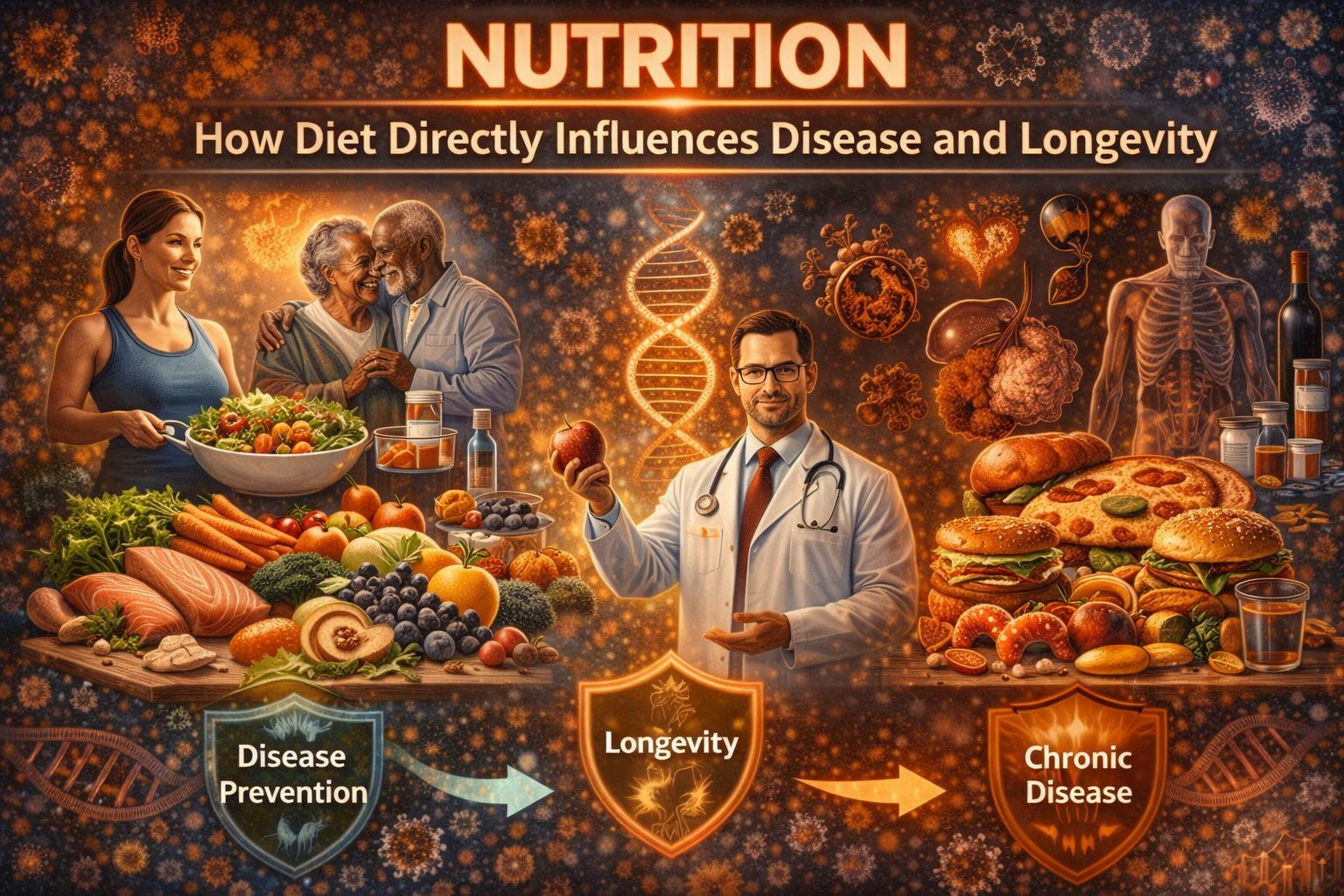
Food is more than fuel. It is information — biological information that constantly signals the body how to function, repair, grow, and age. Every meal triggers thousands of metabolic reactions, influences hormone levels, shapes the immune system, and affects the risk of chronic disease. Over time, dietary patterns become one of the most powerful determinants of health and longevity.
Unlike genetics, which we inherit, nutrition is a daily decision repeated thousands of times across a lifetime. These repeated exposures accumulate. A single meal rarely determines health outcomes, but years of consistent dietary habits strongly shape the trajectory of disease, aging, and survival.
In modern public health, nutrition is considered one of the most influential modifiable risk factors — meaning it is something individuals can change to improve long-term health.
The Evolutionary Roots of Human Nutrition
For most of human history, food availability was unpredictable, and survival required flexibility. Early humans consumed a wide range of foods depending on geography and season, including:
- Fruits
- Vegetables
- Roots and tubers
- Nuts and seeds
- Fish and shellfish
- Meat from hunted animals
- Wild plants and herbs
These diets were typically:
- High in fiber
- Rich in micronutrients
- Low in refined sugars
- Low in ultra-processed foods
- Moderately high in protein
- Variable in fat content
Physical activity levels were also high, which helped regulate metabolism and maintain energy balance.
The modern food environment, however, is dramatically different. Highly processed foods are widely available, inexpensive, and engineered to be convenient and appealing. This shift has occurred rapidly — far faster than human biology can adapt.
As a result, nutrition-related diseases have become some of the leading causes of death worldwide.
Nutrition and the Development of Chronic Disease
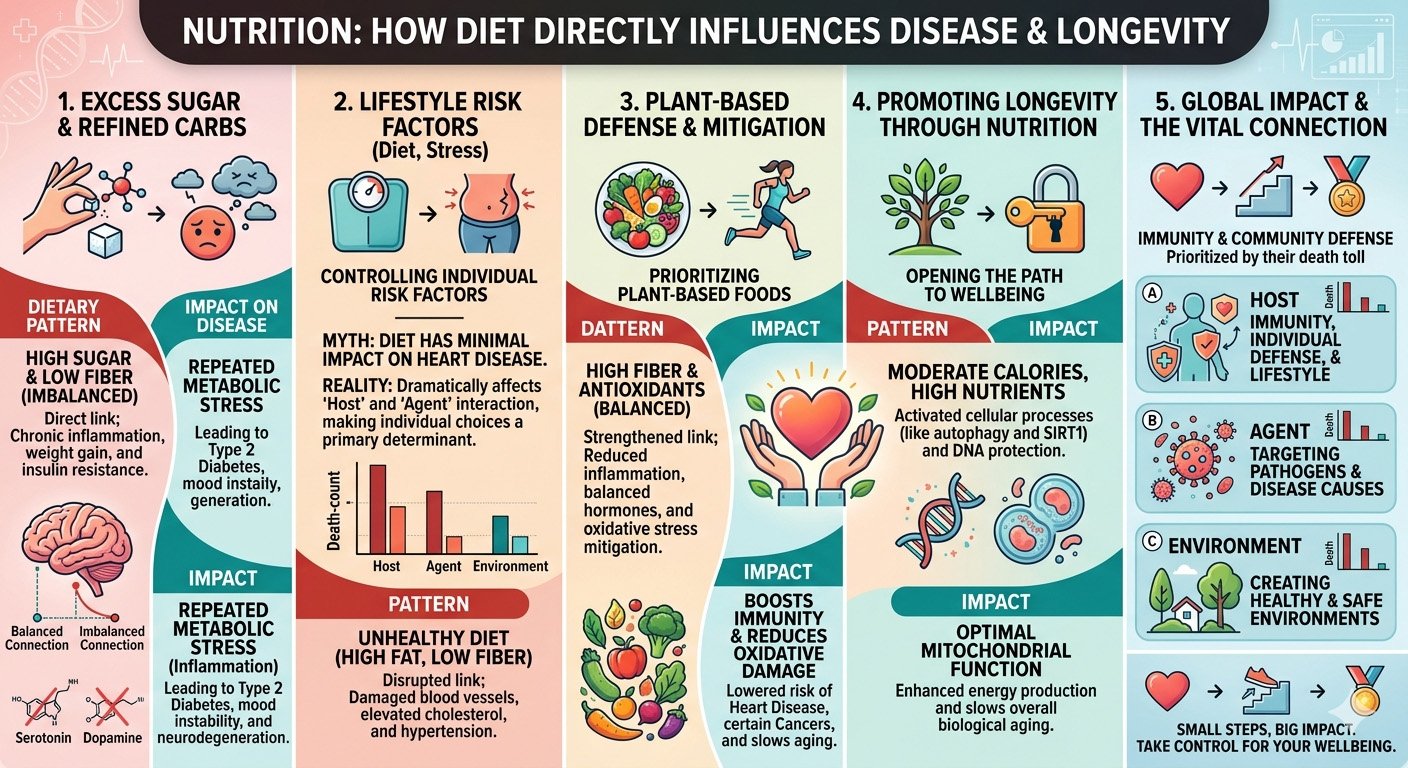
Diet influences nearly every major chronic disease. The relationship is not always immediate, but it is cumulative. Years of dietary exposure gradually affect organs, tissues, and biological systems.
Cardiovascular Disease
Heart disease remains one of the leading causes of death globally, and diet plays a central role in its development.
Dietary factors associated with increased cardiovascular risk include:
- Excess sodium intake
- High consumption of saturated and trans fats
- Low intake of fruits and vegetables
- Excess added sugars
- Highly processed foods
These patterns contribute to:
- High blood pressure
- Elevated cholesterol
- Inflammation
- Arterial damage
In contrast, diets rich in plant-based foods, healthy fats, and whole grains are consistently associated with lower cardiovascular risk.
Type 2 Diabetes
Nutrition is one of the strongest drivers of type 2 diabetes risk.
Diets high in:
- Refined carbohydrates
- Sugary beverages
- Ultra-processed foods
- Excess calories
can lead to:
- Insulin resistance
- Elevated blood glucose
- Pancreatic stress
- Metabolic dysfunction
Over time, this process may result in diabetes.
However, dietary improvements can significantly reduce risk and, in some cases, delay or prevent disease progression.
Obesity and Metabolic Syndrome
Obesity is not simply a matter of body weight. It reflects a complex interaction between diet, metabolism, hormones, and environment.
Common contributors include:
- High-calorie, low-nutrient foods
- Frequent snacking
- Large portion sizes
- Liquid calories
- Low fiber intake
These factors promote:
- Fat accumulation
- Hormonal imbalance
- Chronic inflammation
- Increased disease risk
Metabolic syndrome — a cluster of conditions including high blood pressure, high blood sugar, abdominal obesity, and abnormal cholesterol — is strongly influenced by dietary patterns.
Cancer Risk
Nutrition also affects cancer risk through mechanisms such as inflammation, oxidative stress, and hormonal regulation.
Dietary patterns associated with increased cancer risk include:
- High intake of processed meats
- Low intake of fruits and vegetables
- Excess alcohol consumption
- Diets high in added sugars
- Obesity-related dietary patterns
Protective dietary factors often include:
- Fiber-rich foods
- Antioxidant-containing plants
- Healthy fats
- Balanced energy intake
While diet alone does not determine cancer risk, it is an important contributing factor.
Nutrition and the Immune System
The immune system relies heavily on nutrients to function effectively. Vitamins, minerals, proteins, and healthy fats support immune cell production, communication, and defense.
Key nutrients for immune health include:
Poor nutrition can weaken immune defenses, making the body more vulnerable to infections and slower to recover from illness.
Conversely, balanced nutrition strengthens immune resilience and supports recovery.
The Gut Microbiome: A Hidden Link Between Diet and Health
Inside the human digestive system lives a vast community of microorganisms known as the gut microbiome. These microbes play a critical role in digestion, immunity, metabolism, and even mental health.
Diet is the primary factor shaping the microbiome.
Foods that support a healthy microbiome include:
- Fiber-rich vegetables
- Fruits
- Whole grains
- Legumes
- Fermented foods
- Nuts and seeds
Foods that may disrupt microbiome balance include:
- Highly processed foods
- Excess sugar
- Artificial additives
- Low-fiber diets
A diverse and balanced microbiome is associated with:
- Reduced inflammation
- Improved metabolism
- Better immune function
- Lower disease risk
Nutrition and Brain Health
The brain is one of the most energy-demanding organs in the body, consuming roughly 20% of daily energy intake. Nutrition directly affects brain function, mood, and cognitive performance.
Diet influences:
- Memory
- Attention
- Learning
- Emotional regulation
- Risk of cognitive decline
Poor dietary patterns have been linked to:
- Depression
- Anxiety
- Reduced concentration
- Cognitive impairment
In contrast, nutrient-rich diets support mental clarity and long-term brain health.
Nutrition and Longevity
Long-term studies of populations with high life expectancy consistently reveal similar dietary patterns. These patterns are not extreme or restrictive. Instead, they emphasize balance, variety, and nutrient density.
Common features include:
- High consumption of vegetables and fruits
- Regular intake of legumes and whole grains
- Moderate consumption of healthy fats
- Limited intake of processed foods
- Controlled calorie intake
- Consistent eating patterns
Nutrition does not guarantee longevity, but it significantly increases the probability of living longer and maintaining health in later years.
Healthy lifespan — the number of years lived without major disease — is strongly influenced by diet.
Small Dietary Changes, Large Health Effects
One of the most important lessons from nutrition research is that small, consistent changes can produce meaningful long-term benefits.
Examples of impactful changes include:
- Increasing daily vegetable intake
- Replacing sugary drinks with water
- Choosing whole foods over processed foods
- Reducing excess sodium
- Adding fiber-rich foods
- Maintaining balanced portion sizes
These changes accumulate over time.
Health outcomes are rarely determined by a single decision, but by repeated habits.
Nutrition as a Daily Investment in Health
Nutrition is not a short-term intervention. It is a lifelong process that continuously shapes the body’s internal environment.
Every meal contributes to:
- Energy balance
- Cellular repair
- Immune strength
- Hormonal regulation
- Disease risk
- Aging speed
In this sense, diet functions like a long-term investment. The benefits may not be visible immediately, but they compound over time.
A healthy diet does not require perfection. It requires consistency.
Understanding how nutrition influences disease and longevity allows individuals to make informed choices — choices that can improve health, extend lifespan, and enhance quality of life across the years.
Medical Disclaimer
This content is for informational purposes only and does not constitute medical advice. Always consult a qualified healthcare professional.
Editorial Transparency
This article was created following evidence-based health content guidelines and reviewed by the VitaCoreBalance Editorial Team.
Sources
- https://www.who.int/news-room/fact-sheets/detail/healthy-diet
- https://www.cdc.gov/nutrition/about-nutrition/index.html
- https://www.hsph.harvard.edu/nutritionsource/healthy-eating-plate/
- https://www.nia.nih.gov/health/healthy-eating
- https://www.ncbi.nlm.nih.gov/pmc/articles/PMC7071223/
- https://www.who.int/health-topics/nutrition