
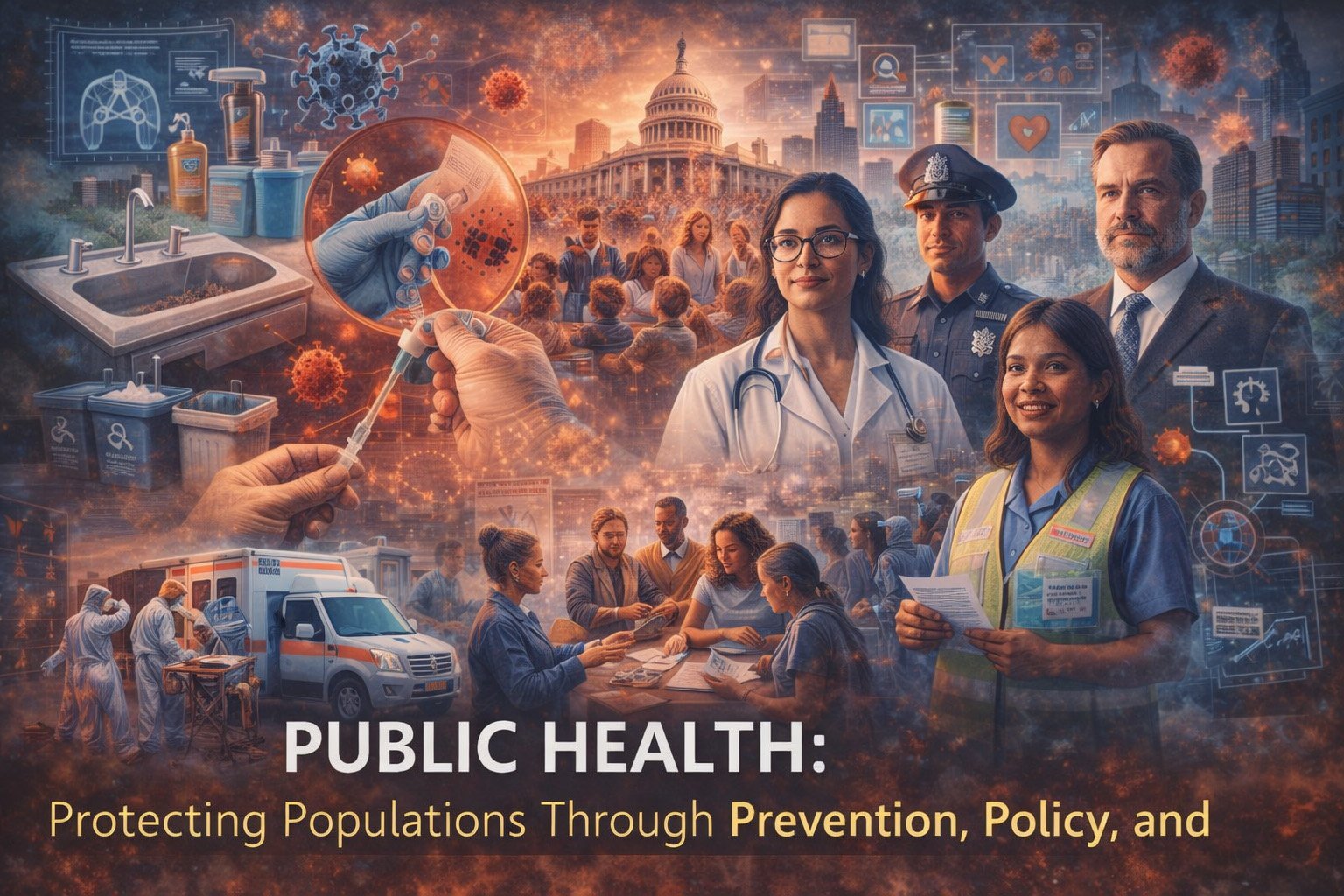
Public Health: Protecting Populations Through Prevention, Policy, and Collective Action
VitaCoreBalance Editorial Team | Research-based health content • Editorial review process | March 2026
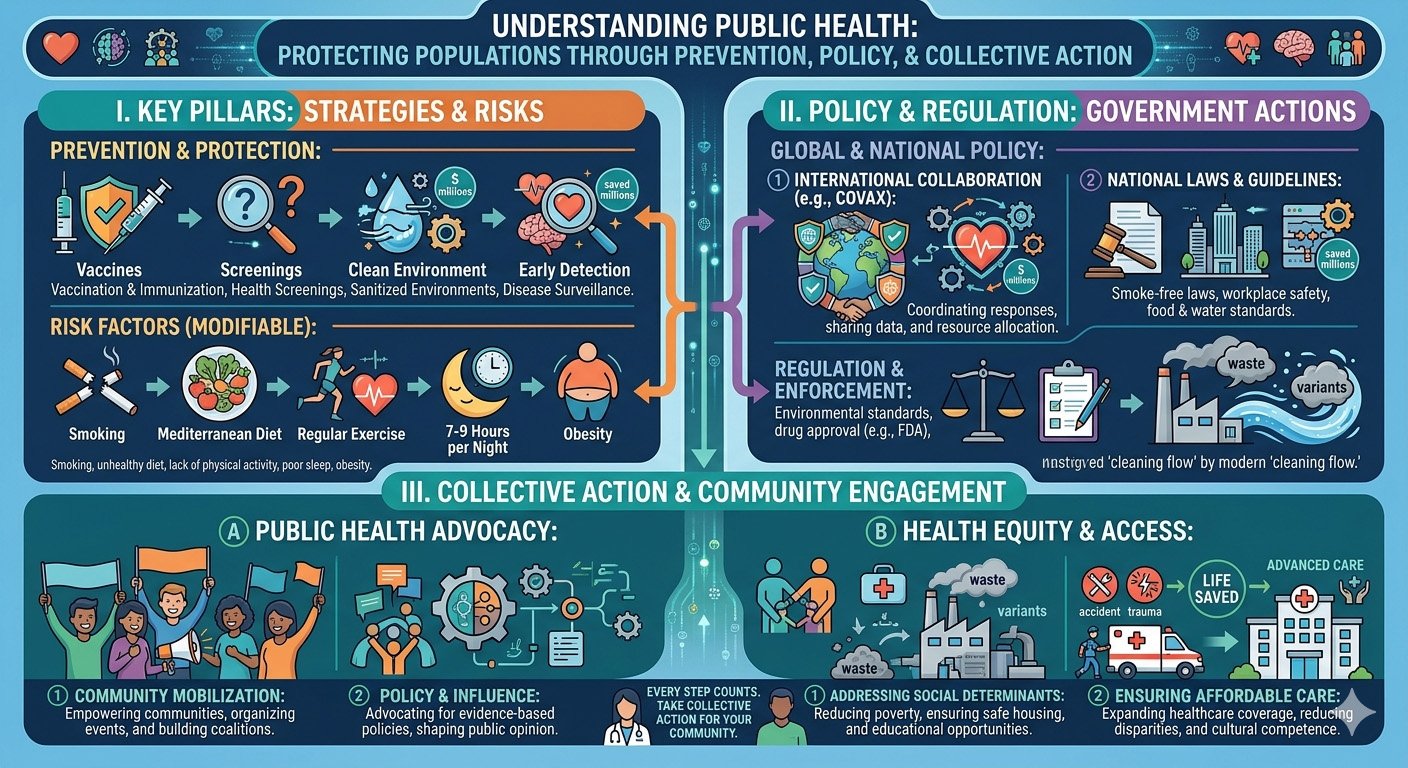
Public health is one of the most powerful forces shaping human survival and quality of life. While clinical medicine focuses on treating individuals, public health focuses on protecting entire populations. It addresses the conditions that influence health long before illness occurs—clean water, safe food, vaccination programs, disease surveillance, environmental protection, and access to healthcare.
Many of the greatest improvements in life expectancy did not result from new drugs or surgical techniques alone, but from public health interventions that prevented disease on a large scale. Sanitation systems, vaccination campaigns, and public health education have saved more lives than many individual medical treatments combined. Understanding public health is therefore essential for understanding how societies reduce disease, extend life, and improve well-being.
What Is Public Health?
Public health is the science and practice of preventing disease, prolonging life, and promoting health through organized efforts of society. It operates at the community, national, and global levels, focusing on prevention rather than treatment.
Core goals of public health include:
- Preventing disease and injury
- Promoting healthy behaviors
- Protecting environmental health
- Ensuring access to healthcare services
- Monitoring health trends
- Responding to health emergencies
Public health professionals work across multiple disciplines, including medicine, epidemiology, environmental science, nutrition, sociology, and policy development.
Unlike clinical care, which treats illness after it occurs, public health aims to reduce risk before disease develops.
The Foundations of Modern Public Health
Modern public health emerged during the nineteenth century, when rapid urbanization and industrialization created crowded living conditions that fueled the spread of infectious diseases.
Early public health reforms focused on sanitation, housing, and water quality. These changes dramatically reduced mortality rates in cities.
Key historical milestones in public health include:
- Development of sewer systems
- Clean water supply infrastructure
- Food safety regulations
- Vaccination programs
- Workplace safety laws
These interventions transformed public health from a reactive system into a preventive one.
The Core Functions of Public Health
Public health systems are built around three essential functions: assessment, policy development, and assurance.
Assessment
Assessment involves collecting and analyzing health data to identify risks and trends.
Examples include:
- Disease surveillance
- Health surveys
- Environmental monitoring
- Mortality and morbidity tracking
Data collected through assessment helps identify emerging health threats and guide interventions.
Policy Development
Public health policies establish rules and guidelines that protect population health.
Examples include:
- Vaccination requirements
- Air quality standards
- Food safety regulations
- Tobacco control laws
- Workplace safety policies
Policies translate scientific knowledge into practical actions that reduce health risks.
Assurance
Assurance ensures that essential health services are available and accessible.
This includes:
- Health education programs
- Access to preventive care
- Emergency preparedness
- Healthcare quality standards
- Community health services
Assurance bridges the gap between policy and real-world implementation.
Disease Prevention: The Core Mission of Public Health
Prevention is the central principle of public health. Preventing illness is often more effective and less costly than treating disease.
Public health prevention operates at three levels.
Primary Prevention
Primary prevention aims to stop disease before it occurs.
Examples include:
- Vaccination
- Safe drinking water
- Nutrition programs
- Physical activity promotion
- Injury prevention measures
These interventions reduce the risk of disease across populations.
Secondary Prevention
Secondary prevention focuses on early detection and treatment.
Examples include:
- Screening programs
- Health checkups
- Blood pressure monitoring
- Cancer screening tests
Early detection improves survival rates and reduces complications.
Tertiary Prevention
Tertiary prevention aims to reduce the impact of existing disease.
Examples include:
- Rehabilitation programs
- Chronic disease management
- Disability support services
- Mental health treatment
These interventions improve quality of life and reduce long-term disability.
Epidemiology: Understanding Disease Patterns
Epidemiology is the scientific foundation of public health. It studies how diseases spread, who is affected, and why outbreaks occur.
Epidemiologists analyze data to identify risk factors and design prevention strategies.
Key tools used in epidemiology include:
- Case investigations
- Statistical analysis
- Risk assessment
- Contact tracing
- Disease modeling
Epidemiology played a critical role in controlling outbreaks such as cholera, influenza, and emerging infectious diseases.
Environmental Health: Protecting the Conditions That Sustain Life
Environmental health focuses on the relationship between people and their surroundings.
Environmental hazards can significantly affect health outcomes.
Common environmental health risks include:
- Air pollution
- Contaminated water
- Hazardous chemicals
- Climate change
- Waste disposal problems
Public health measures such as pollution control and environmental monitoring help reduce these risks.
Environmental protection is therefore a key component of population health.
Public Health and Infectious Disease Control
Controlling infectious diseases remains one of the primary responsibilities of public health systems.
Effective disease control strategies include:
- Vaccination programs
- Quarantine and isolation
- Contact tracing
- Infection prevention
- Public health education
These interventions reduce disease transmission and protect vulnerable populations.
Public health responses to infectious disease outbreaks have prevented millions of deaths worldwide.
Chronic Disease Prevention in Modern Societies
As life expectancy has increased, chronic diseases have become the leading causes of death in many countries.
Common chronic diseases include:
- Heart disease
- Diabetes
- Cancer
- Obesity
- Respiratory disease
Public health strategies for chronic disease prevention focus on lifestyle and environmental factors.
Examples include:
- Tobacco control policies
- Nutrition guidelines
- Physical activity programs
- Health education campaigns
- Workplace wellness initiatives
These interventions reduce long-term disease risk and healthcare costs.
Health Equity: Ensuring Fair Access to Health
Health equity is a central principle of public health. It recognizes that health outcomes are influenced by social and economic conditions.
Factors affecting health equity include:
- Income level
- Education
- Housing conditions
- Access to healthcare
- Employment opportunities
- Geographic location
Reducing disparities improves overall population health.
Public health programs often prioritize vulnerable populations to ensure equal access to essential services.
Emergency Preparedness and Response
Public health systems must be prepared to respond quickly to emergencies such as disease outbreaks, natural disasters, and environmental crises.
Preparedness involves planning and coordination before emergencies occur.
Key elements of emergency preparedness include:
- Surveillance systems
- Emergency response plans
- Medical supply stockpiles
- Training exercises
- Communication networks
Rapid response reduces mortality and protects communities.
The Economic Impact of Public Health
Public health investments generate significant economic benefits.
Preventive measures reduce healthcare costs, increase productivity, and support economic stability.
Examples of economic benefits include:
- Reduced hospital admissions
- Lower treatment costs
- Increased workforce productivity
- Longer life expectancy
- Improved community resilience
Public health is therefore both a health and economic priority.
Global Public Health: Cooperation Across Borders
Health challenges increasingly cross national boundaries.
Global public health initiatives coordinate efforts to address shared risks.
Examples include:
- Disease surveillance networks
- International vaccination campaigns
- Research collaboration
- Emergency response coordination
Global cooperation strengthens the ability to control disease and protect populations.
The Future of Public Health
Public health continues to evolve as new challenges emerge.
Emerging trends include:
- Digital health monitoring
- Artificial intelligence in disease detection
- Climate-related health risks
- Aging populations
- Urban health management
- Pandemic preparedness
Innovation will play a central role in shaping the future of public health.
The Core Insight: Public Health Protects Life Before Illness Begins
Public health is one of the most effective systems ever developed for protecting human life. By focusing on prevention, education, and coordinated action, public health reduces disease, extends life expectancy, and strengthens communities.
The success of public health demonstrates a fundamental principle: health is not determined solely by medical treatment, but by the conditions in which people live, work, and interact. Investing in public health is therefore an investment in the long-term survival and resilience of society.
Medical Disclaimer
This content is for informational purposes only and does not constitute medical advice. Always consult a qualified healthcare professional.
Editorial Transparency
This article was created following evidence-based health content guidelines and reviewed by the VitaCoreBalance Editorial Team.
SOURCES:
World Health Organization (WHO) – Public Health
https://www.who.int/health-topics/public-health
Centers for Disease Control and Prevention (CDC) – What Is Public Health?
https://www.cdcfoundation.org/what-public-health
National Institutes of Health (NIH) – Public Health and Prevention
https://www.nih.gov/health-information/public-health
Harvard T.H. Chan School of Public Health – Public Health Overview
https://www.hsph.harvard.edu/what-is-public-health
American Public Health Association (APHA) – What Is Public Health
https://www.apha.org/what-is-public-health
Our World in Data – Global Health and Population Health
https://ourworldindata.org/global-health