
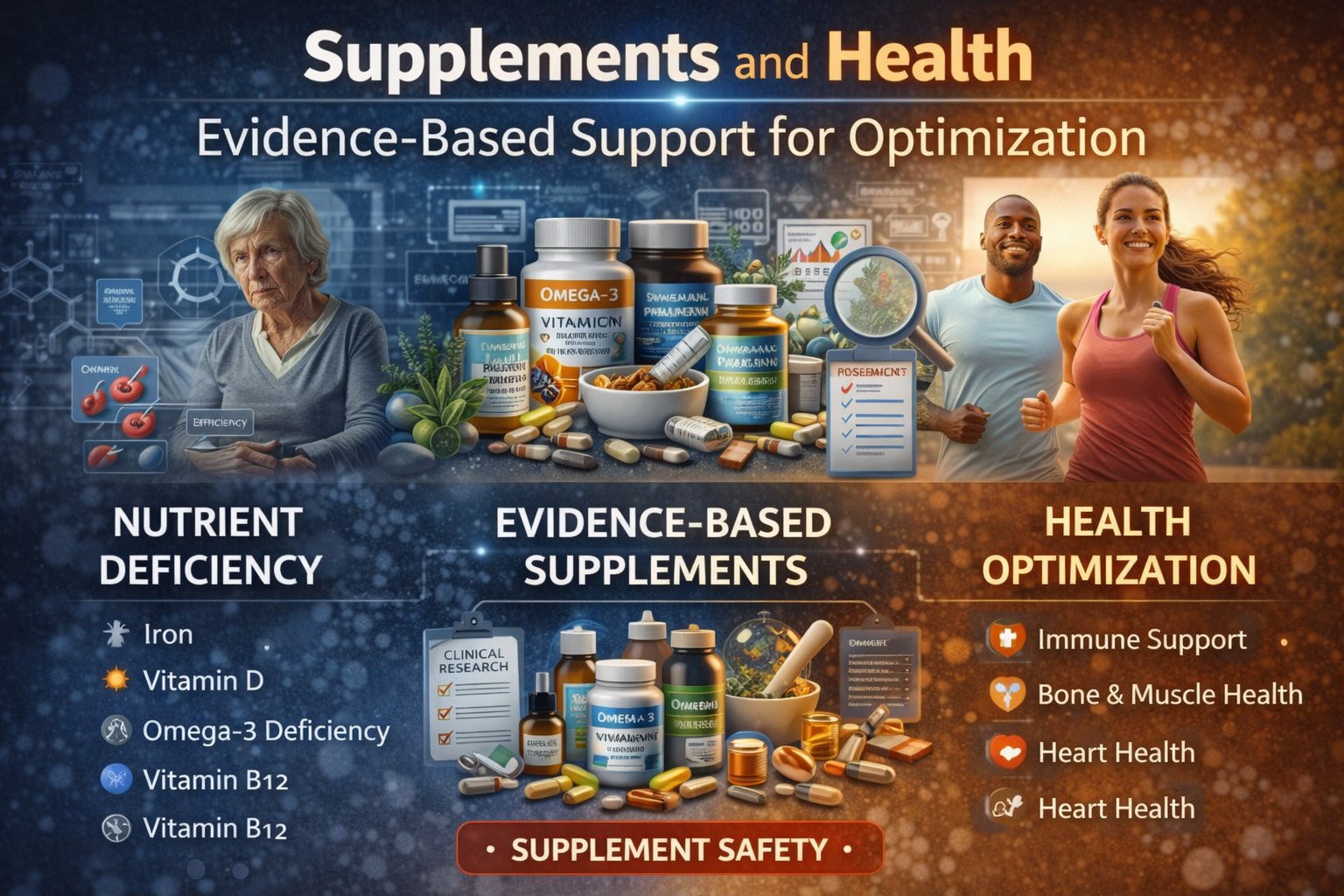
Supplements: Evidence-Based Support for Health Optimization
VitaCoreBalance Editorial Team | Research-based health content • Editorial review process | March 2026
Dietary supplements are widely used around the world, often with the goal of improving health, preventing disease, increasing energy, or slowing aging. Vitamins, minerals, herbal extracts, and other nutritional compounds are now part of daily routines for millions of people. However, the effectiveness of supplements varies widely, and not all products provide meaningful benefits.
Understanding supplements requires distinguishing between marketing claims and scientific evidence. Some supplements have strong support from clinical research and are recommended in specific situations. Others offer minimal benefit or may even pose risks when used improperly.
Supplements are best understood as tools — not substitutes for healthy habits. They can support nutrition, correct deficiencies, and optimize specific biological functions, but they cannot replace balanced diet, physical activity, sleep, and preventive healthcare.
What Are Dietary Supplements?
Dietary supplements are products designed to provide nutrients or biologically active compounds that may be missing or insufficient in the diet. They are typically available in forms such as:
- Tablets
- Capsules
- Powders
- Liquids
- Gummies
Common categories of supplements include:
- Vitamins (e.g., vitamin D, vitamin B12)
- Minerals (e.g., iron, magnesium, zinc)
- Fatty acids (e.g., omega-3)
- Amino acids
- Probiotics
- Herbal products
- Protein supplements
These substances can influence biological processes such as metabolism, immune function, bone health, and energy production.
Why Supplements Exist: Filling Nutritional Gaps
Modern diets do not always provide optimal nutrient levels. Several factors contribute to nutritional gaps, including:
- Limited dietary variety
- Highly processed foods
- Soil nutrient depletion
- Food storage and preparation methods
- Aging-related absorption changes
- Medical conditions
- Dietary restrictions
In these situations, supplements can help restore adequate nutrient levels and support normal physiological function.
However, supplementation is most effective when targeted to specific needs rather than used indiscriminately.
Evidence-Based Supplements With Strong Scientific Support
Certain supplements have consistently demonstrated benefits in well-designed clinical studies. These supplements are commonly recommended in specific populations or health conditions.
Vitamin D
Vitamin D plays a central role in bone health, immune function, and muscle strength. It is produced in the skin through sunlight exposure, but deficiency is common, especially in regions with limited sun exposure or indoor lifestyles.
Evidence supports vitamin D supplementation for:
- Bone health
- Fall prevention in older adults
- Immune support
- Correction of deficiency
Low vitamin D levels have been associated with increased risk of fractures, weakened immunity, and certain chronic diseases.
Omega-3 Fatty Acids
Omega-3 fatty acids are essential fats found in fish and some plant sources. They contribute to cardiovascular and brain health.
Research suggests benefits for:
- Heart health
- Triglyceride reduction
- Inflammation regulation
- Brain function
- Eye health
Omega-3 supplementation is often recommended when dietary intake of fatty fish is low.
Vitamin B12
Vitamin B12 is necessary for nerve function, red blood cell production, and DNA synthesis. Deficiency is more common in older adults and individuals following vegetarian or vegan diets.
Supplementation is strongly supported for:
- Preventing anemia
- Supporting neurological function
- Maintaining cognitive health
- Correcting deficiency
Untreated deficiency can lead to fatigue, nerve damage, and memory problems.
Iron
Iron is essential for oxygen transport in the blood. Iron deficiency is one of the most common nutritional deficiencies worldwide.
Supplementation is recommended when deficiency is confirmed and may help:
- Improve energy levels
- Treat anemia
- Support physical performance
- Reduce fatigue
However, excess iron can be harmful, making proper diagnosis important before supplementation.
Folic Acid
Folic acid is critical for cell growth and development. It plays an especially important role during pregnancy.
Strong evidence supports folic acid supplementation for:
- Preventing neural tube defects
- Supporting fetal development
- Reducing anemia risk
Public health programs worldwide recommend folic acid supplementation for women of reproductive age.
Supplements With Conditional Benefits
Some supplements provide benefits in specific contexts but may not be necessary for everyone.
Magnesium
Magnesium supports muscle function, nerve signaling, and energy production. Many people consume less magnesium than recommended.
Supplementation may help with:
- Muscle cramps
- Sleep quality
- Migraine prevention
- Blood pressure regulation
Benefits are more likely in individuals with low dietary intake or deficiency.
Probiotics
Probiotics are live microorganisms that support the gut microbiome. Their effectiveness depends on the strain, dose, and health condition.
Evidence suggests potential benefits for:
- Digestive health
- Antibiotic-associated diarrhea
- Irritable bowel syndrome
- Immune function
However, results vary, and not all probiotic products are equally effective.
Protein Supplements
Protein supplements are widely used to support muscle growth, recovery, and overall nutrition.
They may be beneficial for:
- Athletes
- Older adults
- Individuals with increased protein needs
- People recovering from illness
Protein supplementation can help maintain muscle mass and support physical function, particularly during aging.
Supplements With Limited or Uncertain Evidence
Some supplements are popular but lack strong scientific support for general health improvement.
Examples include:
- Detox products
- Anti-aging formulas
- Immune “boosters” without clinical validation
- Fat-burning supplements
- Performance enhancers without evidence
These products are often marketed aggressively but may not provide measurable health benefits.
In some cases, they may interact with medications or cause unintended side effects.
Safety Considerations in Supplement Use
Although supplements are widely available, they are not risk-free. High doses, poor-quality products, and inappropriate use can lead to health problems.
Potential risks include:
- Toxicity from excessive intake
- Drug interactions
- Allergic reactions
- Contamination or poor manufacturing quality
- Mislabeling
For example:
- Excess vitamin A can damage the liver
- High doses of iron can cause poisoning
- Excessive calcium may increase kidney stone risk
Safe supplementation requires attention to dosage, product quality, and individual health needs.
Supplements and the Regulation Gap
Unlike prescription medications, dietary supplements are often regulated differently. In many countries, manufacturers are responsible for ensuring product safety and labeling accuracy before products reach consumers.
This regulatory model can lead to variability in:
- Ingredient quality
- Dosage accuracy
- Purity
- Effectiveness
Independent testing and reputable brands help reduce these risks.
Healthcare professionals often recommend choosing supplements that have been tested by third-party organizations.
The Role of Supplements in Preventive Health
Supplements can play a valuable role in preventive health when used appropriately. They are particularly useful in situations such as:
- Nutrient deficiency
- Pregnancy
- Aging
- Chronic illness
- Restricted diets
- Increased physiological demand
In these contexts, supplements help maintain biological balance and reduce health risks.
However, preventive health depends primarily on lifestyle factors.
Supplements Are Not a Substitute for Healthy Habits
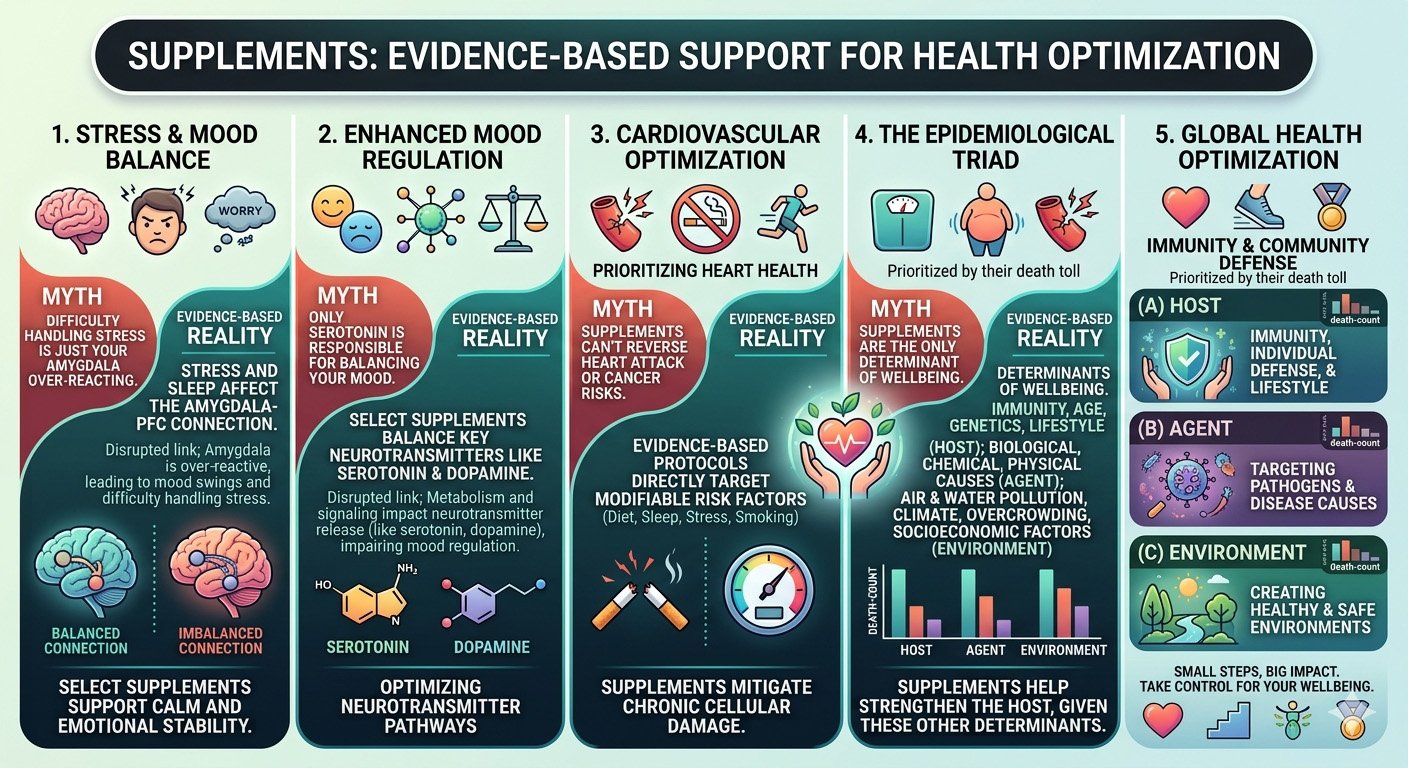
One of the most important principles in nutrition science is that supplements cannot compensate for poor lifestyle habits.
Health outcomes are strongly influenced by:
- Diet quality
- Physical activity
- Sleep
- Stress management
- Environmental exposures
- Preventive healthcare
Supplements can support these behaviors, but they cannot replace them.
A balanced diet provides not only individual nutrients, but also complex combinations of compounds that work together to support health.
Personalization: The Future of Supplement Use
Advances in medicine and nutrition are moving toward personalized approaches to supplementation. Individual needs vary based on:
- Age
- Genetics
- Health conditions
- Lifestyle
- Nutritional status
- Medication use
Personalized supplementation aims to match nutrient intake with specific biological needs rather than applying a one-size-fits-all approach.
This strategy improves effectiveness and reduces unnecessary supplementation.
Supplements as Tools for Health Optimization
Supplements can be powerful tools when used responsibly and based on evidence. They help correct deficiencies, support physiological function, and optimize health in specific situations.
However, their value depends on:
- Scientific evidence
- Proper dosage
- Individual health status
- Product quality
- Professional guidance
Health optimization is not achieved through a single pill. It emerges from consistent habits that support the body’s natural systems.
In this context, supplements serve as supportive tools — complements to healthy living, not replacements for it.
Medical Disclaimer
This content is for informational purposes only and does not constitute medical advice. Always consult a qualified healthcare professional.
Editorial Transparency
This article was created following evidence-based health content guidelines and reviewed by the VitaCoreBalance Editorial Team.
Sources
- https://ods.od.nih.gov/factsheets/WYNTK-Consumer/
- https://www.nccih.nih.gov/health/using-dietary-supplements-wisely
- https://www.who.int/news-room/fact-sheets/detail/dietary-supplements
- https://www.hsph.harvard.edu/nutritionsource/vitamins/
- https://www.ncbi.nlm.nih.gov/pmc/articles/PMC7019963/
- https://www.fda.gov/food/dietary-supplements