
Phosphatidylserine for Memory, Focus, and Brain Health
VitaCoreBalance Editorial Team | Research-based health content · Editorial review process | March 2026 – Updated April
Phosphatidylserine is a naturally occurring phospholipid that plays a critical role in brain cell structure, communication, and cognitive function. It is an essential component of neuronal membranes, where it supports neurotransmitter activity, memory formation, and mental performance.
As people age, phosphatidylserine levels in the brain gradually decline, which may affect memory, attention, and cognitive processing speed. Supplementation is commonly used to support brain function, enhance focus, and maintain cognitive resilience during aging or periods of mental stress.
In addition to its role in cognitive health, phosphatidylserine also supports stress regulation, sleep quality, and nervous system balance. It helps regulate cortisol—the body’s primary stress hormone—making it particularly useful for individuals experiencing chronic stress, mental fatigue, or high cognitive demand.
Phosphatidylserine is widely used for:
- Memory support and cognitive performance
- Focus and attention
- Brain cell communication
- Stress and cortisol regulation
- Mental clarity and productivity
- Age-related cognitive support
- Sleep and nervous system balance
- Brain health and healthy aging
Because brain function depends heavily on cell membrane integrity and neurotransmitter signaling, phosphatidylserine is considered one of the most important structural nutrients for cognitive health.
What Is Phosphatidylserine
Phosphatidylserine is a phospholipid—a type of fat molecule that forms part of the membrane surrounding brain cells. These membranes are essential for communication between neurons, allowing signals to pass efficiently throughout the nervous system.
Phosphatidylserine supports the structural integrity and flexibility of brain cell membranes, which is necessary for learning, memory, and attention.
Phosphatidylserine supports:
- Neuronal communication
- Neurotransmitter release
- Memory formation
- Cognitive processing
- Stress regulation
- Brain cell protection
- Nervous system balance
- Healthy aging
Unlike many herbal supplements, phosphatidylserine functions as a structural component of brain cells rather than a stimulant or adaptogen.
Benefits of Phosphatidylserine
Memory Support and Cognitive Performance
Phosphatidylserine plays a direct role in memory formation and cognitive processing by supporting neuronal signaling and synaptic function.
Research suggests phosphatidylserine may:
- Improve memory recall
- Support learning ability
- Enhance cognitive performance
- Improve attention and concentration
- Support mental clarity
These effects are particularly relevant for individuals experiencing age-related cognitive changes or high mental workload.
Focus, Attention, and Mental Clarity
Phosphatidylserine supports attention and cognitive efficiency by improving communication between brain cells.
Benefits include:
- Improved focus
- Enhanced concentration
- Reduced mental fatigue
- Improved productivity
- Faster cognitive processing
This makes phosphatidylserine useful for students, professionals, and individuals performing complex mental tasks.
Stress Reduction and Cortisol Regulation
Phosphatidylserine helps regulate cortisol levels, supporting stress resilience and nervous system balance.
It supports:
- Reduced stress response
- Improved emotional stability
- Reduced mental fatigue
- Improved resilience under pressure
- Balanced nervous system activity
Cortisol regulation is a key mechanism behind improved cognitive performance during stress.
Sleep Quality and Recovery
Phosphatidylserine may support sleep quality by helping regulate stress hormones and nervous system activity.
Benefits include:
- Improved sleep quality
- Reduced nighttime stress
- Better recovery during sleep
- Improved mental restoration
Although not a sedative, it supports the body’s natural recovery processes.
Brain Protection and Healthy Aging
Phosphatidylserine supports neuronal protection and helps maintain brain function over time.
Benefits include:
- Neuroprotection
- Reduced cognitive decline risk
- Support for healthy brain aging
- Protection against oxidative stress
- Improved long-term cognitive resilience
This protective role is especially relevant for aging populations.
Mood and Emotional Stability
Phosphatidylserine may support emotional regulation through its effects on brain signaling and stress hormones.
It may contribute to:
- Improved mood stability
- Reduced irritability
- Emotional resilience
- Improved mental well-being
Balanced mood supports cognitive performance and overall quality of life.
Physical Performance and Recovery
Phosphatidylserine may support physical performance by regulating stress hormones and supporting recovery.
Benefits include:
- Reduced exercise-induced stress
- Improved recovery
- Reduced fatigue
- Enhanced endurance
These effects make phosphatidylserine relevant beyond cognitive health.
Who May Benefit from Phosphatidylserine
Phosphatidylserine supplementation may be particularly beneficial for individuals seeking cognitive support or stress resilience.
Common groups include:
Older adults
Students
Professionals with high cognitive demand
Individuals experiencing memory concerns
People under chronic stress
Athletes
Individuals seeking better focus and productivity
People interested in healthy aging
Individuals with sleep disturbances related to stress
Preventive use is common for maintaining long-term cognitive health.
Safety and Dosage
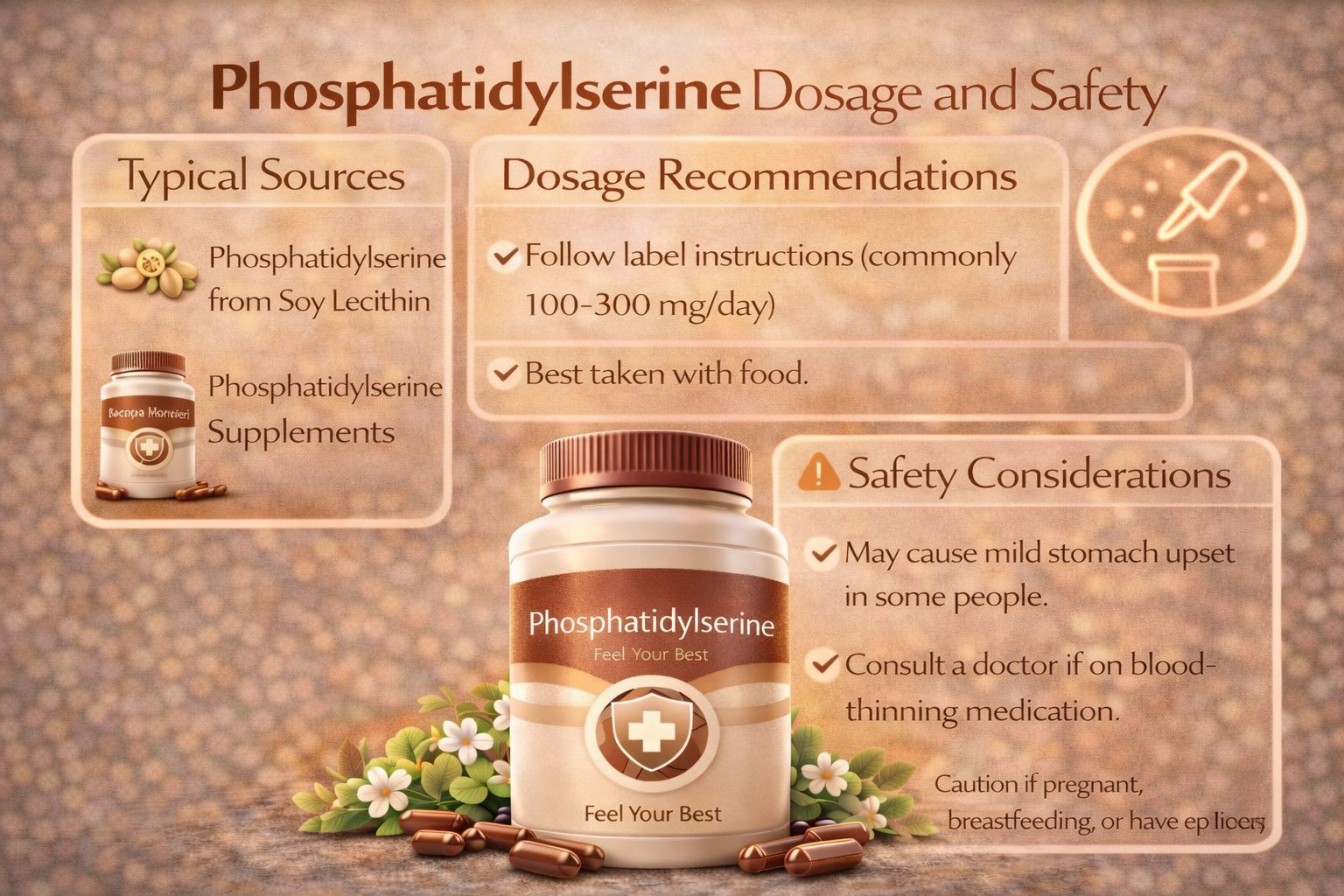
Phosphatidylserine is generally safe when used within recommended dosage ranges.
Typical Daily Dosage
General cognitive support:
100–200 mg per day
Memory and focus support:
200–300 mg per day
Stress and cortisol regulation:
300–400 mg per day
Best Time to Take Phosphatidylserine
Phosphatidylserine can be taken:
With meals
In divided doses
In the morning or evening depending on goals
Evening use is sometimes preferred for stress and sleep support.
Safety Considerations
Phosphatidylserine is well tolerated in most individuals.
Possible side effects may include:
Mild digestive discomfort
Insomnia (rare)
Headache (rare)
Use caution if:
You are pregnant or breastfeeding
You take medications affecting brain function
You have neurological conditions
You are using multiple cognitive supplements
Consult a healthcare professional when combining supplements with medications.
Evidence and Research
Phosphatidylserine has been studied extensively for its role in memory, cognitive performance, and stress regulation.
Research findings show:
Phosphatidylserine supports memory and learning
Phosphatidylserine improves attention and focus
Phosphatidylserine reduces cortisol response to stress
Phosphatidylserine supports brain cell function
Phosphatidylserine supports healthy aging
Clinical studies suggest that consistent supplementation may help maintain cognitive performance and mental resilience.
Best Supplements
Choosing the right phosphatidylserine supplement depends on source, purity, and formulation.
Soy-Derived Phosphatidylserine
Best for:
General cognitive support
Daily supplementation
Cost-effective use
Sunflower-Derived Phosphatidylserine
Best for:
Soy-free supplementation
Long-term use
Sensitive individuals
Phosphatidylserine Capsules
Best for:
Convenience
Consistent dosing
Daily use
Phosphatidylserine with Omega-3
Best for:
Brain cell membrane support
Cognitive performance
Long-term brain health
High-Potency Phosphatidylserine
Best for:
Stress management
Cognitive performance
Clinical dosing
FAQ
What does phosphatidylserine do in the brain?
Phosphatidylserine supports communication between brain cells, memory formation, and cognitive performance.
Is phosphatidylserine safe to take daily?
Yes. Daily supplementation is generally safe within recommended dosage ranges.
Can phosphatidylserine improve memory?
Yes. Phosphatidylserine supports memory, learning, and attention.
Can phosphatidylserine reduce stress?
Yes. It helps regulate cortisol levels and supports stress resilience.
Can phosphatidylserine improve sleep?
Phosphatidylserine may support sleep indirectly by reducing stress and supporting nervous system balance.
Medical Disclaimer
This content is for informational purposes only and does not constitute medical advice. Always consult a qualified healthcare professional.
Editorial Transparency
This article was created following evidence-based health content guidelines and reviewed by the VitaCoreBalance Editorial Team.
SOURCES:
- https://ods.od.nih.gov/factsheets/Phosphatidylserine-HealthProfessional/
- https://www.ncbi.nlm.nih.gov/books/NBK555914/
- https://pubmed.ncbi.nlm.nih.gov/22272871/
- https://www.ncbi.nlm.nih.gov/pmc/articles/PMC2503954/
- https://www.mayoclinic.org/drugs-supplements-phosphatidylserine/art-20362932
- https://www.cochranelibrary.com/search?q=phosphatidylserine